DbcultAccessing Vault...
4.1/10
Senior Film Conservator
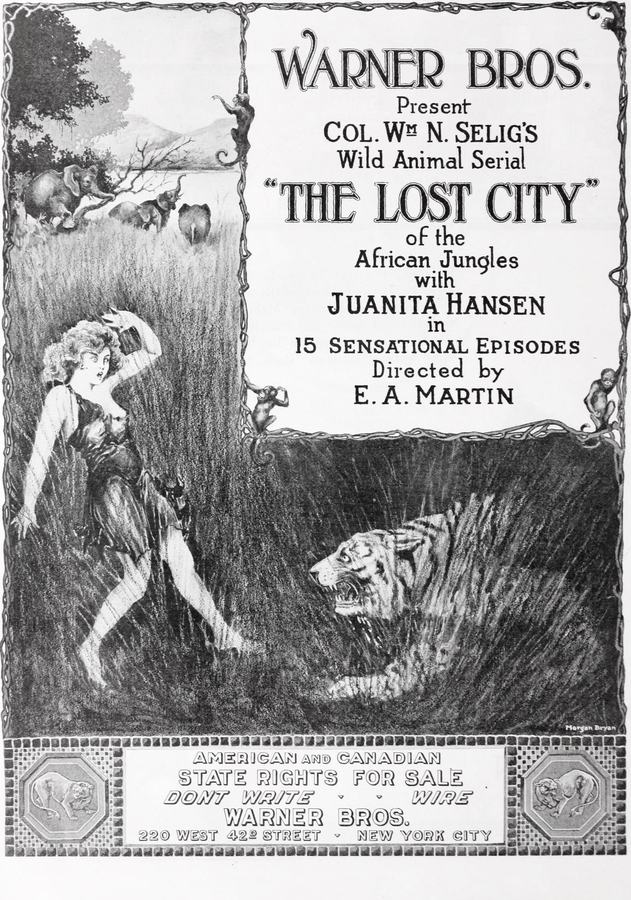
A definitive 4.1/10 rating for a film that redefined the boundaries of cult cinema. The Lost City remains a cornerstone of transgressive art.
The celluloid landscape of 1920 was a frontier of unbridled imagination, a period where the cinematic medium began to shed its stage-bound origins for the sprawling vistas of the adventure serial. At the vanguard of this movement stands The Lost City, a work that encapsulates the anxieties and fascinations of its time. Unlike the domestic intimacy of Pollyanna, which sought to refine the human spirit through optimism, The Lost City plunges its audience into a visceral, often chaotic exploration of the 'Other.' It is a film that breathes through its movement, a picaresque journey that prioritizes the kinetic over the contemplative, yet remains an essential artifact for understanding the evolution of the action genre.
Stanley Morton (George Chesebro) and Mike Donovan (Frank Clark) serve as the archetypal American explorers—men whose confidence is matched only by their ignorance of the terrains they seek to conquer. Their entry into the village ruled by Gagga is not merely a plot point; it is a collision of worlds. Gagga, portrayed with a sinister, theatrical flair by Hector Dion, represents the atavistic threat that silent cinema so frequently associated with the 'uncivilized' world. However, the true gravitational center of the narrative is Princess Elyata, played with a luminous intensity by Juanita Hansen. In an era where female roles were often confined to the victimhood seen in Stolen Hours, Hansen’s Elyata is a refreshing subversion—a sovereign who wields power and provides the necessary salvation for her male counterparts.
The dynamic between the two Americans is one of classic bumbling camaraderie. Frank Clark’s Mike Donovan provides the necessary levity, a sidekick whose reactions mirror the audience’s own bewilderment at the escalating stakes. This partnership predates the buddy-cop tropes by decades, yet it feels surprisingly modern in its execution. When they fall into the clutches of Gagga’s slave-trading network, the film shifts from a travelogue into a high-stakes thriller. The tension is palpable, driven by the rhythmic editing and the expressive histrionics that were the hallmark of the silent era. The stakes are not merely survival, but the preservation of dignity in the face of absolute tyranny.
Directorially, the film manages to evoke a sense of place that feels both grounded and fantastical. The 'Lost City' of Tirzah is rendered through a combination of location shooting and ambitious set design. While it may lack the polished artifice of The Romance of Elaine, there is a grit to the production that enhances its realism. The lighting often utilizes the natural glare of the sun to create high-contrast shadows, emphasizing the heat and the psychological pressure of the jungle. This chiaroscuro effect adds a layer of depth to the chase sequences, making the foliage seem like a living, breathing antagonist.
The costume design for Princess Elyata deserves particular mention. It is a fusion of various cultural motifs, designed to signify her 'exotic' status while maintaining a sense of regal authority. Hansen carries these costumes with a poise that suggests a deep understanding of her character’s importance. Her performance is less about dialogue (conveyed through intertitles) and more about the command of space. When she intervenes in Gagga’s village, her presence alone shifts the power dynamic. It is a masterclass in silent screen acting, where a single gaze can convey a manifesto of defiance.
The screenplay by Frederick Chapin is a marvel of structural efficiency. In a serial-like format, each sequence must build upon the last while maintaining a self-contained sense of urgency. Chapin understands the necessity of the 'cliffhanger' mentality, yet he manages to weave in themes of loyalty and the corrupting nature of greed. Gagga is not just a villain because he is an antagonist to Morton; he is a villain because he commodifies human life. This thematic weight elevates the film above mere escapism, aligning it more closely with the moral inquiries found in The Soul of Satan.
Furthermore, the film’s pacing is relentless. Unlike the slower, more deliberate character studies of the time, such as All Wrong, The Lost City understands that its audience craves spectacle. The transition from the slave village to the hidden reaches of Tirzah is handled with a narrative fluidity that belies the technical limitations of 1920. Chapin’s writing ensures that Morton and Donovan are never truly safe, creating a sense of perpetual motion that keeps the viewer engaged across the film's runtime.
When comparing The Lost City to its contemporaries, one must look at The Lion Man. Both films share an obsession with the wild and the archetypal hero, yet The Lost City feels more expansive in its world-building. Where In the Wild West focuses on the rugged American frontier, this film looks outward, reflecting the burgeoning globalism of the post-WWI era. It captures a world that was becoming smaller through technology but remained vast in the popular imagination.
The film also stands in stark contrast to the social critiques of Public Be Damned or the satirical edge of Heiress for a Day. The Lost City is unashamedly a genre piece, yet it possesses a sincerity that is often lost in modern homages to this era. There is no irony here; the danger feels real, the stakes are absolute, and the heroism of Princess Elyata is presented without the need for justification. This earnestness is what allows the film to transcend its dated cultural tropes and remain a compelling piece of cinema.
One cannot discuss The Lost City without acknowledging the sheer physicality of the production. The actors were often required to perform their own stunts in environments that were far from controlled. George Chesebro’s Morton is a physically imposing presence, his movements characterized by a rugged athleticism that would later become the standard for the adventure hero. This physicality is mirrored in the cinematography, which frequently breaks away from the static wide shot to follow the action more closely. While not as avant-garde as Huo wu chang, there is a burgeoning sense of visual storytelling that relies less on intertitles and more on the placement of actors within the frame.
The use of animals and large-scale sets also points to a high production value for the time. These elements create a sense of 'bigness' that was essential for competing with the stage. The Lost City was designed to be a spectacle, an experience that could not be replicated in any other medium. In this regard, it shares a DNA with the grander productions like Diamonds and Pearls, though it trades that film’s social climbing for a more primal quest for survival.
As we look back at The Lost City from a century's distance, it is easy to focus on the elements that have not aged well—the simplistic depictions of indigenous populations and the inherent colonialist gaze. However, to do so exclusively is to miss the film's contribution to the language of cinema. It is a work that taught audiences how to follow a complex, multi-threaded narrative across multiple installments. It refined the concept of the 'rescue' as a narrative climax, a trope that remains a staple of the industry today.
Moreover, the film serves as a testament to the talent of Juanita Hansen. Her career, though tragically short-lived, was defined by roles that challenged the status quo. In The Lost City, she is not merely a prize to be won; she is the architect of the protagonists' survival. This level of agency is rare for the period and deserves recognition. Her performance provides a necessary counterweight to the male-dominated narratives of the time, such as The Wooing of Riley or Outwitting the Hun.
In the broader context of international cinema, The Lost City lacks the pastoral beauty of Hemsöborna or the decadent cynicism of The Libertine, but it possesses a raw, unpolished energy that is uniquely American. It is a film of the frontier, born from a desire to push the boundaries of what could be shown on screen. It is a loud, vibrant, and occasionally messy epic that captures the spirit of an industry in its adolescence—full of wonder, prone to overreach, but undeniably alive.
The Lost City is a monumental achievement in early genre filmmaking. While it carries the cultural baggage of its era, its technical ambition and the powerful performance of Juanita Hansen make it a mandatory viewing for any serious student of silent cinema. It is a bridge between the simplistic 'chase' films of the 1910s and the sophisticated adventure epics of the 1930s. A relic, yes, but one that still pulses with the thrill of discovery.
IMDb —
1927
Community
Log in to comment.