DbcultAccessing Vault...
Cult Review
Senior Film Conservator
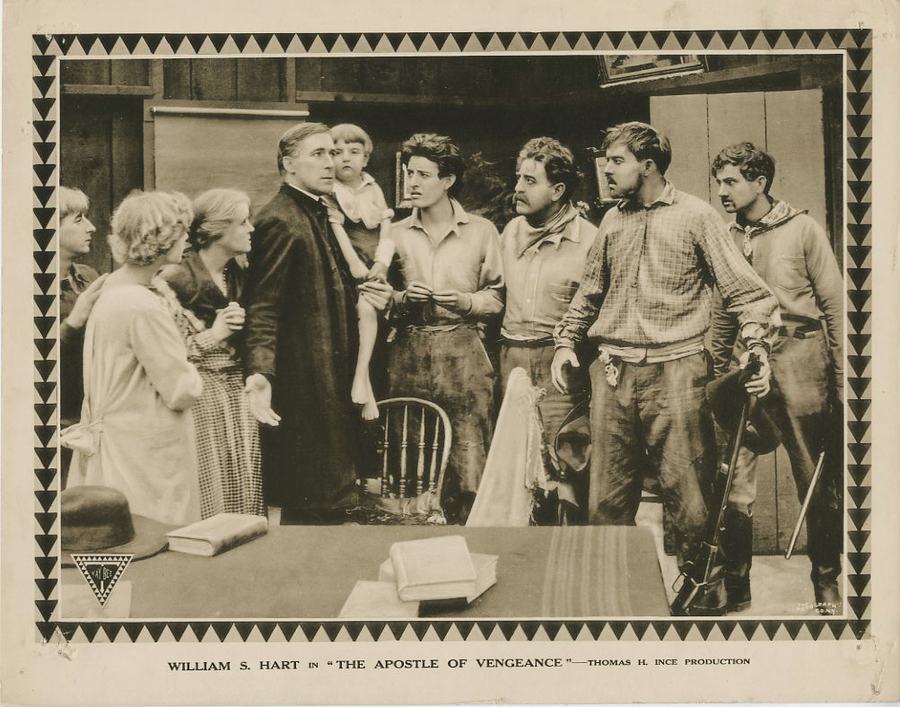
There's a certain raw, untamed power emanating from the silent era's cinematic offerings, a visceral storytelling that transcends the absence of spoken dialogue. Among these, The Apostle of Vengeance stands as a particularly compelling artifact, not merely as a historical curiosity but as a potent exploration of timeless human conflict. Directed by and starring the incomparable William S. Hart, this 1916 production plunges us into the heart of a generations-long feud, a narrative as old as storytelling itself, yet rendered with a stark intensity that feels remarkably fresh even today. Hart, with his signature stoicism and moral gravitas, embodies a character caught in the ultimate ethical maelstrom: a man of God whose unwavering commitment to peace is pitted against the primal, inescapable pull of blood and retribution.
The film opens, not with a gentle pastoral, but with the weighty shadow of inherited animosity. Our protagonist, a minister, has returned to the Kentucky hills, a land where loyalty is etched in stone and grievances are passed down like heirlooms. His years away, spent preaching reconciliation in the comparatively tranquil climes of Vermont, have imbued him with a fervent belief in non-violence. He arrives, a beacon of pacific intent, hoping to extinguish the inferno of the family feud that has consumed his kin and the rival McCoys for as long as anyone can remember. It's a noble, almost quixotic quest, immediately met with the cold, hard wall of tradition. His own family, entrenched in their righteous anger and unyielding desire for vengeance, rejects his pleas for a truce. They cast him out, seeing his philosophy not as wisdom, but as weakness, a betrayal of their shared history of suffering and retaliation. This initial rejection sets the stage, isolating our protagonist and underscoring the formidable nature of the forces he seeks to overcome. It's a powerful statement on the insidious nature of ingrained hatred, how it can blind even those closest to us to the possibility of a different path.
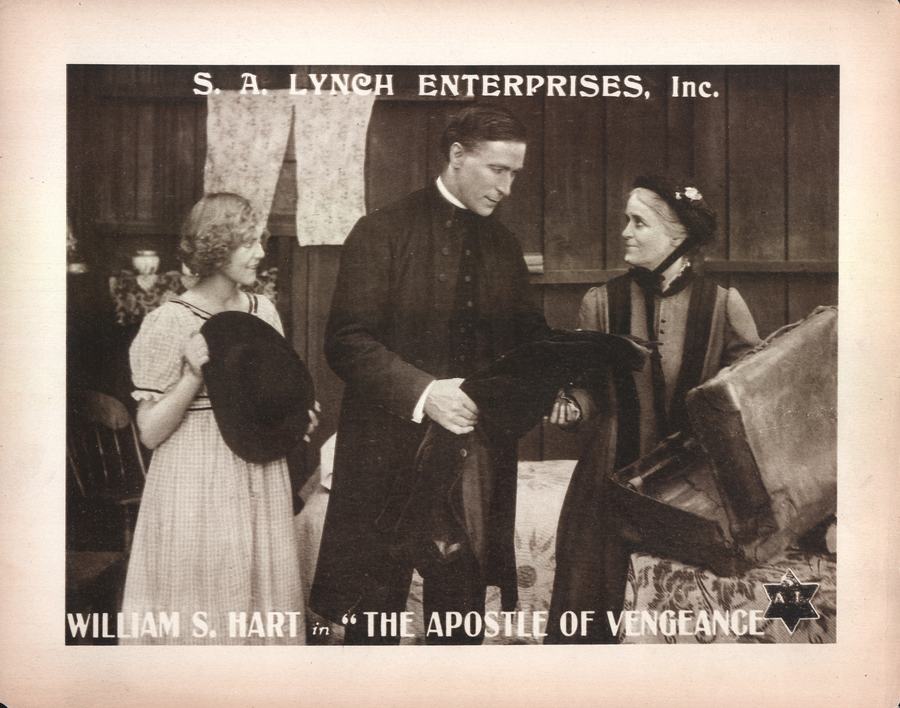
Hart's portrayal of the minister is a masterclass in understated emotion. He doesn't resort to theatrical histrionics; instead, his internal struggle is conveyed through subtle shifts in his gaze, the set of his jaw, the quiet resignation that occasionally flickers across his countenance. Exiled to a humble shack nestled deep within the mountains, he continues his solitary ministry, his voice a lone whisper of peace against the howling winds of discord. This period of isolation is crucial, allowing the audience to witness his unwavering commitment to his ideals. He is not merely preaching; he is living his truth, even when it means enduring ostracism and ridicule. The stark mountain setting itself becomes a character, mirroring the rugged, unyielding nature of the feud and the challenging terrain of the minister's moral landscape. The cinematography, though characteristic of its era, effectively uses these natural backdrops to emphasize the isolation and the primitive instincts at play. One might draw parallels to the solitary figures grappling with immense moral burdens in films like The Silent Battle, where an individual's internal struggle becomes as monumental as any external conflict.
However, the theoretical purity of his non-violent stance is soon shattered by the brutal realities of the feud. The catalyst arrives in the form of his sister, imperiled by one of the McCoy men. This is the moment of truth, the crucible where abstract philosophy collides with visceral, familial duty. The scene is crafted to maximize tension, forcing the minister to confront the very core of his beliefs. Can he stand by and watch his sister suffer, adhering strictly to his vows of non-violence, or will the primal urge to protect his blood override his spiritual conviction? This dilemma is the beating heart of the film, a universal struggle that resonates far beyond the Kentucky hills. It's a question that has plagued humanity for millennia, explored in countless narratives from ancient epics to modern thrillers. The genius of The Apostle of Vengeance lies in its refusal to offer easy answers, instead plunging the viewer into the agonizing complexity of such a choice.
The supporting cast, while perhaps less prominent than Hart, contributes significantly to the film's texture. Fanny Midgley, for instance, as the imperiled sister, conveys vulnerability and desperation, making her plight genuinely impactful. John Gilbert, still early in his illustrious career, also makes an appearance, adding another layer to the complex tapestry of characters caught in this brutal conflict. Gertrude Claire and Joseph J. Dowling, among others, round out a cast that, under Hart's direction, delivers performances that are both era-appropriate and surprisingly nuanced. Monte M. Katterjohn's screenplay effectively builds the narrative tension, allowing the characters' motivations and the escalating stakes to unfold organically. The writing understands the power of the unspoken, letting actions and reactions speak volumes, a hallmark of compelling silent cinema.
The film's exploration of vengeance is particularly astute. It doesn't glorify it, nor does it entirely condemn the impulse. Instead, it portrays vengeance as a deeply ingrained cultural practice, a cycle that perpetuates itself with tragic inevitability. The minister's struggle is not just against the McCoys, but against the very idea of an eye for an eye, a philosophy that has rendered his community stagnant in a pool of blood. This thematic depth elevates The Apostle of Vengeance beyond a simple Western or moral drama. It becomes a meditation on the nature of justice, forgiveness, and the immense courage required to break free from destructive patterns. The film's setting, steeped in the rugged individualism of the frontier, provides a perfect crucible for these themes, where law and order are often secondary to personal codes of honor and retribution.
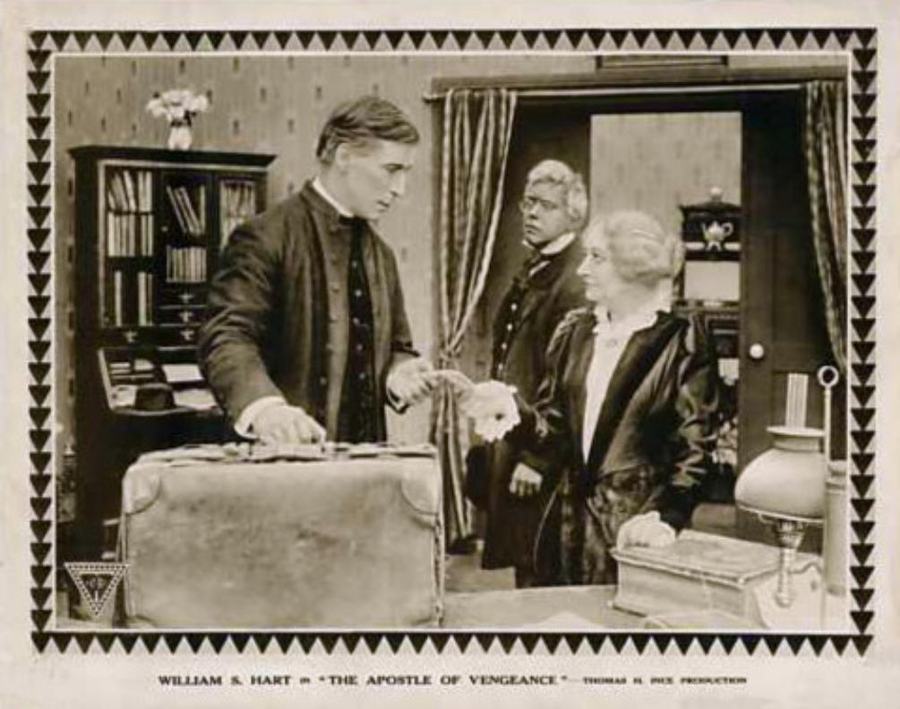
William S. Hart's persona on screen was always that of the morally conflicted hero, often an outlaw with a hidden heart of gold, or a man of principle forced into difficult circumstances. Here, he takes that archetype and pushes it to its spiritual extreme. His minister is not just an individual; he represents an ideal, a radical vision of peace in a world seemingly determined to tear itself apart. The film's climax, where his philosophy is tested in the most direct and violent manner, is not a simple triumph of good over evil, but a deeply human moment of compromise and agonizing choice. It forces the audience to confront the uncomfortable truth that sometimes, even the most devout pacifist might be pushed to the brink, and that the line between righteous defense and vengeful aggression can be perilously thin. This complexity is what grants the film its enduring power, making it more than just a period piece.
Visually, the film is a testament to the artistry of silent cinema. The use of natural light, the dramatic compositions, and the expressive performances all contribute to a powerful visual narrative. The landscapes of the Kentucky hills are not merely backdrops; they are active participants in the drama, their rugged beauty contrasting sharply with the ugliness of the human conflict playing out within them. The pacing, while slower than modern audiences might be accustomed to, allows for a deliberate unfolding of the narrative, giving ample time for the emotional weight of each scene to settle. Hart’s direction, much like his acting, is direct and unadorned, focusing on clarity and impact. This approach, while perhaps less flamboyant than some of his contemporaries, served to underscore the gravitas of his stories. In an era where melodrama often reigned supreme, Hart's films often possessed a grounded realism, a quality that makes them resonate even today. One might compare the starkness of its setting and the moral dilemmas to certain European silent films of the era, such as An Alpine Tragedy, which also used harsh environments to amplify human struggle.
The film's cultural context is also worth considering. Released in 1916, it arrived during a tumultuous period, both globally with the Great War raging, and domestically, with America on the cusp of significant social and political change. Stories of moral fortitude, redemption, and the struggle against ingrained prejudice held particular resonance. The Apostle of Vengeance, in its own way, offers a microcosm of these larger societal tensions. It posits that even in the most entrenched conflicts, there is always the potential for an individual to rise above, to challenge the status quo, even if it means great personal cost. The film doesn't shy away from the tragic consequences of violence, illustrating how it begets further violence, trapping generations in a cycle of suffering. This profound message, delivered without a single spoken word, is a testament to the enduring power of visual storytelling and the timeless artistry of William S. Hart.
Ultimately, The Apostle of Vengeance is more than just a historical film; it's a profound character study wrapped in a gripping drama. It challenges us to reflect on our own capacity for forgiveness, our willingness to break cycles of hatred, and the true meaning of strength. Is strength found in wielding a weapon, or in choosing a path of peace even when faced with overwhelming provocation? Hart's minister embodies this latter, more difficult strength, making his journey a compelling and deeply human one. The film serves as a powerful reminder that while the settings and costumes of cinema may change, the fundamental struggles of the human spirit remain eternally relevant. It's a film that deserves to be revisited, not just for its historical significance, but for its timeless exploration of the moral dilemmas that continue to define our existence. Its quiet power lingers long after the final frame.

IMDb —
1930
Community
Log in to comment.