DbcultAccessing Vault...
Cult Review
Senior Film Conservator
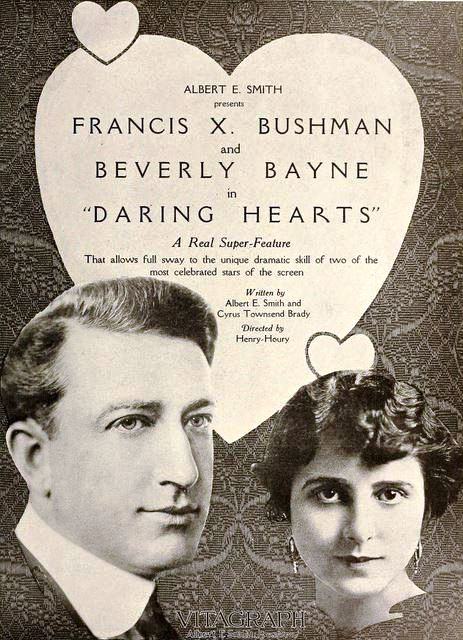
Stepping back into the nascent days of cinematic storytelling, one encounters a peculiar magic, a raw, unvarnished intensity that often eludes the polished productions of today. Daring Hearts, a melodrama from 1914, is precisely such a relic, a vibrant testament to the era's burgeoning narrative ambitions, particularly in its audacious attempt to capture the sweeping cataclysm of World War I as it was still unfolding. This film doesn't merely recount a story; it plunges the viewer into a maelstrom of personal tragedy and global upheaval, presenting a vision of love and survival so heightened, so utterly dramatic, that it transcends mere historical artifact to become a poignant reflection on human resilience.
The narrative unfurls in the idyllic yet precarious setting of Alsace, summer 1914, a region perpetually caught in the tug-of-war between French and German allegiances. Here, we are introduced to Louise de Villars, portrayed with arresting vulnerability by Beverly Bayne, an Alsatian maiden whose tranquil existence is brutally shattered by the predatory advances of two German soldiers. This harrowing initiation into the encroaching horrors of war is swiftly met by the arrival of Hugh Brown, a visiting American, embodied by the dashing Charles Kent. His timely intervention, a classic heroic rescue, serves as the incandescent spark for an immediate, profound connection. Their romance, blossoming with astonishing rapidity against the backdrop of an impending global conflict, feels less like a gradual unfolding and more like a desperate grasp for solace in a world teetering on the brink of chaos. It's a testament to the efficient, emotionally charged shorthand of silent film that such an instantaneous bond feels not only plausible but utterly compelling, the urgency of their affection mirroring the escalating tensions around them.
With the declaration of war, the idyllic interlude shatters completely. Hugh, driven by a potent mix of love for Louise and a nascent sense of patriotic duty, enlists in the French flying corps. What follows is a remarkable cinematic portrayal of early aerial combat, with Hugh ascending to the status of an ace, credited with downing an astounding thirty enemy planes. This segment, while perhaps stretching credulity even for the most ardent silent film enthusiast, effectively positions Hugh as an almost mythical figure, a modern-day knight whose chivalry has traded the steed for the biplane. The visual spectacle, even by today's standards of CGI-laden blockbusters, would have been breathtaking for audiences of the era, offering a thrilling glimpse into the terrifying new frontier of warfare.
However, heroism invariably invites peril. Hugh's inevitable capture leads to a harrowing period of imprisonment, from which he orchestrates a daring escape alongside fellow prisoners during a transfer. This sequence, brimming with tension and ingenious plotting, showcases the ingenuity of the screenwriters, C. Graham Baker, Cyrus Townsend Brady, and Albert E. Smith, in crafting a narrative that continuously ratchets up the stakes. It's a classic escape trope, executed with a flair that keeps viewers on the edge of their seats, anticipating the next twist. The comparison to other early adventure films is almost unavoidable; one can see echoes of the same intrepid spirit that might drive the protagonists of something like The Call of the East, albeit with a far more immediate and visceral connection to contemporary global events.
Hugh's perilous journey culminates in his return to Louise's house, a sanctuary he hopes to find unchanged, only to discover it under the control of the nefarious Baron Von Steinbach, portrayed with chilling efficacy by L. Rogers Lytton. The Baron is not merely a German officer; he is the very commander of Hugh's former prison camp, a figure of absolute power and lecherous intent. The confrontation that ensues is the emotional core of the film, a moment of profound moral dilemma. To save Hugh from certain execution, Louise de Villars makes a choice that would define the melodramatic sensibilities of the era: she offers herself to the Baron. This act, laden with tragic implications, positions Louise not as a passive victim, but as an active agent, albeit one forced into an unbearable position. Her decision is a crucible of love and desperation, a stark demonstration of the lengths to which one might go to protect a beloved.
What truly elevates this narrative beyond simple melodrama, however, is Louise's subsequent action. Her sacrifice is not one of meek submission but a prelude to a fierce, defiant act of vengeance. She murders the Baron, transforming her initial, harrowing offering into a powerful reclamation of agency. This pivotal moment is a shocking turn, granting Louise an unexpected strength and blurring the lines between victim and avenger. It's a narrative beat that resonates with a raw, visceral power, distinguishing Daring Hearts from more conventional tales of wartime romance where female characters often remained in a more passive support role. This subversion of expectation is a testament to the film's willingness to push boundaries, even within the confines of early cinematic morality. One might even draw a thematic connection to the resolute spirit seen in films like The Career of Katherine Bush, which also explores a woman's determined path in challenging circumstances, though undoubtedly without the same life-or-death stakes.
With the Baron dispatched, Louise and Hugh embark on another desperate escape, ultimately finding refuge in an American trench on the final, cataclysmic day of the war. This timing is crucial; their marriage, officiated by a chaplain amidst the fading echoes of battle, serves as a powerful symbol of hope and renewal emerging from the ashes of destruction. It's a poignant, almost impossibly romantic conclusion, suggesting that even in the face of unimaginable devastation, love can endure and even triumph. The image of their union, solemnized in the muddy, blood-soaked landscape of the Western Front, is an indelible one, capturing the profound human desire for connection and peace at the very moment a global conflict grinds to a halt.
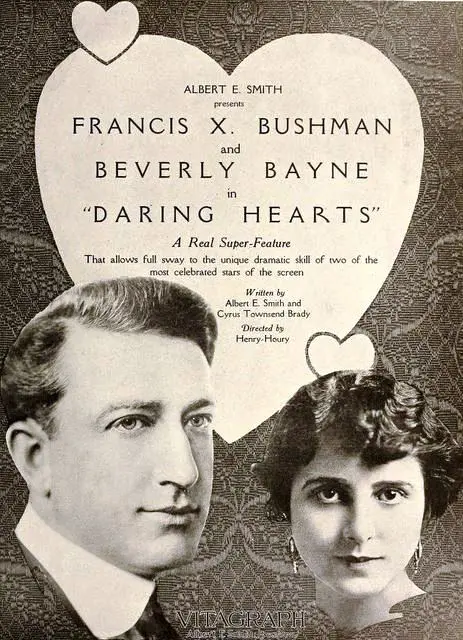
Their journey does not end with the armistice. Seeking a definitive break from the scarred landscapes and haunting memories of Europe, Louise and Hugh embark on a transatlantic voyage to Hoboken, New Jersey. This final act of relocation underscores a universal longing for a fresh start, a desire to leave the trauma behind and build a new life in a land synonymous with opportunity and peace. It's a concluding note that offers a glimmer of optimism, a hard-won peace for two individuals who have endured the unimaginable. The theme of finding solace after profound struggle is a timeless one, echoing perhaps in the quiet resolutions of other melodramas of the era, though few would have had such a globally significant backdrop as Daring Hearts. One could compare the seeking of a new life, albeit under vastly different circumstances, to the aspirations seen in films like Home, Sweet Home, where the concept of hearth and sanctuary holds paramount importance.
The performances in Daring Hearts are archetypal of the silent era, relying heavily on exaggerated gestures, expressive facial contortions, and the power of the gaze to convey inner turmoil and fervent emotion. Beverly Bayne, as Louise, navigates a formidable emotional arc, transitioning from innocent victim to desperate lover to vengeful survivor with remarkable conviction. Her wide, pleading eyes and dramatic hand movements speak volumes without uttering a single word. Charles Kent, as Hugh, embodies the stoic American hero, his bravery conveyed through resolute posture and determined action. The effectiveness of their performances lies in their ability to articulate profound human experiences through a visual language that, while perhaps melodramatic by modern standards, was the very essence of early cinematic communication. The supporting cast, particularly L. Rogers Lytton as the Baron, delivers villainy with delicious relish, ensuring that the stakes feel genuinely high.
Directed by Albert E. Smith, who also contributed to the writing, the film demonstrates a keen understanding of pacing and visual impact. The transitions between intimate character moments and grand-scale action sequences (like the aerial battles or the prisoner escape) are handled with a surprising fluidity for a film of its vintage. Smith, along with his writers Baker and Brady, understood the power of the intertitle, not just as a means to convey dialogue, but to inject narrative drive and emotional resonance. The visual composition, while perhaps lacking the sophisticated camera movements of later eras, is effective in establishing mood and directing the viewer's attention to the crucial dramatic beats. The film's ability to maintain tension and emotional investment over its runtime is a testament to the foundational principles of cinematic storytelling being laid down by pioneers like Smith.
Daring Hearts stands as a fascinating document of its time, not merely as entertainment but as a cultural artifact reflecting the anxieties and aspirations of a nation grappling with a global conflict. Released in 1914, as the Great War was just beginning to unfurl its devastating impact, the film offered contemporary audiences a fictionalized, yet emotionally resonant, lens through which to process the unfolding tragedy. The depiction of German soldiers as aggressors, and the valorization of American intervention (even before the U.S. formally entered the war), speaks volumes about the prevailing sentiments and propaganda efforts of the era. It's a film that, perhaps unintentionally, captures the very essence of burgeoning nationalistic narratives and the construction of wartime heroism.
The film's exploration of sacrifice, particularly Louise's harrowing decision, resonates deeply with the real-life sacrifices being made by countless individuals during the war. While overtly melodramatic, the emotional core of her choice and subsequent vengeful act tap into profound human instincts for survival and protection. This theme of love enduring against impossible odds, of the individual's struggle within the vast machinery of war, is a timeless one. It's a narrative thread that can be seen woven through countless war films that followed, from the grand epics to the most intimate dramas. The stark reality of conflict providing the backdrop for an intense personal drama is something that Wounded Hearts and Wedding Rings, with its evocative title, would undoubtedly explore, albeit likely through a different dramatic lens.
In its entirety, Daring Hearts is more than just a silent film; it is a vibrant, if sometimes quaint, window into the formative years of cinema. It showcases the ambition of early filmmakers to tackle expansive themes, to create grand spectacles, and to elicit powerful emotional responses from their audiences without the benefit of synchronized sound. Its legacy lies not just in its dramatic plot or its historical context, but in its very existence as a pioneering effort to meld romance, adventure, and wartime drama into a cohesive, compelling whole. For those interested in the evolution of film, or simply captivated by stories of love and heroism against insurmountable odds, Daring Hearts remains a truly fascinating and often exhilarating watch. It reminds us that the fundamental principles of captivating storytelling, the yearning for connection, the struggle against adversity, and the triumph of the human spirit, have been at the heart of cinema since its very inception.
The film, with its sweeping narrative and indelible characters, offers a valuable lesson in the power of visual storytelling. It's a reminder that even in an age of rudimentary technology, the human imagination, coupled with a keen understanding of dramatic tension, could craft tales that resonated deeply. The journey of Louise and Hugh, from the initial brutal encounter to their hard-won peace in a new land, is a testament to the enduring appeal of epic romance and daring adventure. It solidifies Daring Hearts as a significant, albeit often overlooked, piece of early cinematic history, deserving of renewed appreciation.
IMDb 5.2
1936
Community
Log in to comment.