DbcultAccessing Vault...
Cult Review
Senior Film Conservator
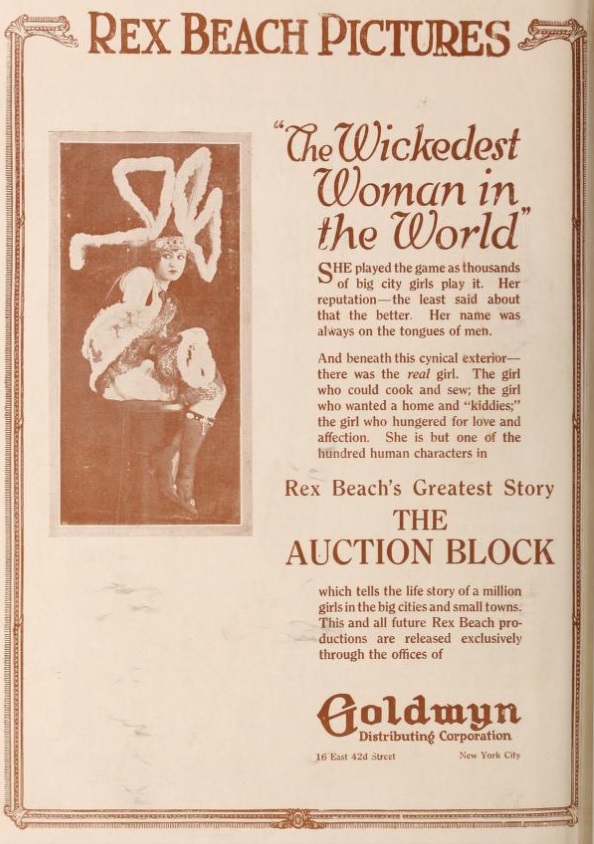
Stepping back into the flickering shadows of early cinema, one encounters a narrative tapestry woven with threads of aspiration, betrayal, and the enduring struggle between virtue and vice. The Auction Block, a cinematic artifact from an era defined by grand gestures and moral clarity, emerges not merely as a historical curiosity but as a potent commentary on human nature that resonates with surprising force even today. The film, adapted from Rex Beach's compelling novel and brought to the screen by Adrian Gil-Spear's vision, plunges us into a world where familial bonds are tested, and the allure of wealth proves a formidable adversary to integrity. It’s a compelling drama that lays bare the vulnerabilities of youth and the agonizing impotence of a parent witnessing their child's perilous journey into a moral quagmire.
At its core, The Auction Block revolves around the promising inception of a young man’s entrepreneurial endeavor. His father, a titan of industry whose own success is a testament to shrewdness and hard work, observes with profound satisfaction as his son embarks upon the seemingly straightforward path of establishing a shoe store. This act, ostensibly a rite of passage into independent manhood, quickly devolves into a complex moral maze. The father’s pride, initially unblemished, soon gives way to a gnawing apprehension as two formidable female figures converge upon his son’s nascent life, each bearing her own brand of manipulative intent. This setup immediately establishes a tension that is palpable, drawing the viewer into the emotional maelstrom that is about to engulf the young protagonist, making his journey less about business acumen and more about survival in a treacherous social landscape.
One of these figures is the father's estranged wife, a character whose re-entry into the family orbit is less about reconciliation and more about insidious influence. Her presence casts a long, unsettling shadow, complicating the son's emotional landscape and challenging his nascent understanding of loyalty and family. She represents a past wound reopened, a source of familial discord that threatens to corrupt the present. The other, a quintessential "gold-digger," is a master of seduction, her every glance and gesture a calculated maneuver designed to ensnare the unsuspecting youth in a web of material desire and emotional dependency. This dual threat, one from a figure of fractured family history and the other from a purely mercenary opportunist, creates a potent cocktail of peril for the young man, whose innocence and ambition render him particularly susceptible to their machinations. His new business, meant to be a symbol of his independence, ironically becomes the very stage for his moral trial.
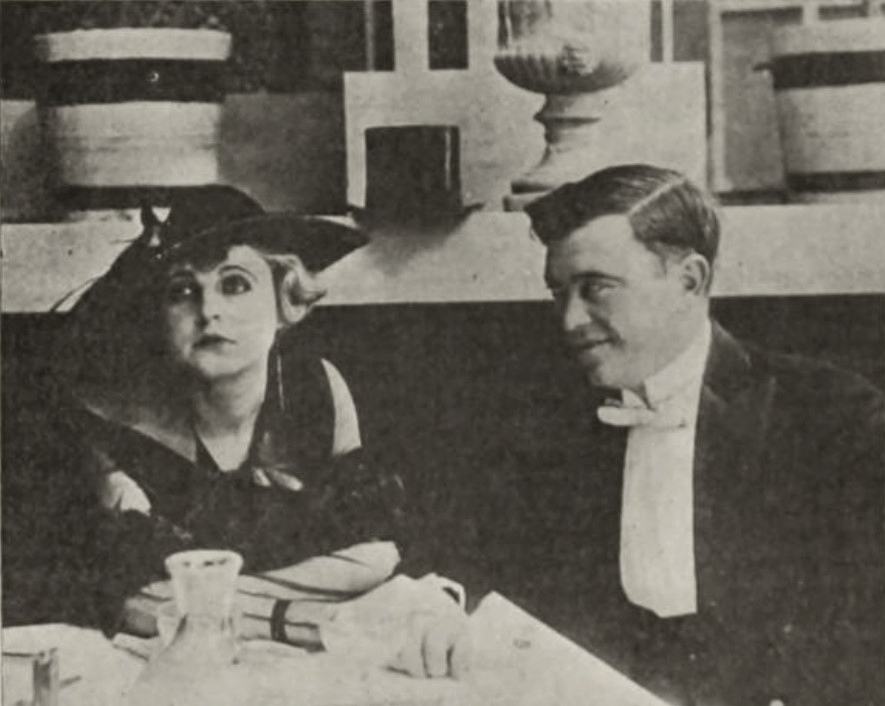
Perhaps the most poignant aspect of The Auction Block is the portrayal of the father’s agonizing position. A man of considerable means and influence, accustomed to controlling his world, he finds himself utterly powerless to intervene directly in his son's personal battles. His wealth, which can move mountains in the business realm and command respect in society, is rendered utterly useless in the delicate, treacherous terrain of his son’s personal choices. He is condemned to a passive role, a silent sentinel watching from the sidelines, his heart undoubtedly heavy with a mixture of fear, frustration, and desperate hope. This theme of paternal helplessness, the inability to shield one’s offspring from the harsh realities and predatory elements of the world, is a universal one, lending the film an emotional depth that transcends its silent origins. It invites the audience to empathize not just with the son’s predicament but with the father’s silent suffering, a testament to the film's nuanced character development and its understanding of the burdens of parenthood.
The father's character, likely embodied by Ned Burton, must navigate this emotional minefield with subtlety and gravitas. His internal conflict, the desire to protect juxtaposed with the necessity of allowing his son to forge his own path, creates a powerful dramatic tension. He can only offer guidance and support from a distance, hoping that the values he instilled will ultimately prevail against the cunning designs of those who seek to exploit his son's burgeoning success. This agonizing distance, this enforced non-intervention, makes his character a profound symbol of parental love tested by the harsh realities of life. It’s a portrayal that speaks volumes about the limits of power and the boundless nature of concern.
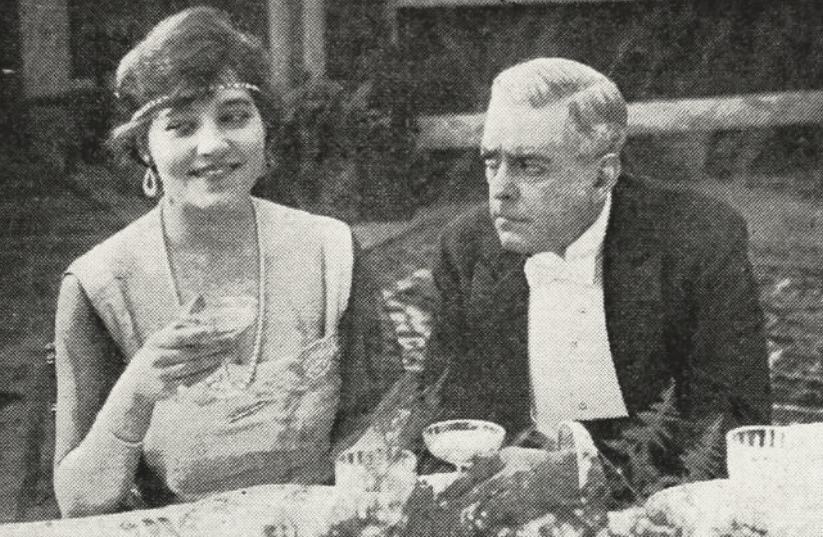
The success of a silent film hinges almost entirely on the expressive capabilities of its cast, and The Auction Block delivers admirably in this regard. Florence Deshon, Ned Burton, and Rubye De Remer, in particular, etch memorable performances that convey complex emotions without uttering a single word. Deshon, likely playing a pivotal role, navigates the emotional landscape with a nuanced grace that was characteristic of the era's leading ladies. Her ability to project inner turmoil or calculated charm through subtle gestures and facial expressions would have been a masterclass in silent acting, drawing the audience into her character's inner world with compelling sincerity. The very essence of silent film acting demanded an almost balletic precision in movement and an intense focus in facial expression, skills that Deshon undoubtedly possessed.
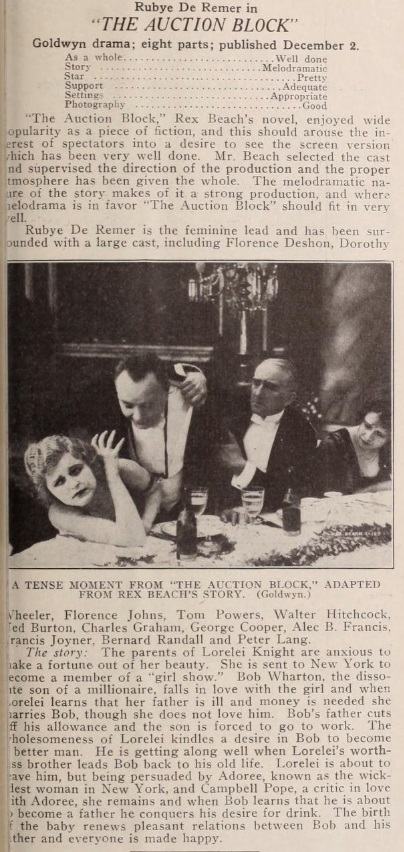
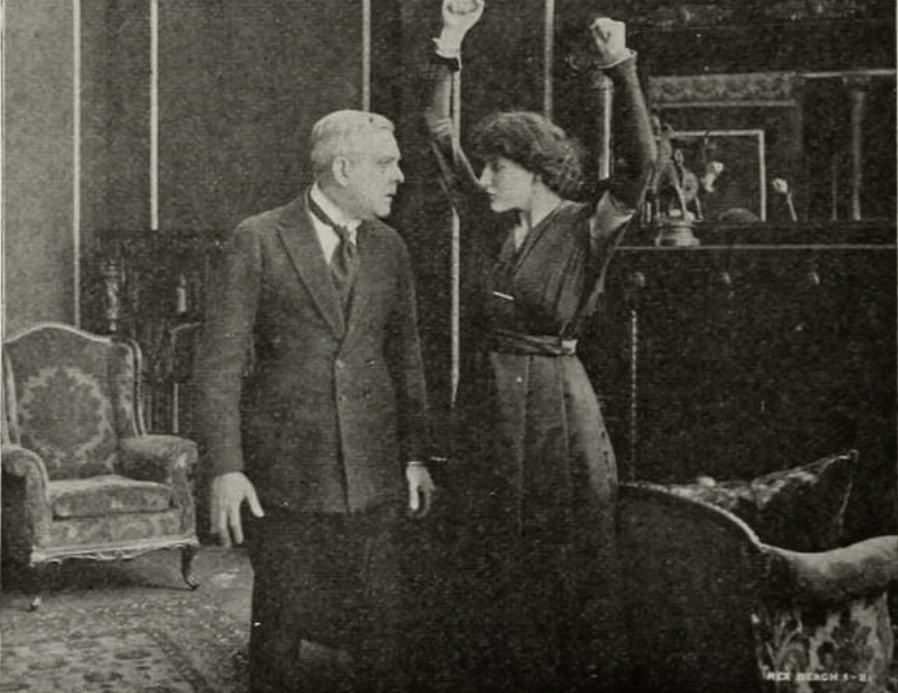
Ned Burton, as the anguished father, embodies the stoic suffering of a man trapped by circumstance. His performance would have been a study in restrained power, conveying a deep well of concern and frustration through his posture, the intensity of his gaze, and subtle shifts in his demeanor. One can almost feel the weight of his uncommunicated anxieties, his internal struggle palpable through the screen. Rubye De Remer, often cast in roles that demanded both beauty and a certain moral ambiguity, would have excelled as the seductive gold-digger. Her portrayal would have been crucial in making the character both alluring and subtly menacing, a siren whose superficial charm masks a ruthless ambition. The delicate balance between overt attraction and underlying threat is a testament to De Remer’s skill in conveying complex villainy. The interplay between these principal performers, particularly the silent battles of wills and the unspoken pleas, forms the dramatic backbone of the film, elevating it beyond a mere melodramatic potboiler into a psychological study.
The supporting cast, including Dorothy Wheeler, Charles E. Graham, George Cooper, Tom Powers, Bernard Randall, Walter Hitchcock, Alec B. Francis, Francis Joyner, Peter Lang, John De Lacey, and Florence Johns, would have been instrumental in building the rich tapestry of the film's world. Each character, no matter how minor, contributes to the overall atmosphere and helps to ground the central drama in a believable social context. Their collective presence would have provided the necessary backdrop against which the main conflicts unfold, adding layers of authenticity and realism to the unfolding events, making the son's journey feel all the more perilous and real.
The Auction Block, much like many films of its time, offers a fascinating window into the social anxieties and moral codes of the early 20th century. The narrative’s focus on wealth, inheritance, and the dangers posed by unscrupulous individuals speaks volumes about the societal concerns of an era grappling with rapid industrialization, burgeoning fortunes, and shifting class structures. The concept of a "gold-digger" was a prevalent trope, reflecting a real fear of individuals seeking to exploit wealth rather than earn it, particularly women who might use their charm to secure financial stability in a society that often limited their independent economic opportunities. This film, therefore, functions as a moral cautionary tale, warning against the deceptive appearances that often accompany material ambition and the perils of succumbing to superficial allure.
The re-emergence of the estranged wife also touches upon the complexities of family dynamics and the lingering resentments that can fester beneath the surface of polite society. Her actions are not just personal betrayals but also reflections of broader societal pressures and expectations placed upon women, particularly those who might feel disenfranchised or overlooked within patriarchal structures, seeking to regain a foothold or exact a form of retribution. These elements combine to create a film that is not just entertaining but also socially resonant, encouraging audiences to reflect on the moral compass guiding their own lives and the insidious ways in which ambition can corrupt even the closest bonds. The film subtly critiques a society where personal value could be, metaphorically, bought and sold, much like items at an auction.
While specific directorial credits for this film are not explicitly detailed in the provided information, the seamless flow of the narrative and the clarity of its emotional beats suggest a firm hand at the helm. Silent films, by their very nature, relied heavily on visual storytelling, with intertitles providing crucial dialogue and exposition. The effectiveness of The Auction Block lies in its ability to maintain tension and convey intricate plot developments through meticulous mise-en-scène, deliberate character blocking, and artful editing. The pacing would have been crucial in building the suspense around the son's predicament, allowing moments of quiet reflection for the father, and escalating the dramatic conflict as the predatory women tighten their grip. The use of close-ups to emphasize emotional states, wide shots to establish social settings, and parallel editing to heighten suspense would have been key tools in the director's arsenal.
The adaptation of Rex Beach's novel by Adrian Gil-Spear would have been a delicate balancing act, translating the nuances of prose into the visual language of cinema. Beach was known for his robust adventure stories and social dramas, often with strong moral undercurrents, making his work fertile ground for cinematic adaptation. Gil-Spear’s writing for the screen must have distilled the novel's essence, highlighting key character motivations and pivotal plot points to ensure the story remained coherent and impactful without spoken dialogue. This art of cinematic translation is often understated but is fundamental to the success of any adaptation, particularly in the silent era where every visual cue and intertitle had to count, acting as anchors for audience understanding and emotional engagement. Their collaboration effectively bridged the gap between literary depth and visual storytelling, a hallmark of successful silent adaptations.
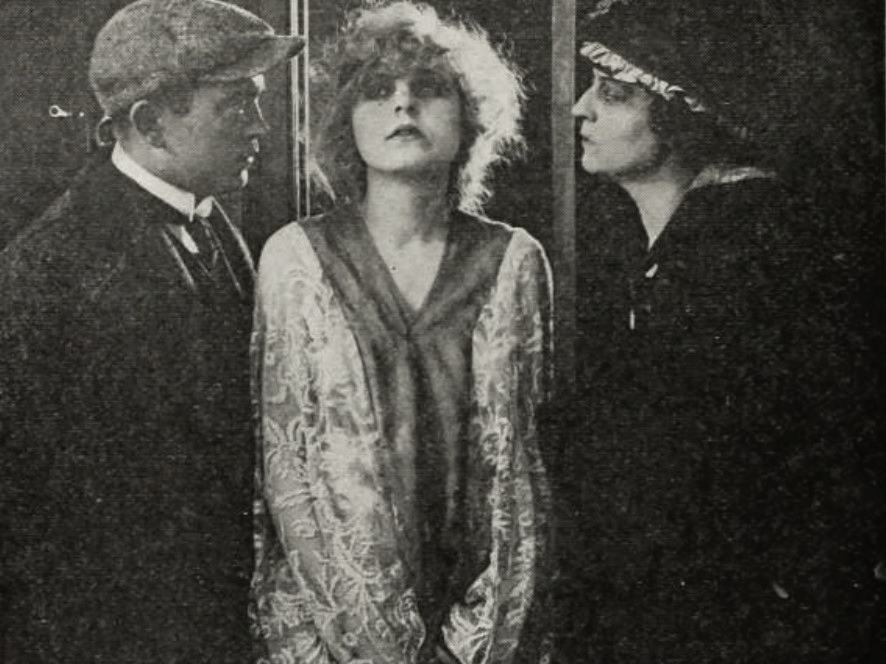
When considering The Auction Block within the broader context of silent cinema, parallels inevitably emerge with other films exploring similar themes of moral conflict, social maneuvering, and personal integrity. For instance, the struggle of a protagonist against external manipulative forces might draw comparisons to the intricate betrayals found in a film like The Iron Claw, where a web of deceit similarly ensnares its characters, testing their resolve against overwhelming odds. The dangers posed by alluring yet morally ambiguous female characters, a common trope reflecting societal anxieties about female agency and power, resonate with the complexities seen in films such as Her Life and His or even the more direct cautionary tales like The Gilded Spider, both of which explore the precariousness of reputation and the seductive allure of material gain at the cost of virtue. These comparisons highlight a prevailing societal concern about moral corruption and the fragility of innocence in the face of temptation.
The theme of a parent's helplessness in the face of a child's choices, while perhaps not the central focus of every contemporary film, certainly finds echoes in the emotional gravitas of dramas like Not Guilty, where familial bonds are strained under the weight of moral dilemmas and personal accountability. Even films with seemingly disparate plots, such as Such a Little Queen, often share an underlying current of characters navigating societal expectations and personal desires, albeit in different registers of comedic or dramatic intensity. The exploration of an individual's journey from innocence to experience, fraught with temptations and moral ambiguities, connects The Auction Block to a lineage of character-driven silent dramas that sought to examine the human condition with earnestness and often, a touch of poignant melodrama.
The psychological intensity of the father’s plight, standing by as his son faces what feels like an existential "auction block" for his soul, could be seen in the vein of other films where characters are forced to make agonizing decisions under duress, such as The Captive or A Man's Law, where personal agency and moral fortitude are rigorously tested against external pressures. These comparisons highlight not only the recurring motifs within silent cinema but also the enduring power of these narratives to explore universal human struggles, irrespective of the technological limitations of their creation. They demonstrate that the fundamental questions of morality, loyalty, and self-preservation have been a constant source of dramatic inspiration throughout cinematic history.
Moreover, the film’s portrayal of a young man entering the business world and facing moral challenges is a narrative archetype that recurs throughout cinematic history, transcending genres and eras. One might draw a subtle connection to the aspirational yet perilous journeys depicted in films like The Senator, where public life brings its own set of trials and temptations, mirroring the private struggles faced by the protagonist of The Auction Block. The exploration of a character's integrity being put to the test, often by the very forces of ambition and social climbing, serves as a powerful thread connecting these disparate narratives, reinforcing the timelessness of such human dramas and their capacity to reflect universal experiences of moral challenge and growth.
In an age dominated by CGI and surround sound, revisiting a film like The Auction Block might seem like a journey into a bygone era. Yet, its themes of manipulation, greed, familial loyalty, and the struggle for moral autonomy remain as pertinent today as they were over a century ago. The silent era, with its reliance on visual storytelling and emotional exaggeration, often stripped narratives down to their essential human conflicts, making their core messages remarkably resilient and universally accessible. The film serves as a powerful reminder that the human heart, with its capacity for both great virtue and profound venality, has changed little over time, and the challenges of navigating a world fraught with temptation are eternal.
The craft involved in bringing such a story to life without spoken dialogue is truly remarkable. The nuanced performances, the careful staging, and the evocative use of intertitles all contribute to a compelling experience that transcends the perceived limitations of the medium. For enthusiasts of silent cinema, and indeed for anyone interested in the evolution of storytelling, The Auction Block offers a rich, engaging, and thought-provoking experience. It compels us to consider the prices we pay for ambition, the insidious nature of manipulation, and the enduring power of a parent’s love, even when that love is expressed through silent, agonizing observation. It stands as a powerful testament to the fact that compelling drama and profound human insight do not require a soundtrack, only a story well told and emotions authentically portrayed, proving that the silent screen could speak volumes to the human soul.
IMDb 4.5
1920
Community
Log in to comment.