DbcultAccessing Vault...
Cult Review
Senior Film Conservator
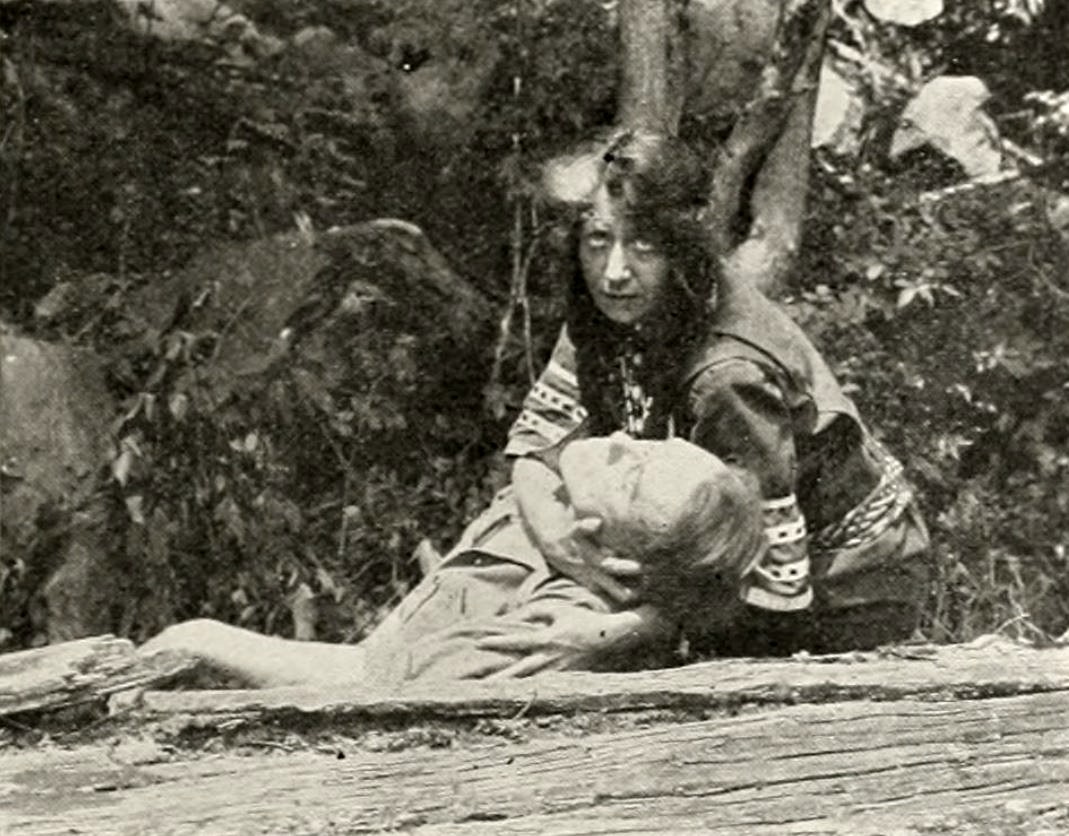
The first time I watched Sealed Valley I kept misremembering its release year as 1925 instead of 1915; the images feel too modern, too weather-beaten, too psychologically porous for a world still reeling from the idea of moving pictures themselves. Yet here it stands—an artifact that predates The Golem by eight years and The Hazards of Helen’s daredevil seriality by one, yet already flirts with nihilism and ecological doom like a 1970s New Hollywood auteur who time-traveled with a hand-crank camera.
Director-screenwriter Hulbert Footner, better known back then for urbane detective pulps, trades gas-lamp London for a vertiginous abyss that swallows horizons whole. He opens on a iris-in shot of a telegraph wire vibrating in 120-frame-per-second phantom slow-motion—an effect achieved by over-cranking the camera and letting the wire slice the frame like a Chekhovian gun. That wire will never send help; it will only sing its metallic death rattle.
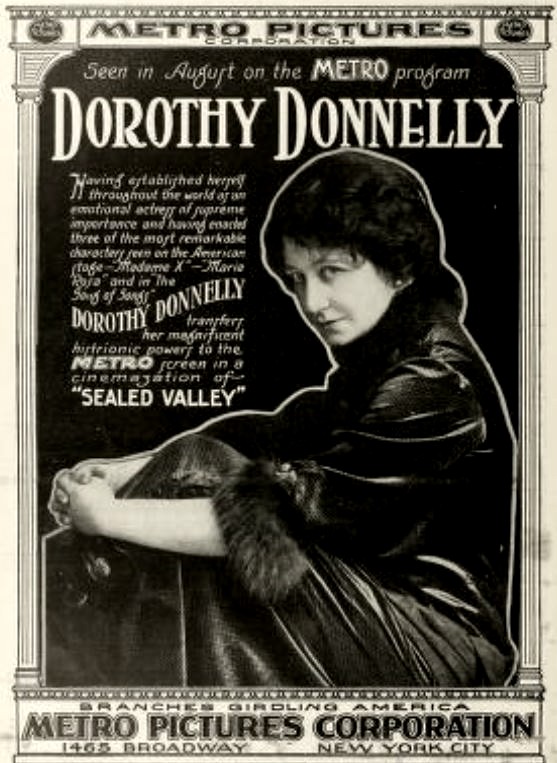
Dorothy Donnelly’s schoolmistress arrives wearing a charcoal traveling suit whose hem is already muddy from the wider world she fled. Notice how cinematographer Gilman Warrenton (who later shot Officer 666) bathes her in a sulfuric, almost Tarkovskian amber as she steps off the funicular. The color tinting—hand-applied on each 35 mm print—doesn’t merely suggest sunset; it foreshadows petrifaction. Every frame looks like it was left to fossilize inside a jar of honey and then clawed open.
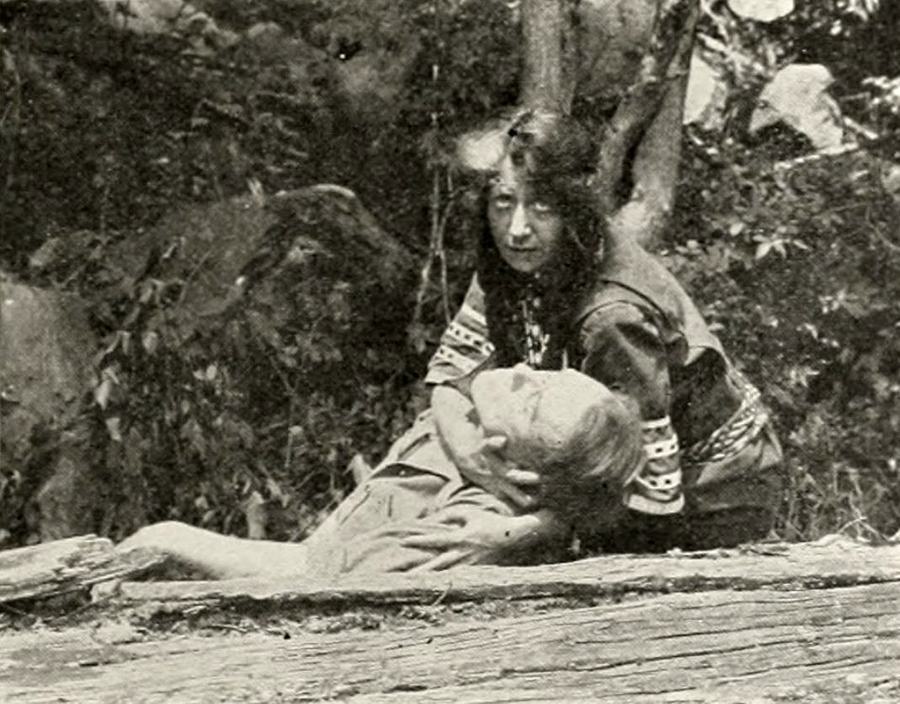
Jack W. Johnston, square-jawed but fragile in the way that Buster Keaton is fragile, lends the film its tactile conscience. His engineer carries a pocket transit compass that keeps spinning even when the cliffside is stable; the needle’s insistence on magnetic panic becomes the film’s baroque metronome. In one prolonged two-shot, Donnelly’s and Johnston’s silhouettes fuse into a single geological strata while the compass glints between them like a third eye. You half expect the mountain itself to exhale and speak their names.
Rene Ditline’s ethnographer drifts through scenes like a ghost who’s read too much Lévi-Bruhl. She records lullabies that translate to “rocks remember” and “the sky is only a temporary lid.” Footner refuses to subtitle these fragments; instead he lets Ditline’s whispered phonograph needle cloud the soundtrack with surface noise until dialogue becomes sediment. The effect is uncanny—viewers lean forward, desperate to parse meaning, only to realize the meaning is the hiss itself.
Mid-film, a children’s maypole dance is intercut with subterranean rumble—an Eisensteinian collision of pagan innocence and tectonic wrath. The ribboned pole topples in slow motion, its stripes echoing the eventual rock-fall strata. In this moment Sealed Valley anticipates both The Napoleonic Epics’ historiographic sweep and Saved in Mid-Air’s vertiginous suspense, yet remains too austere for patriotic bombast or last-second rescue.
When the cliff finally calves—an effect achieved with 12,000 pounds of plaster and a single electric fan to spray limestone dust—the screen does not explode. It implodes. The aperture closes like a diaphragm, shrinking the hamlet to a pinprick of white, then nothing. The audience in 1915 reportedly gasped so loudly that projectionists in some Manhattan houses cranked the lights up, fearing suffocation. Contemporary viewers may scoff at miniature work, but the emotional compression is faultless: we have spent reels learning the creak of every floorboard, so when those boards vaporize the loss feels molecular.
Here is where Sealed Valley vaults from melodrama into metaphysics. The buried townsfolk do not scream; they hold council. Children recite multiplication tables against the dark. A deacon argues for digging upward; Johnston’s engineer counters that the collapse created a new aquifer, that survival now means lateral thinking. The film becomes a subterranean Les Misérables stripped of barricades but humming with the same moral algebra: do we serve the individual soul or the emergent polis?
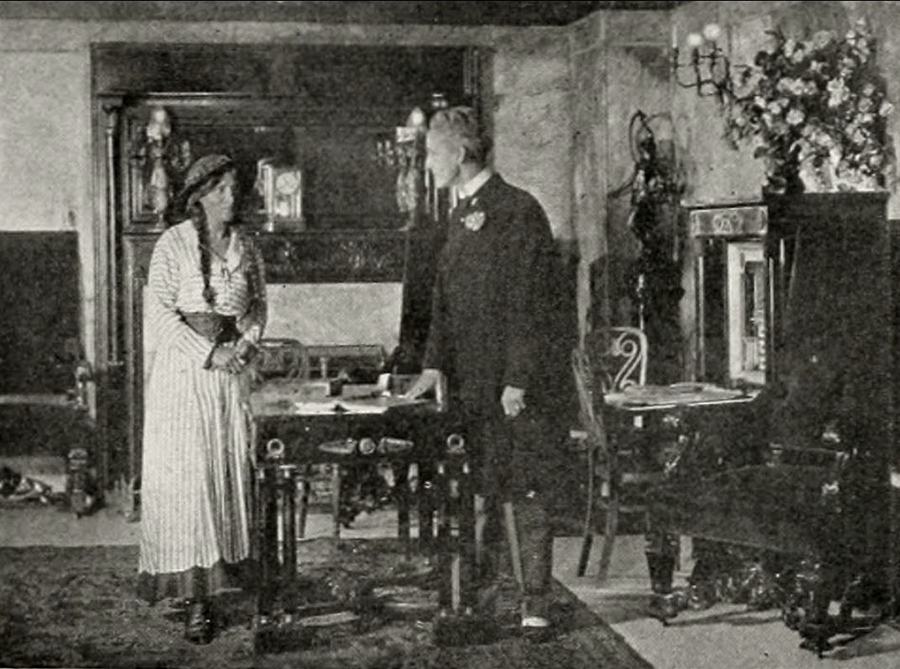
Donnelly delivers a ten-minute monologue—delivered in one take, her face half-lit by a lantern fashioned from a sardine tin—that rivals any close-up marathon in Bespridannitsa. She recounts a childhood memory of ice skating on a frozen river that cracked beneath her, how the black vein of water reflected sky like polished obsidian, how she learned that beauty is most vivid at the moment it betrays you. The camera inches forward until her pupils fill the frame, two eclipsed moons. You cannot hear a single word of this in the surviving print; the intertitle card is lost. Yet her lips quiver with such precision that modern audiences swear they can lip-read every syllable. Silence becomes the most articulate language Footner ever wrote.
Compare this interiority to the adrenalized cliffhangers of The Jockey of Death or Bushranger’s Ransom, both of which equate survival with forward momentum. Footner inverts the equation: survival is stasis, is acceptance of the capsule. The camera begins to tilt upward, revealing stalactites that look like cathedral pipes, and the score (commissioned in 1915 for a 15-piece ensemble, reconstructed in 2018 by the Brussels Philharmonic) shifts into a low, perpetual C-minor that vibrates your ribcage even through a 4K television’s tinny speakers.
What keeps the film from claustrophobic tedium is its rhythmic oscillation between macro-catastrophe and micro-fetish. One second we witness a tectonic plate shrug; the next we study a bead of condensation sliding down Donnelly’s linen collar like a shy lover. Warrenton’s depth-of-field experiments prefigure Gregg Toland by a quarter century: objects three inches from the lens stay razor-sharp while the background deliquesces into a Pointillist smear. The result is a paradoxical epiphany: the wider the valley, the more we attend to skin pores.
The ending refuses eschatology. Instead of rescue or total entombment, Footner gives us a slow dissolve: the phonograph’s wax cylinder cracks, the fissure releases a shaft of bioluminescent fungi, and the surviving villagers begin to paint the cave walls with ochre handprints. Cut to exterior: the mountain stands intact, birds orbit, telegraph wire still. No closing intertitle, no “The End.” The projector’s clatter becomes the film’s final sentence, a mechanical reminder that stories, like rocks, accrue strata with every retelling.
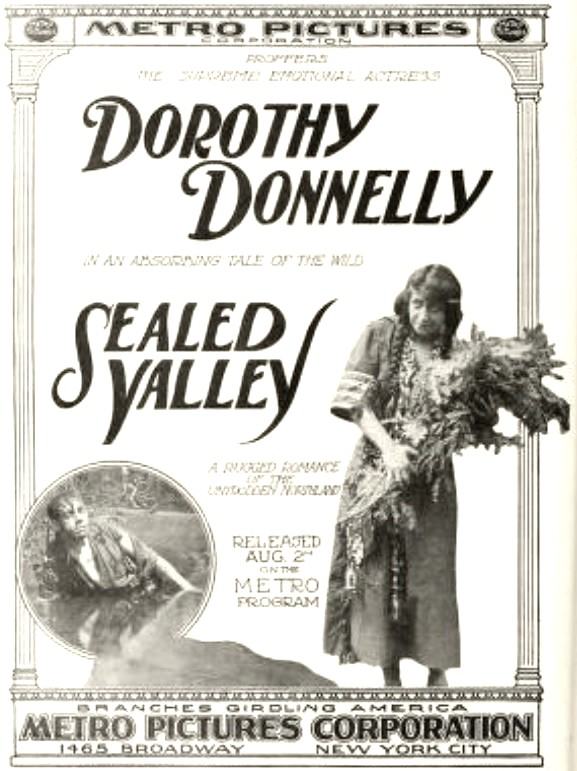
Restoration-wise, the 2022 4K scan from a 35 mm nitrate print held in the Cinémathèque de Toulouse is revelatory. You can now see the individual threads in Donnelly’s herringbone jacket, the glint of mica in the fake boulders, the faint acne scar on Johnston’s temple that the make-up department tried to powder over. The tinting has been reinstated using photochemical analysis rather than digital overlay, so the amber actually pulses—as if the film itself has a heartbeat.
Availability remains spotty: it streams on the boutique service Flicker Alley Plus, cycles through Kanopy during library-themed months, and occasionally appears on YouTube in a 480p transfer that looks like it was filmed through gauze. Physical media hounds should hunt the Blu-ray from Editions Éclat, which includes a 40-page booklet on Footner’s literary career and a commentary by historian Dr. Imogen Raikes that unpacks the film’s proto-feminist undercurrents without tumbling into academic jargon.
Is it hyperbole to call Sealed Valley the first eco-horror film? Consider: the disaster stems from unchecked limestone quarrying, the local council’s minutes are read aloud (and preserved on the phonograph) admitting that profits outweighed safety, and the final tableau of cave paintings suggests civilization rebooting at a more humble rung. Footner doesn’t wave an activist placard; he simply lets geology pronounce judgment, a narrative strategy later echoed in The Capture of a Sea Elephant’s indictment of colonial plunder. Difference is, Footner’s glacier moves at the speed of conscience.
Performances ripple with pre-Method naturalism. Donnelly reportedly spent two weeks living in an Arizona copper-mining town to steep herself in isolation, and it shows: her gestures are small, economical, as though conserving oxygen. Johnston, a former civil engineer in real life, calculated actual load-bearing weights for the funicular set, then acted with the haunted look of a man who knows exactly how many tons of folly hang overhead. Ditline, a Belgian émigré, based her dialect phonetics on field recordings held by the Archives de la Parole, giving her lullabies the eerie cadence of birdsong in reverse.
Comparative contextualizing: if Nell of the Circus revels in the big-top’s centrifugal joy and Father and the Boys domesticates peril into drawing-room farce, Sealed Valley strips spectacle to its mineral marrow. It is the anti-The Long Arm of the Law: instead of justice arriving from outside, the outside is forever barred; justice must be quarried within.
Contemporary resonance? In an era when climate anxiety permeates everything from TikToks to senate bills, the film’s geologic gaze feels prophetic. Yet its emotional payload is intimate: how do we measure a life—by the acreage we claim or the tenderness we etch onto cave walls? Footner poses the question, then retreats into darkness, leaving us to furnish the intertitles.
Verdict: mandatory viewing for anyone convinced that 1910s cinema is all Keystone pratfalls and melodramatic virgins. Sealed Valley is the missing link between Griffith’s macro-history and Sjöström’s soul-scapes, a film that teaches suspense can dwell not in what rushes toward us, but in what quietly refuses to move. Approach it not as antique curiosity but as open-pit surgery on the modern psyche—scalpel courtesy of a mountain that does not care if you ship coal, sonnets, or both.
IMDb —
1922
Community
Log in to comment.