DbcultAccessing Vault...
Cult Review
Senior Film Conservator
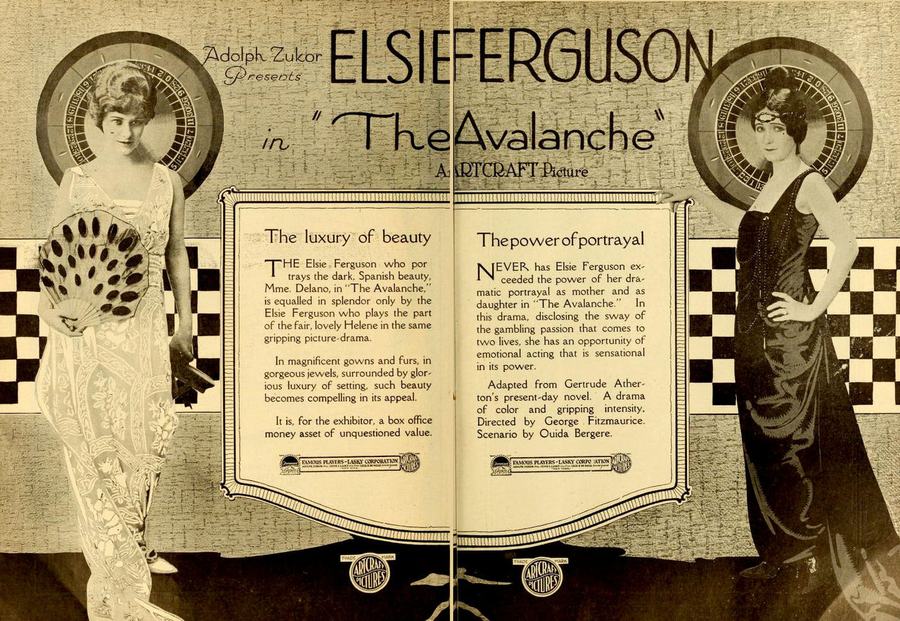
The cinematic landscape of 1919, a period brimming with nascent narrative sophistication, gifted us The Avalanche, a searing examination of inherited vice and the Sisyphean struggle against one's own destructive tendencies. This silent drama, penned by the insightful Ouida Bergère and Gertrude Atherton, delves into the harrowing psychological terrain of a mother whose own gambling addiction casts a long, ominous shadow over the innocent path of her daughter. It's a film that resonates with a timeless poignancy, exploring themes of fate, free will, and the often-unseen burdens we pass down through generations, long before modern psychology codified such concepts.
At the heart of this compelling narrative stands Elsie Ferguson, whose portrayal of the afflicted mother is nothing short of mesmerizing. Ferguson, a luminary of the silent screen, brings a profound depth to a character grappling with an internal maelstrom. Her expressive eyes and subtle gestures communicate volumes, painting a portrait of a woman torn between the allure of the high stakes table and the profound, instinctual desire to shield her offspring from the same devastating path. It’s a performance that transcends the limitations of the medium, speaking directly to the viewer's empathy and understanding of human frailty. Her Helene Chester isn't merely a caricature of addiction; she's a complex individual, capable of both immense love and crushing self-sabotage, a duality Ferguson navigates with exceptional grace and power.
The film’s brilliance lies not just in its central performance but also in its nuanced exploration of addiction as a corrosive force that transcends individual will, hinting at a generational curse. The plot meticulously builds the tension, slowly revealing how the mother's past transgressions and present struggles begin to manifest in her daughter's nascent inclinations. This isn't a simplistic moral fable; it’s a sophisticated study of how environmental factors, coupled with potential genetic predispositions, can conspire to create a cycle of behavior that feels almost inescapable. The very title, The Avalanche, evokes this sense of an unstoppable, destructive force, gathering momentum and threatening to engulf everything in its path.
Director Frank Lloyd, though uncredited in the prompt, was a master craftsman of the era, and his invisible hand guides this narrative with a sure touch. The visual storytelling, a hallmark of the silent era, is particularly effective here. Close-ups on Ferguson's face convey unspoken anguish, while wider shots establish the opulent yet suffocating environments of the gambling dens and the gilded cages of society life. The contrast between these worlds – the chaotic, adrenaline-fueled despair of the casino and the seemingly serene, yet equally perilous, domestic sphere – is starkly drawn. The film uses visual metaphors to underscore its themes, perhaps a spinning roulette wheel mirroring the dizzying descent into debt, or the flickering lights of a card game reflecting the precariousness of fortune.
The supporting cast, including William Roselle, Lumsden Hare, and the formidable Warner Oland, contribute significantly to the film's texture. Roselle likely plays a figure of moral rectitude or perhaps a potential savior, providing a counterpoint to the mother's destructive tendencies. Hare and Oland, both seasoned actors, would have brought gravitas and menace respectively to their roles, embodying either the temptations or the consequences of the gambling world. Zeffie Tilbury, known for her strong character portrayals, would have added another layer of authenticity to the ensemble, perhaps as a sympathetic observer or a stern voice of reason. Each actor, through their silent expressions and physical presence, plays a crucial part in building the world and escalating the emotional stakes.
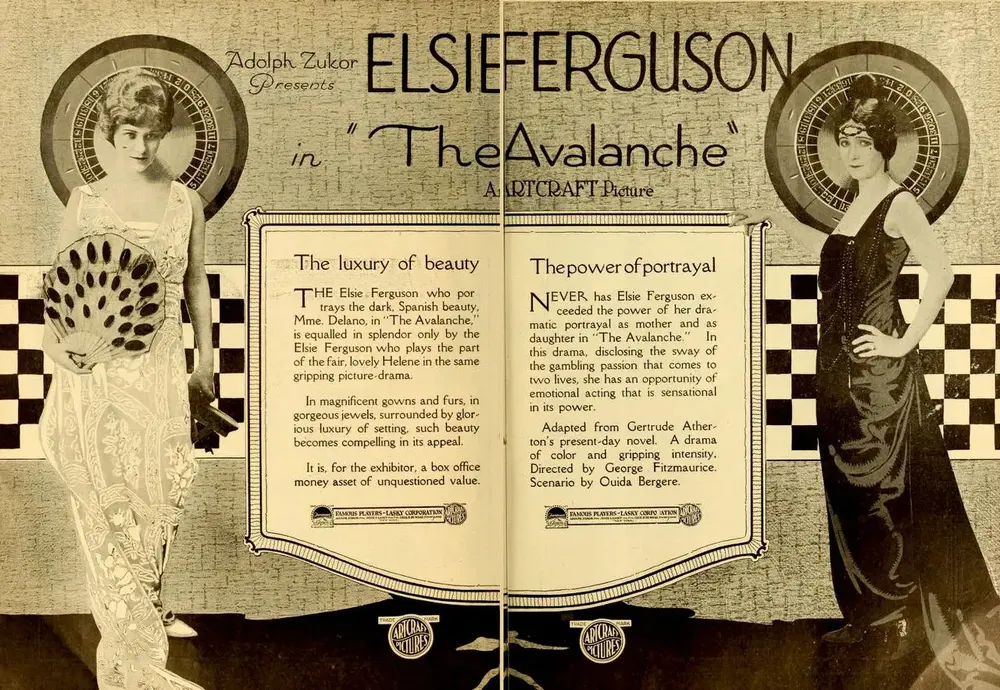
Comparing The Avalanche to other films of its time reveals its unique place. While films like Kinkaid, Gambler also explored the perils of the gambling underworld, The Avalanche distinguishes itself by focusing less on the thrill or mechanics of the game and more on the profound psychological and familial repercussions of addiction. It’s a drama that prioritizes the internal landscape of its protagonist, making it a more introspective and emotionally resonant piece. The generational aspect also sets it apart, prefiguring later cinematic explorations of inherited trauma and cyclical behavior. One might even draw parallels to the tragic inevitability sometimes found in Shakespearean adaptations like The Life and Death of King Richard III, where characters seem fated to their doom, though here the 'fate' is more a consequence of human weakness than royal ambition.
The film's exploration of maternal love, a powerful driving force, adds another layer of complexity. The mother's realization that her daughter is mirroring her own dangerous tendencies ignites a desperate, almost primal urge for redemption. This isn't merely about personal salvation; it's about breaking a potentially destructive chain, a fight not just for herself but for the future of her child. This struggle elevates the narrative beyond a simple cautionary tale, transforming it into a profound meditation on sacrifice and the enduring power of a mother's bond. We see echoes of this fierce protective instinct in films like The Undying Flame, where a character's passion or devotion drives them through immense hardship, albeit in a different context.
The themes presented in The Avalanche remain remarkably relevant today. Addiction, in its myriad forms, continues to be a pervasive societal issue, and the idea of generational patterns of behavior is a cornerstone of modern psychological thought. The film, in its silent, eloquent way, was tackling these complex issues over a century ago, demonstrating the prescience of its writers, Ouida Bergère and Gertrude Atherton. Their script avoids simplistic moralizing, instead opting for a nuanced portrayal of human struggle, a testament to their keen understanding of the human condition. It’s a narrative that challenges the viewer to consider not just the individual caught in the throes of addiction, but also the ripple effect it has on those closest to them, particularly the vulnerable.
Watching The Avalanche in the 21st century offers a unique window into the anxieties and moral quandaries of a bygone era, yet it feels startlingly contemporary in its emotional core. It reminds us that while the external trappings of society may change, the fundamental struggles of the human spirit—the battle against self-destructive impulses, the yearning for connection, the desire to protect one's progeny—remain constant. The film asks profound questions about responsibility, inheritance, and the possibility of breaking free from a destiny seemingly predetermined by one's past. The silent screen, often dismissed as primitive, here proves itself a powerful conduit for deep emotional and psychological exploration, relying on the sheer skill of its performers and the evocative power of its visual language.
Furthermore, the film's subtle commentary on societal pressures and the constraints placed upon women in that era adds another layer of interpretive richness. Gambling, often a masculine vice, here ensnares a woman, possibly as an escape from the strictures of her life or the ennui of her social standing. This perspective provides a less common, yet equally valid, dimension to the addiction narrative. It’s not just a personal failing but potentially a symptom of larger societal discontents, a silent scream against the confines of expectation. This complexity elevates it beyond a mere melodramatic potboiler into a work of genuine artistic merit, inviting repeat viewings and deeper analysis.
In conclusion, The Avalanche stands as a compelling testament to the power of early cinema to tackle weighty, enduring themes with remarkable sensitivity and psychological insight. Elsie Ferguson’s performance alone is worth the price of admission, a masterclass in silent acting that speaks volumes without uttering a single word. It’s a film that compels reflection, a powerful reminder of the insidious nature of addiction and the profound, often challenging, journey toward breaking cycles of harm. For anyone interested in the foundational works of dramatic cinema, or indeed, the timeless struggle of the human spirit against its own demons, this 1919 classic remains an essential, thought-provoking watch. Its legacy is not just in its historical significance, but in its continued ability to resonate with audiences, offering a mirror to our own vulnerabilities and hopes for redemption.
IMDb 5.4
1929
Community
Log in to comment.