DbcultAccessing Vault...
Cult Review
Senior Film Conservator
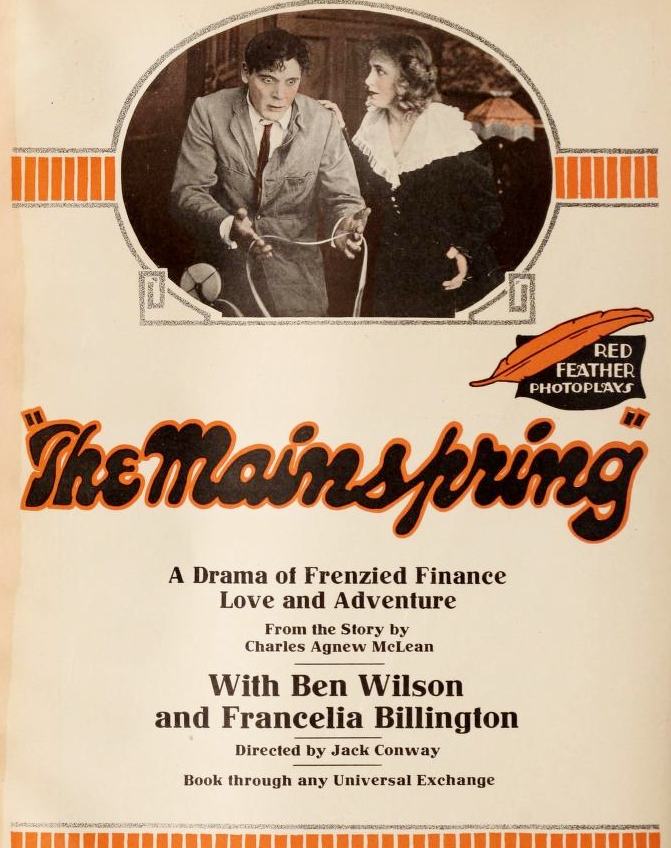
The flickering canvas of early cinema often served as a grand stage for narratives of high stakes, moral fortitude, and the relentless pursuit of justice. In this venerable tradition, The Mainspring emerges as a particularly compelling artifact, a silent film from 1914 that, despite its age, resonates with a surprising contemporary relevance through its exploration of corporate malfeasance, identity deception, and the triumph of integrity over avarice. This isn't merely a quaint relic; it's a vibrant illustration of nascent filmmaking's capacity for intricate storytelling and character development, powered by the sheer force of visual expression and the dramatic capabilities of its performers.
At its core, The Mainspring plunges us into the tumultuous world of Jesse Craven, a financial magnate whose sudden, severe illness sends ripples of apprehension through the market. His condition, shrouded in a deliberate cloak of secrecy, becomes the nexus of intrigue. The press, ever hungry for a scoop, dispatches Lawrence Ashmore, a young reporter whose ambition is matched only by his gumption. Ashmore’s assignment: penetrate the formidable defenses around the ailing financier and secure an exclusive. What follows is a delicious twist of fate, a classic mistaken identity scenario that propels the narrative into a whirlwind of escalating peril and unexpected heroism. The film, in its silent eloquence, manages to convey the palpable tension of these early moments with remarkable clarity, a testament to the directorial choices and the expressive power of the actors.
Ashmore's arrival at the Craven estate coincides with the anticipated return of Jesse's son, Larry. A case of mistaken identity, orchestrated by a simple chauffeur, casts Ashmore into the role of the younger Craven. This initial error, however, is swiftly corrected by the perspicacious Edith, Jesse’s niece, and Richard Creelman, a family friend. Recognizing Ashmore is not Larry, they, in their fear of journalistic intrusion, take him prisoner. This moment serves as a pivotal turning point, transforming Ashmore from an observer into an unwilling participant in a much larger, more sinister drama. The film's early pacing, a rapid succession of events, effectively builds suspense, reminiscent of other fast-paced melodramas of the era like The Jockey of Death, which also relied on quick plot developments to engage its audience.
The true architect of the unfolding chaos is revealed to be Shackleton, Jesse Craven’s erstwhile confidential secretary, now in league with the unscrupulous brokers Farnum and Sharp. Their nefarious objective: to dismantle the Craven financial empire, enriching themselves at the expense of thousands of unsuspecting stockholders. The kidnapping of the real Larry Craven is but one piece of their elaborate scheme. It is against this backdrop of corporate conspiracy and personal jeopardy that Ashmore is presented with an extraordinary proposition by Creelman and Ramsdale, Craven's broker: impersonate Larry Craven for a substantial sum, thereby buying time and potentially thwarting the conspirators. Ashmore, perhaps swayed by the allure of the challenge, the promise of reward, or perhaps a burgeoning sense of duty, accepts. His agreement sets in motion a chain of events that will test his mettle and forge an unexpected bond with Edith, whose initial suspicion gradually gives way to admiration and affection.
As Ashmore assumes the mantle of Larry, Farnum and Sharp, emboldened by their perceived control over the real heir, unleash a furious assault on the stock market. The Craven interests begin to falter, teetering on the precipice of ruin. The film brilliantly uses intercutting between the serene facade of Ashmore's impersonation and the frantic chaos of the stock exchange, a technique that, even in its early form, effectively conveys the dual realities at play. To maintain their intricate bluff, a yachting cruise is announced for 'Larry' and his entourage. This seemingly innocuous trip, however, becomes another flashpoint for danger. Shackleton, ever the opportunist, orchestrates Ashmore’s second abduction, luring him from his own yacht and onto a vessel controlled by the conspirators. This sequence, with its maritime setting, adds a thrilling dimension to the narrative, reminiscent of adventure films like The Three Musketeers, which often utilized dynamic environments for their dramatic confrontations.
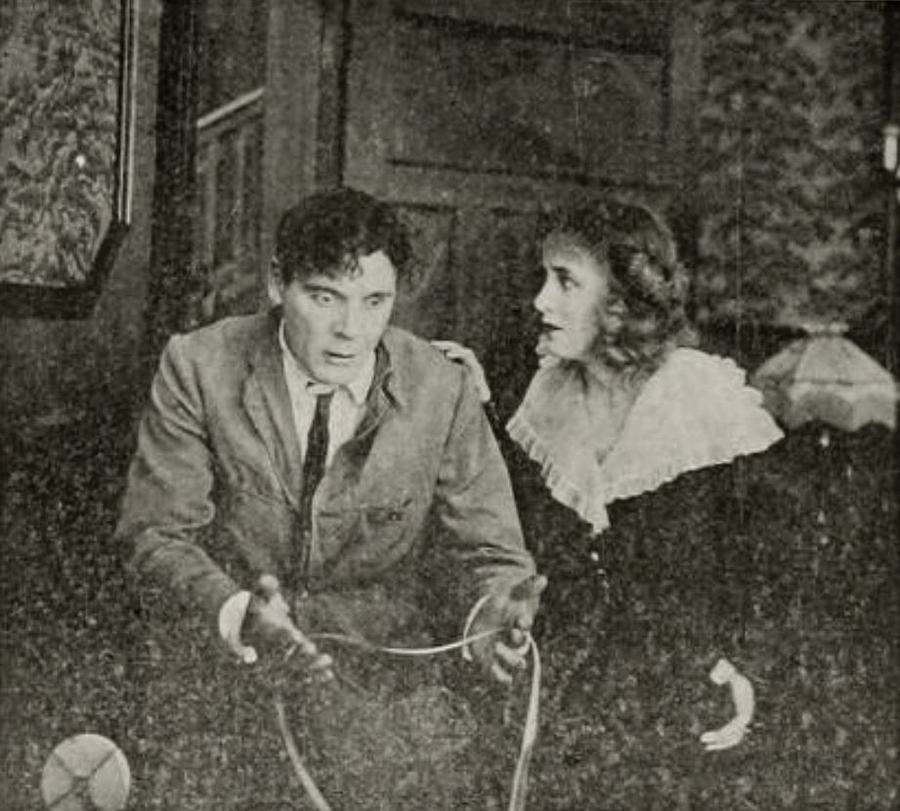
The high seas turn treacherous as a violent storm erupts, battering Shackleton's boat until it springs a leak, forcing all aboard to abandon ship. Ashmore, against all odds, survives the ordeal, washing ashore barely alive. Yet, his heroic struggle is misconstrued by Edith and the others, who, witnessing his disappearance amidst the chaos, conclude he has deserted them in their moment of greatest need. This misunderstanding fuels a palpable sense of despair, as Ramsdale and Creelman, convinced of their impending defeat, resolve to sacrifice their personal fortunes in a desperate bid to salvage Craven's interests. This selfless act underscores the film's underlying theme of loyalty and the ultimate value of honor over wealth. Meanwhile, Jesse Craven's health shows signs of improvement, but his financial hands are tied, his accounts controlled by the still-missing real Larry. The tension here is almost unbearable, a slow burn of impending doom that only heightens the eventual climax.
Just when all seems lost, Ashmore, a phoenix from the waves, reappears. Hitching a ride back to the Craven estate, he then races to the Stock Exchange, a whirlwind of determination. His dramatic entrance and decisive actions on the trading floor turn the tide, thwarting the conspirators' final maneuvers and saving the Craven fortune from utter collapse. This sequence is a masterclass in silent film dramatics, relying on swift cuts, intense facial expressions, and the sheer momentum of the narrative to convey the urgency and significance of Ashmore's intervention. It's a moment of pure cinematic catharsis, where the underdog, through sheer will and intelligence, reverses an seemingly irreversible fate. The rapid-fire resolution of the financial crisis echoes the dramatic turnarounds seen in other films of the period focused on socio-economic struggles, such as Patria nueva, though often with a more overt political undertone.
The confrontation that follows is equally electrifying. Farnum, seething with defeat, threatens Ashmore with arrest for impersonating a member of the Stock Exchange. Ashmore, however, stands defiant, delivering a stunning revelation: he is the son of a man Farnum ruined, and he possesses incontrovertible evidence that will send his adversary to jail. This twist, a personal vendetta intertwined with corporate espionage, elevates the stakes and provides a satisfying sense of poetic justice. It's a moment of profound personal triumph, solidifying Ashmore's transformation from a mere reporter into a true hero, much like the resolute protagonists in films of moral vindication such as The Victory of Virtue.
Concurrently, the real Larry Craven, having successfully escaped Bernice’s insidious attempts to drug him, makes his way back to the Craven household. His arrival is perfectly timed, his identity instantly recognized, just as Farnum, in a final act of desperation, prepares to shoot Ashmore. The dramatic tension is ratcheted to its maximum, culminating in Larry's timely intervention, preventing a tragic end to Ashmore’s heroic journey. The film masterfully resolves its multiple plot threads in this climactic sequence, showcasing the precision and impact that early filmmakers could achieve without spoken dialogue. Ashmore is then formally introduced to the real Larry Craven as the man who saved the family fortune. Witnessing the undeniable affection between Ashmore and Edith, Larry, with magnanimous spirit, offers Ashmore the position of manager of the Craven interests, a testament to his capabilities and integrity. Ashmore, of course, accepts, and in a deeply satisfying resolution, Edith accepts him as her life partner, cementing a future built on courage, love, and restored honor.
The performances in The Mainspring are, for their time, quite compelling. Ben F. Wilson, as Lawrence Ashmore, embodies the resourceful and morally upright hero with a nuanced blend of youthful ambition and burgeoning gravitas. His transformation from a mere journalist to a pivotal figure is conveyed through subtle gestures and powerful expressions, a hallmark of effective silent acting. Francelia Billington, as Edith, portrays a character who evolves from suspicion to deep affection, her emotional journey a key anchor for the audience. Thomas Jefferson, as the ailing Jesse Craven, and the supporting cast including Ed Brady, Wilbur Higby, and Henry Holland, contribute to a believable and engaging ensemble. The script, penned by Charles Agnew MacLean and William Parker, is remarkably intricate for the era, weaving together multiple layers of plot without losing coherence, a feat that would challenge even contemporary screenwriters. Its narrative complexity and moral clarity set it apart from many simpler narratives of its time, such as Miss Peasant, which focused more on character archetypes than elaborate plots.
Ultimately, The Mainspring is more than just a historical curiosity; it's a testament to the enduring power of narrative. It reminds us that tales of good versus evil, personal sacrifice, and the triumph of integrity are timeless. The film’s ability to build suspense, develop character arcs, and deliver a satisfying resolution, all without the benefit of spoken dialogue, is a powerful reminder of the artistic ingenuity of early cinema. It’s a compelling watch for anyone interested in the evolution of storytelling, the foundations of the thriller genre, or simply a well-crafted drama that holds its own a century later. Its themes of economic vulnerability and the fight against corporate greed remain startlingly relevant, echoing anxieties that persist even today. For those who appreciate the historical tapestry of film, The Mainspring offers a rich, engaging, and surprisingly sophisticated experience, demonstrating that the 'mainspring' of compelling cinema has always been a robust, well-told story.
IMDb 5.1
1933
Community
Log in to comment.