DbcultAccessing Vault...
Cult Review
Senior Film Conservator
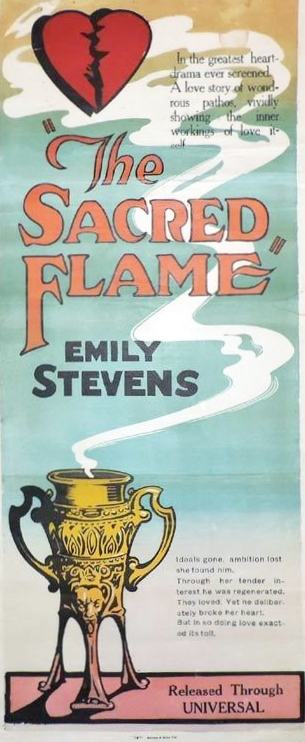
The Sacred Flame, a 1921 silent film, is a masterful exploration of the human experience, delving into the complexities of love, sacrifice, and the unforgiving nature of fate. With its rich, dark orange hues, the film's color palette sets the tone for a narrative that is at once poignant and thought-provoking. As we delve into the world of Rosalie Allen, a young high-school teacher played by Muriel Ostriche, we are met with a tapestry of emotions, woven from the very fabric of her being.
Rosalie's decision to reject the affections of Dr. Paul Duncan, played by Earl Schenck, in favor of devoting herself to the salvation of Lionel Brooks, is a pivotal moment in the film, one that sets in motion a chain of events that will forever alter the course of her life. As she finances his law-school education and provides unwavering support, Rosalie's selfless endeavors appear to yield a brighter future for the couple, until Brooks' encounter with the daughter of a wealthy banker precipitates a cataclysmic shift in his allegiances.
The film's exploration of the human condition is reminiscent of other silent classics, such as The Silent Mystery and Piccadilly Jim, both of which delve into the complexities of love and relationships. However, The Sacred Flame stands apart, its unique narrative and character development rendering it a masterpiece of the silent era. The dark orange hues that permeate the film's color palette serve as a poignant reminder of the devastating consequences of Brooks' actions, as he jilts Rosalie in favor of his new love interest.
As Rosalie's world crumbles, Dr. Duncan re-emerges, tenderly nursing her back to health and eventually winning her hand in marriage. This poignant turn of events is a testament to the enduring power of love, a theme that is expertly woven throughout the narrative. The yellow hues that accompany this shift in the narrative serve as a beacon of hope, illuminating the possibility of redemption and forgiveness. Meanwhile, Brooks belatedly realizes his ardent love for Rosalie, a sentiment that ultimately proves fatal, as he succumbs to a broken heart, a poignant testament to the devastating consequences of his earlier actions.
The film's use of sea blue hues serves as a poignant reminder of the emotional depth that underlies the narrative, a depth that is expertly explored through the characters' interactions and relationships. As we navigate the complex web of emotions that defines The Sacred Flame, we are met with a nuanced exploration of the human experience, one that is at once thought-provoking and deeply moving. The film's themes of love, sacrifice, and redemption are timeless, rendering it a masterpiece that continues to resonate with audiences today.
In comparison to other films of the era, such as His Parisian Wife and The Hayseeds Come to Sydney, The Sacred Flame stands apart, its unique narrative and character development rendering it a standout of the silent era. The film's exploration of the human condition is also reminiscent of The Fortune Teller and Legion of Honor, both of which delve into the complexities of love and relationships. However, The Sacred Flame is a masterpiece in its own right, a poignant tale of love and sacrifice that continues to captivate audiences with its timeless themes and nuanced character development.
As we reflect on the film's narrative, we are met with a complex web of emotions, woven from the very fabric of the characters' beings. The Sacred Flame is a film that defies easy categorization, its themes and characters resisting reduction to simple summaries or analyses. Instead, the film presents a nuanced exploration of the human experience, one that is at once thought-provoking and deeply moving. The dark orange hues that permeate the film's color palette serve as a poignant reminder of the devastating consequences of Brooks' actions, a testament to the enduring power of love and the unforgiving nature of fate.
In conclusion, The Sacred Flame is a masterpiece of the silent era, a poignant tale of love and sacrifice that continues to captivate audiences with its timeless themes and nuanced character development. As we navigate the complex web of emotions that defines the narrative, we are met with a nuanced exploration of the human experience, one that is at once thought-provoking and deeply moving. The film's use of yellow hues and sea blue hues serves as a poignant reminder of the emotional depth that underlies the narrative, a depth that is expertly explored through the characters' interactions and relationships. As a testament to the enduring power of love, The Sacred Flame remains a film that continues to resonate with audiences today, a masterpiece that will forever be etched in the annals of cinematic history.
IMDb —
1926
Community
Log in to comment.