DbcultAccessing Vault...
Cult Review
Senior Film Conservator
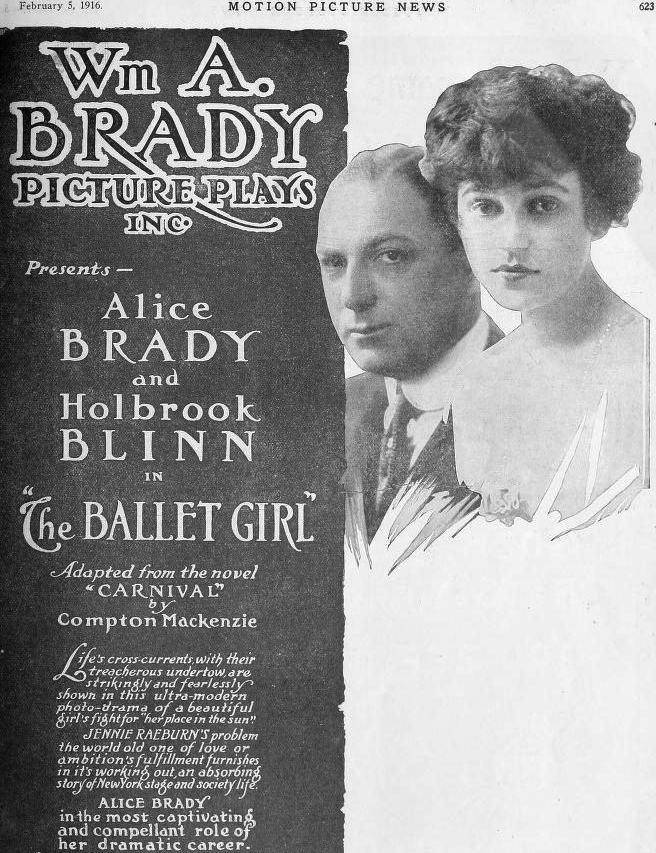
Step into the hushed grandeur of early 20th-century cinema, where the flickering images told stories with an eloquence that transcended spoken dialogue. Among the myriad cinematic offerings of 1917, The Ballet Girl emerges as a compelling narrative, a poignant exploration of destiny, desire, and the intricate dance between ambition and genuine affection. This silent film gem, adapted from Compton MacKenzie's evocative prose, invites its audience into a world of theatrical glamour, personal tragedy, and the quiet resilience of the human heart.
At its core, The Ballet Girl is a saga of inherited fate and self-discovery. We are introduced to the ethereal Aerial dancer, La Syrena, whose dazzling artistry is tragically cut short by the possessive fury of her husband, a jealous act that leaves her young daughter, Jennie Raeburn, an orphan. This opening, a stark tableau of passion and fatal consequence, casts a long shadow over Jennie's nascent life. Unaware of her mother's perilous profession, Jennie nonetheless feels an irresistible, almost genetic, pull towards the stage, a yearning that speaks to a deeper connection to her lineage than she comprehends. It's a fascinating premise, one that immediately distinguishes the film from contemporaries like The Dawn of Understanding, which often focused on more straightforward moral parables. Here, the tragedy is ingrained, a pre-existing condition of the protagonist's very existence.
Jennie's eventual foray into the theatrical world is portrayed with a captivating blend of wide-eyed innocence and burgeoning talent. Her successful stage debut propels her into the glittering, yet often superficial, social milieu of the theater. This is where the film truly begins to unfurl its thematic complexities. The allure of wealth, status, and the intoxicating adulation of an audience proves to be a powerful, almost narcotic, draw for Jennie. She finds herself navigating a labyrinth of newfound prominence, where genuine connection often takes a backseat to fleeting glamour. Alice Brady, in the titular role, delivers a performance that, even through the lens of silent film acting conventions, conveys a remarkable range of emotion. Her expressive eyes and graceful movements articulate Jennie's initial naiveté, her subsequent intoxication with success, and eventually, her profound disillusionment. It’s a masterclass in subtlety for the era, allowing the audience to truly empathize with her character’s tumultuous journey.
Enter Zachary Trewehella, Jennie's steadfast cousin from the countryside, portrayed with an earnest gravitas by Holbrook Blinn. Zachary represents the antithesis of the theatrical world's superficiality. He is a man of quiet integrity, deeply rooted in a love for Jennie that predates her fame. His disapproval of her sudden obsession with societal validation and material gain is not born of jealousy, but of a genuine concern for her well-being. He sees the precipice upon which she teeters, the potential for a devastating fall. His warnings, however, are met with the dismissive arrogance of someone caught in the dazzling spell of their own ascendance. This dynamic, the clash between urban glamour and rustic sincerity, is a timeless one, explored in various forms across cinematic history, perhaps even subtly echoed in the moral choices presented in films like A Soul for Sale, where characters grapple with the cost of their aspirations.
The narrative then takes a predictable, yet emotionally resonant, turn. Jennie's disregard for Zachary's sage advice leads her into a disastrous affair with a society man, a liaison that strips away her illusions and exposes the hollow core of her chosen path. This sequence serves as the film’s crucible, forging Jennie's understanding of true value. It's a harsh awakening, a brutal lesson in the fleeting nature of superficial affections and the corrosive impact of ambition unchecked by moral compass. The pain of this betrayal, the bitter taste of disillusionment, is palpable, a testament to Brady's expressive capacity. This pivotal moment underscores the film's commentary on the perils of social climbing, a theme that resonates even today, offering a stark contrast to the perhaps more lighthearted aspirations often seen in films like Wanted - A Film Actress, where the pursuit of a stage career might be less fraught with moral hazards.
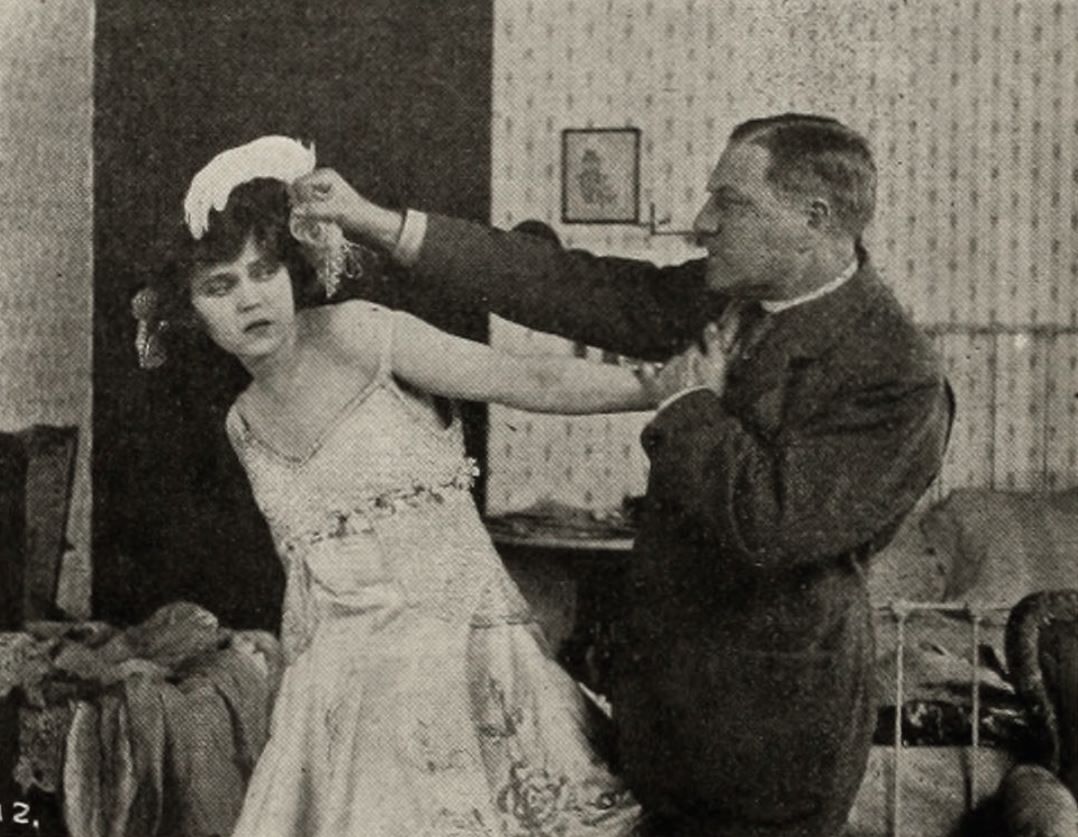
The aftermath of this calamitous affair finds Jennie profoundly changed, her previous effervescence replaced by a hardened cynicism. The glitter has faded, revealing the dross beneath. It is in this state of emotional desolation that she reluctantly agrees to marry Zachary. This union, born not of passionate love but of weary resignation, initially seems a melancholic conclusion. Yet, the genius of MacKenzie’s narrative, and the film’s sensitive portrayal, lies in its exploration of love’s slow, quiet bloom. Zachary’s unwavering devotion, his steadfast kindness, and his patient understanding gradually chip away at Jennie’s bitterness. What begins as a marriage of convenience, or perhaps even a form of penance, transforms into a profound and genuine affection. It's a beautifully understated portrayal of love’s capacity to heal and grow, even from the most unpromising of beginnings. This evolution of marital affection, from obligation to genuine love, offers a nuanced perspective that might be contrasted with the more immediate, idealized romances often found in other early cinema works like The Midnight Wedding, where love is often portrayed as an instant, all-consuming force.
The supporting cast, though perhaps less prominently featured, contributes significantly to the film's rich tapestry. Julia Stuart as a wise, perhaps maternal, figure, or Fred Radcliffe in a role that grounds the narrative, each adds texture to Jennie's world. The interplay of these characters, though often without spoken words, builds a believable social environment that supports Jennie's dramatic arc. The film’s direction, characteristic of the era, relies heavily on strong visual composition, expressive intertitles, and the nuanced performances of its lead actors to convey the intricate emotional landscape. The staging of the theatrical scenes, in particular, must have been quite striking for audiences of the time, capturing the spectacle and the inherent drama of performance itself.
Compton MacKenzie’s original story provides a solid foundation, rich in psychological depth and social observation. The adaptation for the screen, while undoubtedly simplifying some of the novel’s intricacies, manages to retain the core emotional journey and thematic resonance. The script, communicated through well-crafted intertitles, guides the audience through Jennie's internal and external conflicts with clarity and emotional impact. It’s a testament to the power of early screenwriting that such complex character development could be conveyed effectively without dialogue, relying instead on visual cues and concise textual explanations. This approach to storytelling is a hallmark of the silent era, requiring a different kind of engagement from the audience, inviting them to fill in the gaps with their own imagination and emotional responses.
From a broader cinematic perspective, The Ballet Girl stands as a compelling example of early narrative filmmaking. It tackles universal themes – the pursuit of happiness, the pitfalls of ambition, the nature of true love, and the legacy of our past – with a sophistication that belies its age. The film’s exploration of societal pressures and the deceptive allure of status could be seen as a precursor to later, more overtly critical social dramas. It subtly critiques the superficiality of certain social circles, echoing sentiments that might be found in other films of social commentary, even if less directly, such as The Clever Mrs. Carfax, which also delves into the intricacies of social maneuvering.
The film’s conclusion, while perhaps not a grand, sweeping declaration, offers a satisfying sense of earned contentment. Jennie’s journey from orphaned innocence to jaded socialite and finally to a woman who discovers genuine love in an unexpected place, is deeply human. It reminds us that sometimes, the most profound affections are not born of immediate passion, but forged in the quiet crucible of shared experience and unwavering devotion. The transformation of Jennie’s heart, from reluctant acceptance to true affection for Zachary, is the film’s most enduring triumph, offering a message of redemption and the quiet power of enduring love.
In an era marked by rapid cinematic innovation, The Ballet Girl carves out its own niche as a thoughtful, emotionally resonant drama. It’s a film that speaks to the timeless human experience of seeking connection and meaning amidst the dazzling distractions of the world. For those with an appreciation for the artistry and storytelling prowess of silent cinema, this forgotten gem offers a rich and rewarding viewing experience, proving that even without words, a film can speak volumes to the heart and soul. It’s a testament to the enduring power of classic narratives, reminding us that the fundamental human struggles and triumphs remain unchanged, regardless of the technological advancements in storytelling. Much like the quiet resilience sometimes found in films such as The Beloved Vagabond, The Ballet Girl champions the understated virtues and the enduring strength of character over fleeting societal accolades.
IMDb —
1916
Community
Log in to comment.