DbcultAccessing Vault...
Cult Review
Senior Film Conservator
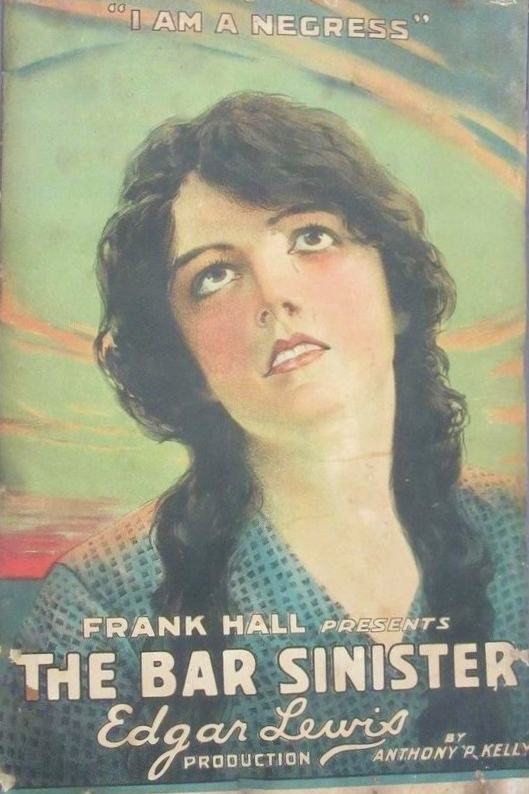
A century ago, when the flicker of nitrate still felt like Prometheus swiping fire, The Bar Sinister slipped into segregated theaters carrying a stick of dynamite between its teeth. Today the film is ghost—no complete print survives, only brittle stills, a frayed censorship card, and the echo of walkouts reported in the Chicago Defender. Yet even as a phantom it scalds.
Imagine Passing cross-bred with The Hunchback of Notre Dame and scored by the wet slap of swamp water. The kidnapped child Belle—christened with plantation bells yet suckled by a woman whose back bears the keloid scripture of every whip—grows into a beauty so incandescent she seems backlit by heaven’s klieg lights. But Lindy, her kidnapper-savior, has poured racial terror into the girl’s porridge; Belle therefore greets mirrors like Medusa, fearing her own reflection might stone her.
Enter Page Warren, lantern-jawed Northerner who wears idealism like a fresh collar. He sees Belle at a riverside baptism, sun-shafts turning her hair into molten brass, and falls—no gradual slope, but a cliff-dive. Their courtship scenes unfold in Expressionist twilight: tilted canted frames, Spanish moss hanging like nooses, while intertitles bleat warnings: “The sins of the fathers are blood-bars that cannot be erased.”
Ben Swift—part Creek, part African, part Scottish—haunts the periphery, a man whose moral authority feels carved from riverbed granite. He has loved Belle since she collected moon-snails at twelve, but deferred desire, believing time might erode the witch’s brainwashing. When he realizes Belle reciprocates Page only because she believes herself white, Ben’s heart fractures with the sound of a calabash gourd splitting underfoot.
The third act detonates in a warehouse juke-joint: jukebox piano, gin that burns like turpentine, a single sideways glance. One slash of a razor becomes racial Rorschach: whites read black savagery, blacks read white entitlement, both blind to the film’s insistence that violence is America’s mother tongue. Ben storms the mob, absorbing bullets meant for Page, his dying whisper—“Tell her she was always light enough”—a line that still rings like a cracked bell in my skull.
In the revelatory coda, Belle clutches a parchment that brands her the heir to Magnolia Manor: her ancestors once auctioned humans beneath its columns. She owns the plantation that owned her. The final shot—Belle setting the deed ablaze, her face a phosphorescent mask—feels like the birth of modern American cinema: guilt as inheritance, fire as baptism.
Hedda Nova, a Latvian émigré previously cast as vamps in Paramount potboilers, here channels something feral. Watch her pupils in the close-up where Page confesses love: they tremble like pinned butterflies, half-thrill, half-terror. She performs Belle’s racial self-loathing with such rawness you half-expect the frame itself to bruise.
Mitchell Lewis’s Ben Swift is a triumph of calibrated dignity. He never begs the camera for sympathy; instead he gifts it stoicism edged with a half-smile that feels like sunrise on bayou water. When he blocks the mob, arms spread in cruciform, the gesture is both Christ-like and unmistakably Native—a cinematic synapse connecting two genocides.
William A. Williams has the thankless role of Page, the “noble white” who must register horror without slipping into minstrel shock. He solves the problem by letting his Adam’s apple do the acting: it bobbles like a hooked trout when Belle’s heritage is unveiled, a micro-gesture that speaks pages of intertitles.
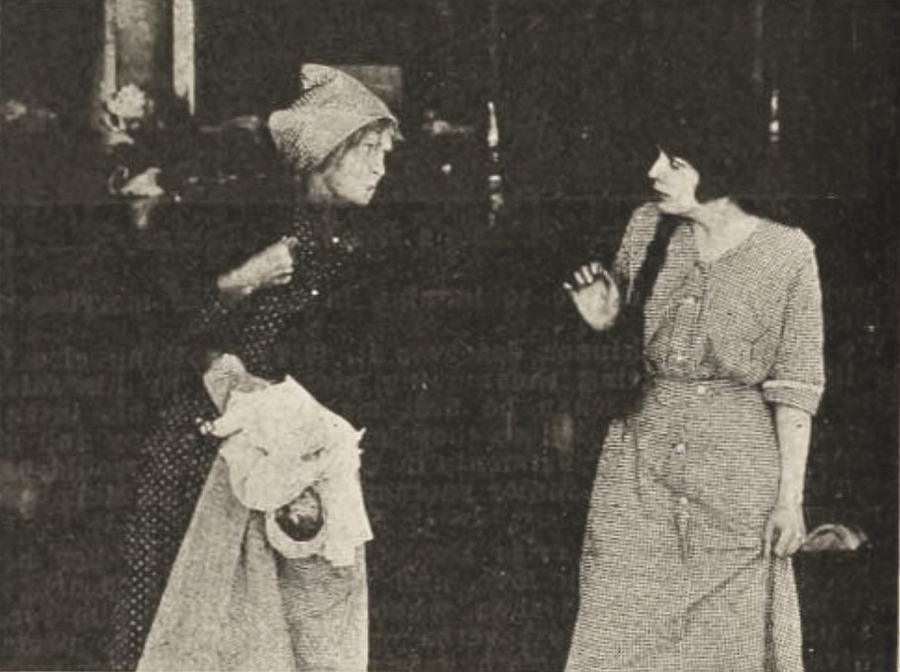
Cinematographer George Dangerfield treats Louisiana swampland like a fever dream. He hoses the lens with petroleum jelly so lantern light blooms into halos; Spanish moss becomes black veins across a cyanotic sky. In one sequence Belle flees through a canebrake; the camera tracks at knee-level, stalks slashing the frame like prison bars. You feel the humidity condense on your own skin.
Color tinting alternates between arsenic green for night exteriors and bruised amber for interiors, suggesting rot beneath gilded respectability. The film’s most quoted shot—Belle reflected in a broken mirror fractured into seven shards—required seven separate exposures on one negative. The effect predates Lady from Shanghai by twenty-five years.
Though silent, the picture was conceived with a score: a witches’ brew of spirituals, Creole fiddles, and Stravinsky-esque discords. Contemporary reviews mention a twenty-piece orchestra in Harlem’s Lincoln Theater improvising during the lynch-mob sequence—drums mimicking heart palpitations, brass screeching like klaxons. That music is lost, but even imagining it feels like placing your ear against America’s aorta.
Kelly’s screenplay—adapted from a scandalous 1899 novel—navigates a minefield that modern films still tiptoe around. Yes, it traffics in the tragic-mulatto trope, but it also indicts white paternalism: Page’s love curdles the instant Belle’s blackness surfaces, revealing his affection as conditional pigment politics. Meanwhile the “bad blacks” who assault Page are led by a character listed only as “Rufus—renegade,” yet the script grants him a monologue (preserved in the continuity script) about how white violence has turned his community into a tinderbox. The film refuses easy binaries; everyone is both sinner and sinned-against.
Compare it to The Ticket-of-Leave Man where redemption is Protestant and white, or The Shadow of Her Past where female shame is a moral stain washed clean by marriage. The Bar Sinister offers no such absolution. Its final conflagration suggests America itself must burn before new growth can poke through ash.
Released four months after Birth of a Nation re-ignited Klan recruitment, the film was denounced by both the NAACP (for exploitative sensationalism) and Southern censors (for promoting miscegenation). Memphis banned it outright; Atlanta demanded 22 cuts, including Ben’s dying line. Yet Harlem audiences cheered when Ben defied the mob, and box-office receipts in Chicago topped Robin Hood for three weeks. The film’s very controversy became its marketing: posters screamed “DO YOU HAVE THE COURAGE TO SEE THE TRUTH?”
No print known to exist. The last reported screening was 1932 in a Jalisco roadhouse where the print was allegedly burned after a knife fight—myth fitting for a film that itself is about erasure. What survives: 47 production stills, the continuity script at LOC, and a 1972 Cahiers du Cinéma essay that misidentified the director. Even the title card—depicting a diagonal black stripe across a family crest—survives only as a halftone in a 1922 Motion Picture Magazine. Yet cinephiles keep its ghost alive; every lost film is a negative space that shapes what remains.
I first encountered the film as a footnote in a grad-school seminar on miscegenation melodramas. The idea of a 1922 picture centering a black-passing heroine who torches her own plantation deed felt too subversive for its era, so I dove into archives, chasing microfilm like a junkie. One rainy night in New Orleans I stood on the dock where the final scene was shot; fog off the Mississippi tasted of tannin and diesel, and for a heartbeat I swore I heard Ben’s last words carried on horn-calls from a riverboat. That’s when I understood: some films don’t need reels to haunt. They need only the hunger of those who watch what’s absent.
So here’s to The Bar Sinister, a film that exists most vividly where it no longer does—in the projector of our collective imagination, flickering against the wall of America’s original sin. May it stay lost enough to remain dangerous, found enough to keep burning.
IMDb —
1925
Community
Log in to comment.