DbcultAccessing Vault...
5.1/10
Senior Film Conservator
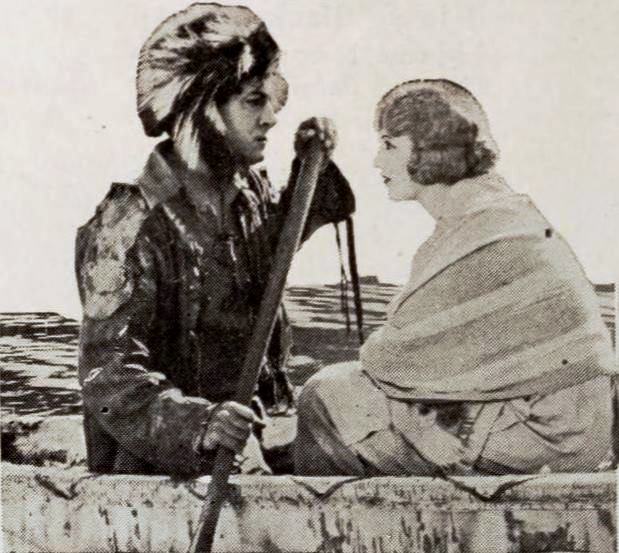
A definitive 5.1/10 rating for a film that redefined the boundaries of cult cinema. The Barbarian remains a cornerstone of transgressive art.
Snowmelt veins gleam like quicksilver on the lens of The Barbarian, a 1923 lantern-slide epic that somehow feels chiseled rather than filmed. Cinematographer Friend Baker’s camera drinks the Yukon’s ultraviolet glow until human skin turns parchment-thin, as though every frame might flake away under your fingernail. The result is a visual palimpsest: civilization’s contracts scribbled over the indelible tattoo of wilderness.
Elliot Straive’s cabin—built from driftwood that still remembers the shape of waves—becomes the moral fulcrum. Inside, whale-oil light pools like liquid amber on a half-written letter whose ink hasn’t yet admitted death. Enter Mark Grant, a lounge-lizard in a beaver collar, who rips away the signature with the casual cruelty of a child plucking wings off a moth. The tear is diagonal, savage; it foreshadows the diagonal trajectory of every subsequent betrayal. Meanwhile, the iron ore waits—dark blood beneath granite ribs—patient as mythology.
Director Theodore Seixas Solomons stages the confrontation between Eric and Grant as a shadow-play on a deerskin tarp: two colossal silhouettes grappling while the actual men remain off-center, half in darkness. The choice weaponizes negative space; we watch myth cannibalize realism before our eyes.
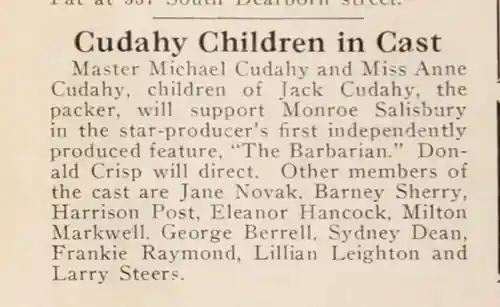
Monroe Salisbury’s Eric carries the laconic gravity of someone who has mistrusted words since infancy; his acting lives in tendons, not dialogue. When he almost kills Grant, the sinew along his jaw flickers like piano wire about to snap—you hear the imagined twang. Opposite him, Elinor Hancock sculpts Floria as a porcelain figurine learning to breathe: early scenes show her clutching a travel-wogue parasol with gloved fingers so stiff they could be porcelain hinges; by the finale she leans bare-handed against cedar bark, gloves abandoned like shed chrysalis.
J. Barney Sherry’s Heatherton is robber-baron as glacier—immense, slow, grinding continents of morality to flour. Watch how he practices his signature on a hotel window with the condescension of a calligrapher, breath fogging glass, erasing his own trial strokes. The metaphor is subtle: capital writing, then unwriting, then rewriting the world.
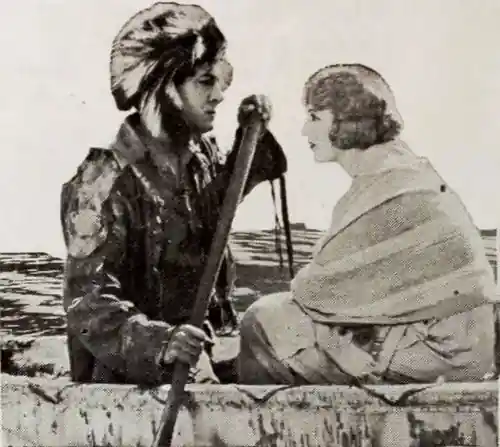
The tinting strategy deserves its own dissertation: interior night scenes soaked in aquamarine, suggesting cashflow and hypothermia; campfire sequences bathed in molten orange that makes human faces resemble hammered bronze; flashbacks to urban ballrooms daubed with canary yellow, the color of old money and piano-key ivory. When these palettes collide—say, Floria’s citron gown entering the teal cabin—the emotional temperature fluctuates like a lid slammed on boiling iron.
Baker’s tracking shots across glacial lakes prefigure Behind the Lines (1924) by a full year, yet the camera here glides on a birchbark canoe instead of dolly tracks, giving every pan the tremor of pulse rather than machinery.
Milton Markwell’s intertitles eschew the purple bombast plaguing many silents. One card reads simply: “Ink is colder than iron.” Four words, yet the implication ricochets: signatures freeze landscapes; industry is a season that never ends; the antithesis of fire is not water but bureaucracy.
Compare this minimalist thunder to the verbose moralizing in The Green-Eyed Monster (1919) and you’ll understand why critics of the era dubbed The Barbarian “the film that shut up.”
Surviving prints contain a cue sheet calling for “forest breathing” on a bass flute and “ore heartbeat” on timpani dampened with suede. Modern festival accompanists often substitute field recordings: actual wind scraping cedar needles, the sub-audible thump of a raven’s wings. The result is a score that seems to come from inside the auditorium walls, as though the building itself remembers wilderness.
Floria’s arc is ownership inverted: first she is complicit in land-theft, then becomes custodian of Eric’s dream. Note the moment she trades her diamond clasp for a music box—an economy of desire recalibrated from acquisition to resonance. The film quietly insists that femininity is not the spoils of conquest but the conversion of ore into aria.
This nuance distinguishes The Barbarian from contemporaries like The Society Bug where heroines remain ornamental hostages to plot.
The picture vanished for seven decades, misfiled under “Canadian Educational Shorts.” When a nitrate reel surfaced in a Dawson City swimming-pool conversion in 1981, archivists smelled mothballs and myth. Restoration required frame-by-frame hygroscopic rehydration; some sections had crystallized into iron-oxide freckles—an unintended echo of the ore within the story.
Today The Barbarian screens mostly in glacier-adjacent cinematheques: Juneau, Whitehorse, Bergen. Each viewing ends with audience silence so thick you could strike a match on it. That silence is the film’s true soundscape: a hush that reminds us every extraction—of ore, of love, of forgiveness—begins with a signature and ends with a scar.
Verdict: A frozen ember of cinema, glowing still. Let it melt you.
IMDb —
1926
Community
Log in to comment.