DbcultAccessing Vault...
5.8/10
Senior Film Conservator
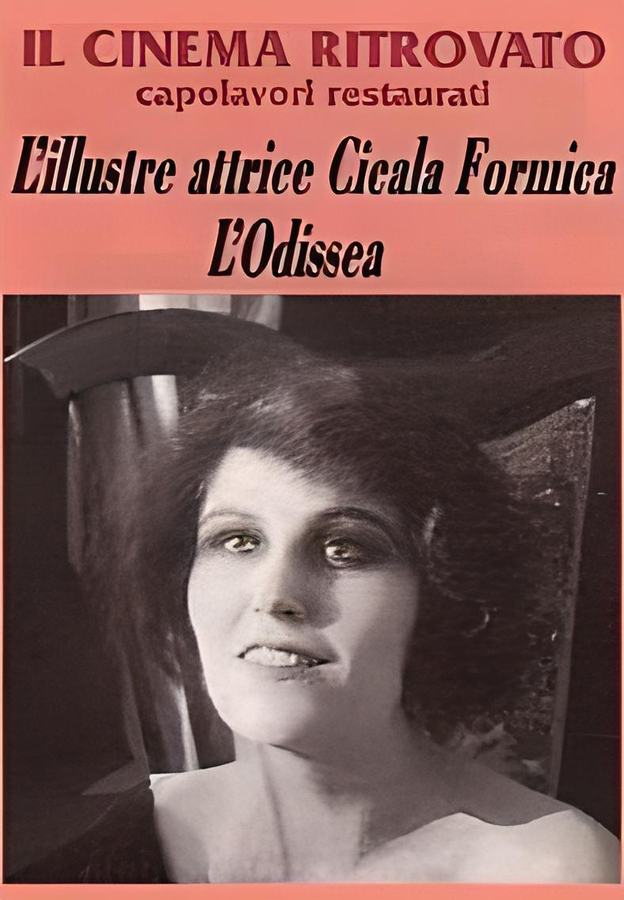
A definitive 5.8/10 rating for a film that redefined the boundaries of cult cinema. L'illustre attrice Cicala Formica remains a cornerstone of transgressive art.
In the pantheon of early Italian cinema, few figures cast a shadow as idiosyncratic and intellectually vibrant as Lucio D'Ambra. With L'illustre attrice Cicala Formica, we are not merely observing a silent film; we are witnessing the birth of the meta-narrative, a sophisticated deconstruction of the 'diva' mythos that was then dominating the Mediterranean celluloid landscape. Unlike the somber, existential weight found in The Mysteries of Souls, D'Ambra’s work here is infused with a sparkling, almost cruel wit that dissects the social fabric of the era.
The film’s title itself serves as a linguistic bridge to Aesop, yet D'Ambra subverts the fable. Our protagonist, the 'Cicala' (Cicada), is portrayed with a frantic, magnetic energy by Lia Formia. She is a woman possessed by the phantom of the screen, a creature of light and shadow yearning to escape the suffocating 'Formica' (Ant) existence of her domestic sphere. Her family, played with varying degrees of comedic menace by Umberto Zanuccoli and Renato Piacentini, represent the crushing weight of the status quo. They are the 'opponents' mentioned in the plot, yet their opposition is often masked as a clumsy, well-meaning interference that is far more damaging than outright hostility.
The narrative architecture of L'illustre attrice Cicala Formica is remarkably modern. As the wannabe actress attempts to produce her own film, the boundaries between reality and fiction begin to dissolve. This thematic preoccupation with the 'film-within-a-film' predates the postmodernist obsession by decades. While a film like The Footlights of Fate explores the destiny of the performer through a more traditional dramatic lens, D'Ambra opts for a satirical chiaroscuro. He highlights the absurdity of the cinematic process—the makeshift sets, the temperamental 'directors' within the family, and the sheer vanity of the endeavor.
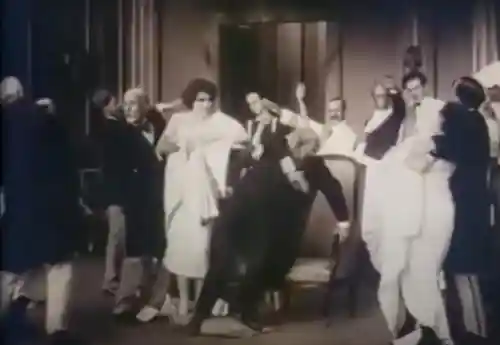
The visual language of the film is a testament to D'Ambra’s background as a man of letters and theatre. The framing is often theatrical, yet there is a restlessness in the editing that mirrors the protagonist’s internal agitation. We see echoes of the psychological depth found in A Naked Soul, but here the 'soul' is not bared through tragedy, but through the pathetic, noble comedy of trying to be someone else. The family home becomes a prison of the mundane, where every attempt at artistic expression is met with a request for coffee or a reminder of household chores.
The supporting cast, featuring Riccardo Bertacchini and Diomede Procaccini, provides a masterclass in ensemble frustration. They represent the collective 'Ant' colony, a phalanx of normalcy that finds the Cicada’s singing to be an affront to the rhythm of the harvest. In many ways, this film serves as a precursor to the domestic satires of the mid-century, yet it retains a silent-era purity. The gestures are large, the faces are expressive landscapes of confusion and judgment. When compared to the rigid social structures depicted in The Marble Heart, D'Ambra’s characters feel more fluid, more dangerously human in their ability to stifle a dream with a smile.
One cannot overlook the technical bravado of the era. The restoration of such works allows us to appreciate the subtle gradations of the original tinting. There are sequences where the screen seems to vibrate with the protagonist’s ambition, only to be cooled by the blue-toned reality of her failure. It is a visual dialogue between the warmth of the spotlight and the coldness of the hearth. This contrast is far more sophisticated than the binary morality seen in contemporary works like Should a Wife Forgive?, which relied on more conventional melodramatic tropes.
Why does L'illustre attrice Cicala Formica remain relevant to the modern cinephile? Because the 'Cicala' is a universal archetype. In an age of digital self-promotion and 'influencer' culture, the struggle to be 'illustrious' while surrounded by the 'ants' of algorithms and economic necessity is more pertinent than ever. D'Ambra captures the specific agony of the amateur—the person who possesses the passion of a genius but perhaps only a fraction of the talent, yet persists regardless. It is a celebration of the 'wannabe,' a figure often mocked but here treated with a complex mixture of derision and empathy.
The film also serves as a fascinating counterpoint to international productions of the time. While American cinema was perfecting the slapstick of Yankee Doodle in Berlin or the grit of Oliver Twist, the Italians were experimenting with the very soul of the medium. D'Ambra was less interested in the 'what' and more in the 'how'—how we perceive ourselves through the lens, and how that perception is warped by those who know us best.
Technically, the film utilizes the limited resources of its time to create a sense of grandeur that is intentionally hollow. The 'film' our protagonist tries to make is a pastiche of historical epics and romantic dramas, a far cry from the gritty realism of The Struggle. This juxtaposition highlights her disconnection from reality. She wants to be in a world of velvet and marble, but she is stuck in a world of linoleum and laundry. The irony is thick, layered like the costumes she insists on wearing even when the camera isn't rolling.
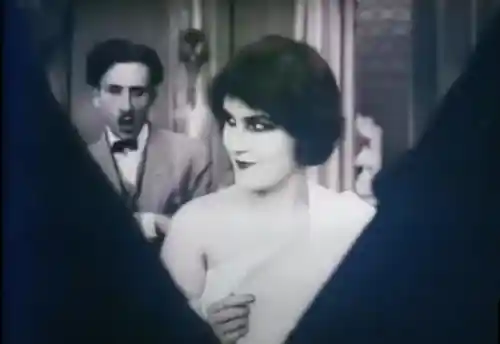
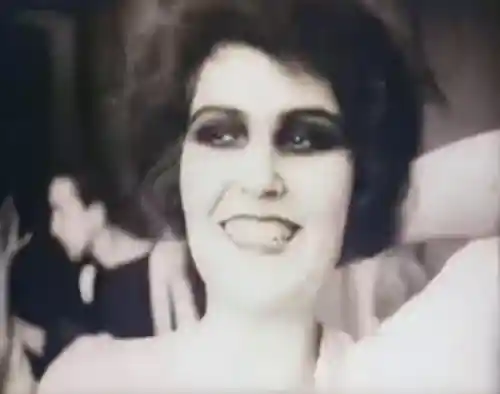
The performance of Lia Formia is the axis upon which the entire film rotates. She avoids the pitfalls of mere caricature, grounding her character’s flights of fancy in a palpable, aching need for recognition. It is a performance that reminds one of the intensity found in Zagadochnyy mir, where the internal world is far more expansive than the external one. When she looks into the lens, she isn't looking at the audience; she is looking at a version of herself that doesn't exist—the 'illustrious actress' of the title.
In the final analysis, L'illustre attrice Cicala Formica is a triumph of wit over budget. It is a film that understands the inherent comedy of the human condition—the way we all cast ourselves as the leads in a grand drama, only to realize we are merely extras in someone else’s domestic comedy. It lacks the bleakness of Blind Man's Luck but possesses a sharper, more intellectual edge. Lucio D'Ambra has crafted a love letter to the cinema that is also a warning: the camera can capture your beauty, but it cannot free you from your family.
For those who enjoy the exploration of social mores through a satirical lens, this film is an essential artifact. It stands alongside works like East Is East or Crooked Streets in its ability to navigate the complexities of identity within a restrictive society. However, D'Ambra’s unique 'Cicala' remains a singular creation—a buzzing, vibrant reminder that art, however fleeting, is the only thing that makes the work of the 'Ants' bearable. It is a film that deserves a place in the modern conversation about the cost of creativity and the weight of the domestic yoke.
Ultimately, the 'illustrious actress' may never finish her film, but in her failure, D'Ambra finds a profound truth. The attempt itself is the performance. The hindrance of the family is the conflict required for the plot. Life is not a film, but for the Cicalas of the world, it is the only script they are willing to follow. This is a masterpiece of early European avant-garde humor, a must-watch for anyone who has ever felt like an artist trapped in a house of accountants.
IMDb 6.8
1926
Community
Log in to comment.