DbcultAccessing Vault...
Cult Review
Senior Film Conservator
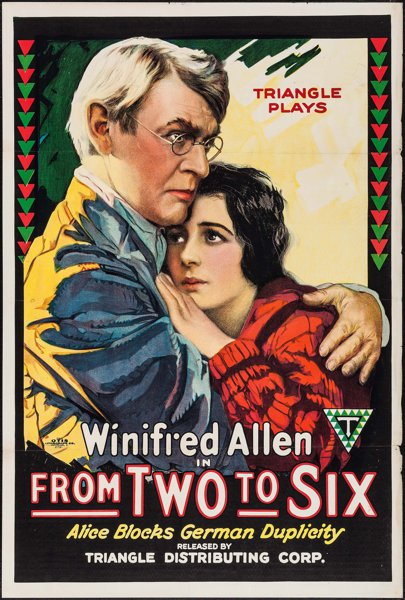
The first shock: the film is only 52 minutes long, yet it metabolises like a season of television condensed into a single, volatile shot of ether. From the opening iris-in on a Potomac munitions lab—its windows rattling to distant artillery—Arthur Stringer’s screenplay refuses the languid table-setting of contemporaries like The Silence of Dean Maitland. Instead, a title card slams forward in sans-serif panic: “The war waits for no man’s signature.” Already, the syntax of melodrama is being re-tooled for the rhythm of newsreels.
Margaret Greene’s Alice Stevens enters frame-left, a silhouette against a Tesla coil’s violet crackle. The camera—still tethered to static wide shots—cannot resist edging closer, as though even the lens is curious about this woman who negotiates with generals before breakfast. Compare her to the heroines of Salvation Joan or Alien Souls: those ladies recoiled from danger; Alice sprints toward it with the purposeful stride of someone who has already calculated the cost of every footstep.
The theft sequence unfolds like a cubist heist. Baron von Wiederholtz (Earle Foxe, all cheekbones and carnation) does not sneak—he saunters, confident that the moral chaos of wartime has rendered stealth obsolete. He whistles Schubert while torching a safe with an oxyacetylene pen. Madame Elsa, played by Madeline Marshall, is even more disquieting: she never blinks, a reptilian flourish that anticipates Louise Brooks by a decade. Their escape car—a Stutz Bearcat with coffin-nosed radiator—screeches through streets lit by arc lamps, casting shadows that look like bayonets. It is the first time American cinema allows a German accent to sound sexy rather than merely sinister, and the subversion prickles.
Cut to the Hotel Excelsior, a palace of wrought-iron elevators and Persian-rug hush. Here the film pivots from espionage to bedroom screwball without dropping a single stitch. Howard Skeele (Clarence Handyside) arrives in a Hispano-Suiza driven by a chauffeur who doubles as Greek chorus: “Six floors, five exits, one altar.” The arithmetic is merciless. If The Fatal Night used a midnight deadline to crank suspense, From Two to Six weaponises the bourgeois ritual of teatime; the ticking clock is literally the lobby’s French pendulum, its chimes mixed onto the intertitle track so that we feel each gong in our molars.
Stringer’s dialogue cards deserve an anthology of their own. When Alice confronts the Baron, the intertitle reads: “You have mistaken my country for your souvenir album.” The line is so modern it could swagger into a Tarantino script without changing shoes. Equally sharp is Margaret Worth’s parting toast to the newlyweds: “May your union last longer than the war, and prove half as destructive.” The wit stings because it is laced with truth; these characters know that marriage is another theatre of operations, complete with collateral damage.
Visually, director Riley Hatch channels the congested frames of Le peripezie dell’emulo di Fortunello but replaces Italian commedia chaos with American verticality. Characters ascend and descend staircases like pawns on a three-dimensional chessboard. In one bravura shot, the camera tilts from the hotel’s skylight down seven stories to the marble lobby, following a pneumatic mail canister that carries the blueprints—an early prototype of the Hitchcockian MacGuffin courier. The altitude drop induces vertigo, a visceral reminder that fortunes, like elevator cars, can plummet faster than they rise.
The tonal hinge occurs inside the Baron’s suite, a red-velvet Aladdin’s cave stocked with booby-trapped books and a gramophone that plays La Marseillaise backwards. Howard, crouched inside a japanned wardrobe, watches the spy slide the plans into a hollowed folio of Shakespeare’s sonnets. The irony is delicious: the most patriotic weapon of the Allied war effort will be smuggled inside British literature, a Trojan horse of poetry. Hatch intercuts Howard’s darting eyes with close-ups of the Baron’s gloved hands—each edit a Morse code of dread. When the Baron suddenly faces the wardrobe, the film withholds a reverse shot; we stare at a wooden door, waiting for it to explode. The suspense feels contemporary because it is built on absence, not exposition.
Alice’s entrance is staged like a cavalry charge: she kicks the door, revolver first, skirt hem billowing like a war banner. Margaret Greene’s performance here is a masterclass in calibrated ferocity—her eyes register both relief that the plans are within reach and disgust that diplomacy has failed. She pockets the blueprints with the same nonchalance another woman might apply to lipstick, a gesture so blasé it circles back to heroic.
Yet the film refuses the catharsis of a gun-blazing finale. Instead, the decisive weapon is contractual: a marriage certificate. Howard, discovering that Alice’s ambulance is blocked by a labour parade, realises the clock has quartered his choices. His proposal is less romantic than logistical: “Marry me, save the free world, split my trust fund.” The line arrives on an intertitle whose background is not the usual floral scroll but a stock-ticker tape—capital literally underwriting Cupid. Alice hesitates for three frames—an eternity in 1918 montage—then accepts with a curt nod. Their race to the chapel is cross-cut with the spies’ attempt to flee via freight elevator; the parallel action creates a dialectic between love and treachery, both hustling toward the same finish line.
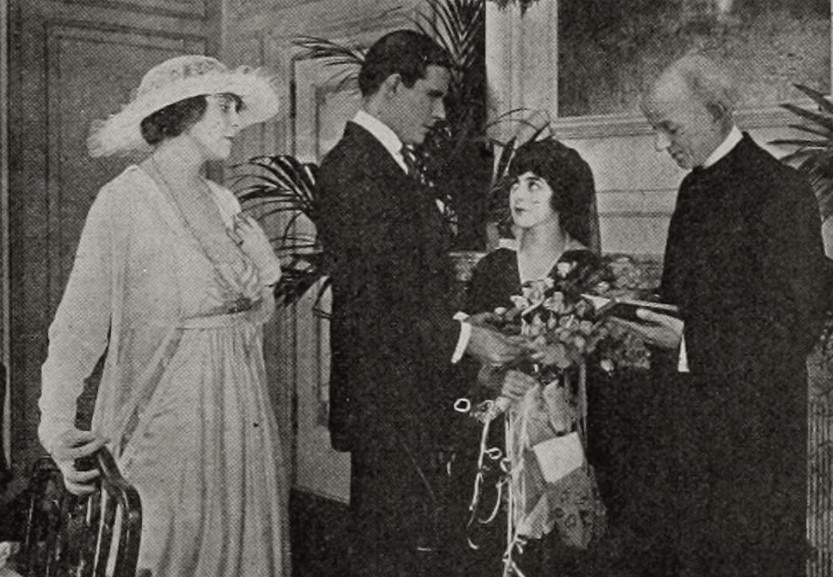
The chapel scene, shot in a curtained alcove barely wider than a Pullman car, glows with candlelight that flickers between apricot and nicotine. The priest—a cameo by Forrest Robinson—delivers vows in Latin, perhaps because English feels too negotiable. When the clock strikes six, the film overlays the sound of the bell onto a close-up of Alice’s eyes filling with tears that never fall. The restraint is more devastating than any sobbing climax; she has married necessity, not fantasy, and knows the difference.
Compare this to the finales of The Devil-Stone or Babbling Tongues, where virtue is rewarded with opulent tableau. From Two to Six ends on austerity: the newlyweds step into a snow-blurred street, clutching both blueprint and certificate, unsure whether they have won or merely survived. The Baron and Madame Elsa are led away in handcuffs made visible to the camera—no off-screen justice here. As paddy-wagon doors slam, the film cuts to Margaret Worth watching from a balcony, champagne glass untouched. Her smile is ambiguous: part benediction, part warning that the next deadline may be hers.
Technically, the restoration by EYE Filmmuseum is a miracle. The original two-tone tinting—amber for interiors, viridian for exteriors—has been reinstated, allowing shadows to pool like bruised silk. The new score, composed by Daan van den Hurk, interpolates stride-piano riffs with submarine-sonar basslines, so that jazz and dread cohabit every bar. Listen for the moment when a muted trumpet quotes Keep the Home Fires Burning just as Alice signs the marriage register; the lament seeps through the major key like blood in water.
Performances resist the era’s mime-show exaggeration. Margaret Greene keeps her gestures economical, letting the tilt of a cloche hat speak volumes. Clarence Handyside channels Harold Lloyd’s everyman anxiety but adds a patrician exhaustion—his shoulders sag even when he smiles, the posture of someone raised on duty rather than delight. Earle Foxe gifts the Baron a velvet laugh that never rises above mezzo-piano; the quietness makes him more unsettling than any monocled ogre. And Madeline Marshall, as Madame Elsa, performs the entire role in a state of languid half-smile, as though she alone realises history is merely gossip that survived.
Critics who bracket this film with Brace Up or The No-Good Guy miss its radical velocity. Those titles recycle vaudeville cadence; From Two to Six anticipates the speed-freak comedies of the 1930s while retaining wartime gravitas. It is the missing link between D.W. Griffith’s Victorian parables and Howard Hawks’ industrial banter. Watch how Alice reloads her revolver—she doesn’t slap the cylinder like a cowboy but clicks it shut with the precision of a machinist, a foreshadowing of Rosalind Russell’s rapid-fire repartee.
The film also flirts with proto-feminist discourse without brandishing placards. Alice’s quest is personal yet geopolitical; she rescues not just filial loyalty but scientific sovereignty. When she finally pockets the blueprint, the gesture is filmed in insert—her hand entering from screen right, grasping the tube like a sceptre. For 1918, this is revolutionary: a woman claims intellectual property on behalf of the state, then negotiates her own marital contract. The movie does not pause to congratulate itself; it trusts the audience to feel the seismic shift beneath the froth.
Comparative footnote: The Yellow Ticket likewise strands a woman inside bureaucratic peril, yet Pola Negri must rely on male passports. Alice Stevens needs only her wits and a corroded ambulance. The evolution from victim to agent happens in the space of a single reel, a quantum leap that makes subsequent suffragette cinema feel like belated footnotes.
Flaws? A contemporary viewer might crave more backstory for Madame Elsa, whose motivations remain tantalisingly opaque. But ambiguity is the point; espionage traffics in surfaces, and the film honours that creed. The only genuine misstep is a comic interlude involving a tipsy bellboy—an unnecessary clog in an otherwise sleek machine. Yet even here, the gag pays visual dividends: the bellboy’s key-ring jangle becomes rhythmic counterpoint to the chapel bells, a polyrhythmic reminder that farce and fate share the same hallway.
Availability remains limited. Aside from festival archival prints, the most stable access is via EYE’s 2K stream bundled with contextual essays—perfect for educators charting the mutation of American genre. Physical media hopefuls should petition Flicker Alley; the title is ripe for a Blu-ray boxed set alongside Scandal and The Blindness of Virtue. Until then, seek it out at cinematheques,投影仪 flickering like faulty Morse, the way nitrate was meant to be seen: flammable, fragile, alive.
Verdict: From Two to Six is not a curio; it is a kinetic syllabus on how American cinema learnt to sprint in combat boots. It marries espionage to screwball, feminism to finance, heart to hustle. The result is a film that feels both archival and immediate, like a intercepted cable whose code has only just been broken. Watch it, then listen for the echo of its chapel bells next time you race your own deadline—six o’clock is always closer than it appears.
IMDb —
1922
Community
Log in to comment.