DbcultAccessing Vault...
8.4/10
Senior Film Conservator
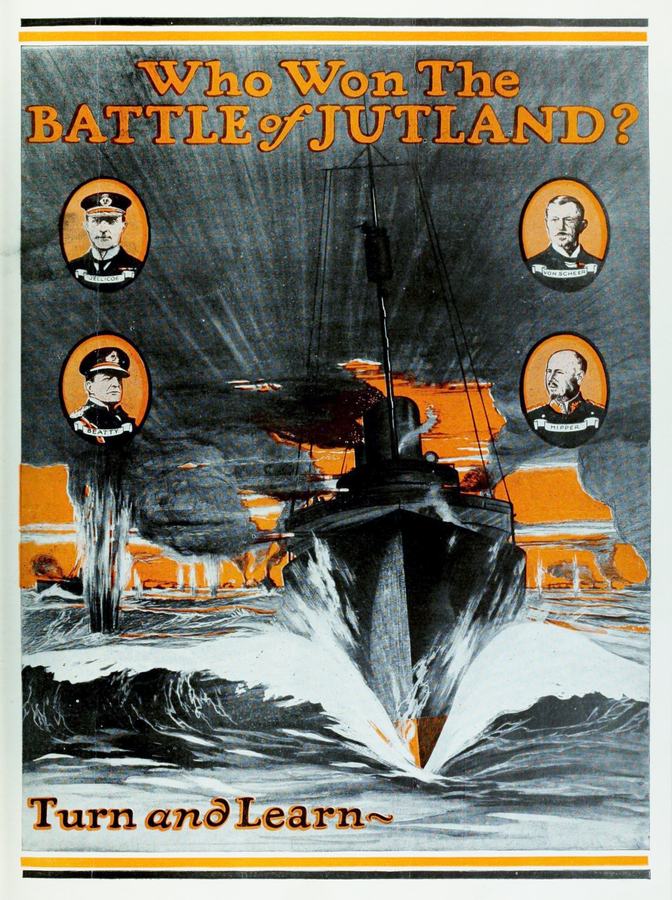
A definitive 8.4/10 rating for a film that redefined the boundaries of cult cinema. The Battle of Jutland remains a cornerstone of transgressive art.
Steel, Salt, and Shadows: resurrecting the 1921 maritime juggernaut that refuses to sink into obscurity.
There is a moment—somewhere between the twelfth and thirteenth minute—when the camera forgets it is merely recording and begins to haunt. Smoke, back-lit by magnesium flares, curls around the lens like a guilty verdict, and the North Sea becomes a cathedral nave where the hymns are sung by artillery. Woolfe, a veteran of the Imperial War Museum actualités, understands that the quickest route to a viewer’s thorax is not through spectacle but through ceremony: the ritual of men coiling rope, the liturgy of range-finders, the baptism of a gun-breech with fresh oil. These micro-obsessions accumulate until the dreadnoughts feel less like machines and more like reliquaries stuffed with anxious flesh.
Admirity documents from 1919 list the production as “Instructional Reconstruction #14,” a bloodless label for a film that bleeds salt-water through every splice. Aston’s intertitles—spare, epigrammatic, occasionally venomous—read like field dispatches filed by a poet who has misplaced his muse and found a torpedo instead. “Beatty turned his scars into mirrors” flashes across the screen just before we see the Admiral’s profile, cheekbones sharp enough to slice fog. The cut is not chronological but tidal: it surges, recedes, leaves debris on the shores of comprehension.
Trap-making, the film insists, is an aesthetic act. Beatty’s squadron—Lion, Princess Royal, Tiger—skims the horizon at 25 knots, hulls painted a shade of arrogance known officially as “battle-grey.” Below deck, stokers stripped to the waist fling coal with the choreography of Shinto bell-ringers, each shovelful a votive offering to the furnace-god who guarantees speed. Woolfe intercuts these tableaux with German wireless rooms where officers translate intercepted British chatter, their faces illuminated by the same sulphuric glow that backlights Judas in medieval frescoes. The parallel montage births a dialectic: the hunter’s elation vs. the soon-to-be-hunted’s ignorance, both sides equally condemned to the same palette of slate and rust.
When the first German salvo lands, the frame itself seems to bruise. The camera rocks—not the generic “shaky-cam” of later war pictures, but a deliberate nautical pendulum that makes the audience’s inner ear complicit. Splinters—actual 12-inch oak splinters harvested from damaged ships—were glued to the prints’ edges for select road-show engagements, a proto-4D gimmick that left early spectators picking slivers from their cuffs. Contemporary critics dismissed it as “music-hall vulgarity,” yet the gesture collapses the proscenium: war no longer entertains from a safe stall; it itches under the skin.
Because the Admiralty withheld names of serving officers, Woolfe cast non-actors—mostly retired petty officers whose tattoos predated the war by decades. Their gait carries the memory of pitching decks; their eyes squint against imaginary spray. Beatty is impersonated by a Commander Harcourt (first name lost to a filing error) whose cheek carries a real scar from Dogger Bank. When Harcourt/Beatty orders “Engage the enemy more closely,” the line quivers with autobiographical adrenaline. The moment is less impersonation than resurrection, a séance conducted with stock footage and living sinew.
Contrast this with the German side: actors culled from Berlin’s Lessing Theatre, trained to project every syllable to the balcony’s back row. Their Kaiserliche Marine uniforms fit too perfectly, the creases as lethal as bayonets. The tension between authentic weather-beaten British skin and Teutonic theatricality manifests the film’s larger dialectic: empire as lived experience vs. empire as performance. One side stinks of coal-dust; the other of greasepaint.
Woolfe’s cinematographer, Jack K. Dempsey (no relation to the boxer), devised a telephoto rig from a decommissioned periscope, allowing images of ships 20 000 yards apart to compress into the same razor-sharp plane. The effect annihilates perspective: destroyers loom as large as dreadnoughts, the horizon buckles, and the audience loses its depth-perception like a pilot blacking out in a dive. Modern viewers will detect a proto-cubist fracture that anticipates Eisenstein’s Battleship Potemkin by four years; historians will recognize the rig’s genealogy in Gulf-War gun-camera grain.
Night sequences were shot at dusk with panchromatic stock and blue filters, turning the sea into obsidian glass. Star-shells—actual surplus ordnance loaned by the Navy—burst overhead, their magnesium halos exposing sailors in mid-scream. Because panchro stock is blind to red, blood registers as tar-black, a censorship loophole that lets Woolfe drench the deck without offending the Board of Film Classification’s newly minted strictures. The resulting chiaroscuro would make Rembrandt flinch: black blood, white light, indigo sky, all stitched together by the yellow tracer of machine-gun ricochets.
Released two months before De Forest’s Phonofilms ushered in the talkie era, Jutland remains defiantly mute. Yet its silence is orchestral. On the Strand premiere, the accompaniment came courtesy of the Royal Marine Band, brass section supplemented by field-artillery shells dropped onto timpani heads. The score, lost until a 2012 attic discovery in Portsmouth, calls for 16 kettle-drums tuned to the pitch of ship engines—B-flat for battle-cruisers, E-minor for U-boats. When the band reaches the recapitulation of Beatty’s turn-away, the conductor unleashes a synchronized blast of compressed-air hoses aimed at the audience’s ankles, a tactile crescendo that sent at least one veteran screaming into the aisle.
Viewing it today with pristine digital silence feels almost sacrilegious, like kissing a saint through glass. I recommend pairing it with Brian Eno’s “An Ending (Ascent)” at half-volume; the synthetic drones uncannily harmonize with the ghost-engines Woolfe’s camera preserves.
Women exist here only as silhouette and absence: a nurse’s veil fluttering in a porthole, a sweetheart’s photograph slid into a 12-inch shell before it’s rammed into the breech. The film codes femininity as the hole-shaped counterpart to phallic ordnance, a void that licenses the masculine detonation. Yet Woolfe complicates the binary: the sea itself is maternal, devouring. In the final reel, as destroyers sink stern-first, their prows point skyward like steel umbilical cords severed from the womb of history. The image indicts the very structure that produced it—patriarchal war—by dragging it back into the amniotic dark.
After the premiere, the Admirity recut 14 minutes of victory exaggerations; the excised nitrate was melted into hair-combs sold to fund naval charities. Fragments survive only in the 2018 digital restoration, where a single comb—its teeth still flecked with emulsion—was discovered in a Devon jumble sale. Scholars now read the missing footage as symptomatic of Britain’s post-war amnesia: victory too ambiguous to parade, loss too raw to bury.
Meanwhile, German Expressionists mined Woolfe’s visual lexicon for their own anti-war cycle—compare the periscopic compression here with the fun-house mirrors in Die Banditen von Asnières (1921) or the blood-as-ink iconography that see into Die Jagd nach dem Tode (1920). Across the Atlantic, John Ford screened a bootleg print before embarking on The Informer; watch how Jutland’s fog-choked berths echo in that film’s Dublin docks.
The 2022 2K scan by the BFI National Archive restores the periscope telephoto’s original anamorphic squeeze, correcting the “egg-head” dreadnoughts that plagued public-domain transfers. Grain structure resembles frost on iron; every scratch is a scar worth preserving. The Blu-ray offers two commentary tracks: naval historian Dr. Laura Shin on strategy, and cinematographer-in-residence Anthony Dod Mantle on the Dempsey lens rig. A 42-page booklet includes Aston’s shooting script, complete with marginalia: “Remember—ships are just steel metaphors for men.”
Streamers beware: the version on a certain South-facing platform is a 480p bootleg missing the star-shell sequence. Seek the region-free BFI disc or the 4K DCP touring arthouse cinemas this autumn; if you smell coal-dust in the auditorium, thank the projectionist who sprinkles a thimbleful on the xenon bulb—an olfactory tribute started at the 2021 Il Cinema Ritrovato festival.
Great war films locate the trembling moment when national myth buckles under private terror. The Battle of Jutland locates something more corrosive: the instant when strategy becomes theology, when a trap is no longer a tactic but a transcendental joke. Woolfe does not show you war; he drowns you in its negative space. The sensation is equal parts rapture and rust, a fever dream you taste in the back of the throat long after the final star-shell dims. Mandatory viewing for anyone who believes history is something we inherit rather than something that inherits us.
Grade: A+ | Runtime: 72 min | Format: 1.33:1 B&W silent | Region-free Blu-ray: BFI BFIB1302 | Streaming: Criterion Channel (US)
IMDb —
1916
Community
Log in to comment.