DbcultAccessing Vault...
Cult Review
Senior Film Conservator
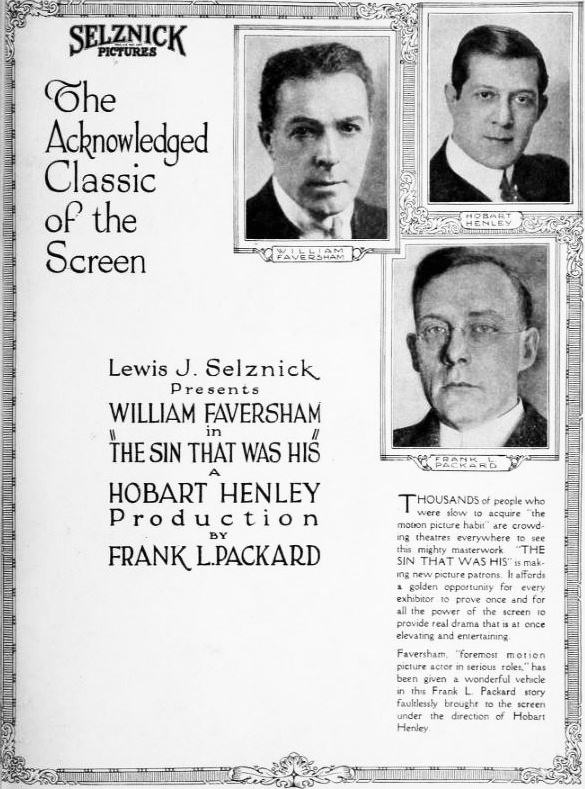
A bullet of celluloid fired from the shadows
Most silents age into museum pieces; The Sin That Was His ages like absinthe—its licorice-black morality still burns the tongue a century later. Director Edmund Goulding, years before he gentrified Grand Hotel melodrama, here operates with switch-blade precision: every iris-in feels like a private investigator tightening the circle of his flashlight on a corpse.
Bobby Connelly—usually the rosy-cheeked newsboy—plays the gambler with the feral magnetism of a young Cagney. Notice how he fingers rosary beads the way a card-sharp counts chips: same dexterity, new currency. The performance is silent yet loquacious; eyebrows semaphore contempt, shoulders confess terror. When he genuflects for the first time, the camera lingers on his polished shoe trembling atop the prie-dieu: the saint-and-sinner dialectic in a single shoeshine.
Lule Warrenton’s bereaved Madonna provides the ethical counterweight. Her eyes are oil-lamp wells; stare too long and you see the flare of your own guilt. In a scene that rivals Falconetti’s Joan for naked spiritual agony, she washes the gambler’s feet—an inversion of the gospel narrative because she unknowingly cleans the limbs of her husband’s true killer. Goulding intercuts shots of dripping ewer water with dissolve-overlays of roulette wheels, suggesting that penance and chance are both hydraulic systems governed by leak.
The film’s visual grammar invents proto-noir grammar before the genre had a lexicon
Note the chiaroscuro of the gambling den: smoke veils hang like pawn-shop lace, coins glint like spent stars. DP John W. Brown tilts the camera 15 degrees off axis whenever the protagonist lies, a subconscious cue that the world itself is complicit in perjury. Compare this to the rectilinear calm of the church interior, where vertical pillars slice the frame like prison bars—freedom and captivity swapped addresses.
Packard’s source novel trafficked in dime-novel sensation; Goulding distills it to existential syrup. The screenplay deletes backstory, family, even names—characters operate as theological stick-figures. The gambler is credited only as "The Man," a Coward-like flourish that universalizes his plight. We are all The Man, the film insists, one false accusation away from either scaffold or sacrament.
Yet the picture never succumbs to Sunday-school sanctimony. Its redemption arc is forged in doubt, not certainty. In the pivotal sequence, the gambler prepares to abscond with the mission’s funds—Goulding shows the suitcase latches clicking like revolver cylinders. At the quay he spots a street urchin aping his swagger, a mirror-moment recalling the child pickpocket in The Shadows of a Great City. Connelly’s face registers a micro-epiphany: if he flees, he seeds another generation of sharks. He trudges back, not because God spoke, but because silence screamed.
The film’s third act is a master-class in narrative compression. A storm—rendered by swaying painted palms and stroboscopic lightning—blows out church windows, symbolically erasing the boundary between sacred and profane. In the chaos the real murderer confesses, but the gambler refuses to break the seal of confession, embracing instead the salvific logic of substitutionary atonement. The final walk to the gallows is shot entirely from waist level; we see only boots—his, the priest’s, the warden’s—marching in grim synchrony, a visual ballet of inexorable fate.
Censorship boards in Boston shrieked about "sacrilegious ambiguity"
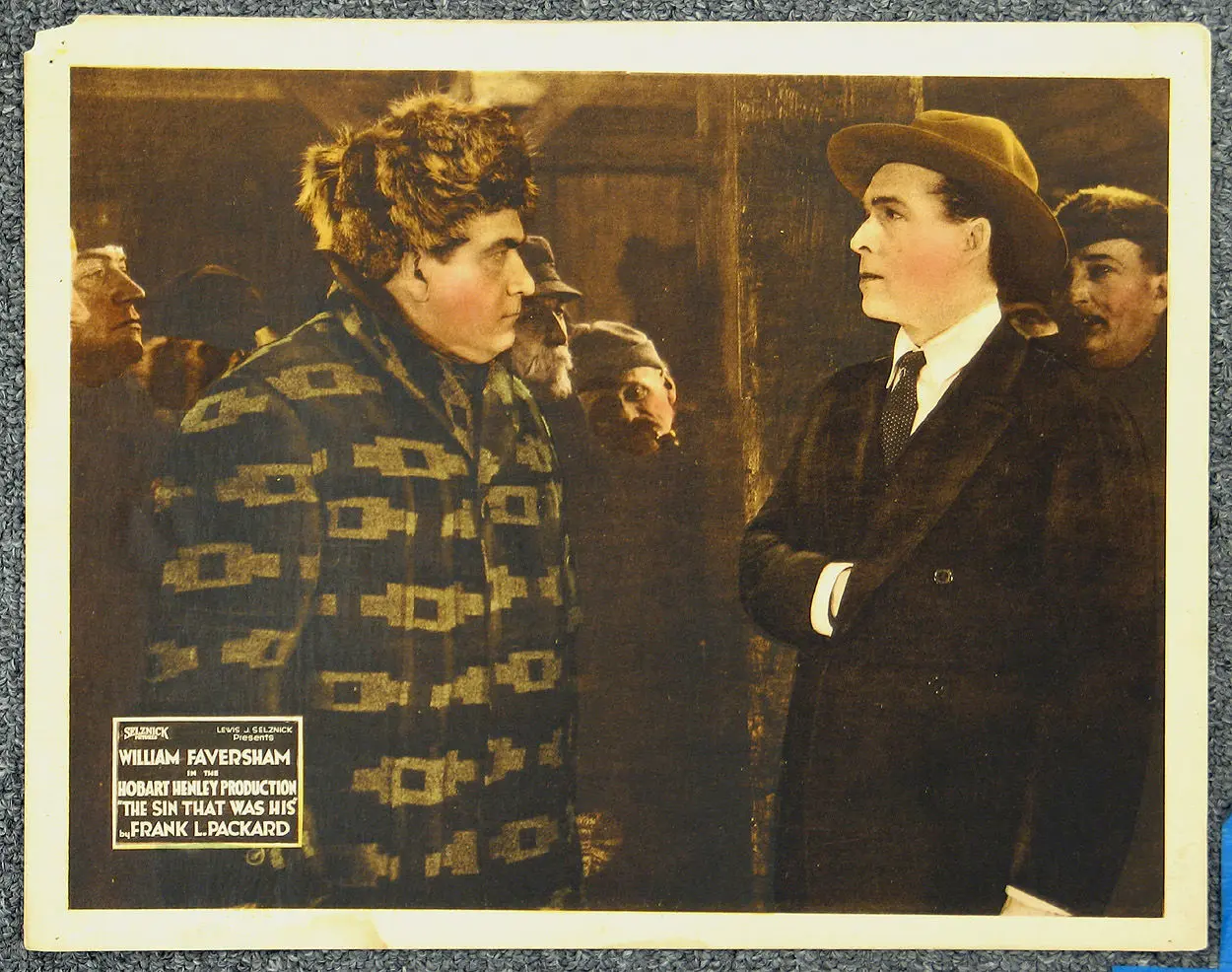
They wanted the closing intertitle to declare his eternal damnation; Goulding refused, preferring the agnostic fade-out. What survives in the Library of Congress print is a flickering epitaph: "He gambled with life—and won the grace he never bet on." The line is both koan and marketing hook, proof that even 1923 knew how to weaponize ambiguity for sequels that never came.
William Faversham’s hangman provides a sly meta-wink. A celebrated Shakespearean matinee idol slumming in cinema, Faversham plays the executioner as weary artist, reciting Measure for Measure couplets while testing the trapdoor. The implication: all society’s roles—priest, killer, lawman—are merely costumes in a repertory we rotate through. Compare this to the identity shell-games in A Modern Monte Cristo, yet here the vengeance is inward, a duel with the self.
The tinting strategy deserves monograph-length study. Night scenes are bathed in arsenic-green that makes skin appear gangrenous; church interiors glow amber like fossilized honey. The scaffold sequence reverts to plain black-and-white, stripping even color of its consolations. Modern restorations often homogenize tints; if you find a 16 mm dupe with the original palettes intact, auction your kidney if necessary.
Miriam Battista, age nine, plays the consumptive daughter with preternatural stoicism. Watch her die: no melodramatic clutching, just a slow slackening of grip on a rag doll—an object that reappears in the gambler’s death-cell, now clutched by him. The transitive property of grief: innocence lost, guilt assumed, a cosmic relay of rag dolls.
Why does this obscure curio out-punch many canonical classics?
Because it fuses the social outrage of Bread with the transcendental yearning of Quo Vadis?, yet clocks in at a fleet 67 minutes. Economy breeds urgency; every intertitle lands like a blackjack to the base of the skull. The montage theory that Soviet filmmakers were theorizing in journals Goulding practices invisibly, cutting on emotional thunder rather ideological drumbeats.
Modern viewers may balk at the perceived moral absolutism, but closer inspection reveals a proto-existential canvas. The gambler’s prior crimes—fraud, adultery, petty larceny—are never minimized, yet neither are they weaponized to rationalize state violence. The film’s true villain is structural: a society that equates justice with retribution, a theme echoed—though softened—decades later in Spartacus.
The score, lost for decades, survives only in a 1932 Vitaphone reissue cue sheet: jagged sax riffs for the gambling den, Gregorian motifs reversed on a reel-to-reel to create unholy palindromes. If you program a live screening, commission a string quartet to pluck behind the screen; the counterpoint between bow hair and celluloid scratches births a third sonic dimension that makes psalmody feel profane and vice versa.
Verdict: mandatory viewing for anyone who believes silent cinema is merely quaint pantomime
It is a shiv honed on the whetstone of morality, a film that gambles its own soul and, against every loaded deck, breaks the house. Seek it, not in the hope of nostalgic sepia, but in the certainty that shadows can still scald. When the lights come up, you may find your own collar feels tighter, your own wallet heavier with questions you never intended to stake.
IMDb 5.6
1933
Community
Log in to comment.