DbcultAccessing Vault...
5.2/10
Senior Film Conservator
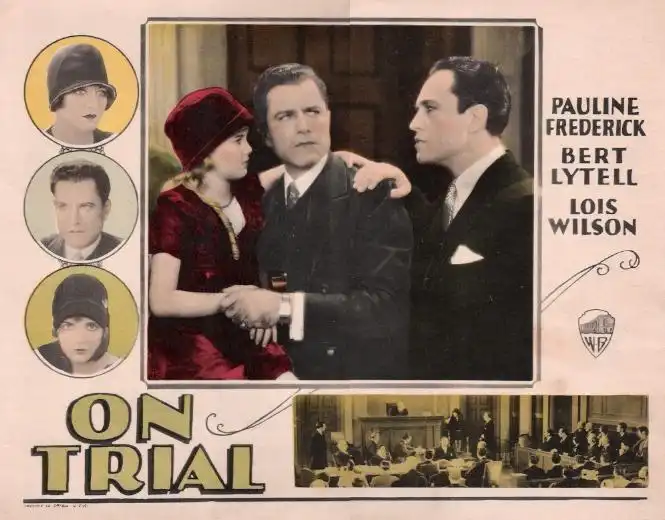
A definitive 5.2/10 rating for a film that redefined the boundaries of cult cinema. On Trial remains a cornerstone of transgressive art.
For film historians and enthusiasts of early sound cinema, On Trial (1928) is an essential, if sometimes cumbersome, watch. This adaptation of Elmer Rice’s hit play offers a fascinating glimpse into the nascent stages of the talkie era, showcasing both its limitations and its burgeoning potential. For a general audience seeking a compelling courtroom drama, however, the film’s significant technical and stylistic quirks, born of its time, might prove a considerable hurdle. If you have patience for static cameras, deliberate pacing, and actors still finding their vocal footing, there's a unique experience here. If you expect the slick, dynamic storytelling of modern cinema, this will likely feel like a slow, creaky journey.
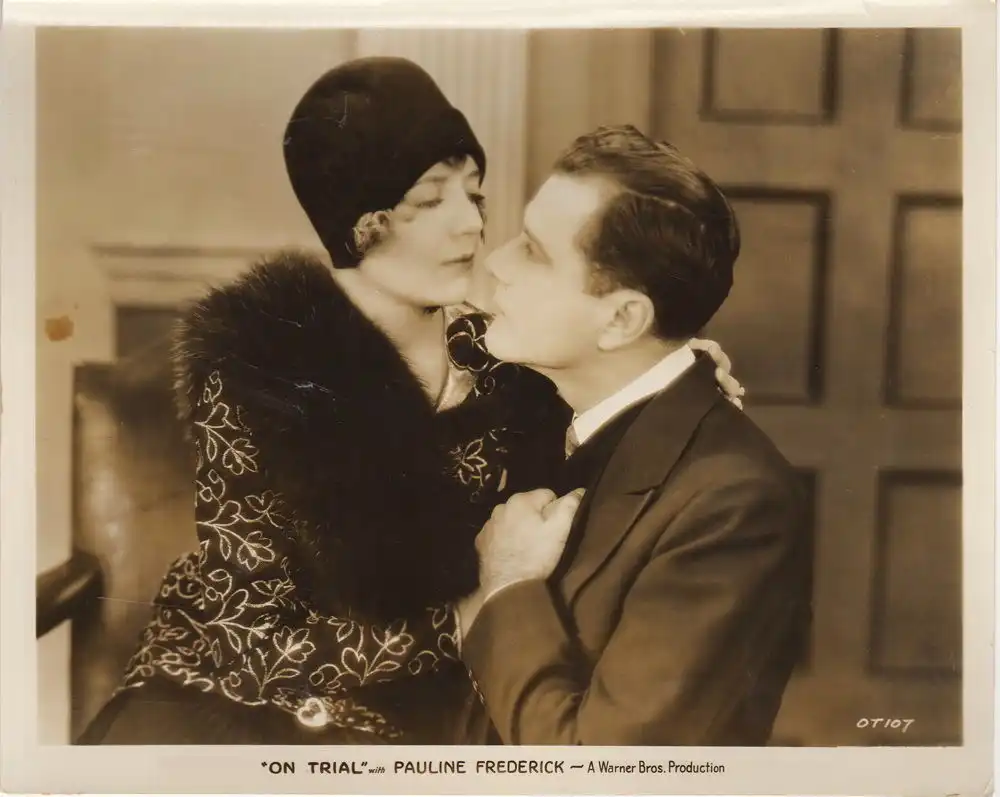
As one of the first feature-length sound films, On Trial is a fascinating case study in adaptation. The narrative, centered on Robert Strickland (Bert Lytell) accused of murdering his friend, unfolds primarily within the confines of a courtroom. This setup, inherited from its stage origins, translates directly into the film's visual approach: largely static camera work, with long takes that often feel more like filmed theater than cinematic storytelling. The camera is tied down, literally and figuratively, by the bulky early sound recording equipment, resulting in a series of medium shots and two-shots that rarely break free.
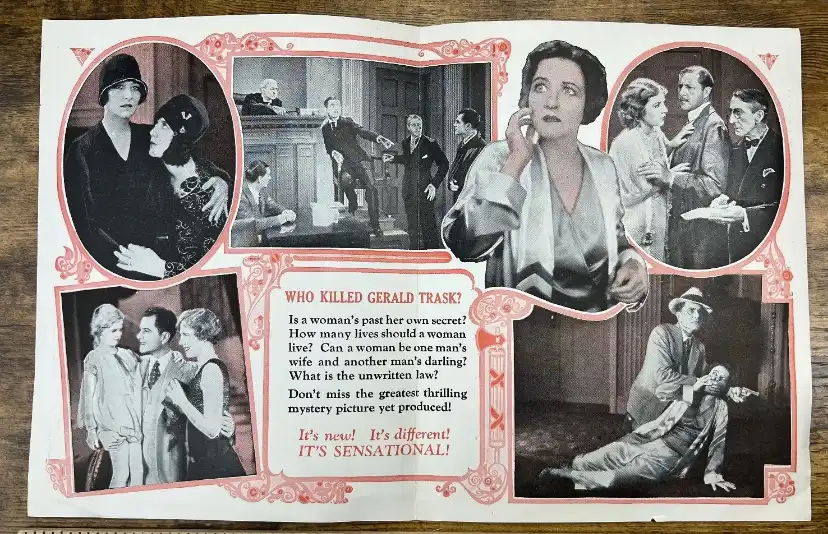
The pacing, consequently, is deliberate. Testimony unfolds in extended sequences, punctuated by intertitles that still serve to bridge gaps or emphasize crucial points, a lingering habit from silent film. When characters speak, the dialogue is delivered with a certain theatricality, often projected rather than naturally conversed. This isn't a flaw of the actors, but a characteristic of the period; they were learning to perform for the microphone, often positioned awkwardly off-camera, while still projecting for the back row of a theater. The film's primary innovation, its use of flashbacks to break up the courtroom scenes, feels genuinely progressive for 1928, providing necessary visual variety and narrative momentum that mitigates some of the static nature of the main setting.
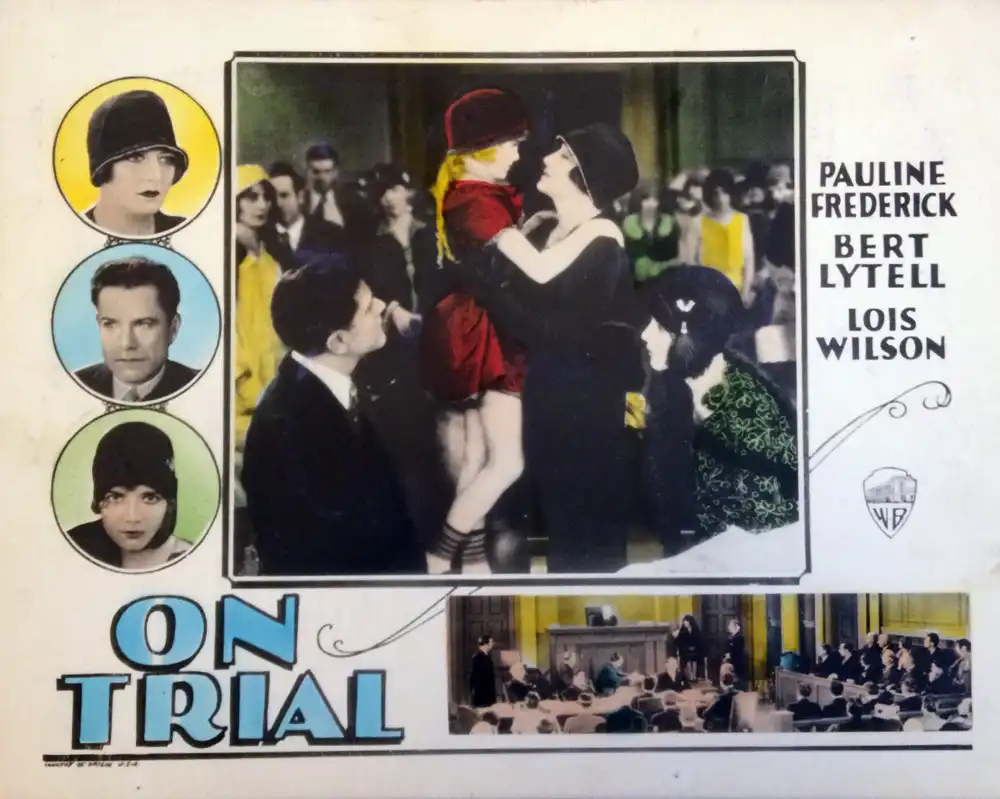
Bert Lytell, as the accused Robert Strickland, carries the weight of the film on his shoulders. His performance is a curious blend of silent-era intensity and early talkie restraint. In moments of high drama, his eyes still convey a powerful, almost melodramatic anguish, while his vocal delivery is measured, perhaps overly so, as if he's acutely aware of the microphone's presence. There are instances where his voice feels almost disembodied from his physical performance, a common issue in these transitional years.
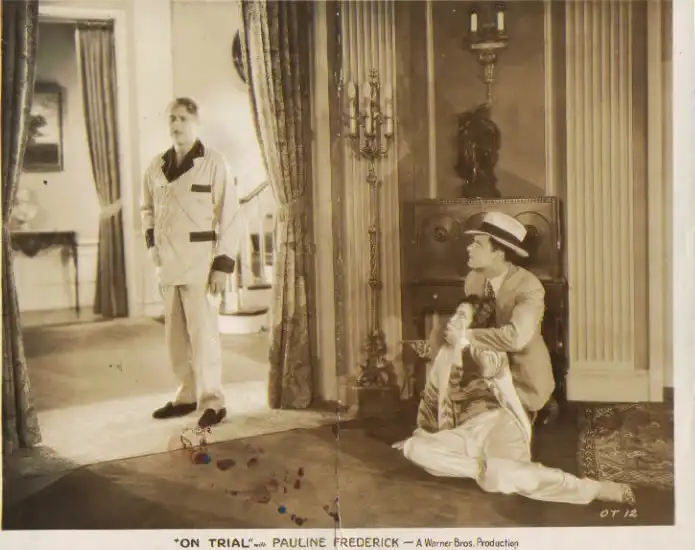
Lois Wilson, playing Strickland's distraught wife, offers a more nuanced portrayal. Her quiet desperation is often more effective than Lytell's more overt displays. Watch for a particular scene where she clutches her hands tightly, her knuckles white, just off-center in the frame, while listening to a particularly damning piece of testimony. The camera holds on her for an extended beat, and it's in these silent, physical moments that her performance truly resonates, transcending the sometimes-stilted dialogue.
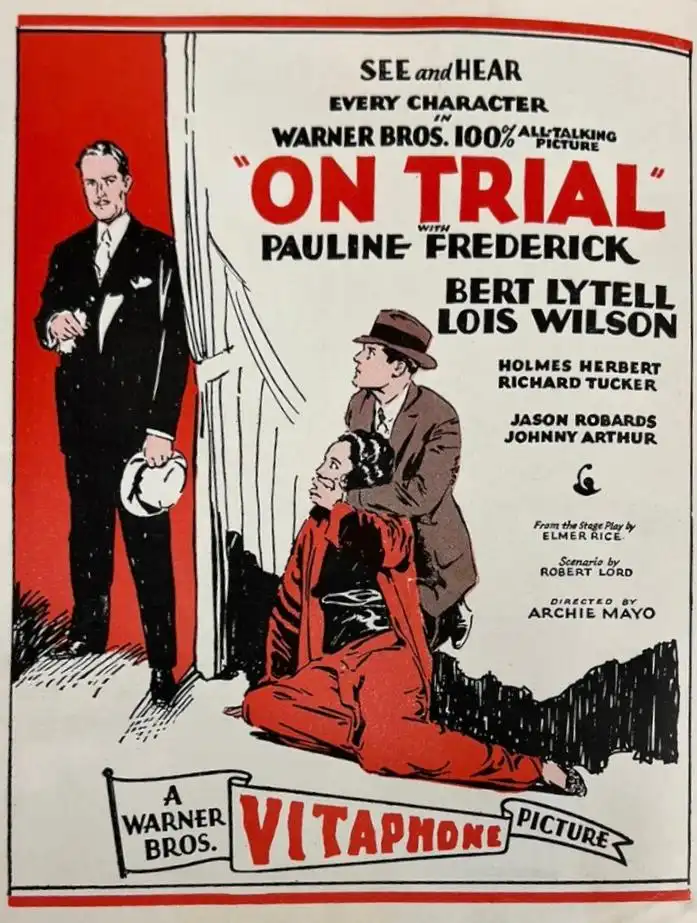
Among the supporting cast, Franklin Pangborn makes a brief but memorable appearance as a hotel clerk, delivering his lines with a distinctive, almost flustered energy that would become his comedic trademark. Even in this early role, his unique cadences stand out, a welcome splash of personality in a generally serious affair. Edmund Breese, as the prosecuting attorney, chews the scenery with gusto, his booming voice and aggressive gestures perfectly suited to the theatrical demands of the era.
Visually, On Trial struggles with the technical limitations of its time. Lighting is often flat and functional, designed to illuminate the actors rather than create atmosphere. The sets, particularly the courtroom, are functional but lack depth, reinforcing the feeling of a filmed play. However, the film does attempt some interesting visual flourishes. The transition to flashbacks, for instance, often employs a simple but effective dissolve, sometimes overlaying the current scene with the past, creating a sense of memory bleeding into reality.
One striking detail that only a viewer would notice is the peculiar, almost reverent way the judge's gavel is miked. Every strike of the gavel, especially early in the film, sounds disproportionately loud and sharp compared to the dialogue, as if the sound engineers were particularly proud of capturing that specific, resonant thud. It’s a minor but telling detail about where the technical focus sometimes lay.
The film's tone is largely serious, as expected from a murder trial. However, there are moments of unexpected levity, mostly unintentional, stemming from the sometimes-awkward delivery of lines or the exaggerated reactions of background extras. A specific instance involves a juror in the second row, whose head bobs with an almost comical rhythm as the lawyers deliver their arguments, a small human detail that momentarily breaks the tension.
On Trial is not a film for everyone, nor is it a forgotten masterpiece. It is, however, an invaluable piece of cinematic history. For those with a keen interest in the transition from silent to sound cinema, or specifically in the evolution of the courtroom drama, it offers a wealth of material for study. You’ll see the growing pains of a new medium, the awkwardness of actors adapting to new demands, and the tentative steps towards a new visual language. While it may not thrill as a piece of entertainment today, its historical significance and the occasional flashes of genuine performance make it a worthwhile, if sometimes laborious, viewing experience for a very specific audience. Approach it as a historical document first, and a drama second, and you might find its clunky charm surprisingly engaging.
IMDb 6.3
1927
Community
Log in to comment.