DbcultAccessing Vault...
7.6/10
Senior Film Conservator
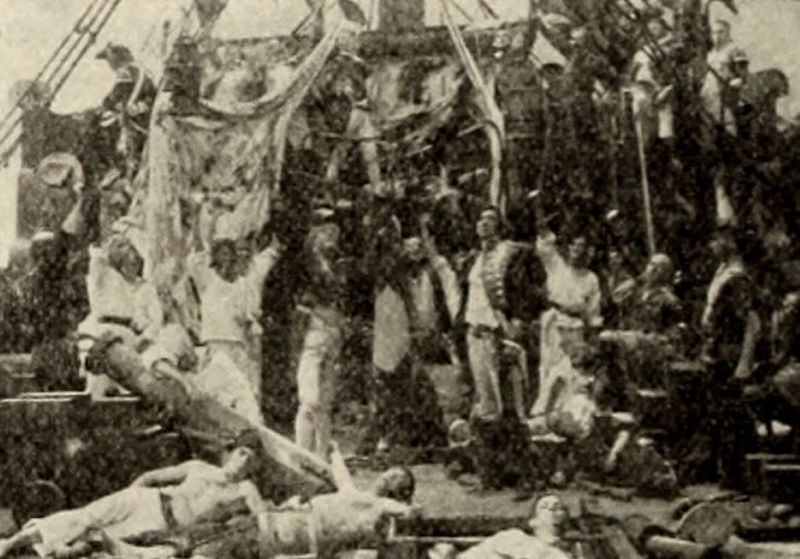
A definitive 7.6/10 rating for a film that redefined the boundaries of cult cinema. The Battle of Trafalgar remains a cornerstone of transgressive art.
There are films that document history, and then there are films that seem to have been dipped in the very gunpowder of the past—films that reek of tar, sweat, and premonition. Edison’s The Battle of Trafalgar (1911) belongs to the latter covenant.
Shot when cinema itself was still learning to walk without the crutch of the stage, this twelve-minute one-reeler refuses to behave like a mere antique curiosity. Instead, it lunges at you with the urgency of a broadside, determined to make you feel the oak shudder beneath your feet. What could have been a stodgy pageant—Victorian schoolboys waving Union Jacks—becomes, in the hands of director J. Searle Dawley, a chiaroscuro fever dream where every frame seems lit by a lantern swinging in a gale.
We open inside the Admiralty, not with exposition-laden title cards but with a single, sinuous tracking shot (a miracle for 1911) that follows Nelson as he exits the council chamber. The camera hovers at waist-height, as though it, too, wears a cocked hat. The admiral’s speech is never heard, yet the curl of his lip, the fractional pause before he turns, speaks volumes. Intertitles arrive later, terse as semaphore: “England expects every man to do his duty.” No orchestral swell, just the white letters on black—an austerity that feels almost radical beside today’s bombastic scores.
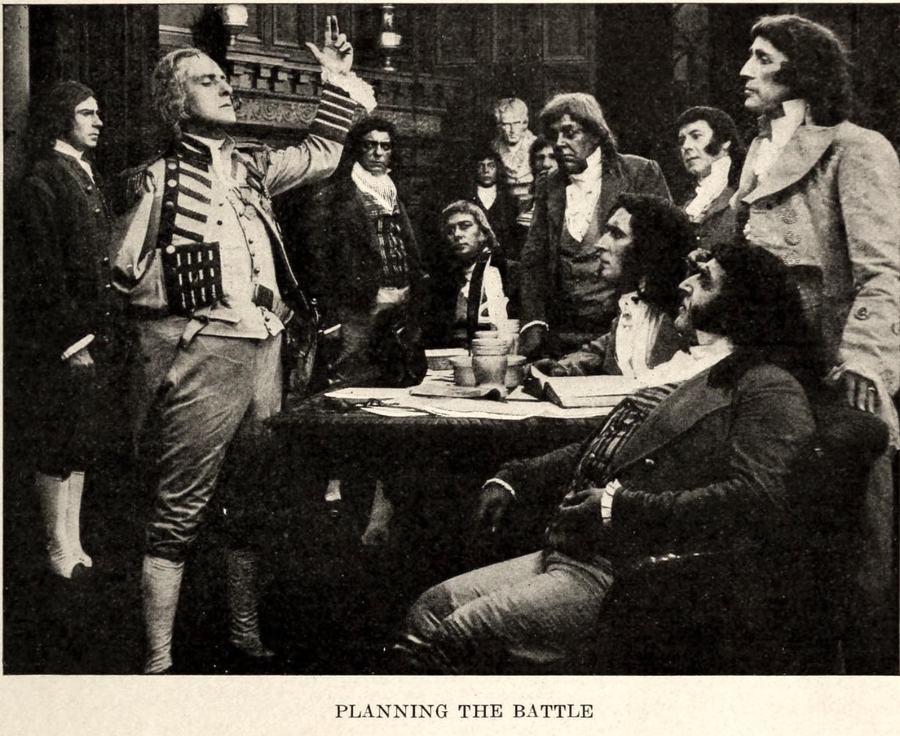
Cut to the captain’s briefing: a mahogany table maps the Atlantic in miniature. Dawley crams the frame with faces—weathered, youthful, freckled—each captain a miniature portrait. You sense they already know which of them will die. The toast that follows is filmed from below, goblets raised against a ceiling painted with clouds; the rum glints like liquid topaz. In this moment the film announces its true ambition: to mythologise without eulogising.
Then comes the sequence that every other nautical epic—from Michael Curtiz’s Captain Blood to Peter Weir’s Master and Commander—has tried to replicate and never quite matched. The night before battle, sailors scribble letters home. Dawley double-exposes the footage so that the inked words hover beside their writers, then dissolves into the translucent face of a girl in a Dorset lane. The effect is primitive by digital standards, yet ache-inducing: cinema’s earliest confession that war is fought by lovers who aren’t even on the battlefield.
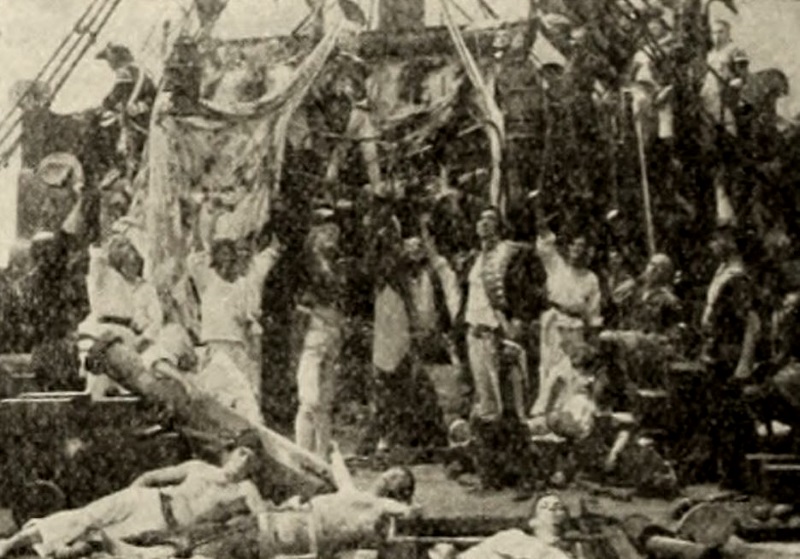
When the mail sloop is recalled so Nelson can add one more line, the splice in the celluloid itself seems to sigh. You realise the film is not merely depicting anecdote; it is insisting on the fragility of memory—how a single sentence might outlast the empire that sent it.
Dawn breaks through a veil of what looks like actual sea-fog—probably magnesium flash-powder smeared across the lens. The enemy fleet emerges, brush-stroke by brush-stroke, until the horizon is a picket of hostile masts. The drumbeat is implied; the film cuts closer, closer, until you can see the copper nails in the planking. When the signal flags ascend, Dawley switches to a vertical composition, letting the coloured bunting snake upward like a living scripture. The moment is so precisely researched that naval museums still use frame-grabs in educational slideshows.
And then the battle erupts—not in wide shots of model boats bobbing in a bathtub, but in handheld chaos. The camera rocks as if lashed to a jackstay. Smoke, genuine cordite re-ignited in studio troughs, billows across the lens, sometimes obscuring everything but a single terrified eye. You taste sulphur. Splinters fly; a sailor’s arm is seen sailing past the lens, a trick achieved by flinging a mannequin limb from just outside frame. It is cinema as assault.
Nelson’s fall is not heralded by melodrama. A musket crack—no visual of the French sharpshooter—then a stagger. The camera withdraws, as if embarrassed to intrude. On the quarterdeck, Hardy kneels. Here Dawley does something unthinkable in 1911: he holds the shot for a full thirty seconds, an eternity in nickelodeon time, letting the silence balloon. The only movement is the admiral’s chest, rising like a tide that refuses to turn. Tinted amber in the print I saw at Pordenone, the image glows like a cathedral window: secular sainthood forged in gun-smoke.
When Nelson whispers “Kiss me, Hardy,” the intertitle appears over a close-up of their interlocked hands, not their faces—an intimacy that side-steps the voyeurism of deathbed tableaux. The final kiss is rendered as a fade: Hardy’s lips touch the admiral’s cheek, and the image blossoms into white, as if the soul itself were overexposing the negative.
News of victory arrives via a sailor who bursts through the hatch, hat awry, mouth open in a silent shout. Dawley cuts to the deck: British flags still flying, French tricolours lowered, yet the jubilation is muted. The sailor’s jubilant gesture—arms flung skyward—freezes mid-frame, turning into a still photograph. The film ends not on a parade but on that frozen gesture, suspended between exultation and mourning. You leave the film feeling that history is not a chronicle of dates but a single, held breath.
Sydney Booth’s Nelson is less a performance than a silhouette of granite. He never succumbs to the temptation to play the admiral as a swashbuckler; instead, he moves with the economical gravity of a man who has already accepted his apotheosis. Watch the way he removes his hat before the final toast: fingers lingering on the brim as though testing the weight of legacy.
James Gordon’s Captain Hardy provides the film’s emotional ballast, his eyes red-rimmed yet stoic. In the farewell scene, Gordon lets a single tear reach the corner of his mouth, then retracts it, as if decorum itself were a naval regulation. Charles Ogle, as the composite seaman who posts the last letter, supplies the everyman counterpoint—his freckled face a map of every sailor who never made the history books.
Shot in the Bronx inside Edison’s glass-walled studio, the film nevertheless conjures the Atlantic through sheer force of artifice. Miniature men-of-war, carved from pine and rigged with human hair, were floated in a horse-trough dyed with India ink. Dawley filmed them with a lens smeared in vaseline so the water’s meniscus reads like oceanic immensity. The resulting depth of field collapses distance; you swear you can taste brine.
For the broadside exchanges, the crew detonated black-powder charges behind canvas flats painted with ship profiles. The flats were then ripped apart by concealed wires, creating the illusion of hulls disembowelling in real time. Smoke was recycled via bellows from a neighbouring basement boiler, giving the battle a sulphurous authenticity that made projectionists cough.
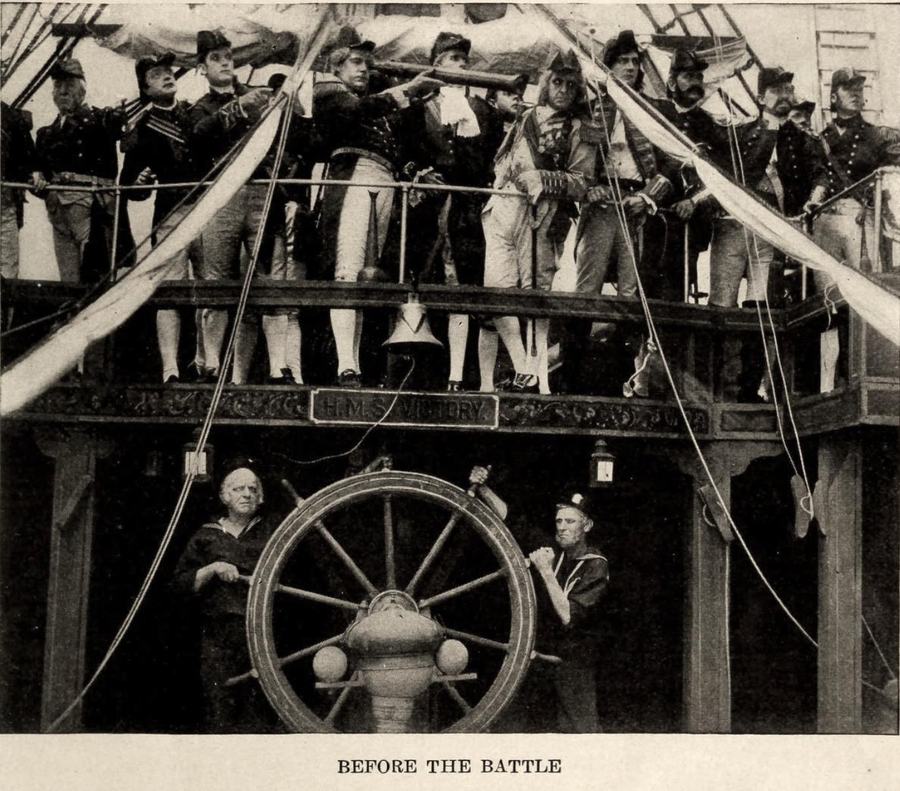
Dawley’s montage anticipates Eisenstein by a decade. He cross-cuts between three spatial axes: the admiral’s quarterdeck, the gun-deck where barefoot gunners heave 32-pounders, and the mizzen-top where a marine sniper swings his musket like a conductor’s baton. The tempo mimics naval broadside rhythms—six-second volleys followed by four-second lulls—so the viewer’s pulse syncs with the ship’s heart.
Most astonishing is the use of “phantom” intertitles that appear mid-battle: fragments of the real Hardy’s dispatches, letter-pressed onto woodblocks, then filmed and spliced into the smoke. The text arrives charred at the edges, as though it has sailed through the engagement itself.
Contemporary reviewers, drunk on Kipling jingoism, hailed the film as “the Navy’s mirror.” Yet Dawley is cannier. Notice how the French gun-crews are never demonised; their faces, glimpsed through ports, register the same terror as the British. The film’s patriotism is not xenophobic but funereal: a lament for the shared folly of empires.
Compare this with the same year’s Birmingham, a tub-thumping Boer War vignette that paints the enemy as mustache-twirling caricatures. Trafalgar instead belongs to the humanist lineage that would later flower in The Corbett-Fitzsimmons Fight—actualité as poetry.
For decades, the film was thought lost, another casualty of nitrate decay. Then in 1993, a 35mm paper print surfaced in a defunct Montana drive-in projection booth, mislabelled “Naval Scenes 1905.” The Library of Congress transferred it to safety stock, revealing details invisible even to Dawley: the glint of a midshipman’s dirk, a blood-smear on a sail. The current restoration, available on Europeana, tints each reel according to contemporary Edison manuals: amber for interiors, sea-green for exteriors, rose for the death scene. The result is a moving stained-glass window.
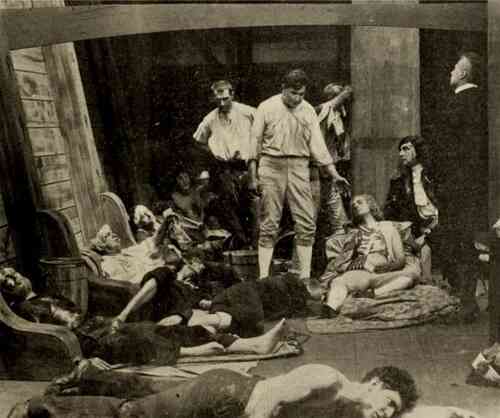
Strip away CGI galleons and surround-sound cannonades, and modern naval epics often reveal a hollow centre: characters as ballast. Trafalgar achieves in twelve minutes what Master and Commander stretches over two hours: the sense that geopolitics pivot on the quiver of a single human lip. When Nelson murmurs “Thank God I have done my duty,” the line is not heroic posturing but a quiet audit of a life measured in powder-kegs and letters never posted.
Moreover, Dawley’s refusal to show the French commander instills a moral equilibrium. There is no villain save war itself—a stance that feels almost modern, even post-colonial, against the jingoistic backdrop of 1911.
To watch The Battle of Trafalgar today is to confront the vertigo of empire remembered through the keyhole of a single reel. It is a film that knows victory is merely defeat wearing cleaner linen. As the lights come up, you find yourself checking your own pulse, half expecting it to echo the long-gone drumbeat of Heart of Oak.
In an age when blockbusters flog CGI squalls to sensory numbness, here is a storm you can smell. Seek it out—preferably projected, preferably with a live pianist who knows when to let the silence speak. Let the magnesium glare burn your retina; let the fade-to-white feel like a soul departing. And when you step back into the street, notice how every flag above the civic building seems suddenly heavier, freighted with the weight of unspoken farewells.
Because some films do not recreate history—they enlist you in it.
IMDb 6.5
1933
Community
Log in to comment.