DbcultAccessing Vault...
Cult Review
Senior Film Conservator
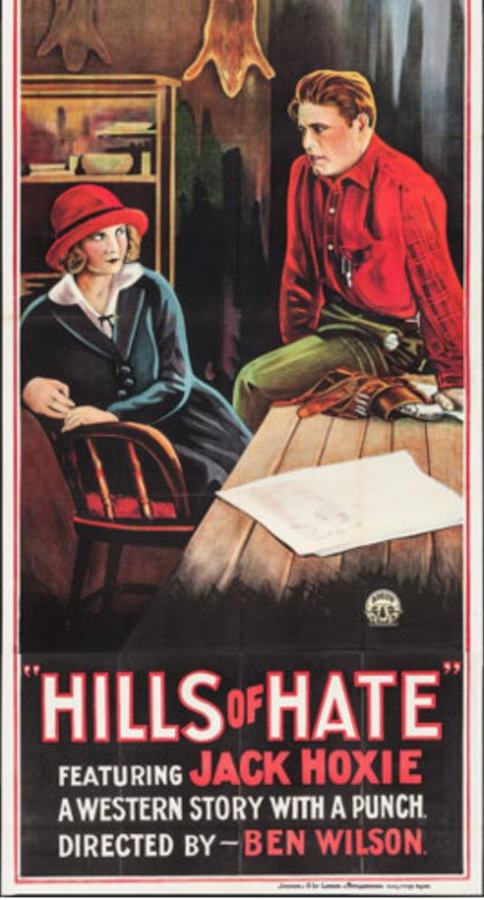
Hills of Hate is a film that wears its heart on its sleeve, yet hides it in plain sight behind layers of dusty boots and gold-dusted monochrome. It is a story of a man torn between two worlds—the gilded cage of urban society and the untamed promise of the frontier. The film’s director, with a deft hand, paints this conflict with the precision of a Renaissance master, using the stark contrast between city streets and prairie horizons to mirror the protagonist’s inner turmoil. If you’ve ever found yourself lingering in the shadow of Her Father’s Gold or the poetic desolation of The Kiss, this Western will feel like a familiar gust of wind through a saloon door.
The film opens with a young man—played with aching sincerity by Jack Hoxie—in the throes of urban success. His partnership with his father, a man of old-world values, is both a bond and a burden. The father, portrayed by Wilbur McGaugh, is a figure of quiet dignity, his reputation slowly eroded by a financial scandal he didn’t orchestrate. The villain of the piece, a ‘clever crook’ (a term as vague as it is deliberate), is the kind of antagonist who exists to test the hero’s moral fiber. Yet what makes Hills of Hate resonate is its refusal to reduce these characters to archetypes. The crook isn’t a caricature of greed but a shadowy figure whose schemes are as much a product of the times as they are personal.
The love story, however, is the film’s beating heart. Evelyn Nelson’s portrayal of the heroine—whose loyalty is tested by the hero’s fall from grace—is a quiet triumph. Her scenes with Hoxie crackle with a restrained intensity, their dialogue sparse but loaded with subtext. When the hero is spurned by his beloved, the rejection isn’t melodramatic but visceral, a blow that sends him westward in search of solace. This journey isn’t just physical—it’s a metaphorical exodus from the lies of civilization into the raw, unfiltered truth of the wild.
The film’s greatest strength lies in its use of landscape. The transition from the smog-choked city to the golden expanse of the West is rendered with almost mythic grandeur. Wide shots of rolling hills and sun-drenched valleys serve as both setting and symbol, a reminder that redemption often lies in places where the earth itself seems to hum with possibility. Cinematographers, though unnamed in the credits, deserve praise for capturing the interplay of light and shadow with the delicacy of a painter working in oils. One scene, in particular—a sunrise over a campsite where the hero and heroine reunite—stays with the viewer like a half-remembered dream.
Structurally, Hills of Hate follows a classic arc: fall from grace, journey into the unknown, and triumphant return. Yet it subverts expectations in subtle ways. The hero’s reunion with his love isn’t a fairy-tale resolution but a negotiation of scars—both visible and hidden. The gold he finds isn’t just a material reward but a metaphor for the intangible: resilience, forgiveness, and the quiet strength of starting anew. This thematic depth elevates the film beyond its B-movie origins, placing it in conversation with more ambitious works like The Dragon Painter, where art and life blur into a single canvas.
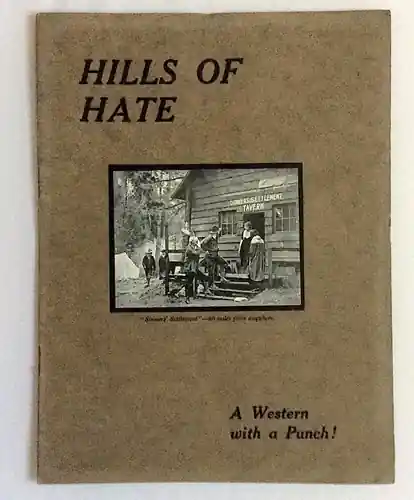
The supporting cast, though given little screen time, adds texture to the narrative. Marin Sais’s brief but memorable role as a saloon singer—a woman who sees the hero’s potential before he does—offers a fleeting glimpse into the film’s feminist undertones. Her rendition of a folk ballad, accompanied by a lonesome harmonica, is a moment of pure poetry in a film otherwise driven by action and emotion. It’s a reminder that even in a genre dominated by gunfights and gold, there’s room for nuance.
If there is a flaw, it lies in the pacing. The first act, which sets up the hero’s urban downfall, feels rushed compared to the leisurely pacing of the Western sequences. This isn’t a criticism per se, but a quirk that reflects the film’s dual nature: a story torn between two worlds, each with its own rhythm. Yet even this duality is thematically apt. The city’s fast-paced scheming is contrasted with the West’s slow, deliberate unfolding of fate—a narrative choice that rewards patience.
The film’s score, a blend of melancholic piano and twanging fiddle, deserves mention. It’s the kind of music that lingers in the air after the screen fades to black, haunting the viewer with its bittersweet refrain. When paired with the visuals—a lone rider silhouetted against a blood-red sunset—the effect is nothing short of transcendental. It’s a reminder that even in a genre often dismissed as formulaic, there are moments of profound beauty waiting to be unearthed.
In comparing Hills of Hate to its contemporaries, one might draw parallels to Behind the Mask, where identity and deception drive the plot, or Uden Fædreland, which explores the immigrant’s struggle for belonging. Yet Hills of Hate stands apart for its unflinching examination of how personal crises can be both destroying and transformative. It’s a film that trusts its audience to sit with discomfort, to find meaning in the spaces between dialogue and action.
For modern viewers, the film offers a fascinating window into early 20th-century anxieties—financial instability, the erosion of family legacy, and the search for authenticity in a rapidly changing world. Though its resolution may feel unapologetically optimistic, this optimism is grounded in the tangible: gold, yes, but also the hero’s hardened hands, the heroine’s weathered eyes, and the unspoken understanding that survival is a form of victory in itself.
In conclusion, Hills of Hate is more than a Western. It is a tapestry of human frailty and fortitude, woven with the care of a craftsman who believes in the power of stories to heal. Its legacy lies not only in its plot but in the way it asks us to look beyond the surface—into the hills of our own hates and the gold that might lie beneath them. For those who crave films that blend the epic with the intimate, this is a journey worth taking.
IMDb 4.8
1933
Community
Log in to comment.