DbcultAccessing Vault...
Cult Review
Senior Film Conservator
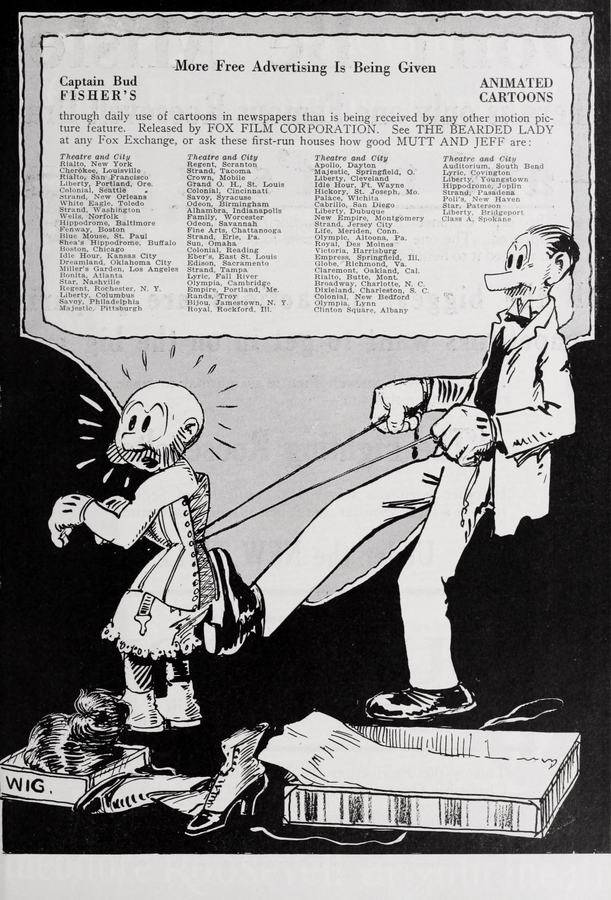
From the flickering shadows of the early cinematic age emerges a peculiar and profoundly resonant work: Bud Fisher's 'The Bearded Lady.' Often overshadowed by more boisterous comedies or grand historical epics of its era, this film quietly asserts its place as a poignant exploration of identity, difference, and the enduring human quest for acceptance. Crafted by the singular vision of Bud Fisher, who not only penned the narrative but also, remarkably, took on a pivotal role within its cast, the film transcends its seemingly sensationalist title to deliver a narrative of surprising depth and emotional complexity.
The central figure, Elara, portrayed with a compelling blend of vulnerability and quiet strength, immediately captures the audience's empathy. Her existence, defined by a magnificent beard, is a public spectacle, a source of both fascination and ridicule. Fisher’s direction, surprisingly nuanced for the period, avoids caricature, instead allowing Elara’s inner life to slowly unfurl. We witness her daily routines, the subtle glances of onlookers, the performative aspects of her carnival life, all painted with a delicate brush that highlights her isolation even amidst the throng. It’s a masterful study in silent performance, where every gesture, every tilt of the head, every momentary flicker in her eyes speaks volumes. This nuanced portrayal sets it apart from more simplistic characterizations often found in early cinema, inviting comparison to the complex moral dilemmas explored in films like The White Sister, which similarly delves into the sacrifices and internal struggles of its protagonist.
Elara’s world is a vibrant, chaotic tableau of the early 20th-century carnival, a setting that provides both a backdrop for her uniqueness and a poignant contrast to her deep-seated desire for normalcy. The film uses its visual language to underscore this dichotomy: bright lights and boisterous crowds often frame Elara in moments of profound solitude, her expressive eyes conveying a longing that words could never capture. Fisher, as a writer, imbues her character with an internal monologue that, though unspoken, is palpably felt. It’s a testament to his understanding of human psychology, even in a medium still finding its voice. The narrative deftly navigates her public identity as ‘The Bearded Lady’ – a marvel, an oddity – and her private yearning for a life beyond the tent flap. This struggle between an imposed identity and an authentic self is a timeless theme, handled here with remarkable sensitivity.
The introduction of a romantic interest, a gentle and unassuming painter (also played by Bud Fisher, showcasing his versatility), serves as the catalyst for Elara’s deeper introspection. This character, initially drawn to her exoticism, gradually begins to see beyond the superficial, recognizing the woman beneath the beard. Their burgeoning connection is portrayed with a delicate tenderness, a stark contrast to the often melodramatic romances of the era. It challenges the viewer to question their own perceptions of beauty and acceptance. The film doesn't shy away from the societal pressures and prejudices they face, making their bond feel earned and genuinely impactful. This exploration of unconventional love in the face of societal judgment echoes, in a very different context, the quiet defiance found in narratives like Golfo, where profound emotional connections challenge established norms.
For a film of its vintage, 'The Bearded Lady' exhibits a surprising sophistication in its visual storytelling. The cinematography, while constrained by the technology of the time, uses close-ups effectively to convey emotion, a technique still evolving in the silent era. The use of light and shadow, particularly in the more intimate scenes, creates an atmosphere of quiet contemplation, drawing the audience into Elara’s internal world. The editing, though straightforward, maintains a steady rhythm, allowing the narrative to unfold organically without feeling rushed or disjointed. Fisher’s choice to keep the action largely focused on character interaction rather than grand spectacle allows these subtle cinematic techniques to shine. It's a masterclass in how much can be communicated without a single spoken word, relying entirely on visual cues and the power of performance. One might even draw parallels to the character-driven animation of Feline Follies, where the expressive movements of its animated figures convey complex emotions without dialogue, proving the universal language of visual narrative.
The film’s pacing is deliberate, allowing moments of quiet reflection to breathe, which is crucial for a character study of this nature. Unlike the often frantic energy of some early comedies or action serials, 'The Bearded Lady' takes its time, inviting the viewer to linger on Elara’s expressions, to ponder her dilemmas. This measured approach enhances the emotional impact, making her triumphs and heartbreaks feel more profound. It's a testament to Fisher's confidence in his story and his lead performer, trusting that the audience would be captivated by the interior journey as much as any external drama.
At its heart, 'The Bearded Lady' is a profound meditation on 'otherness' and the human desire for belonging. Elara’s beard is merely a visible manifestation of a deeper theme: the challenge of being different in a world that prizes conformity. The film critiques societal norms, subtly questioning why certain physical attributes are deemed acceptable while others are relegated to the realm of the 'freakish.' It’s a powerful, albeit unspoken, argument for empathy and understanding. This thematic depth elevates the film far beyond a mere curiosity, positioning it as an important, albeit overlooked, piece of social commentary from the silent era. One could argue its timeless relevance, drawing lines to contemporary discussions about body positivity and identity, making it surprisingly modern in its outlook.
The climax of the film, a moment of profound personal choice for Elara, is handled with an understated power that resonates long after the final frame. It is not a grand, dramatic confrontation, but a quiet, deeply personal decision that speaks volumes about self-acceptance and agency. This resolution avoids the easy tropes of either complete assimilation or tragic isolation, instead offering a more nuanced and ultimately empowering vision of individuality. It suggests that true acceptance must first come from within, a lesson that feels as vital today as it did a century ago. This emphasis on internal transformation and the journey of self-discovery finds a spiritual kin in films like The Learnin' of Jim Benton, which similarly charts a protagonist's evolution through challenging circumstances.
The fact that Bud Fisher not only conceived and wrote 'The Bearded Lady' but also stepped into a significant acting role is a testament to his multifaceted talent and artistic vision. His performance as the painter is understated yet compelling, providing a grounding presence against Elara’s more extraordinary existence. He embodies the 'normal' gaze that slowly shifts to one of genuine affection and respect. This dual responsibility, both behind and in front of the camera, undoubtedly contributed to the film’s cohesive vision and its remarkable emotional authenticity. It allowed for a seamless integration of narrative intention and performative execution, a rare feat for any filmmaker, let alone one working in the nascent days of cinema. His dedication to the project is palpable in every frame, reinforcing the film’s distinct artistic integrity.
Comparing his work here to other endeavors of the period, Fisher demonstrates a versatility that extends beyond the comedic sensibilities he might have been known for. While films like Bill's Sweetie might showcase a lighter touch, 'The Bearded Lady' reveals a capacity for profound drama and social commentary. This range is a remarkable characteristic of early cinema pioneers, who often wore many hats, pushing the boundaries of what the medium could achieve. Fisher’s contribution here is not just as a writer or an actor, but as a holistic artist shaping a meaningful narrative from the ground up.
'The Bearded Lady' may not possess the grandiosity of some of its contemporaries, nor the broad comedic appeal of others. Yet, its quiet power and profound humanism ensure its lasting relevance. It is a film that challenges, educates, and, most importantly, empathizes. Its rediscovery in the annals of silent cinema offers a valuable insight into the diverse storytelling landscape of the era, proving that even in its infancy, cinema was capable of tackling complex social themes with grace and insight. It stands as a testament to the fact that compelling narratives about the human condition are timeless, regardless of the technological limitations of their creation.
The film’s enduring appeal lies in its courageous portrayal of a character who, despite being an 'outsider,' embodies universal aspirations for love, acceptance, and self-worth. It serves as a reminder that the most extraordinary stories often emerge from the most ordinary desires, magnified by unusual circumstances. In an age where spectacle often overshadows substance, 'The Bearded Lady' offers a refreshing, poignant counter-narrative, inviting viewers to look beyond the surface and connect with the shared humanity that binds us all. Its gentle yet firm voice resonates through the decades, a beacon for anyone who has ever felt different, a quiet triumph in the vast, flickering tapestry of early film. This enduring message of self-acceptance and challenging societal norms makes it a compelling companion to other films that tackle profound personal journeys, such as Even As You and I, which explores similar themes of internal struggle and external judgment.
Ultimately, 'The Bearded Lady' is more than just a historical artifact; it is a living, breathing piece of art that continues to speak to modern audiences. It encourages us to question our biases, to celebrate individuality, and to recognize the inherent dignity in every human being, regardless of their outward appearance. Bud Fisher, through his singular creation, leaves us with a film that is both a product of its time and remarkably ahead of it, a true gem in the crown of silent cinema.

IMDb —
1917
Community
Log in to comment.