DbcultAccessing Vault...
Cult Review
Senior Film Conservator
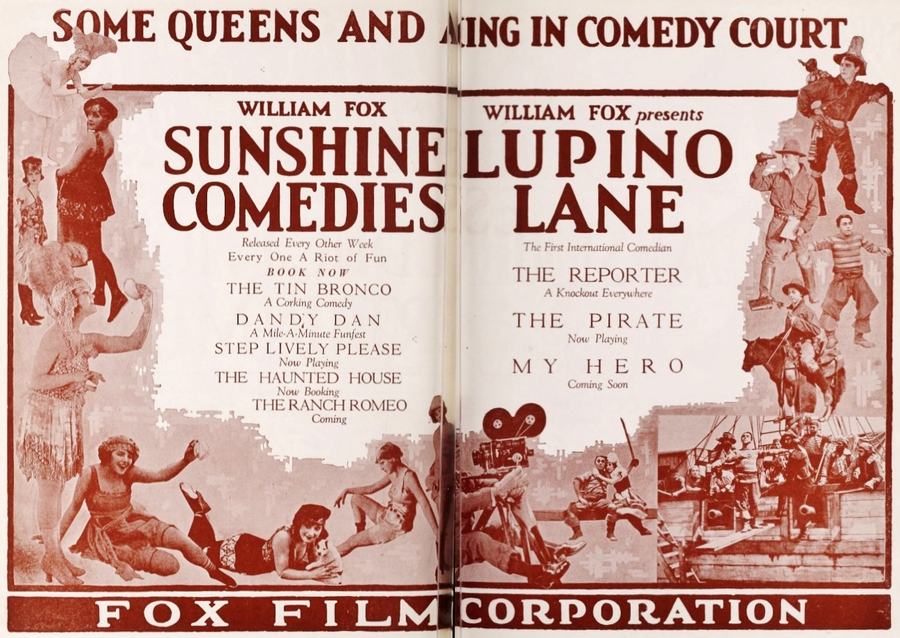
The cinematic tradition of the 'tenderfoot'—that quintessential urbanite thrust into the unforgiving maw of the frontier—finds one of its most rhythmically sophisticated iterations in My Hero. Starring the mercurial Lupino Lane, this film transcends the rudimentary gags of its era to offer a meditation on physical adaptability. Lane, a product of the legendary Lupino theatrical dynasty, brings a level of European music-hall precision to the dusty vistas of the American West, creating a stylistic friction that is as intellectually stimulating as it is visually hilarious.
In the early 1920s, the Western was already a crystallized genre, often leaning toward the melodrama seen in works like A Romance of the Redwoods. However, Lane’s approach subverts the rugged stoicism of the pioneer. Instead of the brooding hero, we are presented with a protagonist whose primary weapon is his own biological elasticity. The premise—a father sending his son West for 'taming'—is a classic Victorian trope, yet Lane revitalizes it by treating the environment not as a backdrop, but as a sparring partner.
The initial sequences of My Hero are a masterclass in visual contrast. We see Lane’s character draped in the excessive finery of the city, an anachronism in the making. This sartorial choice is not merely for comedic effect; it serves as a semiotic marker of his alienation. When he arrives in the West, the juxtaposition between his polished exterior and the jagged, sun-bleached topography creates an immediate tension. Unlike the high-stakes peril found in The Adventures of Kathlyn, the danger here is filtered through the lens of social and physical incompetence.
The 'taming' process is depicted through a series of escalating vignettes. Each encounter with the locals becomes a choreographic exercise. Lane’s ability to manipulate his body—collapsing, rebounding, and twisting with a liquid grace—suggests a character who is fundamentally at odds with the rigid, hyper-masculine expectations of the frontier. This is where the film gains its depth; it critiques the very notion of 'manliness' by showing that the protagonist’s survival depends more on his agility and quick-wittedness than on brute strength or gunplay.
When placed alongside contemporary efforts like Penny of Top Hill Trail, My Hero distinguishes itself through its pacing. While many Westerns of the period struggled with the transition from episodic action to cohesive narrative, Lane’s film maintains a relentless internal logic. The gags are not merely appended to the plot; they are the plot. The 'taming' is not a single event but a cumulative transformation that occurs in the spaces between the falls and the recoveries.
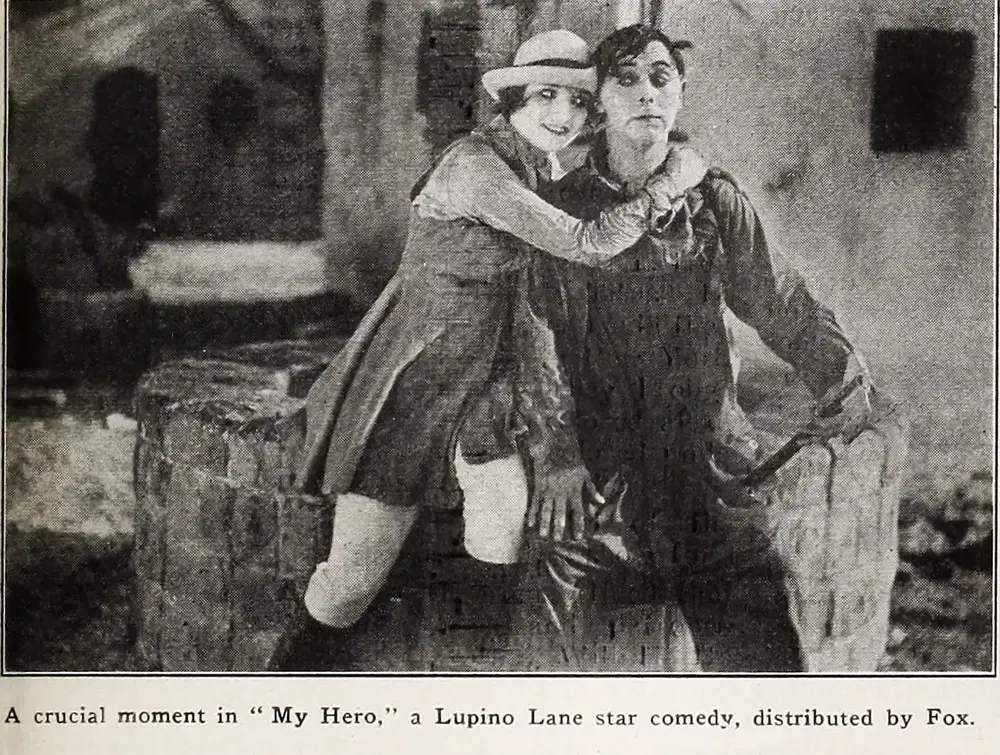
Consider the thematic echoes in Shadows of Suspicion, where the protagonist must navigate a web of deception. In My Hero, the 'deception' is the protagonist's own initial belief that he is incapable. The Western landscape acts as a mirror, reflecting his fears back at him until he is forced to shatter the glass. This psychological undercurrent, though masked by the frantic energy of slapstick, provides the film with a resonance that many of its peers lack.
Lupino Lane’s genius lies in his understanding of the cinematic frame. In My Hero, he uses the entire depth of the field to execute complex physical sequences. There is a specific moment involving a horse—a staple of the genre—that subverts the heroic equestrian imagery popularized by the likes of William S. Hart. Instead of a seamless union between man and beast, Lane presents a chaotic struggle for dominance, where the horse appears to be the more intellectually composed of the two. This reversal of roles is a recurring motif, highlighting the absurdity of the 'civilizing' mission.
The film’s editing, though primitive by modern standards, shows a sophisticated grasp of comic timing. The cuts are sharp, emphasizing the impact of Lane’s physical exertions. This technical competence reminds one of the precision required in The Bride-to-Be, where timing is the difference between a laugh and a lull. In My Hero, the stakes are heightened by the ruggedness of the terrain; a fall on a stage is one thing, but a tumble down a rocky incline carries a visceral weight that the audience can feel.
Beyond the laughter, My Hero speaks to the anxieties of a post-WWI society. The 'city chap' was a figure of suspicion—someone who had benefited from the industrial boom but had lost touch with the 'rugged individualism' that supposedly built the nation. By sending the character West, the film participates in a cultural exorcism, attempting to reconcile the modern man with his ancestral roots. It is a theme explored with more gravity in El signo de la tribu, but Lane’s comedic approach makes the pill easier to swallow.
The 'taming' is ultimately a two-way street. While the West hardens the protagonist, he, in turn, brings a sense of whimsical disorder to the static lives of the frontiersmen. His presence disrupts the status quo, suggesting that perhaps the 'civilized' world has something to offer the wild after all—even if it is just a bit of levity. This synthesis of values is what elevates the film from a simple parody to a nuanced exploration of American identity at the dawn of the 20th century.
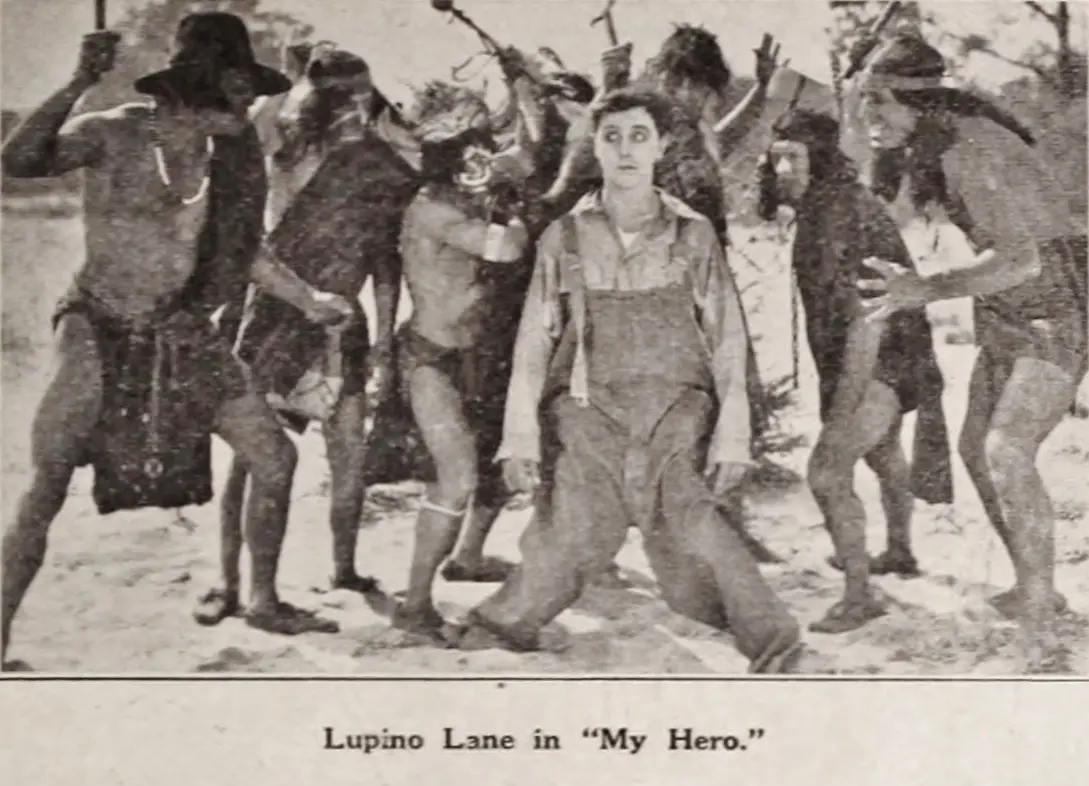
The cinematography in My Hero utilizes the natural light of the California locations to create a stark, high-contrast look that defines the silent Western aesthetic. The wide shots capture the isolation of the protagonist, making his small, flailing figure seem even more insignificant against the vastness of the hills. This visual storytelling is far more effective than any intertitle could be. It evokes the same sense of scale found in The Great Reward, albeit with a focus on the ridiculous rather than the sublime.
Lane’s performance is a masterclass in 'controlled chaos.' Every trip, every stumble, and every frantic run is calculated to the millimeter. This level of control is what allows the film to maintain its momentum. If the physical comedy felt accidental, the tension would evaporate. Instead, we are constantly aware of the performer’s agency, which creates a fascinating layer of meta-commentary: we are watching a highly skilled man play a man with no skills. This duality is the engine that drives the film’s enduring appeal.
My Hero remains a vital piece of silent cinema history, not just for its laughs, but for its role in the evolution of the Western comedy. It paved the way for future icons like Buster Keaton to explore the intersection of man and machine (or man and nature) with similar acrobatic stoicism. While it may lack the epic scope of Disraeli or the raw intensity of Kiss or Kill, its focus is narrower and, consequently, more piercing. It is a study of a single soul in transition, told through the language of the body.
In the pantheon of Lupino Lane’s work, My Hero stands as a testament to his unique ability to translate the complexities of the human condition into the universal tongue of slapstick. It reminds us that whether we are in the crowded streets of London or the dusty trails of the Sierras, the struggle to find our footing is a constant, hilarious, and ultimately heroic endeavor. For those seeking to understand the roots of physical comedy, or for those who simply wish to see a master at work, this film is an indispensable artifact of a bygone era that still feels remarkably alive.
Explore more silent era critiques and deep-dives into the archives of early Hollywood by following our series on the pioneers of the frame.
IMDb 7.2
1933
Community
Log in to comment.