DbcultAccessing Vault...
6.5/10
Senior Film Conservator
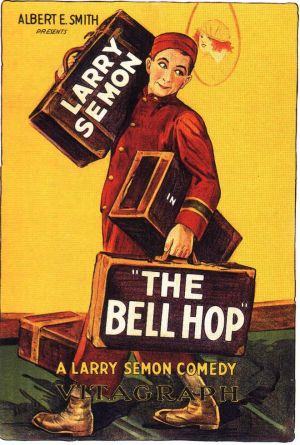
A definitive 6.5/10 rating for a film that redefined the boundaries of cult cinema. The Bell Hop remains a cornerstone of transgressive art.
In the vibrant tapestry of early 20th-century cinema, where innovation jostled with nascent storytelling conventions, certain films emerged as true encapsulations of their era's burgeoning potential. Larry Semon's 1921 silent feature, The Bell Hop, stands as a prime example, a vivacious concoction that masterfully blends the high-stakes thrills of espionage with the anarchic joy of slapstick comedy. It's a delightful romp that, even a century later, retains an infectious energy and a surprising narrative coherence, defying the notion that silent-era comedies were merely a sequence of disconnected gags. This film doesn't just entertain; it provides a fascinating window into the comedic sensibilities and technical prowess available to filmmakers of the time.
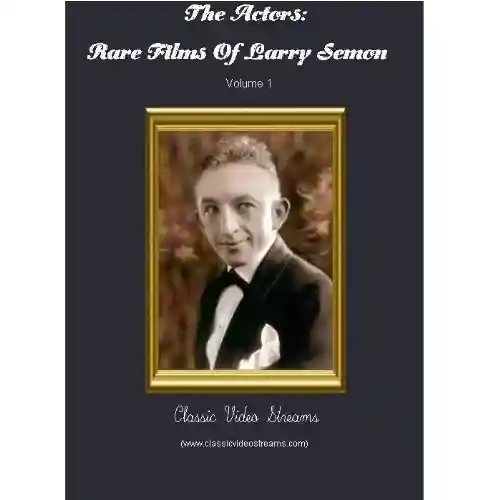
At the heart of The Bell Hop lies the inimitable presence of Larry Semon, a comedic force often overshadowed by his contemporaries but whose unique brand of physical comedy and inventive stunts deserves far greater recognition. Semon, who not only stars but also co-wrote the screenplay with Norman Taurog, crafts a character that is simultaneously endearing and exasperating. His bellhop is not merely bumbling; he is a magnet for misfortune, a walking, talking (or rather, gesturing) catalyst for chaos. Unlike the more introspective or emotionally nuanced characters of a Chaplin, or the stoic resilience of a Keaton, Semon's persona is one of perpetual motion and wide-eyed bewilderment, always on the verge of disaster, yet somehow always stumbling towards a solution.
His performance in The Bell Hop is a testament to his athletic prowess and his meticulous staging of elaborate gags. Every pratfall, every near-miss, every frantic dash through the hotel's opulent corridors is executed with precision, often involving complex mechanical contraptions or perfectly timed interactions with the environment. This isn't just random flailing; it's a carefully choreographed ballet of destruction and recovery. One might draw a parallel to the intricate Rube Goldberg-esque sequences popularized later, but Semon was already exploring these possibilities within the narrative framework of his films. His bellhop's journey from unwitting participant to accidental hero is the comedic engine that drives the entire plot, showcasing a character arc, however broad, that resonates with the audience's desire for the underdog to triumph.
While Semon's antics provide the laughter, the film's espionage plot provides a surprisingly sturdy backbone. The premise of vital government papers being stolen from a hotel safe by a nefarious spy ring is a classic trope, one that was already well-worn even in the early 20th century. Films like The Intrigue or The Island of Intrigue, though often more overtly dramatic, demonstrated the public's appetite for such clandestine narratives. What distinguishes The Bell Hop is its audacious decision to inject this serious subject matter with an unrelenting dose of farce.
The arrival of a sophisticated lady government agent, portrayed with admirable resolve by Norma Nichols, elevates the stakes considerably. Her character is a refreshing counterpoint to Semon's chaotic energy, embodying competence and strategic thinking. She serves not just as a love interest, but as an active participant in the mission, a testament to the evolving portrayal of women in cinema. The dynamic between her calculated approach and the bellhop's accidental heroism generates much of the film's charm, creating a comedic duo whose methods are diametrically opposed but whose goals are perfectly aligned. The film manages to build genuine suspense around the recovery of the papers, despite the continuous interruptions of Semon's clowning, a delicate balance that few films of its kind could achieve.
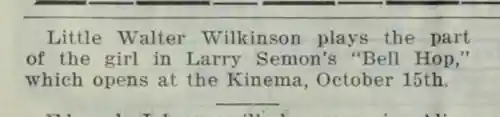
No silent comedy is complete without a memorable supporting cast, and The Bell Hop delivers in spades. Frank Alexander, a frequent collaborator with Semon, brings his usual imposing physicality to the role of one of the chief villains, providing a formidable, albeit often frustrated, antagonist. His reactions to Semon's antics are priceless, a masterclass in comedic exasperation. Walter Wilkinson and Al Thompson also contribute solid performances, rounding out the villainous syndicate with a believable blend of menace and ineptitude, often falling victim to the bellhop's inadvertent sabotage.
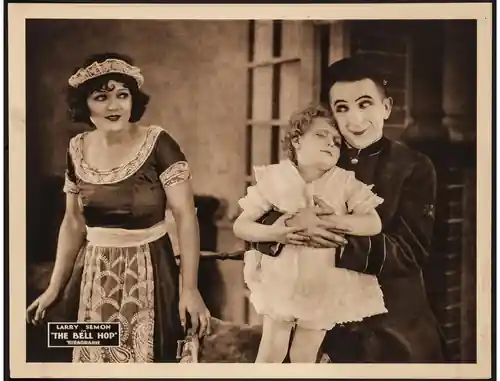
Perhaps the most notable supporting turn, for modern audiences, is the appearance of a very young Oliver Hardy. Before he became one half of the legendary Laurel and Hardy, Hardy was a prolific character actor, often playing heavies or comedic foils in numerous silent films. In The Bell Hop, his presence, even in a relatively early role, hints at the immense comedic talent that would later define his career. His scenes with Semon are particularly enjoyable, showcasing a burgeoning chemistry that, while not yet fully developed into the iconic partnership, is nonetheless palpable. Pete Gordon and William Hauber also add to the film's rich texture, ensuring that every frame is populated with engaging characters, each contributing to the overall comedic and dramatic effect.
The directorial vision, shared by Larry Semon and Norman Taurog, is remarkably cohesive. Taurog, who would later go on to a distinguished career directing talkies, including an Academy Award win, demonstrates an early aptitude for pacing and visual storytelling here. The film never lags, maintaining a brisk tempo that propels the narrative forward even through the most elaborate comedic set pieces. The use of chase sequences, a staple of silent cinema, is particularly effective. The camera work, while perhaps not as revolutionary as some of the European avant-garde of the period, is functional and dynamic, always positioning the audience to appreciate the scale of Semon's stunts and the unfolding drama.
The production design, though simple by today's standards, effectively conveys the grandeur of the hotel and the urgency of the various locations. The film capitalizes on practical effects and clever editing to achieve its comedic impact, relying on the ingenuity of its creators rather than technological wizardry. The visual gags are clear, well-timed, and often surprisingly elaborate, a testament to the craftsmanship involved in silent-era filmmaking. In an age where spectacle was paramount, The Bell Hop delivers a mini-epic of comedic action within its relatively modest scope, a feat that would impress any contemporary filmmaker.
While primarily a comedy, The Bell Hop subtly touches upon themes prevalent in many films of its period: the clash between order and chaos, the accidental hero, and the ever-present threat of international intrigue. It stands in interesting contrast to more overtly dramatic thrillers like The Hawk's Trail, which might have explored similar themes with a grim seriousness. Here, the potential for global catastrophe is defused by the sheer absurdity of the protagonist's methods, offering a lighter, more escapist vision of heroism.
Compared to other comedies of its time, such as a film titled simply Nonsense, The Bell Hop distinguishes itself with a more robust narrative framework. While pure 'nonsense' films relied almost entirely on a rapid succession of non-sequitur gags, Semon's work, especially in this feature, anchors its humor within a discernible plot, allowing the comedy to arise organically from the characters' predicaments rather than existing in a vacuum. This structural integrity gives The Bell Hop a longevity that many more ephemeral comedies of the era lacked.
The film also exemplifies the broad appeal of silent cinema, reaching audiences that enjoyed both high drama, as seen in films like The Bells or Der Wilderer, and the pure escapism of a good laugh. Its ability to marry these disparate elements speaks volumes about the creative ambition of its makers. While it might not share the overt dramatic weight of a film like The Divine Sacrifice, or the romantic sweep of The Mating, The Bell Hop carves out its own niche, demonstrating that a film can be both thrilling and uproariously funny without sacrificing either quality. It's a testament to the versatility of early film narratives, which were constantly experimenting with genre blending long before it became a recognized cinematic trend.
In conclusion, The Bell Hop is far more than a historical curiosity. It is a vibrant, engaging piece of cinema that offers a potent blend of action, suspense, and the distinctive comedic genius of Larry Semon. Its intricate gags, rapid pacing, and surprisingly coherent plot make it a standout among silent comedies, and a worthy subject for rediscovery. The film serves as a powerful reminder of the ingenuity and creative spirit that characterized the early days of filmmaking, proving that a compelling narrative and unforgettable characters can transcend the limitations of spoken dialogue.
For anyone interested in the evolution of film comedy, the history of espionage thrillers, or simply in enjoying a genuinely entertaining silent movie, The Bell Hop comes highly recommended. It's a film that not only showcases Larry Semon at the peak of his powers but also provides a delightful escape into a world where secret papers, bumbling heroes, and daring agents collide in a symphony of laughter and thrills. It's a testament to the enduring power of silent cinema to captivate and amuse, a true gem in the cinematic archives that deserves its moment in the spotlight once more.
IMDb —
1935
Community
Log in to comment.