DbcultAccessing Vault...
Cult Review
Senior Film Conservator
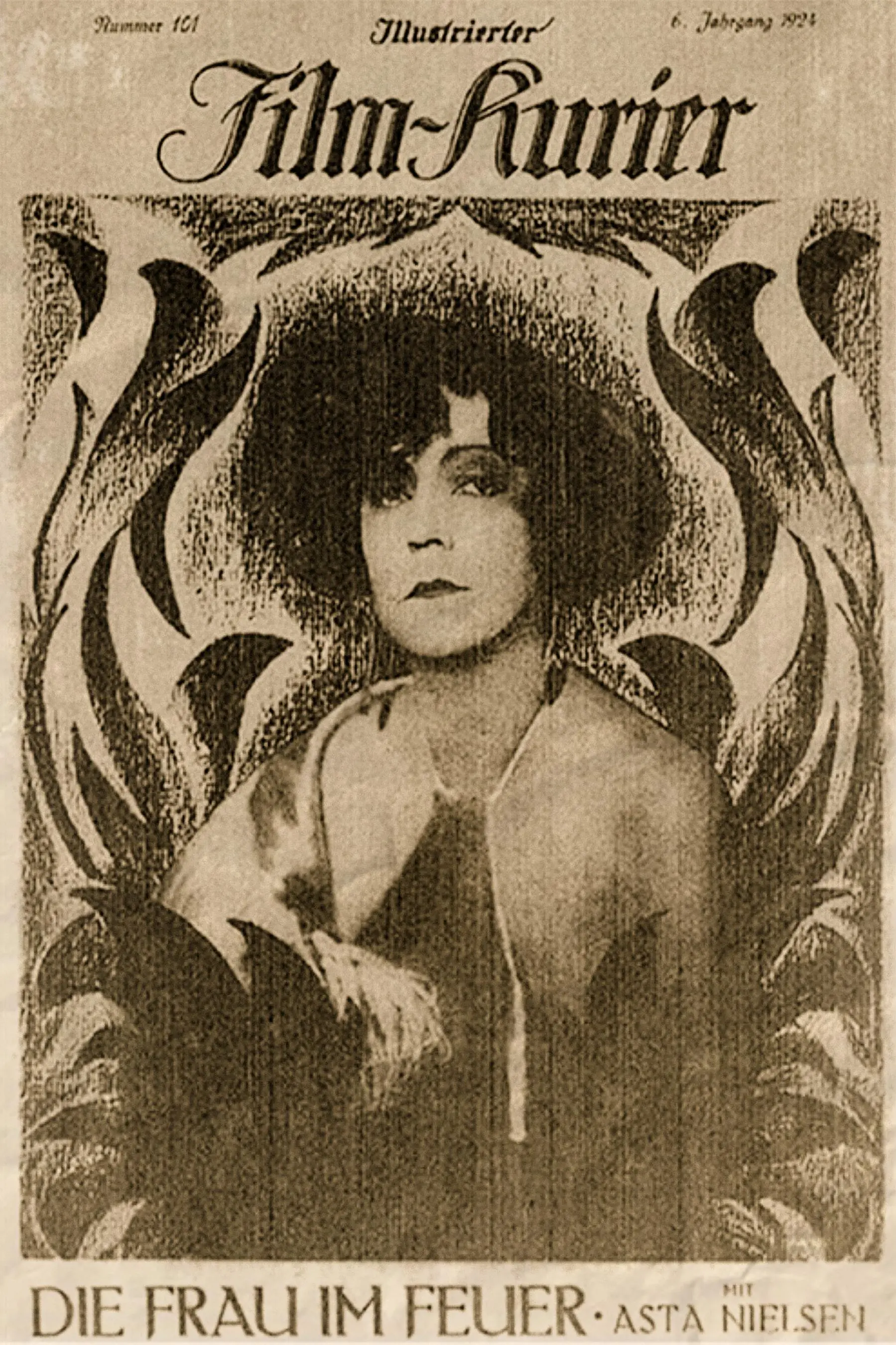
In the silent film era, German cinema produced some of the most innovative and provocative works of art, pushing the boundaries of the medium and exploring the complexities of the human condition. 'Die Frau im Feuer', a 1920 drama directed by Margarete-Maria Langen and Georg Hirschfeld, is a prime example of this cinematic revolution. This scorching drama tells the story of Josefine, a woman scorned and abandoned, who finds herself ensnared in a tumultuous dance of desire and despair.
At the heart of 'Die Frau im Feuer' is the complex and multifaceted performance of Lia Eibenschütz as Josefine. Her portrayal is a masterclass in nuance and subtlety, conveying the depths of her character's emotions through a series of expressive gestures and facial expressions. As Josefine navigates the treacherous landscape of her own passions, Eibenschütz brings a sense of vulnerability and desperation to the role, making her character's ultimate downfall all the more tragic.
The cast is rounded out by Alfred Abel as Fennhofer, the selfish and manipulative love interest who sets Josefine's world ablaze. Abel brings a sense of smarmy charm to the role, making Fennhofer a compelling and complex figure. The chemistry between Eibenschütz and Abel is undeniable, and their on-screen relationship is fraught with tension and desire.
One of the most striking aspects of 'Die Frau im Feuer' is its use of visual motifs and symbolism. The film's title, which translates to 'The Woman in Fire', is a reference to the all-consuming passion that drives Josefine's actions. This theme is echoed throughout the film, with recurring images of flames, smoke, and burning desire. The cinematography is stark and evocative, with a focus on high contrast and bold lighting. This visual style adds to the overall sense of tension and unease, drawing the viewer into Josefine's world of turmoil and despair.
In terms of its place within the broader cinematic landscape, 'Die Frau im Feuer' can be seen as part of a larger trend of German Expressionist films that explored the complexities of the human condition. Films like 'Without Evidence' (/movies/without-evidence), 'Ludzie bez jutra' (/movies/ludzie-bez-jutra), and 'Die toten Augen' (/movies/die-toten-augen) also pushed the boundaries of the medium, exploring themes of desire, despair, and the human condition.
A closer examination of 'Die Frau im Feuer' reveals a film that is both deeply rooted in its historical context and remarkably ahead of its time. The film's exploration of themes such as female desire, abandonment, and the destructive power of unchecked emotions was remarkably progressive for its era. In this sense, 'Die Frau im Feuer' can be seen as a pioneering work, one that paved the way for future generations of filmmakers to explore similar themes.
The film's score, while not present in the original release, would undoubtedly add another layer of depth and emotion to the viewing experience. The use of music in silent films was often used to heighten the emotional impact of key scenes, and 'Die Frau im Feuer' would be no exception. A haunting and atmospheric score would perfectly capture the mood and tone of the film, drawing the viewer even deeper into Josefine's world of turmoil and despair.
In comparison to other films of the era, 'Die Frau im Feuer' stands out for its unflinching portrayal of the human condition. Films like 'The Shoes That Danced' (/movies/the-shoes-that-danced) and 'The Eternal Sin' (/movies/the-eternal-sin) also explored themes of desire and despair, but 'Die Frau im Feuer' does so with a level of nuance and complexity that is unmatched.
The film's themes of desire, abandonment, and the destructive power of unchecked emotions are timeless and universal. As Josefine's world begins to unravel, the film raises important questions about the nature of love, desire, and the human condition. What drives us to pursue our passions, even when they lead to destruction? How do we navigate the complex web of emotions that drive us? These are questions that 'Die Frau im Feuer' poses, and ones that continue to resonate with audiences today.
In conclusion, 'Die Frau im Feuer' is a masterpiece of silent cinema, a film that continues to captivate audiences with its powerful performances, striking visuals, and timeless themes. If you're a fan of classic cinema, or simply looking for a film that will challenge and provoke you, then 'Die Frau im Feuer' is a must-see. With its universal themes and powerful performances, this film is sure to leave a lasting impression on viewers.
The film's influence can also be seen in later works, such as 'Her Own People' (/movies/her-own-people), 'A Quiet Street' (/movies/a-quiet-street), and 'Marie, Queen of Rumania' (/movies/marie-queen-of-rumania). These films, while not directly related to 'Die Frau im Feuer', share a similar tone and thematic focus.
Ultimately, 'Die Frau im Feuer' is a film that will leave you thinking long after the credits roll. Its exploration of the human condition is both deeply unsettling and profoundly thought-provoking. As a work of cinematic art, it is a testament to the power of film to challenge, provoke, and inspire us.
IMDb 6.7
1926
Community
Log in to comment.