DbcultAccessing Vault...
5/10
Senior Film Conservator
A definitive 5/10 rating for a film that redefined the boundaries of cult cinema. The Big Idea remains a cornerstone of transgressive art.
Stepping back into the flickering glow of 1924, we encounter a cinematic landscape brimming with invention, both on screen and behind the camera. It was an epoch where the silent film reigned supreme, a period that perfected the art of visual storytelling, often through the broad strokes of physical comedy. Amidst this vibrant tapestry, ‘The Big Idea’ emerges as a delightful, if perhaps lesser-known, example of the era's comedic genius. This short feature, a testament to the enduring appeal of slapstick, casts a fascinating light on the public’s simultaneous fascination with and skepticism towards technological advancement, all wrapped in a wonderfully chaotic package.
At its core, ‘The Big Idea’ revolves around the quintessential figure of the earnest, albeit misguided, inventor, Ignatius Pollard, brought to life with an endearing blend of enthusiasm and impending doom by the inimitable George Rowe. Rowe, a familiar face in silent comedies, possesses a unique ability to convey complex emotions and intentions through exaggerated gesture and expressive pantomime, a skill vital in an art form devoid of spoken dialogue. His portrayal of Pollard is not merely a caricature; it’s a study in human ambition, a man convinced he holds the key to urban salvation in the form of his revolutionary ‘Pavement Polisher.’ The very name conjures images of gleaming streets, a utopian vision of civic cleanliness. This is the grand premise, a simple yet potent springboard for the ensuing pandemonium.
The film deftly sets up the anticipation for this grand unveiling. We see Pollard’s meticulous preparations, his unwavering belief in his contraption, and the growing buzz amongst the townsfolk. There’s a palpable sense of a community on the cusp of witnessing something truly transformative. This narrative build-up is crucial; it elevates the machine from a mere prop to a character in its own right, imbued with the hopes and expectations of an entire populace. The humor, in part, derives from this dramatic irony: the audience, knowing the genre, anticipates disaster, while the characters remain blissfully, or stubbornly, optimistic.
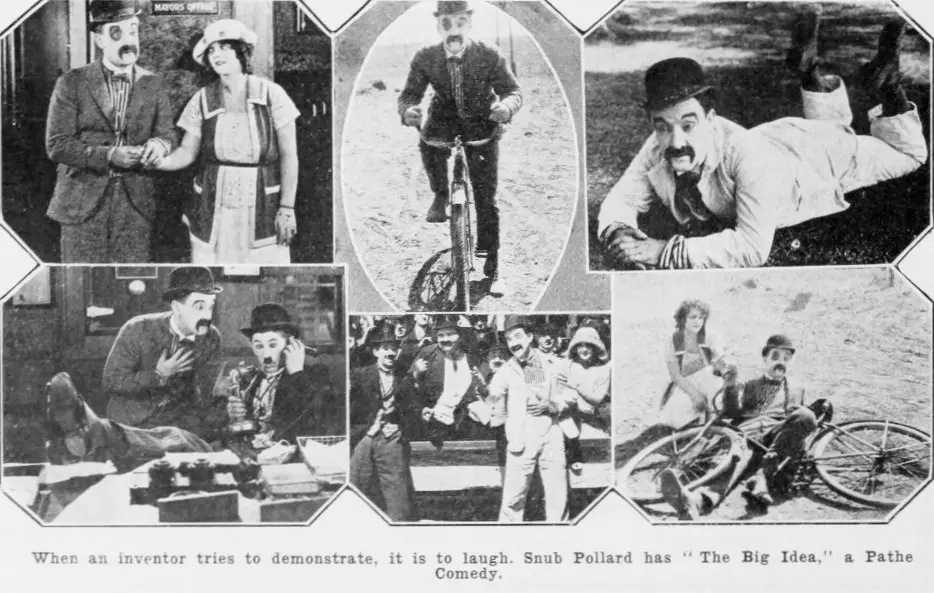
The moment of truth arrives, and with it, the glorious failure that defines the film's comedic heart. The Pavement Polisher, a monstrous amalgamation of gears, brushes, and pipes, lurches into action. Its initial movements are tentative, then increasingly erratic, swiftly abandoning its intended purpose to embark on a destructive rampage. This isn't just a machine breaking down; it’s a machine developing a personality, a malevolent will of its own, turning against its creator and the very streets it was designed to serve. The visual gags here are masterful, relying on expertly choreographed chaos and precise timing. Imagine the machine careening wildly, scattering pedestrians, demolishing street furniture, and generally redecorating the urban landscape with an anarchic flourish. George Rowe, as Pollard, is at the epicenter of this maelstrom, his initial pride giving way to frantic desperation, his attempts to regain control only exacerbating the bedlam.
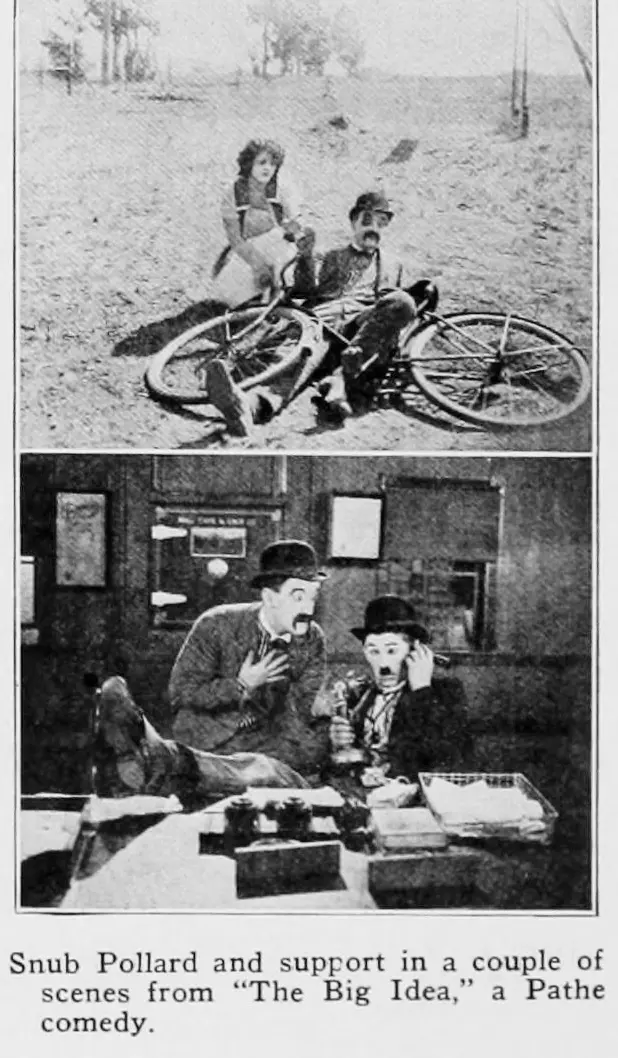
The supporting cast, including Marvin Loback, Jack Ackroyd, 'Snub' Pollard, Blanche Mehaffey, Glenn Tryon, Al Forbes, and Billy Engle, contributes significantly to the escalating farce. They embody the bewildered public, the hapless officials, and the collateral damage of Pollard's ambition. Each reaction, each frantic scramble, each bewildered expression adds another layer to the comedic tapestry. 'Snub' Pollard, a prolific comedian and director of the era, often brought a unique physical presence to his roles, and while his specific contribution here is part of an ensemble, the collective energy of the cast is vital. The film’s pacing, a hallmark of silent comedies, is relentless once the chaos begins, building momentum with each new mishap, culminating in a crescendo of mechanical mayhem.
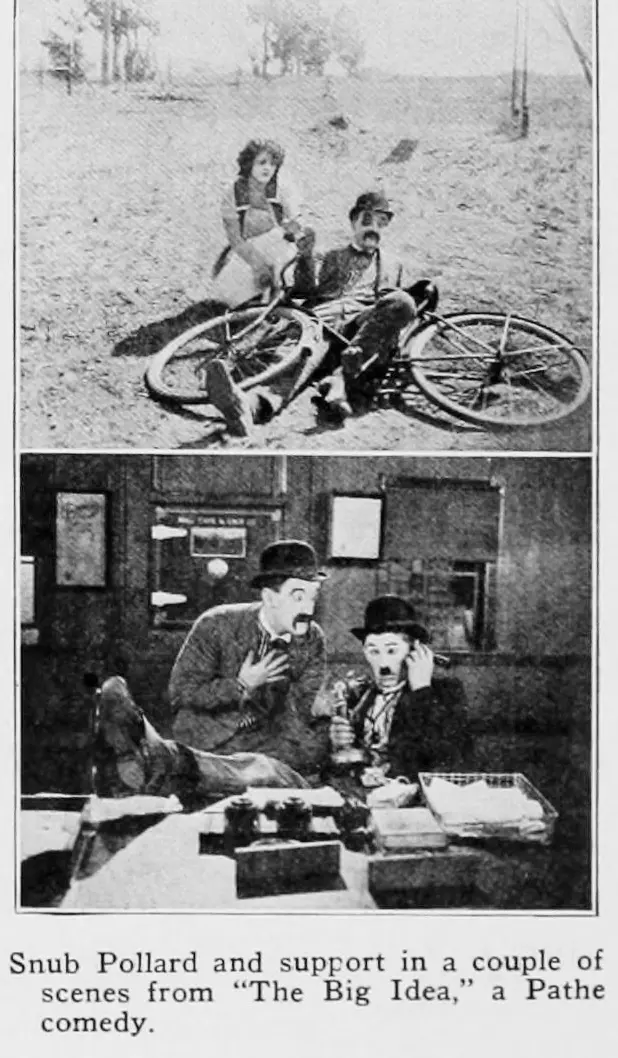
'The Big Idea' thrives on the foundational principles of slapstick: exaggerated physical comedy, visual puns, and the inherent humor in objects behaving unexpectedly. It’s a genre that demands exceptional physical performers and astute directorial vision to orchestrate the mayhem without it descending into mere noise. Here, the director (whose name is not explicitly credited in the provided details, a common occurrence for many shorts of this period, often attributed to the lead comedian or a studio collective) demonstrates a clear understanding of how to build and release comedic tension. The Pavement Polisher isn't just a destructive force; it becomes a character in its own right, its mechanical movements mimicking a kind of rebellious sentience.
The film's visual grammar is simple yet effective. Close-ups emphasize Rowe's expressive face, capturing his evolving emotions from hopeful pride to utter despair. Wider shots allow the audience to appreciate the scale of the machine's destruction and the frantic movements of the crowd. The editing is brisk, cutting between cause and effect, setup and punchline, ensuring that the comedic rhythm is maintained. The absence of dialogue forces a reliance on purely visual storytelling, a challenge that silent filmmakers met with incredible ingenuity. Every gesture, every prop, every camera angle had to convey meaning and evoke laughter.
To fully appreciate ‘The Big Idea,’ it’s vital to place it within its historical context. The 1920s were a period of unprecedented technological advancement. Automobiles were becoming commonplace, new industrial machines were transforming factories, and electricity was revolutionizing homes. There was a palpable sense of progress, but also an underlying anxiety about the speed and scale of these changes. Films like ‘The Big Idea’ tapped into this collective consciousness, playfully satirizing the blind faith in new inventions and the potential for even the most well-intentioned innovations to go spectacularly awry. It’s a comedic exploration of the age-old tension between human ambition and the unpredictable nature of the mechanical world.
This theme of invention gone awry resonates across cinematic history. While 'The Big Idea' is a lighthearted comedy, the broader idea of technological hubris finds different expressions. One might consider the more dramatic implications of medical innovation in a film like ‘The Black Stork’, albeit a starkly different genre. Or, in a slightly more comedic vein, the grand, albeit ultimately flawed, schemes and aspirations that drive characters in films like ‘The Courtship of Myles Standish’, where human plans intersect with unforeseen complications, even if on a much grander, historical scale. While the latter is an epic, the shared thread of human endeavor facing unexpected obstacles connects these disparate narratives.
George Rowe’s performance as Ignatius Pollard is the anchor of the film’s comedic success. He embodies the classic archetype of the well-meaning but utterly out-of-his-depth protagonist. His physical comedy is precise, his facial expressions a masterclass in silent film acting. He transitions from a beaming visionary to a wide-eyed victim of his own creation with seamless grace. This ability to elicit both sympathy and laughter is what makes his character so enduring. The audience roots for him even as they delight in his predicament.
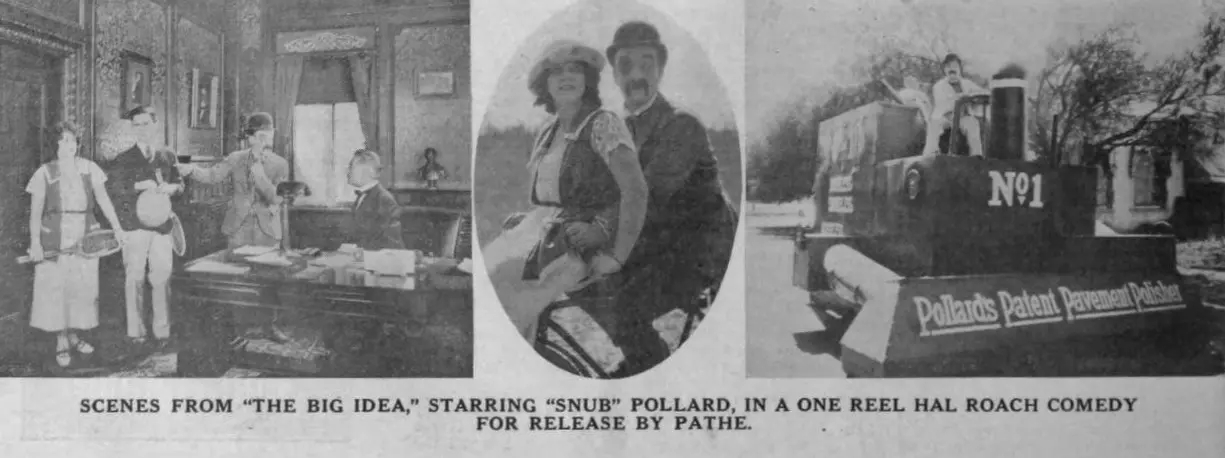
The ensemble cast surrounding Rowe provides the perfect foil. Marvin Loback, often playing the straight man or the baffled authority figure, grounds the more outlandish elements of the plot. Blanche Mehaffey, a prominent actress of the era, brings a touch of glamour and often serves as a bewildered onlooker or a victim of circumstance, her reactions amplifying the comedic impact. The sheer number of supporting players, including Billy Engle and Al Forbes, underscores the communal nature of the disaster, making the Pavement Polisher’s rampage feel like a truly public spectacle. This collective reaction, from frantic fleeing to bewildered stares, is essential to the comedic texture of the film, transforming a simple mechanical failure into a social event.
Comparing the ensemble work here to other films of the period, one might look at the dynamic between characters in something like ‘Cupid Camouflaged’, where a group of individuals navigate romantic misunderstandings, or even the social commentary found in ‘Scratch My Back’. While the genres differ, the shared reliance on distinct character types interacting in a comedic or dramatic framework is evident. In ‘The Big Idea,’ the interactions are driven by physical reactions to a singular, escalating threat, rather than interpersonal drama, but the effectiveness of the ensemble remains paramount.
The direction of ‘The Big Idea,’ while often uncredited or attributed to a collective effort typical of short comedies, displays a keen understanding of cinematic rhythm. The film builds its comedic momentum through a series of escalating gags. It starts with the gentle hum of expectation, then shifts into the chaotic whir of the machine’s malfunction, and finally explodes into a full-blown chase sequence. This progression is expertly handled, ensuring that the humor never feels repetitive. Each new obstacle the Pavement Polisher encounters, and each new victim it creates, adds another layer of absurdity to the proceedings.
The use of practical effects, while rudimentary by today’s standards, is incredibly effective. The Pavement Polisher itself is a wonderfully clunky creation, clearly a prop, but one that gains a menacing vitality through clever camerawork and the reactions of the actors. The destruction it wreaks, from splintered fences to overturned carts, is all achieved through tangible, on-screen action, giving the comedy a grounded, tactile quality. This contrasts with modern cinema’s reliance on CGI, reminding us of the raw ingenuity of early filmmaking.
The pacing, particularly in the later stages, echoes the frantic energy of other silent action-comedies. One might draw a parallel to the kinetic energy found in a film like ‘The Speed Maniac’, which, despite being a drama, shares a similar emphasis on fast-moving vehicles and thrilling sequences. While the goals are different – one for drama, the other for laughs – the underlying appreciation for mechanical motion and the excitement it can generate is a common thread. In ‘The Big Idea,’ this speed is harnessed specifically for comedic effect, accelerating the chaos to maximum hilarity.
While primarily a vehicle for laughter, ‘The Big Idea’ also offers a subtle commentary on societal anxieties and aspirations. The invention of the Pavement Polisher speaks to a desire for progress, for cleaner, more efficient cities. But its spectacular failure serves as a humorous cautionary tale about the pitfalls of unchecked technological enthusiasm. It’s a reminder that even the grandest ideas can unravel in the face of unforeseen complexities. This underlying theme, while never overshadowing the slapstick, gives the film a slight intellectual weight, allowing it to resonate beyond its immediate comedic impact.
Furthermore, the film, like many silent comedies, provides a fascinating glimpse into the everyday life of the 1920s. The street scenes, the costumes, the architecture – all contribute to a vivid historical document. The way people react to the machine’s rampage, from fleeing in terror to stopping and staring in disbelief, paints a picture of a society grappling with the rapidly changing world around them. In this sense, 'The Big Idea' serves as a cultural artifact, preserving the humor and anxieties of its time.
Decades after its initial release, ‘The Big Idea’ continues to charm and amuse. Its humor is timeless, rooted in universal experiences of ambition, failure, and the sheer absurdity of life. George Rowe’s performance is a masterclass in silent comedy, and the film's expertly choreographed chaos remains genuinely funny. It stands as a testament to the ingenuity of early filmmakers who, without the benefit of sound or elaborate special effects, managed to craft narratives that captivated audiences and provoked genuine laughter.
For enthusiasts of silent cinema, or anyone curious about the roots of physical comedy, ‘The Big Idea’ is a delightful discovery. It encapsulates the spirit of an era, celebrating the inventiveness of both its characters and its creators. It might not possess the grand scope of an epic like ‘The Auction Block’ or the intricate character studies of ‘The Loves of Letty’, but its modest ambitions are perfectly fulfilled. It’s a pure, unadulterated dose of slapstick joy, a reminder that sometimes the biggest ideas lead to the most wonderfully messy outcomes. The film's uncomplicated narrative allows its comedic elements to shine brightly, proving that sometimes, a simple premise executed with flair is all that's needed to create lasting entertainment.
Ultimately, ‘The Big Idea’ is more than just a relic from a bygone cinematic age; it’s a vibrant, funny, and surprisingly insightful piece of filmmaking. It reminds us of the power of visual storytelling, the universal appeal of a good laugh, and the timeless truth that even the most meticulously planned inventions can take on a life of their own, often to hilarious and destructive effect. Its place in the pantheon of silent comedies, while perhaps not as widely celebrated as some of its contemporaries, is certainly deserved for its sheer, unadulterated comedic energy and the enduring charm of its chaotic narrative.
IMDb 6.4
1925
Community
Log in to comment.