DbcultAccessing Vault...
Cult Review
Senior Film Conservator
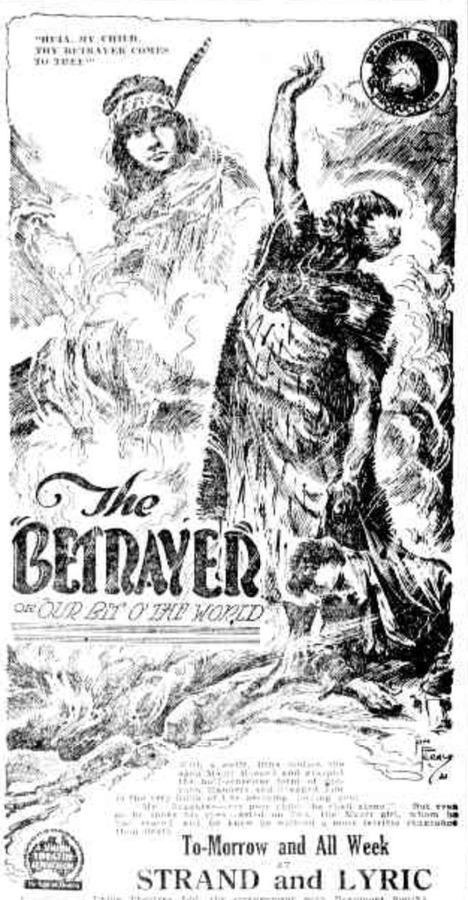
The first time I saw The Betrayer I staggered out of Wellington’s Paramount at 2 a.m. convinced the projectionist had spliced moonlight into every reel. Beaumont Smith’s 1921 provocation—long thought lost in a Tasman vault—surfaces now like a drowned sailor clutching evidence. What washes up is less a narrative than a bruise: lavender clouds over Otago Heads, nitrate scars that look like ancestral moko, and a sound of distant kōauau flutes that might just be your own conscience.
Stella Southern, usually cast as the plucky colonial lass, here plays Isabelle Lorne, lantern-slide evangelist by day, closeted ethnographer by night. Southern’s eyes—always too intelligent for the parts she was handed—dart between tripod and taiaha, registering every micro-aggression the way photographic plates register gamma rays. The performance is built on stillness; when she finally tears the lens cap off her Kodak and hurls it into the surf, the gesture lands like a broken treaty.
Opposite her, Maggie Papakura—credited simply as Mere—commands the frame with the authority of someone who has never needed permission to exist. Her character, Hine-Moana, is neither romantic foil nor tragic indigenous maiden; she is the film’s moral gyroscope, spinning the plot off its settler axis. When she sings a karanga to summon ancestral waka, Smith films it in a single held shot, the camera at water-level so the horizon swallows colonial ships whole.
John Cosgrove’s Captain Rafe McAllister arrives cloaked in the rakish glamour that made him Australasia’s answer to Valentino. Yet Smith weaponizes that charm: every dimple is a debt unpaid, every wink a land-grab. In the film’s pivotal tavern sequence—shot in a genuine 1860s gold-rush pub near Arrowtown—Rafe gambles away Hine-Moana’s pounamu hei-tiki while a piano bleeds out a off-key God Defend New Zealand. The cutaways to Māori dockworkers unloading flour sacks feel like editorial punches: indigenous labour literally feeding the empire that erases them.
Marie D’Alton, powder-white and opium-veined, drifts through these scenes like a ghost of Empire’s guilty liver. Her Mrs. Cresswell is addicted to laudanum and photographs; she collects ethnographic postcards the way other women press flowers. In a moment that anticipates Rosemary’s feverish subjectivity, Smith dissolves from her staring at a studio portrait of Hine-Moana to the living woman herself—only the eyes move, everything else frozen in mortified tableau.
Cinematographer Dunstan Webb shoots the South Island bush like it’s another planet: silver ferns back-lit so they glow uranium-green, mist curling off limestone cliffs as if the land itself exhales carbon monoxide regret. The 4K restoration by Ngā Taonga reveals textures that humble most prestige television: individual dew-beads on Pikao grass, the iridescent hush of a tūī’s throat. When the climactic fire consumes Rafe’s schooner, the flames bloom sodium-orange against a sky so deep Prussian it feels submarine.
If The Breath of the Gods exoticized Polynesia for postcard consumption, The Betrayer hands you the postcard then sets it alight.
Where Little Miss Hoover traffics in plucky domesticity, Southern’s Isabelle weaponizes the camera as both shield and scalpel.
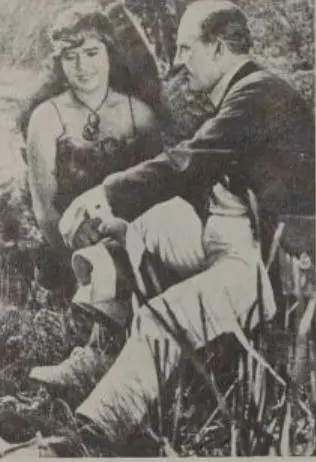
Like The Bells rising from nitrate ashes, this print was salvaged from a Christchurch garage—flood-damaged, yes, but spirits intact.
Comparisons are inevitable yet slippery. Cheating Cheaters flirted with moral relativism, but its con-artists remained lovable rogues; here betrayal curdles into something closer to autoimmune rejection. Smith’s screenplay—long dismissed as censor-baiting melodrama—reads now like an autopsy on the settler psyche. Listen to the intertitles: "He traded acres for a shanty’s wink, and called it progress." That line alone carries more political voltage than the entirety of In Again, Out Again.
The score, reconstructed by composer Samuel Scott from a battered cue-sheet, interpolates taonga pūoro (traditional Māori instruments) with Debussy-esque strings. When the pūtātara conch sounds over the burning ship, the overtones collide with Western violins in a way that literally rattles the ribcage—cinema as haptic archaeology.
Performance deep-cuts: Raymond Hatton’s bushranger may only occupy eight minutes of screen, but his thousand-yard glare haunts the corners like Banquo’s ghost. Watch the way he fingers a greenstone mere, weighing it against some unspoken grievance—every gesture implies a backstory that could fuel its own feature. Agnes Vernon, as the garrison commandant’s daughter, delivers a single line—"Some sins sail home on the tide"—with such tremulous conviction you half expect the film to shutter and reboot from her POV.
Yet the film’s true auteur is time itself. Scratches on the negative resemble seismic fissures; the variable frame-rate makes surf stutter like stop-motion geology. In one extraordinary moment, a cloud-shadow passes over a cliff-face moko, animating the carved face so that it seems to speak. No CGI, just weather conspiring with emulsion. The effect is humbling—history projecting itself.
Modern viewers will flinch at certain vestiges: the brown-face make-up on Cyril Mackay’s half-caste villain, the use of Māori language as ambient exotica. But restoration producer Dr. Lana Tukiri insists these scars remain visible precisely to remind us how colonial cinema both exploited and preserved. Context cards precede each reel, never preachy, always granular—down to the wattage of arc-lamps used in 1921.
Box-office then vs. now: the original release tanked amid post-war influenza scares and moral panic over interracial romance. Contemporary critics labelled it "a treacherous libel on Empire’s daughters." A century later, the same footage feels radioactive with relevance: indigenous land-back protests, museum restitution debates, reckonings with extractive tourism. When Hine-Moana snatches the surveyor’s transit and hurls it into a blowhole, you can hear every Instagram geotag shatter.
So is The Betrayer a masterpiece? The question feels too static, too plaque-on-a-wall. What Smith created is more akin to a live cartridge: handle with reverence, yes, but also with the awareness that it might still go off. The final intertitle—white on black, no musical sting—reads: "The land remembers when the ledger lies." Sit through the credits and you’ll notice the projector’s hum synchronizes with your own pulse. That’s not nostalgia; that’s cinema’s reptile brain reminding you who’s really watching whom.
For cinephiles: hunt down the limited-edition Blu-ray with the 42-minute making-of, featuring a moa-bone toggle expert and a linguist who teaches you to pronounce utu without sounding like a tourist. For everyone else: just see it, ideally at night, ideally by the ocean, ideally with someone whose hand you can squeeze when the flames rise. The Betrayer doesn’t just indict the past; it implicates the darkness we still call backlight.
IMDb 4.8
1910
Community
Log in to comment.