DbcultAccessing Vault...
Cult Review
Senior Film Conservator
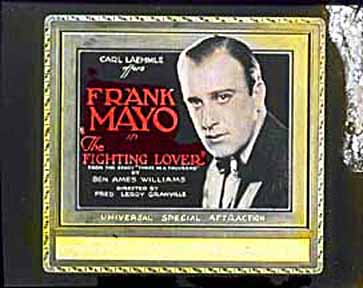
Picture a Manhattan penthouse drenched in champagne glare: crystal snifters catch the light like prisms, laughter ricochets off lacquered panels, and in the epicenter Andrew Forsdale—tailcoat immaculate, eyes glittering with the cruelty of a card-sharp—slaps ten thousand dollars onto mahogany as though flipping a coin with destiny. Gordon Sackville plays him with feline swagger, every smirk calibrated to remind the audience that money is merely his chosen weapon. Into this glitzy crucible steps Frank Mayo’s Ned Randolph, a man whose moral spine wobbles like gelatin at the first sign of feminine eyelash. The bet is simple, juvenile, irresistible: fall in love with one of three self-promoted damsels within thirty days, or forfeit bragging rights forever.
Director Benjamin B. Hampton—working from a crackling scenario by Harvey Gates and pulp maestro Ben Ames Williams—turns what could have been a drawing-room trifle into a taut fuse. Notice how the first reel luxuriates in opulence only to tighten the screws scene by scene, morphing romantic froth into something perilously close to noir. The tonal pivot feels modern, almost anachronistic, as though the film anticipates the cynicism of post-war noir decades early.
Elinor Hancock’s Helen Leigh enters framed like a Pre-Raphaelite vision, backlit to halo her curls, yet her gaze carries the weary wisdom of someone who has already read the final page of the book. Jacqueline Logan’s Anna Hughes supplies flapper effervescence, all shimmy and reckless grin, while Gertrude Olmstead’s Julia Gunther slinks through candle-lit corridors with a predatory serenity reminiscent of a panther napping before the kill. Together they form a tri-color spectrum of femininity—luminous, kinetic, serpentine—each woman a potential downfall for whichever man dares claim her.
Meanwhile Colin Kenny’s Vic Ragner, the designated referee, brandishes that diamond—the MacGuffin with facets like frozen fire—until the moment it is pilfered, pitching the narrative from flirtation into fatalism. His murder occurs off-screen, as demanded by censorship, yet Hampton lets the aftermath bleed across the screen: a blood-stained glove, a shattered window, a terrier bristling at the scent of betrayal. The restraint amplifies dread; we feel the chill more acutely than had we witnessed the slaughter.
Cinematographer Jackson Read bathes the country-house sequences in chiaroscuro, every hallway a tunnel of ink with sudden gas-lamp sunbursts. Watch the sequence where suspicion ricochets: a canted mirror multiplies suspects into infinity, an early experiment in optical anxiety later echoed in Garden of Lies. Cigarette smoke coils like thought made visible; intertitles shrink to single ominous words—“GONE,” “GUILTY,” “LOVE?”—as if even the text itself hyperventilates.
Compare this pictorial sophistication to the more stage-bound compositions of The Honorable Algy or the pictorial stiffness of Cecilia of the Pink Roses. Where those films pose prettily, The Fighting Lover lunges, camera roving like a private eye sniffing for deceit.
Silent acting runs the perpetual risk of semaphore exaggeration, yet Sackville modulates; his stillness speaks louder than flailed limbs. Note the moment Andrew realizes he, the wager’s author, has himself toppled into love: the actor’s pupils dilate in a 4-second close-up, a micro-gesture that wordlessly sells the inversion of power. Opposite him Mayo provides perfect foil, his Ned forever half-beat behind the melody, stumbling into tenderness with puppyish bewilderment.
Among the women, Olmstead essays Julia’s duplicity with velvet subtlety; she smiles even as her eyes perform rapid moral calculus. When the script finally rips off her silk veneer, the reveal feels less like twist than inexorable fate—Lady Macbeth in beaded chiffon.
At its marrow the film interrogates the commodification of affection. Andrew’s bet literalizes the era’s habit of treating romance as parlor sport, yet the plot’s corkscrew contorts until the jest becomes crucible. Once blood stains the floorboards, the monetary stake turns laughably insignificant; what matters is the moral invoice each character must pay. Hampton, no doubt aware of post-WWI disillusion, weaponizes jazz-age frivolity to interrogate hollow decadence, a critique later refined in An Honest Man and Broken Bubbles.
The resolution—Ned winning Anna yet forfeiting cash—delivers an ethical ledger: love untainted by transaction endures, while greed ends empty-handed. It’s a moral equation worthy of Victorian parable, but wrapped in Roaring-Twenties swagger.
Stack The Fighting Lover beside Double Crossed and you’ll notice both trade in gentlemanly wagers curdling into peril. Yet where Double Crossed opts for pulp sensationalism, this picture cultivates emotional sophistication. It lacks the slapstick anarchy of Keystone Comedies but also sidesteps the florid melodrama of Rupert of Hentzau. Instead it occupies a liminal sweet-spot: sophisticated enough for Park Avenue, yet thrilling enough for the nickelodeon hinterlands.
For decades historians classed The Fighting Lover among the vanished, a 7-reel ghost glimpsed only in dog-eared lobby cards. Recent restoration efforts—combining a 16mm Czech print, a decomposed but salvageable American dupe, and an exhaustive re-assembly of censorship records—return the film to circulation, complete with a newly commissioned score that fuses ragtime syncopation and noir-jazz basslines. The tinting faithfully replicates 1926 lab notes: amber for interiors, viridian for night exteriors, a blush rose for the heroine’s first close-up. Digital cleanup removed mildew veining without airbrushing grain, preserving the patina of time.
Does the film transcend its era? Yes—and no. Its gender politics inevitably bear the paternalistic stamp of the ’20s; the women, though vibrant, function chiefly as moral mirrors for male growth. Yet its formal daring, emotional candor, and philosophical bite feel startlingly contemporary. In an age when streamers churn out algorithmic rom-coms, witnessing a love story that pauses to contemplate the ethics of its own premise is, frankly, intoxicating.
The Fighting Lover is both artifact and arrow—rooted in 1926 yet aimed squarely at modern viewers who crave substance beneath sparkle. Watch it once for the whodunit thrills, again for its visual sonnets, a third time to savor how swiftly romance can mutate into ransom when the heart becomes collateral. Place your bets, ladies and gents; just be warned—the house always collects in feeling, if not in coin.
IMDb 5.6
1924
Community
Log in to comment.