DbcultAccessing Vault...
Cult Review
Senior Film Conservator
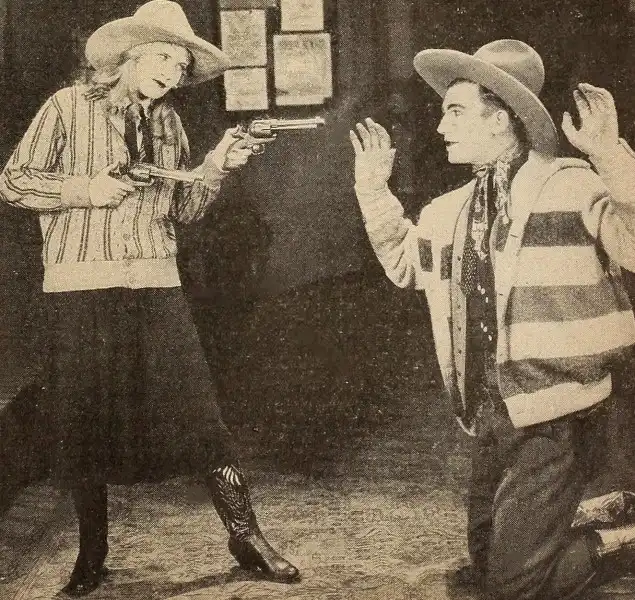
If you have a soft spot for the kind of late-1920s westerns that feel like they were filmed in a windstorm, you’ll probably find something to like in The Black Ace. It isn't a masterpiece, and it definitely isn't trying to change the genre. It’s a movie for people who don't mind a predictable plot as long as the horses look fast and the hero looks like he’s actually spent a week sleeping in the dirt.
If you’re looking for high drama or something that breaks the mold of the 'bad man turned good,' you’re going to be bored out of your mind. This is a very specific flavor of B-movie comfort food from 1928.
Don Coleman plays the lead, and he has this incredibly specific silent-western look. He’s not polished like some of the guys who would take over the genre in the 30s. He has a heavy brow and a way of squinting that makes you think he’s constantly trying to see through a sandstorm. He plays a gambler and a thief—the 'Black Ace' of the title—who decides to flip his life around because he falls for Jeanette Loff.
Loff is interesting here, mostly because she looks like she stepped out of a completely different movie. Her hair is perfect. Her clothes look like they’ve never touched a speck of dust. In one scene where she’s standing in a doorway, the lighting hits her in a way that makes her look like a porcelain doll placed in the middle of a barn. It’s one of those weird silent film disconnects where the leading lady has to look like a star, even if she’s supposed to be living on a struggling ranch.
The chemistry between her and Coleman is... fine. It’s very much 'I saw you and now I am a different person.' There’s a moment early on where they look at each other, and the camera just stays on Coleman’s face for about five seconds too long. You can see him trying to convey 'soul-shattering realization,' but it mostly looks like he’s trying to remember if he left the stove on. It’s charming in its own awkward way.
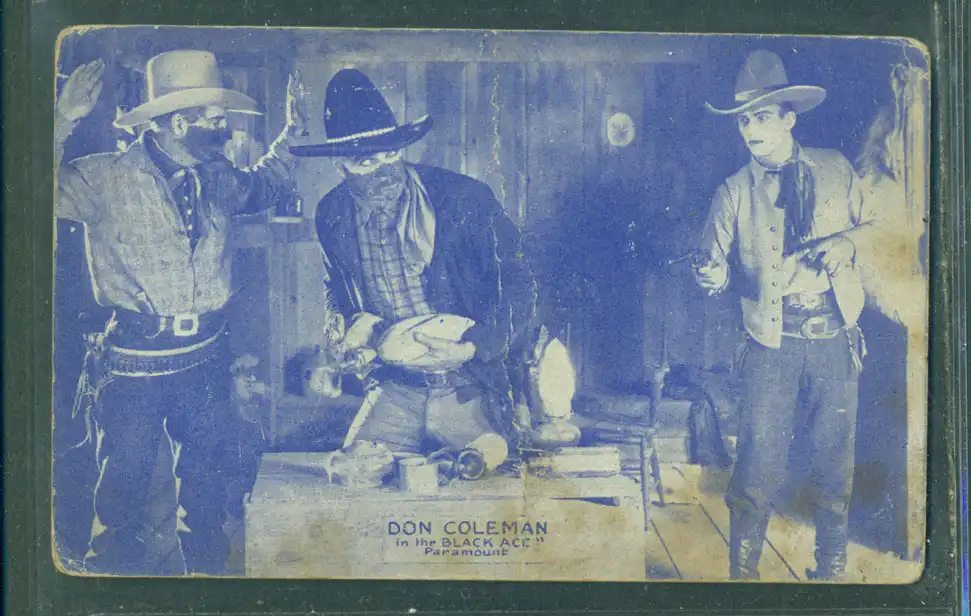
One of the best things about the film is Noble Johnson. I always get a kick out of seeing him pop up in these old films. He has this massive screen presence that usually dwarfs everyone else in the frame. Even when he’s just standing in the background of a saloon scene, your eyes go to him. He has a way of moving that feels deliberate and dangerous, which is more than I can say for some of the other henchmen who mostly just mill around and look confused during the action beats.
The action itself is a bit of a mixed bag. There’s a fight toward the end that feels genuinely frantic. It’s not the clean, choreographed stuff you see in Square Shooter. It’s just guys grabbing each other’s vests and rolling around in the weeds. I prefer this, honestly. It feels more like a real bar fight and less like a dance. But the editing in these sequences is a bit choppy. There’s a jump cut during a horse chase that made me think the film had skipped a few frames, but I think it was just a clunky transition in the original assembly.
I noticed a weird detail in the saloon scenes. There’s a guy in the background—completely uncredited, I’m sure—who is leaning against a post and just staring directly into the lens for a solid three seconds. Nobody caught it in the edit. It’s those little moments that make these old silents feel alive to me. It’s a reminder that this was just a job for these people, and sometimes the extras were just bored.
The card-playing scenes are handled with a lot of gravity. The way Coleman handles the deck is actually pretty impressive; he looks like he knows his way around a pack of cards. But the 'Black Ace' motif is laid on a bit thick. We get it. It’s his calling card. It’s his dark past. The movie treats the physical card like it’s a cursed artifact from a horror movie. Every time it appears, the music (if you’re watching a scored version) usually takes a sharp, dramatic dive into the minor keys.
Pacing-wise, it drags in the middle. There’s a lot of 'reforming' that happens through long, static shots of people sitting on porches or looking wistfully at the horizon. It lacks the weird, dark energy of something like Riddle Gawne, which felt like it had a bit more grit under its fingernails. The Black Ace wants to be a bit more wholesome than it probably should be, given that the main character is a career criminal.
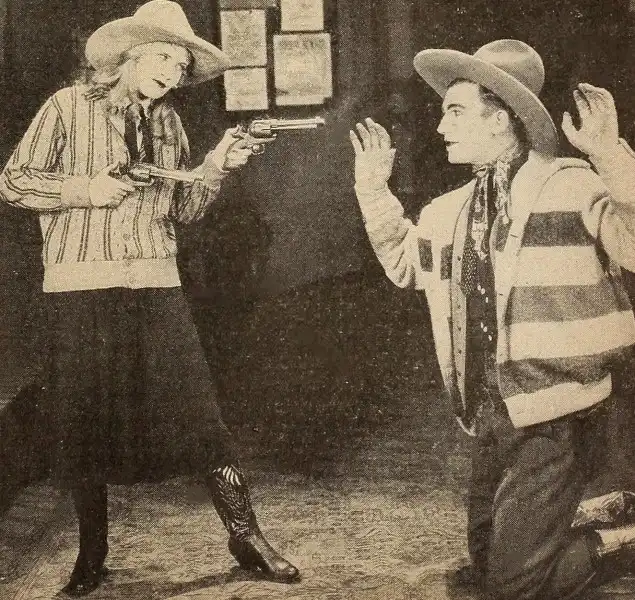
The kid, played by Billy Butts, is exactly what you expect from a 1920s child actor. He’s there to be the emotional bridge between the outlaw and the girl. He’s fine, but there’s a scene where he’s 'helping' with the horses that goes on for way too long. It’s clearly there to show that Coleman has a soft heart, but we already got the point five minutes earlier.
I did like the costume work on the villains. They have these incredibly tall, stiff hats that make them look like they’re trying to add six inches to their height. It gives them a strange, spindly silhouette against the flat desert landscape. It’s a small visual thing, but it makes the stand-offs look more interesting than your average low-budget western.
Is it a great film? No. But it’s a solid example of what was being cranked out right before sound changed everything. It’s dusty, the acting is occasionally stiff, and the ending is wrapped up in a way that feels a bit too convenient. But watching Don Coleman try to look like a respectable citizen while wearing a hat that’s seen better decades is worth the hour it takes to watch it.
One last thing: the titles. Ford Beebe wrote this, and you can tell he was used to the serial format. The title cards are very punchy, almost aggressive. They don't just tell you what's happening; they shout it at you in that very specific 1920s font. It adds a bit of energy to a story that otherwise might have felt a bit too sleepy.
If you’ve already gone through the bigger silent westerns and you’re looking for something that feels like a dusty relic found in the back of a warehouse, give it a look. Just don't expect it to stay with you much longer than it takes for the credits to roll.
IMDb 6.8
1915
Community
Log in to comment.