DbcultAccessing Vault...
4.5/10
Senior Film Conservator
A definitive 4.5/10 rating for a film that redefined the boundaries of cult cinema. IV. Károly király koronázása remains a cornerstone of transgressive art.
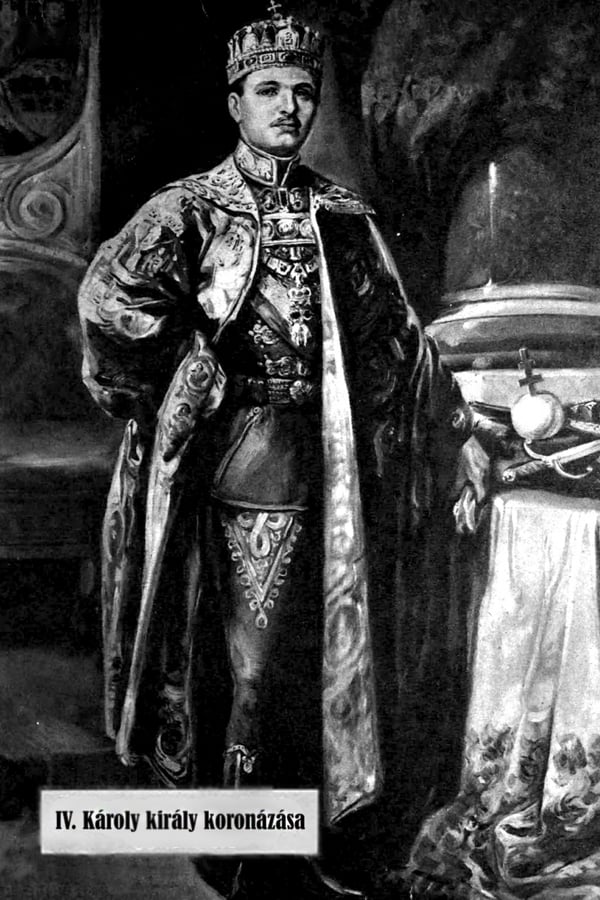
The annals of early cinema are replete with fragments, lost reels, and tantalizing glimpses into a world just discovering the moving image's profound power. Among these treasures, 'IV. Károly király koronázása' stands as a particularly compelling artifact, a silent film not merely documenting an event, but attempting to distill the very essence of national identity and monarchical authority through the lens of a young, ambitious filmmaker: Michael Curtiz. Released in 1916, amidst the tumultuous backdrop of the First World War, this cinematic record of King Charles IV of Hungary's coronation is far more than a historical curiosity; it is a testament to the burgeoning art form’s capacity for grand spectacle and propaganda, even in its infancy.
To approach 'IV. Károly király koronázása' is to step back into an era when film was still finding its voice, its grammar, its very purpose. Here, Michael Curtiz, long before his Hollywood fame with classics like 'Casablanca,' demonstrates an innate understanding of visual storytelling, even without the benefit of synchronized sound or sophisticated editing techniques. He captures the pomp and circumstance with an almost reverential eye, framing each shot to emphasize the gravity and splendor of the occasion. The film opens, presumably, with wide establishing shots of Budapest, its historic architecture serving as a majestic stage for the impending drama. One can almost feel the chill in the air, the anticipation of the throngs gathered, their faces turned towards the unfolding spectacle.
The coronation itself is a meticulously choreographed ballet of tradition. Curtiz’s camera, rather than simply recording, attempts to interpret the profound symbolism embedded within each gesture. The procession, a river of gilded carriages and resplendent uniforms, becomes a visual metaphor for the continuity of the Hungarian state, stretching back through centuries. The slow, deliberate movements of the clergy, the nobles, and finally, the sovereign himself, are imbued with a weight that transcends the mundane. The Holy Crown of St. Stephen, a relic steeped in legend and national consciousness, is presented not merely as an object, but as the very embodiment of Hungary’s sovereignty, its historical struggles, and its enduring spirit.
In an age dominated by narrative features, it's easy to overlook the artistic merit of early non-fiction cinema. Yet, Curtiz's work here holds its own. While one might compare the raw, unvarnished depiction of life in films like 'Az aranyásó' or 'The Miner's Curse' to a certain gritty realism, 'IV. Károly király koronázása' offers a different kind of reality: a constructed, ceremonial one, nonetheless authentic in its historical moment. It showcases a deliberate choice to elevate the factual into something grand and emotionally resonant. The close-ups, if any exist, would have been particularly impactful, allowing audiences to see the expressions of the key figures, the glint of the crown, the texture of the vestments – details often lost in the broader sweep of the ceremony itself.
Michael Curtiz's involvement elevates this film beyond a mere newsreel. Even at this nascent stage of his career, one can discern the nascent stylistic choices that would later define his oeuvre. There's a certain theatricality in his framing, an understanding of how to compose a shot for maximum dramatic effect, even when the 'drama' is a strictly ritualistic one. He understands the power of the crowd, portraying the mass of humanity not just as passive observers, but as active participants in the collective national experience. The sheer scale of the event, with thousands lining the streets, is conveyed through sweeping panoramas, a technique that would be refined in later epic productions.
While we lack a traditional 'writer' in the sense of a screenwriter for such a historical documentation, Curtiz's directorial vision effectively 'writes' the narrative through his lens. The narrative arc, such as it is, follows the progression of the ceremony, building from anticipation to the climactic moment of the anointing and crowning, and then concluding with the acclamation of the new king. It's a narrative of succession, tradition, and the affirmation of power. One might even draw a thematic parallel to films like 'A Woman's Power', not in plot, but in its exploration of authority and influence, albeit here on a national rather than individual scale. The coronation is the ultimate display of a monarch's power, legitimized by centuries of custom and belief.
The silence of the film, far from being a limitation, forces the viewer to focus intently on the visual information. The rustle of silk, the clatter of horses' hooves, the roar of the crowd – all must be imagined, conjured by the mind’s eye. This active engagement enriches the experience, transforming passive viewing into a more immersive, almost meditative, encounter with history. The absence of dialogue also lends an air of universality to the proceedings; the symbolism of a crown, a scepter, and an orb transcends linguistic barriers, speaking directly to archetypal notions of kingship and governance.
Considering the era, the technical execution of 'IV. Károly király koronázása' would have been formidable. Capturing such an expansive event with bulky cameras, limited film stock, and rudimentary lighting (relying heavily on natural light for outdoor scenes) was a feat in itself. The clarity of the images, the smooth transitions (or purposeful cuts), and the overall coherence of the sequence speak volumes about the dedication and nascent professionalism of Curtiz and his crew. While early documentaries like 'The Long Arm of the Law' might have focused on more mundane or procedural aspects of society, Curtiz's film aims for the monumental, the ceremonial peak of national life.
The historical context of King Charles IV's coronation is crucial to understanding the film's significance. Occurring in 1916, two years into World War I, it was a moment of profound uncertainty for the Austro-Hungarian Empire. The coronation served not just as a transition of power, but as a potent symbol of continuity and hope amidst a devastating global conflict. The film, therefore, functions as a powerful piece of national morale-boosting, projecting an image of strength and stability to both domestic and international audiences. This propagandistic undertone, though subtle, is undeniable, aligning with the state's desire to assert its legitimacy during a period of immense strain.
The cinematic capture of this fleeting moment ensures its immortality. Without films like this, the visual memory of such grand historical events would be relegated to static photographs or written accounts. Curtiz's film provides a dynamic, living record, allowing future generations to witness, however imperfectly, the grandeur and gravity of a pivotal historical juncture. It reminds us of the early cinema's role not just as entertainment, but as a vital historical archive, a moving mirror reflecting the societies that produced it. It's a far cry from the dramatic narratives of films like 'The Story of the Kelly Gang', but its 'story' is equally compelling: the narrative of a nation's soul expressed through ritual.
Examining 'IV. Károly király koronázása' today allows for an appreciation of the challenges and triumphs of early filmmaking. The lack of elaborate sets or special effects forces a greater reliance on the inherent drama of the event itself and the skill of the cinematographer and director to frame it effectively. Curtiz’s intuitive understanding of composition and movement within the frame is evident. He uses the architecture, the crowds, and the ceremonial objects to create visually rich tableaux, each shot contributing to the overall sense of majesty and historical weight. The film is a masterclass in observation, but also in interpretation, as Curtiz guides the viewer's eye to the most significant elements, ensuring that the symbolic meaning is not lost.
The film also serves as a fascinating precursor to later cinematic explorations of leadership and national identity. While it lacks the narrative complexity of later biopics or historical dramas, its directness in presenting the performance of monarchy is striking. It is a moment frozen in time, capturing the final flicker of an imperial age before its dramatic collapse. The youthful energy and ambition of Michael Curtiz, who would go on to direct over 100 films, are palpable even in this early work. It's a foundational piece, demonstrating his ability to handle large-scale productions and extract visual meaning from complex real-world events.
Ultimately, 'IV. Károly király koronázása' is an invaluable historical document and a significant piece of early cinematic artistry. It invites us to consider the ways in which power is displayed, legitimized, and consumed by the public, even in an era before mass media saturation. Through Curtiz’s lens, the coronation transcends a mere political act, becoming a deeply cultural and spiritual performance. It stands as a testament to early cinema's capacity to freeze time, to preserve the ephemeral, and to offer future generations a direct, albeit silent, window into the past. It’s a powerful reminder that sometimes, the most compelling stories are those that simply show us what was, rendered with an artist's discerning eye.
The film's existence, its survival through decades, speaks to the enduring human fascination with ritual and leadership. It is a dialogue between the past and the present, conducted in the universal language of moving images. While films like 'Not Guilty' or 'The Devil's Daughter' delved into moral complexities and dramatic narratives, 'IV. Károly király koronázása' finds its power in its unadorned presentation of a historical truth, enhanced by the burgeoning artistry of a director destined for greatness. It’s a quiet masterpiece, echoing with the unspoken grandeur of a bygone era.

IMDb 7.1
1925
Community
Log in to comment.