DbcultAccessing Vault...
Cult Review
Senior Film Conservator
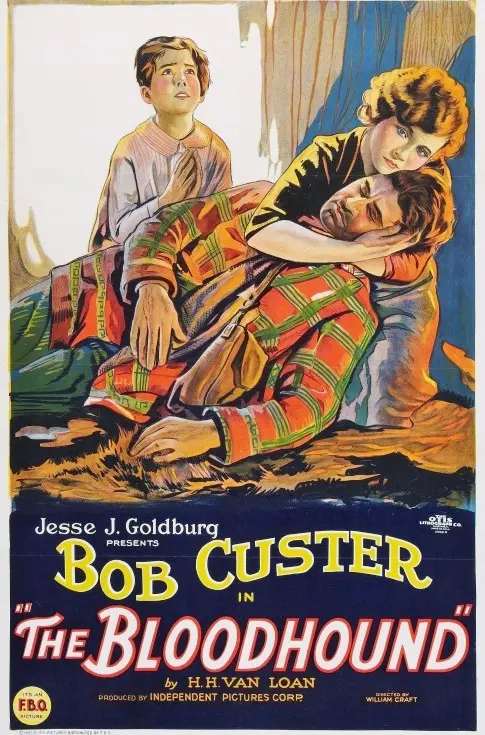
Short answer: yes, but with significant caveats. The Bloodhound is a fascinating relic of the silent era, offering a glimpse into early Western cinema's narrative ambition, even if its execution often feels simplistic by modern standards. This film is for silent film enthusiasts, Western aficionados curious about the genre's origins, and anyone interested in the foundational storytelling techniques of early Hollywood. It is definitively not for viewers who demand fast pacing, complex character arcs, or high-fidelity visuals; those accustomed to contemporary cinema might find its rhythm and visual language challenging.
Released at a time when cinema was still finding its voice, The Bloodhound attempts a relatively intricate plot involving murder, mistaken identity, and a surprising fraternal bond. It's a film that, despite its age and certain narrative shortcomings, manages to engage through sheer storytelling bravado and the earnest performances typical of its period. Understanding its context is key to appreciating its modest achievements.
The narrative engine of The Bloodhound is its central conceit: a wrongful accusation leading to a revelation of long-lost family. The film opens with a violent tavern brawl, a common enough trope in Westerns, culminating in the death of "Moose" Rambo. Belleau is quickly implicated, setting the stage for a standard pursuit narrative. However, the plot deftly sidesteps convention almost immediately with the introduction of Sergeant McKenna, a Northwest Mounted Police officer tasked with apprehending Belleau.
The critical twist arrives with Constable Fitzgerald, an observer who, witnessing Belleau, notices an uncanny resemblance to McKenna. This sets up a delightful, if somewhat implausible, secondary chase: Fitzgerald pursuing McKenna, believing him to be the man he saw. This layered pursuit adds a comedic and dramatic tension that elevates the story beyond a simple "cop hunts criminal" premise. It’s a bold choice for a silent film, relying heavily on visual cues and the audience's willingness to suspend disbelief.
The core emotional weight, however, rests on the discovery that McKenna and Belleau are twin brothers. This revelation transforms the chase from a matter of duty into a profound test of loyalty. McKenna’s subsequent decision to impersonate his brother, sacrificing his freedom to protect Belleau’s family, is the film's dramatic peak. This act of selflessness, while perhaps telegraphed, provides a compelling emotional anchor, even if the silent film format struggles to fully explore its psychological depths. The subsequent unraveling of this deception by Belleau's wife, and the eventual confession of the true killer, ties the various threads together, culminating in a somewhat rushed, but ultimately satisfying, resolution.
The success of The Bloodhound hinges significantly on the shoulders of Bob Custer, who undertakes the ambitious task of portraying both Sergeant McKenna and Belleau. In the silent era, such dual roles were often a technical marvel, relying on clever editing and Custer's ability to convey distinct personalities through physical acting and facial expressions alone. Custer, a prolific Western star of his time, brings a rugged intensity to McKenna, embodying the stoic, duty-bound Mountie with a believable gravitas.
His portrayal of Belleau, however, is where the performance feels a little less defined. While Custer attempts to differentiate the brothers through subtle shifts in posture and demeanor, the limitations of the silent medium, combined with what appears to be a less nuanced script for Belleau, make it challenging for the audience to fully distinguish the two without the aid of intertitles or narrative context. For instance, in scenes where both characters are present, the clever use of split screen or body doubles is evident, but the emotional distinction between the two men often blurs. This isn't necessarily a failure on Custer's part, but rather a reflection of the era's nascent techniques for conveying complex dual identities.
Emily Barrye, as Belleau's discerning wife, offers a strong, understated performance. Her quick perception of the twin deception is a crucial plot point, and Barrye conveys this intelligence with a quiet intensity, making her character feel more active than many female roles of the period. David Dunbar, as the earnest but misguided Constable Fitzgerald, adds a touch of almost comedic misdirection, his conviction in his mistaken belief driving a significant portion of the early plot. While the acting style of the silent era can feel overtly theatrical to modern eyes, the cast of The Bloodhound generally delivers performances that serve the dramatic needs of the story, even if they lack the psychological depth we expect today.
The direction of The Bloodhound, though often uncredited in films of this period, demonstrates a competent understanding of silent film storytelling. The pacing is surprisingly brisk for a film of its age, particularly in the initial chase sequences. The director (likely a collaborative effort of H.H. Van Loan and Adele Buffington, who are credited as writers) understands the need to keep the narrative moving, using action and dramatic reveals to propel the audience forward. There are moments of genuine tension, particularly during McKenna's initial pursuit of Belleau, where the rugged landscapes are utilized effectively to convey isolation and the vastness of the frontier.
Cinematographically, the film employs a functional, rather than groundbreaking, style. Wide shots establish the Western setting, showcasing sprawling plains and rustic settlements. Close-ups are used sparingly but effectively to emphasize key emotional moments or significant plot details, such as a character's realization or a crucial piece of evidence. The lighting is straightforward, relying mostly on natural light for outdoor scenes and practical lamps for interiors, creating a stark, realistic aesthetic typical of the era. There's a particular sequence involving McKenna's sacrifice, where the framing subtly emphasizes his isolation as he accepts his fate, which stands out as a moment of visual eloquence amidst the more utilitarian shots.
The overall tone oscillates between adventurous Western and earnest melodrama. The initial barroom brawl and subsequent chase are pure frontier action, while the fraternal deception and the wife's discovery lean heavily into dramatic, almost theatrical, emotional beats. This blend is characteristic of silent films, which often sought to combine genre elements to appeal to a broad audience. While not revolutionary, the directorial choices ensure the story remains coherent and engaging, even as it navigates its more convoluted plot points. It's a testament to the filmmakers' ability to communicate a complex narrative without spoken dialogue, relying solely on visual storytelling and intertitles.
As a product of the silent era, The Bloodhound offers a fascinating case study in how filmmakers conveyed intricate plots without dialogue. The reliance on intertitles is, of course, paramount. Here, they are generally well-integrated, providing necessary exposition and character dialogue without becoming overly intrusive. They serve to clarify the twists and turns, particularly the crucial revelation of the twin brothers, which would be impossible to convey visually alone without significant ambiguity.
The film leans heavily on visual cues and exaggerated acting to communicate emotion. A furrowed brow, a dramatic gesture, or a wide-eyed stare often stand in for pages of dialogue. While this can feel dated to modern viewers, it's an essential aspect of silent film's unique charm and challenge. The pacing, while brisk, also allows for moments of visual storytelling that might be rushed in a talkie. For instance, the sequence where Constable Fitzgerald mistakenly identifies McKenna is built through a series of observations and reactions, allowing the audience to follow his flawed logic.
Compared to other Westerns of its time, such as Hitchin' Posts, The Bloodhound feels slightly more ambitious in its narrative scope. It moves beyond simple good-versus-evil dynamics to explore themes of identity and sacrifice. The inclusion of the Northwest Mounted Police also gives it a distinct flavor, setting it apart from the more common American frontier narratives. The film’s uncredited score (as with most silent films, it would have been live accompaniment) would have played a crucial role in setting the mood, guiding the audience through moments of suspense, drama, and resolution, underscoring the importance of sound in the overall silent film experience.
At its heart, The Bloodhound is a meditation on loyalty, identity, and the sometimes-blurry lines of justice. McKenna's unwavering devotion to his duty as a Mountie is tested by the discovery of his twin brother. His decision to protect Belleau, even at the cost of his own freedom, speaks volumes about the powerful pull of familial bonds. This conflict between personal loyalty and professional obligation is a compelling theme, explored with admirable clarity for a silent film.
The film also subtly critiques the fallibility of the justice system. Belleau is wrongfully accused, and McKenna is nearly imprisoned due to a mistaken identity. Constable Fitzgerald's well-meaning but ultimately flawed investigation highlights how easily appearances can deceive and lead to grave injustices. The narrative suggests that true justice isn't always swift or straightforward, often requiring external factors—like Belleau's wife's intervention or the real killer's confession—to set things right. This is a surprisingly mature theme for a film of its era, moving beyond simple black-and-white morality.
An uncomfortable, yet historically significant, aspect of the film is the portrayal of the real murderer as a "half-breed." This reflects the unfortunate racial stereotypes prevalent in early 20th-century cinema, where non-white characters were often relegated to villainous or one-dimensional roles. While a product of its time, it's a detail that modern viewers will, and should, find problematic. It serves as a stark reminder of how far cinematic representation has evolved, and how far it still needs to go. This choice, while offering a convenient resolution to the plot, detracts from the film's otherwise more nuanced thematic explorations of justice and identity. It feels like a shortcut, an easy out that relies on harmful tropes rather than developing a more complex villain. This is arguably where the film fails most significantly in its attempt to provide a truly compelling resolution.
Yes, The Bloodhound is worth watching today, especially for specific audiences. It's a prime example of a silent Western that tries to do more than just stage shootouts and chases. It has a heart, a clever plot, and showcases the earnest efforts of early filmmakers to tell engaging stories.
This film works because of its surprisingly intricate plot, which manages to weave together mistaken identity, fraternal loyalty, and a quest for justice with remarkable clarity for a silent feature. The central twin brother twist provides a strong dramatic hook that keeps the audience invested despite the lack of dialogue. It’s also a valuable historical document, showing the nascent stages of genre filmmaking.
This film fails because of its occasionally simplistic characterizations, the unavoidable limitations of silent film acting (which can feel over-the-top to modern sensibilities), and its reliance on a problematic racial stereotype for its villain. The pacing, while generally good, can still feel slow compared to contemporary cinema, and the visual style is more functional than artistic, lacking the groundbreaking cinematography of some of its more celebrated contemporaries.
You should watch it if you have an appreciation for silent cinema, are a fan of classic Westerns, or are simply curious about the evolution of film storytelling. It offers a unique window into a bygone era of moviemaking. However, if you're seeking a modern, fast-paced thriller or a film that challenges contemporary social norms, you might find The Bloodhound a difficult watch.
"The film’s central conceit of twin brothers, while a convenient plot device, elevates the narrative beyond simple genre fare, making it a surprisingly engaging watch for the historically curious."
The Bloodhound is more than just a dusty artifact; it's a testament to the enduring power of storytelling, even in its most nascent forms. While it certainly has its limitations, particularly for a modern audience, its ambition and earnest execution make it a worthwhile watch for those willing to engage with the conventions of silent cinema. It's a solid, if not spectacular, entry in the silent Western canon, offering both entertainment and a valuable historical lesson in cinematic evolution. It won't convert skeptics of silent film, but for the initiated, it offers a quietly compelling narrative that holds up surprisingly well as a historical curiosity.
IMDb 7.3
1929
Community
Log in to comment.