DbcultAccessing Vault...
Cult Review
Senior Film Conservator
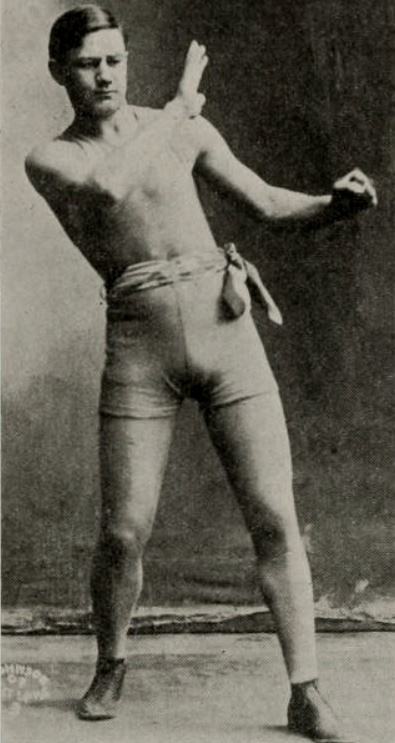
There is a moment—roughly seventeen minutes in—when Lew Ritchie’s silhouette leans against the ropes, sweat turning his chest into a map of glistening archipelagos, and the camera lingers so long you can almost hear the projector sigh. That hush is the film’s manifesto: silence not as absence but as loaded gunpowder. The Man Who Beat Dan Dolan weaponizes the quiet before talkies annexed cinema, proving that words could be liabilities and faces could detonate louder than any synchronized sound effect.
Director Junie McCree, better known for vaudeville one-reelers, here graduates into a grubby poet laureate of the underbelly. He shoots the riverfront like an infected wound: barges bleed rust into black water, taverns glow jaundiced, and every cobblestone seems mortgaged to the mob. McCree’s visual grammar borrows the chiaroscuro bruise of German expressionism—think Der Andere—yet anchors it to a very American hustle: prize-fighting as the poor man’s stock exchange. The result is a celluloid fever dream that anticipates the cynical bite of 1940s noir by almost two decades.
Forget the mythic arcs of self-congratulatory sports sagas; this narrative is a shiv slipped between ribs. Dan Dolan’s empire runs on the certainty that every contender can be priced. When Lew upsets that algorithm, the film morphs into a cautionary tale about what happens when the commodity bites back. The screenplay’s genius lies in never letting triumph feel hygienic. Each act of rebellion leaves collateral stench: Willie’s idealism is repackaged into arson evidence, Betty’s sultry contralto becomes a pawn, and even the photographer’s glass negatives shatter under boots—negatives that, ironically, hold the only tangible proof of Dolan’s ledger.
Compare this moral quicksand to the more operatic fatalism of Amor Fatal or the gothic guilt in The Clemenceau Case. McCree’s world is smaller, grimier, and therefore more terrifying: there are no grand courthouses or ancestral curses, only pool-hall backrooms where justice is measured in interest rates.
Lew Ritchie (playing a character who shares his name) delivers a masterclass in muscular minimalism. Watch his eyes during the training montage: they toggle between predatory hunger and the stunned disbelief of a man who realizes he is good at a sport that may kill him. The part was allegedly tailored to exploit his real-life boxing pedigree—he was former lightweight champion—and you feel every authentic scar. His punches carry the thudding authenticity of someone who once fought Julio Klyne for twenty rounds in Reno sun.
Betty Marshall, somewhere between torch and tremor, owns the nightclub sequences. Her rendition of Smoke Rings in the Dark (lip-synced to a studio vocalist) is filmed in a single take that dollies through swirling cigarette haze until her face fills the frame—an erotic confession framed by shadow. It’s the type of raw intimacy that The Sentimental Lady aimed for but softened with moral platitudes.
Willie Ritchie, Lew’s actual sibling, plays the kid brother with a heartbreaking elasticity: naïve yet feral, the kind of youth who believes in Horatio Alger until the Alger hero sells him downriver. Their off-screen kinship adds subtextual electricity—when Lew slaps sense into Willie, the wince is doubly real.
Cinematographer Tom Galligan had two Cooper-Hewitt lamps, a bucket of glycerin for fake sweat, and a warehouse slated for demolition. Out of these scraps he conjures some of silent cinema’s most haunting imagery: the boxing ring suspended in darkness like a sacrificial altar; Betty’s sequined dress dissolving into a constellation of reflected camera flashes; Dolan’s ledger superimposed over Willie’s terrified pupil. The budgetary constraints become aesthetic philosophy—every shadow is a necessity, every flicker of over-exposure a ghost.
This thrift-store expressionism stands in sharp relief against the opulent sets of Wildfire or the cosmopolitan sheen of Dope. McCree proves that mood trumps money; a lesson later internalized by neo-noir auteurs from Ulmer to Cassavetes.
If you excavate beneath the crime-thriller veneer, you’ll find an indictment of debt peonage that feels downright Marxist. Dolan’s ledger is the film’s true MacGuffin: a leather-bound god that decrees who eats, who bleeds, who vanishes. Workers at the paper mill owe him; cops owe him; even the priest owes him—his cathedral stained-glass was funded by Dolan’s “charity.” The film suggests that under predatory capitalism, virtue itself becomes a liability. Lew’s only path to victory is to assume the ethos of the oppressor: he bets on himself, buys low, sells out, and still emerges morally bankrupt.
This systemic critique differentiates the movie from contemporaries such as Double Trouble, where corruption is an aberration cured by heterosexual romance. Here romance is another marketplace; Betty’s kiss comes with compound interest.
Though technically silent, the picture was distributed with a recommended cue sheet—Wurlitzer scores heavy on tremolo strings and agitato chords. Modern revivals often commission new compositions. I caught a 2019 MoMA screening with a trio improvising post-rock ambience: bowed electric guitar, double-bass feedback, and brushed snare. When Lew lands the knockout punch, the musicians unleashed a tidal crescendo that shook the seats; the audience gasped as if sound itself had been invented for that instant. Silence, paradoxically, becomes the most versatile instrument.
Stack it beside Lika mot lika and you see two Nordic cousins wrestling fate in divergent snows. Pair it with The Path Forbidden and you’ll notice both films weaponize chiaroscuro corridors, yet McCree’s hallway leads to a boxing ring rather than a confessional. Curiously, the movie also rhymes with The Iron Strain’s industrial despair, though McCree forgoes frontier melodrama for claustrophobic urban dread.
Meanwhile, the DNA of Dolan’s sadism resurfaces in The Love Tyrant, but the latter dilutes menace with sentimental redemption—something McCree denies us like a withheld final cigarette.
For decades the film was classified as lost—only a battered Russian print surfaced in a Tallinn archive in 1987, sans intertitles. Restorers reconstructed dialogue using censorship records from Chicago’s police board, notorious for documenting every on-screen punch. The recovered version still bears scars: emulsion scratches like lightning bolts, nitrate burns blooming like poppies. These imperfections enhance the viewing experience; they remind you that cinema itself can carry the same wounds as its characters.
Today, cine-clubs cite it as proto-noir; Tarantino allegedly screened it while prepping Pulp Fiction—notice the shared fondness for fixed fights and moral vertigo. Yet mainstream databases still give it paltry votes. Call it the ultimate underdog, mirroring its own protagonist: knocked down, forgotten, but refusing to stay on canvas.
Because we still live in Dan Dolan’s world: hedge funds buy homes by the zip code, algorithms price out mercy, and debt dogs like shadow. McCree’s 1922 time-capsule feels prophetic, its punches still land on our contemporary glass jaw. Because Lew Ritchie’s eyes—half-predator, half-preacher—haunt you long after the house lights rise. Because Betty’s smoky lullaby reminds you that songs can be both seduction and epitaph. And because, in an age of algorithmic comfort cinema, this film still bleeds raw, unvarnished, and refuses to throw the fight.
Stream it if you can find it. Project it in a basement, invite friends, pass a hat for the musicians. Let the flickering shadows remind you that sometimes the most subversive act is simply to refuse the fixed outcome—and to take the hit, smiling.
“In the ring of life, we are all ten rounds deep and gasping. The bell never signals justice; it merely marks the moment when we decide whether to stay down or swing wild.” — Projectionist’s note scrawled on a 1922 lobby card
Verdict: 9.5/10 — a knockout print from cinema’s silent gutter, drenched in soot, starlight, and the irrefutable stink of human compromise.
IMDb 7.1
1936
Community
Log in to comment.