DbcultAccessing Vault...
Cult Review
Senior Film Conservator
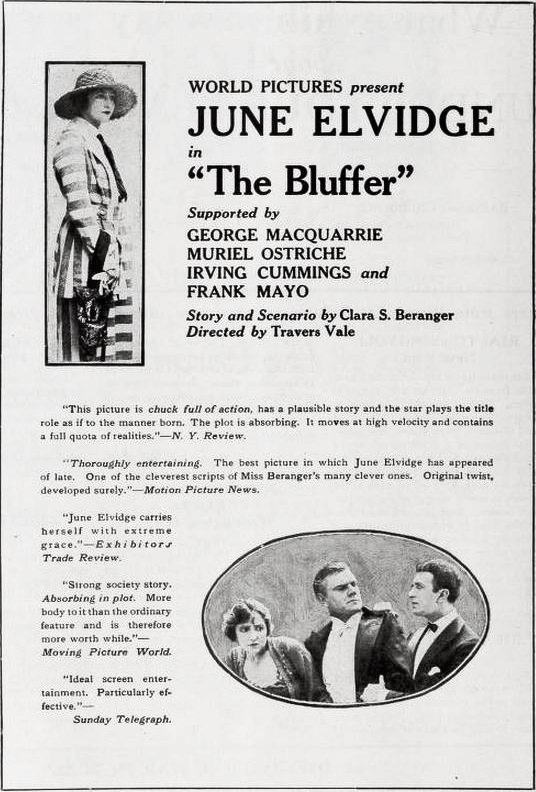
The cinematic landscape of the early 20th century often grappled with the burgeoning complexities of urban morality and the seductive allure of superficiality. In this regard, The Bluffer, a compelling silent drama penned by the insightful Clara Beranger, emerges as a particularly poignant artifact, dissecting the corrosive effects of a life predicated on artifice. It’s a narrative that, even a century later, resonates with an uncomfortable familiarity, holding a mirror to the human propensity for dissimulation in the pursuit of social and financial ascendancy. The film navigates a treacherous path through a world where integrity is a negotiable commodity and reputation is often a skillfully constructed illusion. From its very outset, the audience is plunged into a milieu where the foundations of respectability are shown to be shockingly fragile, collapsing under the weight of financial ruin and moral decay. The story is not merely a tale of individual struggle but a broader indictment of a societal structure that incentivizes pretense and punishes authenticity, making it a surprisingly modern commentary on the pressures of keeping up appearances.
At the heart of this intricate web of deceit stands Sybil Van Norden, portrayed with nuanced vulnerability by Elizabeth Garrison. Her initial circumstances are those of privilege, a life cushioned by her father's wealth, until his abrupt suicide unveils a hidden legacy of financial impropriety and public disgrace. The sudden plummet from social grace leaves Sybil adrift, stripped of her former standing and facing a stark, unforgiving reality. It is in this crucible of despair that she encounters Richard Vaughan, played by George MacQuarrie, a man whose own life was irrevocably damaged by Sybil's father's dishonest dealings. Vaughan is no benevolent guide; his counsel is steeped in a bitter cynicism born of personal betrayal. He advises Sybil to embrace the art of the 'bluff,' to navigate life not with honesty, but with a calculated performance, a strategy designed to conquer a world that, in his view, rewards only the most artful pretenders. This pivotal interaction sets the stage for Sybil's dramatic transformation, an almost Faustian bargain where she trades her innocence for a hardened, pragmatic facade. It's a moment that defines the film's trajectory, establishing the moral ambiguity that will permeate every subsequent decision Sybil makes. The resonance here with films like Love Insurance (1919), where characters engage in intricate schemes to secure their financial and social futures, is palpable, though The Bluffer delves deeper into the psychological toll of such calculated living.
Following Vaughan's cold, hard advice, Sybil enters into a strategic marriage with Wallace Duncan, believing his wealth will restore her position. However, the irony is cruelly swift: Duncan, brought to life by Irving Cummings, is himself a master of illusion, a man as financially bereft and as committed to the 'bluff' as Sybil has become. Their union is not one of love, but a partnership in subterfuge, a mutual agreement to perpetuate a grand deception. Together, they embark on a precarious career of cheating at bridge, skillfully exploiting their unsuspecting, affluent circle of friends. These card games are not mere pastimes; they are tense, high-stakes battles of wits and manipulation, where every smile, every feigned hesitation, is part of a meticulously choreographed charade. The film excels at depicting the psychological strain of such a life, where the lines between performance and reality blur, and genuine connection becomes an impossible luxury. Their existence becomes a constant tightrope walk, each day a new performance to maintain their fragile illusion of prosperity. The audience is drawn into their dangerous game, feeling the thrill of their illicit gains alongside the gnawing anxiety of potential exposure. This precarious dance of deception is reminiscent of the intricate plots found in serials like The Iron Claw (1916), though The Bluffer grounds its machinations in a more intimate, psychological drama.
Their fraudulent enterprise eventually ensnares John Moran, a robust Western millionaire portrayed by Frank Mayo, whose rustic sincerity stands in stark contrast to the sophisticated artifice of Sybil and Duncan's world. Moran, drawn to Sybil's captivating yet enigmatic presence, hires the couple to guide his daughter, Grace (June Elvidge), through the treacherous currents of high society. This arrangement introduces a new layer of complexity to Sybil's life. As she spends time with Grace, a genuine fondness begins to blossom, a rare and fragile emotion in her otherwise calculated existence. Grace’s innocence and vulnerability serve as a poignant reminder of the life Sybil has forsaken, stirring a nascent sense of conscience within her. The moral quandary deepens with the arrival of Edmond Curtiss (John Davidson), a dissolute opportunist who offers Duncan a substantial sum to manipulate Grace into marrying him. This proposition forces Sybil to confront the true depths of her moral compromise. The idea of sacrificing Grace's happiness for financial gain, even indirectly, becomes a bridge too far. This internal conflict is exquisitely rendered through Garrison’s subtle expressions, conveying a woman torn between the survival instincts instilled by Vaughan and a burgeoning desire for genuine connection and integrity. Her protective instinct towards Grace marks a crucial turning point, signaling a potential shift away from the cynical philosophy that has governed her actions. It's a testament to Beranger's writing that such a complex moral awakening feels organic and earned.
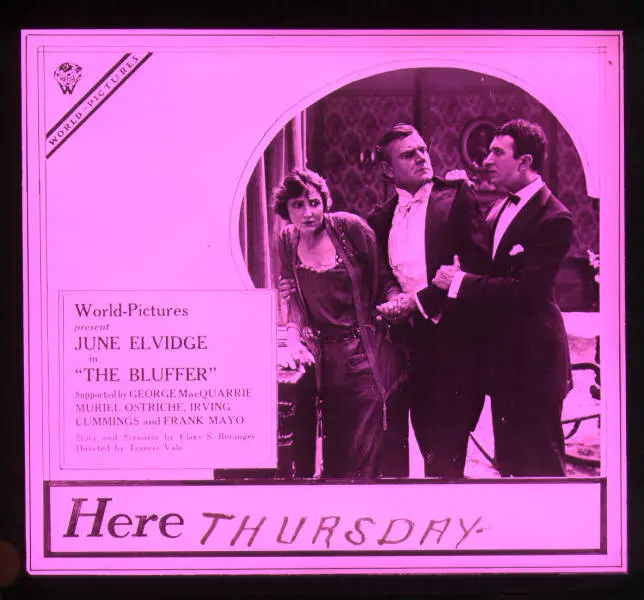
Driven by her burgeoning conscience, Sybil takes a decisive, risky step: she contacts Vaughan, who has returned, now seemingly softened by time and reflection, to warn Moran about Curtiss's nefarious intentions. This act of defiance against the very 'bluffing' philosophy Vaughan himself espoused marks a significant evolution in Sybil's character. However, the intricate web of deceit is destined to unravel. During a tense card game, Moran discovers Sybil and Duncan's systematic cheating. The confrontation is explosive, a raw display of betrayed trust and simmering anger. Moran, feeling duped and enraged, locks Sybil in a room, his initial attraction curdling into a violent struggle as he attempts to force himself upon her. The scene is a chilling depiction of the dangers inherent in a life built on falsehoods, where the consequences can escalate far beyond mere financial loss. It is at this critical juncture that Vaughan, perhaps driven by a subconscious desire to atone for his earlier counsel, arrives. His dramatic intervention, breaking down the door to rescue Sybil, is a powerful moment of redemption, both for him and for the narrative's moral compass. Moran, thwarted and exposed, retreats, leaving a chaotic aftermath. In the quiet intensity that follows, Vaughan, his hardened exterior finally cracking, confesses to Sybil the malicious intent behind his initial advice, admitting that his cynicism was fueled by a desire to see her suffer for her father's sins. This raw confession is a cathartic moment, clearing the air and paving the way for a different kind of relationship, one built on painful honesty rather than calculated deception. The dramatic rescue and confession echo the high stakes and moral dilemmas often found in adventure serials, but here, the focus remains firmly on the psychological and relational consequences, much like the intense personal stakes in His Robe of Honor (1918).
The fallout from the card game and Moran's aggression is swift and tragic. Duncan, unable to escape the consequences of his actions, meets his end in a violent altercation with Moran. His death, while brutal, serves as a grim punctuation mark to the destructive path of deception he and Sybil had walked. With Duncan removed from the equation, the narrative shifts towards a possibility of genuine redemption and a hard-won peace for Sybil. The film culminates in a poignant resolution: Sybil and Vaughan, having navigated the turbulent waters of deceit, betrayal, and atonement, find solace and love in each other. Their marriage signifies not a return to superficiality, but a commitment to a life built on a foundation of honesty and shared understanding, forged in the crucible of their past mistakes. The birth of their child symbolizes a new beginning, a future untainted by the 'bluff,' where authenticity can finally flourish. It’s a powerful statement that even after profound moral compromise, the path to redemption, though arduous, is ultimately attainable. The journey of Sybil, from naive heiress to cynical bluffer, and finally to a woman embracing genuine love and motherhood, is a testament to the resilience of the human spirit and the enduring power of truth. This arc, from moral ambiguity to eventual clarity, resonates with the thematic depth found in films that explore personal growth through adversity. Beranger’s masterful script transforms a tale of social intrigue into a profound exploration of human nature.
Clara Beranger's writing for The Bluffer is a remarkable achievement, particularly for its era. She crafts a narrative that is both intricate in its plotting and profound in its psychological insight. The characters are not mere archetypes but complex individuals wrestling with their moral compasses in a society that often prioritizes appearance over substance. Beranger skillfully explores the corrosive nature of cynicism and the arduous journey towards redemption, presenting a story that is as much a character study as it is a social commentary. The film's message, that a life built on pretense is ultimately unsustainable and fraught with peril, remains timeless. The performances, particularly Elizabeth Garrison's portrayal of Sybil, convey a depth of emotion and internal conflict that transcends the limitations of silent cinema. Her transformation from an innocent, albeit privileged, young woman to a hardened manipulator and then to a woman seeking genuine connection is compelling and believable. George MacQuarrie as Vaughan also delivers a memorable performance, charting his character's arc from embittered cynic to repentant mentor. The visual storytelling, characteristic of the period, relies on strong compositions, expressive acting, and carefully crafted intertitles to convey the narrative's nuances and emotional weight. The film avoids simplistic moralizing, instead inviting the audience to consider the complex pressures that drive individuals to compromise their integrity. It's a testament to the power of early cinema to tackle sophisticated themes with grace and impact. The deliberate pacing allows for character development to unfold naturally, building tension and empathy in equal measure. This considered approach to storytelling sets it apart from more straightforward melodramas of the time, aligning it more with the nuanced character studies found in serious literary adaptations. Beranger's ability to imbue her characters with such internal struggle makes The Bluffer a standout work, demonstrating that even in the silent era, screenplays could achieve remarkable psychological depth. It’s a film that quietly challenges its audience to look beyond the surface, to question the veneers of respectability, and to consider the profound cost of living a life that is anything less than authentic.
In its exploration of moral ambiguity, the seductive power of deception, and the ultimate triumph of genuine connection, The Bluffer stands as a significant, if often overlooked, work of silent cinema. It’s a film that not only entertains with its dramatic twists and turns but also provokes thought about the nature of truth, reputation, and the choices that define us. The journey of Sybil Van Norden is a compelling reminder that while the 'bluff' may offer temporary gains, true fulfillment lies in the courage to live authentically, even in a world that often rewards artifice. Its themes resonate with a timeless quality, making it a valuable piece for both film historians and contemporary audiences interested in the enduring human struggle between appearance and reality.
IMDb 6.9
1933
Community
Log in to comment.