DbcultAccessing Vault...
6.2/10
Senior Film Conservator
A definitive 6.2/10 rating for a film that redefined the boundaries of cult cinema. Snow White remains a cornerstone of transgressive art.
Step back into the nascent days of cinematic storytelling, to an epoch where flickering images and evocative musical scores wove tales of profound human drama and fantastical escapism. In 1918, amidst the tumultuous backdrop of a world in flux, director J. Searle Dawley unveiled his interpretation of one of the Western world's most enduring fables: "Snow White." Far from a mere children's tale, this silent film adaptation, penned by Winthrop Ames from the timeless narratives of Wilhelm and Jacob Grimm, offers a fascinating window into the artistic sensibilities and narrative ambitions of early 20th-century cinema. It's a production that, while perhaps overshadowed by later, more technologically advanced renditions, holds its own as a significant artifact, brimming with a particular kind of charm and a surprisingly sophisticated grasp of psychological tension.
The narrative bedrock of "Snow White," meticulously crafted by the Grimm Brothers and adapted for the screen by Winthrop Ames, is one that has resonated across generations, cultures, and mediums. At its core lies a primal struggle: the innocent versus the corrupt, beauty versus vanity, life versus the insidious grip of envy. Dawley’s film, even without spoken dialogue, manages to tap into these universal archetypes with remarkable clarity. The Queen, a figure of formidable, albeit fragile, power, embodies a chilling pathology born of profound insecurity. Her obsession with being the "fairest of them all" isn't merely a whimsical desire; it's a desperate, almost existential, need to dominate, to control the narrative of beauty itself. This silent portrayal allows the audience to project their own understanding of such malevolence onto Dorothy Cumming's expressive, often unsettling, performance.
What makes this particular iteration so compelling is its reliance on visual cues and the power of suggestion. The grand, opulent settings of the Queen's castle, often starkly contrasted with the rustic simplicity of the forest, speak volumes about the competing worlds within the story. The very act of Snow White's banishment isn't just a plot device; it's a symbolic expulsion from artifice into authenticity, from a realm of poisoned mirrors to one of natural, unvarnished truth. This underlying philosophical current is deftly handled, a testament to the writers' and director's ability to imbue a seemingly straightforward fairy tale with deeper resonance. The moral clarity, a hallmark of the Grimm tales, is translated with an almost stark purity onto the silent screen, making the conflict between good and evil feel both fantastical and deeply human.
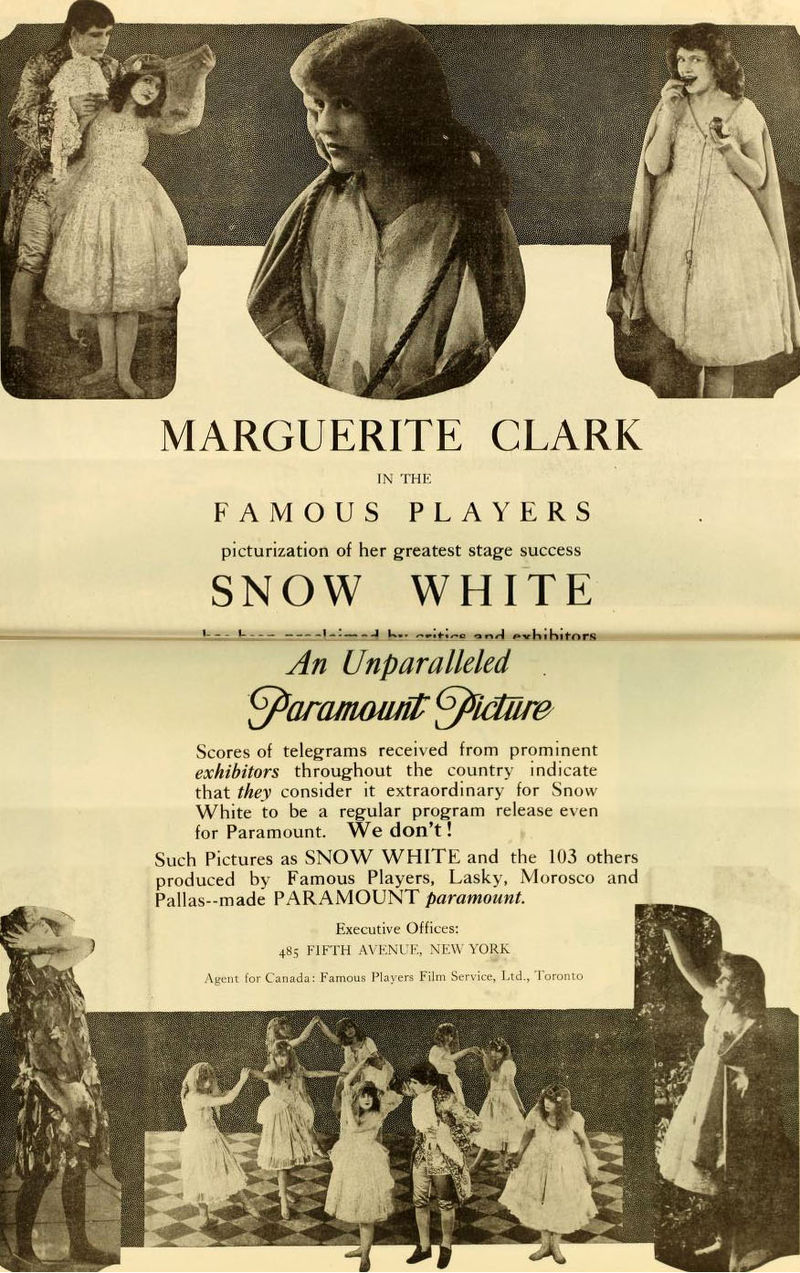
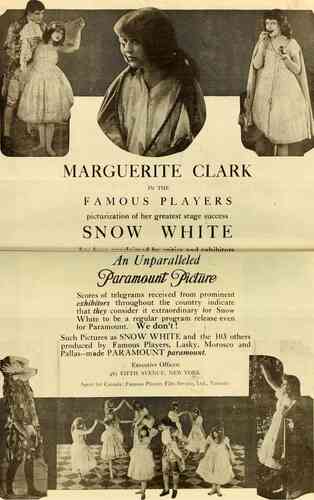
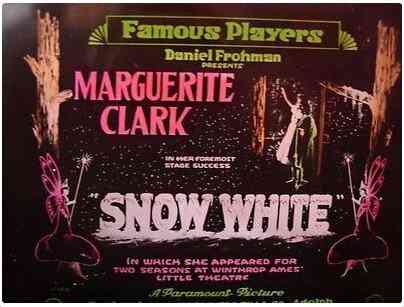
At the heart of this cinematic endeavor is Marguerite Clark, whose portrayal of Snow White is nothing short of captivating. Clark, a celebrated stage actress who transitioned seamlessly into silent film, brings a delicate yet resilient quality to the character. Her Snow White is not a passive victim awaiting rescue; rather, she embodies an inherent goodness and an unyielding spirit that allows her to navigate the treacherous world around her. Her wide, expressive eyes convey both vulnerability and an inner strength, making her trials all the more poignant. The purity she projects is not saccharine; it feels earned, a natural luminescence that stands in stark opposition to the Queen's manufactured glamour. Clark's performance is a masterclass in silent acting, relying on nuanced gestures, subtle facial expressions, and a palpable aura of innocence that radiates from the screen.
Consider her scenes of distress and despair in the forest; there's a genuine pathos that doesn't descend into melodrama. Her interactions with the forest creatures and, later, with the dwarves, are imbued with a gentle sincerity that establishes her character's compassionate nature. This isn't merely a princess in peril; it's a young woman grappling with profound injustice, finding solace and strength in unexpected alliances. Clark's Snow White becomes a beacon of hope, not just for the narrative, but for the audience, inviting empathetic engagement that transcends the limitations of the silent medium. Her ability to convey complex emotions without uttering a single word is a testament to her profound understanding of both the craft and the character. Her portrayal solidifies Snow White as an active participant in her own fate, rather than a mere object of conflict.
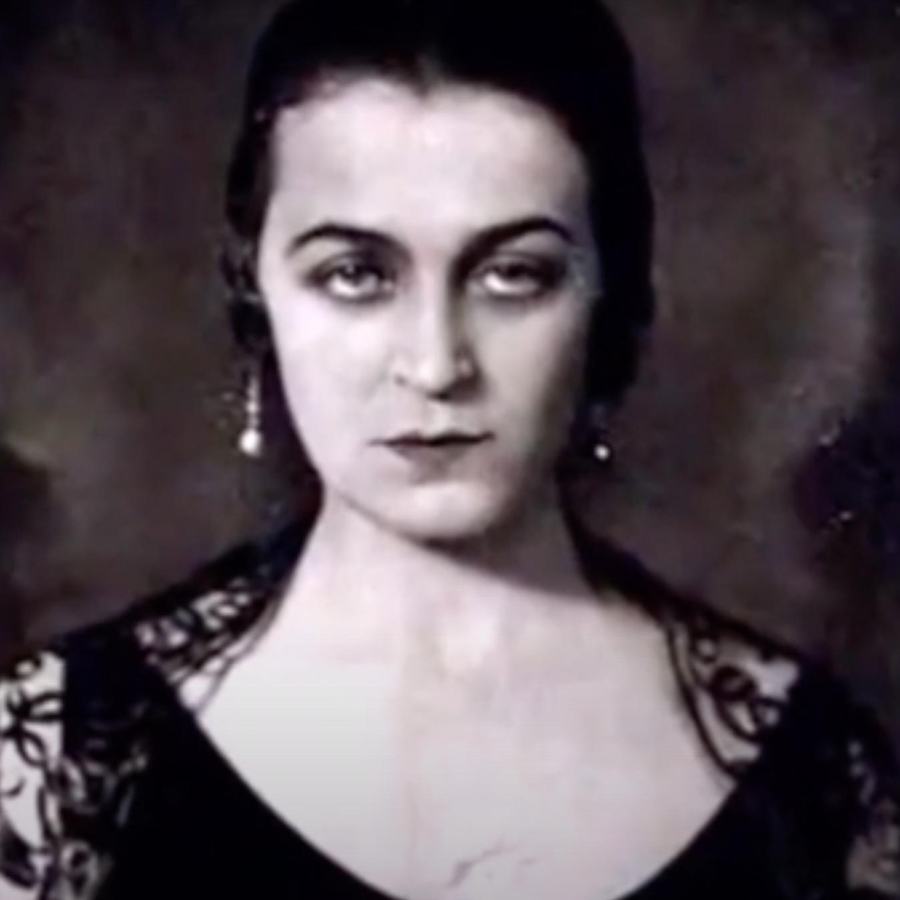
Opposite Clark's radiant innocence stands Dorothy Cumming's chillingly effective portrayal of the wicked Queen. Cumming eschews overt villainy for a more insidious, psychologically driven malevolence. Her Queen is not merely evil for evil's sake; she is consumed by a gnawing insecurity, a desperate clinging to a fading youth and beauty that manifests as cruel envy. The mirror, her confidante and tormentor, becomes a powerful symbol of her self-obsession, reflecting not truth but her warped perception of it. Cumming's performance is a study in controlled fury, her gestures precise, her gaze piercing, conveying a woman teetering on the brink of madness, driven by an insatiable desire for supremacy.
The silent film format, paradoxically, enhances the Queen's terrifying presence. Without dialogue, her actions and expressions become magnified, allowing the viewer to fill in the unspoken depths of her depravity. Her attempts to destroy Snow White are not cartoonish acts of villainy but feel like desperate, calculated moves of a woman losing control, her fear of being superseded overriding any semblance of humanity. This nuanced approach elevates the Queen beyond a simple antagonist, transforming her into a tragic figure of self-destruction, a cautionary tale woven into the very fabric of the narrative. Her descent into sorcery and disguise further underscores her desperation, a willingness to shed her regal identity to achieve her destructive aims. The intensity of Cumming's performance provides the necessary dramatic counterweight to Clark's gentle portrayal, creating a dynamic tension that propels the story forward. The interplay between the Queen's external grandeur and internal decay is a powerful visual metaphor throughout the film.
The transition from the Queen's oppressive court to the freedom of the forest marks a pivotal shift in Snow White's journey. The woods, initially a place of fear and uncertainty, transforms into a sanctuary, a realm where nature's embrace offers solace from human malice. It is here that Snow White encounters the seven dwarves, portrayed with a charming blend of individuality and collective loyalty by actors such as Lionel Braham, Jimmy Rosen, and Arthur Donaldson. These characters, far from being mere comic relief, represent a profound counterpoint to the superficiality of the royal court. Their lives, rooted in honest labor and simple camaraderie, offer Snow White not just refuge, but a sense of belonging and purpose she lacked in her stepmother's castle.
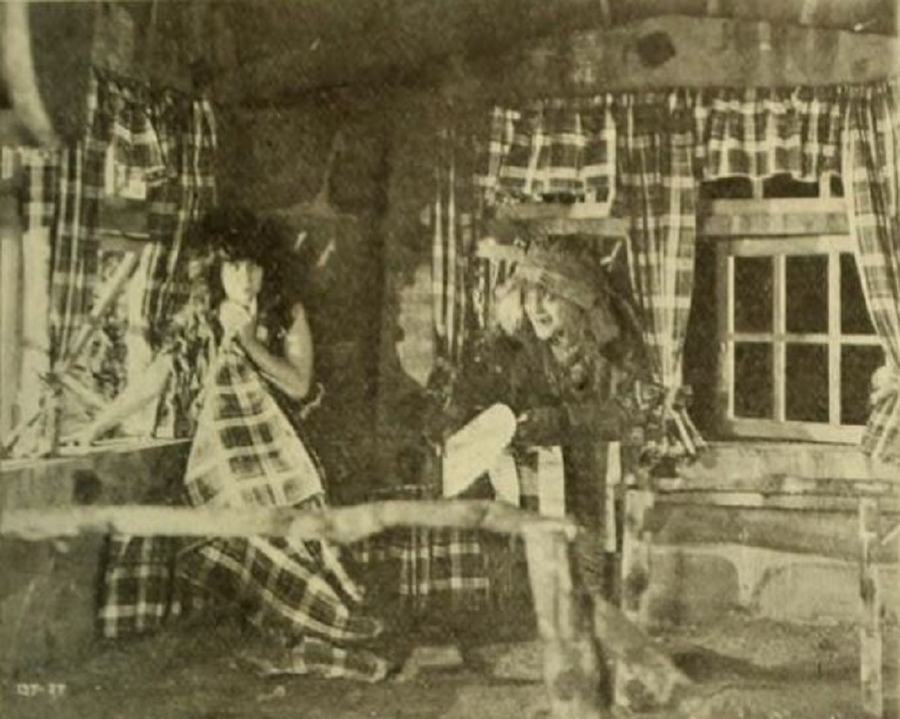
The portrayal of the dwarves, while adhering to the common tropes of the era, manages to imbue each with a distinct personality, allowing for moments of genuine warmth and humor. Their initial apprehension towards Snow White, followed by their protective devotion, underscores themes of acceptance and the formation of an unconventional family. This section of the film is crucial for its emotional depth, showcasing Snow White's resilience and her capacity to inspire kindness in others. The contrast between the dark, menacing forest of her initial flight and the cozy, bustling home of the dwarves is visually striking and thematically rich, emphasizing the idea that true safety and happiness are found not in power or status, but in genuine connection and community. Their unwavering loyalty and simple wisdom provide Snow White with the strength and protection she desperately needs against the Queen's relentless pursuit, highlighting the power of collective good against individual evil.
J. Searle Dawley's direction, alongside the efforts of his cinematographers, demonstrates a keen understanding of visual storytelling, a necessity in an era devoid of synchronized sound. The film relies heavily on elaborate sets, detailed costumes, and expressive lighting to convey mood and atmosphere. The use of intertitles, while sometimes lengthy by modern standards, serves not just to advance the plot but to provide crucial insights into character motivations and emotional states. The pacing, characteristic of silent films, allows for moments of lingering emotion and grand dramatic gestures, inviting the audience to immerse themselves fully in the visual narrative.
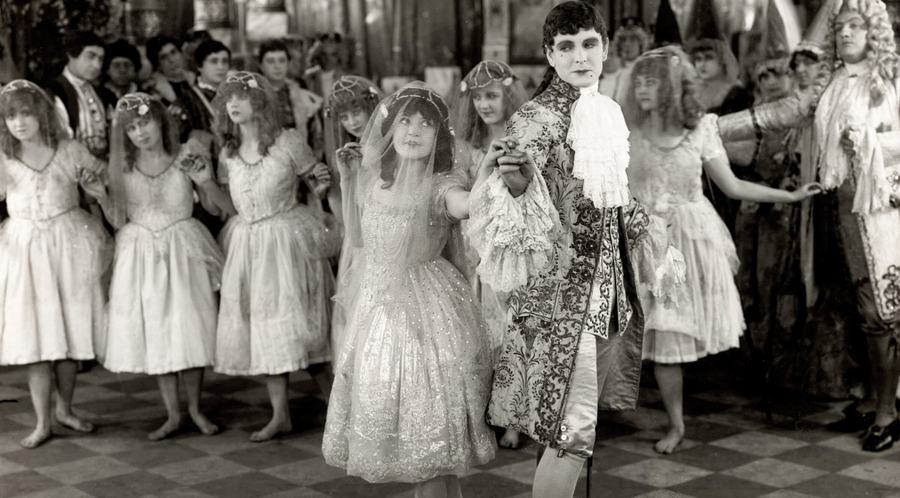
One might draw a parallel to other grand cinematic spectacles of the period, though perhaps not in direct thematic comparison, but in the sheer ambition of their visual scope. Consider films like The Princess of India or A Princess of Bagdad, which similarly sought to transport audiences to exotic, fantastical realms through elaborate production design and compelling visual narratives. "Snow White" achieves a similar feat, creating a believable fairy tale world within the constraints of early filmmaking. The special effects, though rudimentary by today's standards, are employed effectively to depict the Queen's magical transformations and the enchanted elements of the story, adding to the film's fantastical allure. The overall aesthetic is one of meticulous craftsmanship, striving to bring the beloved story to life with as much verisimilitude as the technology of the day would allow. The deliberate framing and composition of shots, particularly in the Queen's more menacing moments or Snow White's serene forest scenes, speak volumes about the visual language of the era, where every gesture and every shadow had to carry significant narrative weight.
While "Snow White" is often framed as a straightforward battle between good and evil, Dawley's adaptation, through its performances and visual language, delves deeper into the psychological complexities of its characters. The Queen's villainy, as discussed, stems from a profound internal conflict, a fear of aging and irrelevance. Snow White's goodness, conversely, is not a naive lack of awareness but an inherent purity that resists corruption, even in the face of profound adversity. The film implicitly explores the destructive nature of obsession and the redemptive power of empathy and resilience. It's a narrative that speaks to the timeless struggle of the individual against oppressive forces, whether external or internal.
The resolution, while adhering to the fairy tale's traditional happy ending, feels earned. Snow White's triumph isn't solely due to the intervention of the Prince (Richard Barthelmess, portraying a valiant but somewhat less developed character, as is common for the genre's princes). It's a culmination of her own enduring spirit, the loyalty of her dwarf companions, and the self-destructive nature of the Queen's own malice. The film, therefore, serves as a poignant reminder that true beauty emanates from within, and that genuine worth is not measured by external validation but by the integrity of one's character. This moral compass, so clearly articulated in the silent medium, remains as relevant today as it was over a century ago. The narrative deftly navigates the transition from fear to hope, from isolation to community, reinforcing the idea that even in the darkest of times, intrinsic goodness possesses an unbreakable power.
In conclusion, J. Searle Dawley's 1918 "Snow White" is far more than a historical curiosity; it is a meticulously crafted silent film that stands as a testament to the enduring power of classic storytelling and the innovative spirit of early cinema. With Marguerite Clark's radiant performance, Dorothy Cumming's compellingly malevolent Queen, and a narrative that deftly navigates complex themes, the film offers a rich viewing experience for those willing to engage with its unique charms. It demonstrates how, even in the absence of spoken dialogue, a story can be told with profound emotional depth, visual artistry, and lasting thematic resonance. This adaptation not only brought the beloved Grimm fairy tale to life for a new medium but also set a precedent for future cinematic interpretations, proving that the magic of "Snow White" is indeed timeless.
For enthusiasts of film history, fairy tale adaptations, or simply compelling drama, this silent "Snow White" offers a unique and rewarding journey. It serves as a vital link in the chain of cinematic evolution, showcasing the foundational techniques and artistic ambitions that would ultimately shape the medium into what it is today. Its legacy, though perhaps less celebrated than some of its successors, is undeniable, providing a captivating glimpse into a bygone era of moviemaking where imagination and visual poetry reigned supreme. The film is a powerful reminder that sometimes, the most profound stories are told not with words, but with the eloquent silence of compelling imagery and unforgettable performances. It stands as a vibrant example of how early filmmakers, with limited technology but boundless creativity, could capture the essence of a cherished narrative and infuse it with a dramatic power that continues to resonate with audiences a century later. This "Snow White" is not just a film; it is a historical landmark, a beacon of early cinematic artistry that deserves continued recognition and appreciation.

IMDb —
1924
Community
Log in to comment.