DbcultAccessing Vault...
Cult Review
Senior Film Conservator
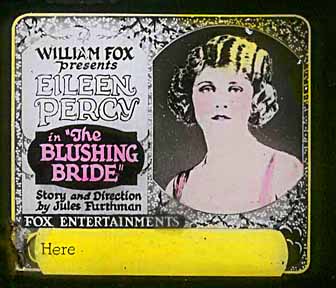
The Blushing Bride
1939 | Jules Furthman | Sylvia Ashton, Herbert Heyes
In a cinematic era saturated with gangster films and slapstick comedies, The Blushing Bride emerges as a rare jewel of character-driven drama, its narrative anchored by Sylvia Ashton’s indelible portrayal of Beth Rupert. The film’s opening act—a showgirl trading sequined gowns for the tailored elegance of wealth—sets the stage for a psychological odyssey that transcends mere costume drama. Director Herbert Heyes (also the lead actor) and writer Jules Furthman weave a tale where identity is both a mask and a mantle, and where the past’s shadows loom over the present’s gilded facades.
Beth Rupert’s decision to abandon the stage for the estate of Kingdom Ames is not merely a marriage of convenience but a collision of worlds. The Ameses’ belief that she is the niece of the Duke of Downcastle—a British aristocrat—frames her existence in a liminal space between truth and fabrication. This tension is magnified by the arrival at the estate of her long-lost uncle, played with gruff pathos by Philo McCullough, whose presence unravels the carefully constructed lies. The narrative doesn’t merely pivot on this revelation; it spirals, as Beth’s agency is repeatedly tested by the weight of inherited expectations.
Ashton’s performance is a masterclass in restrained intensity. Her Beth is no passive ingénue but a woman whose every gesture—from the flick of a wrist to the tilt of a head—communicates a storm of internal conflict. Consider a pivotal scene where she confronts the butler, her uncle, in the candlelit stillness of the library. The camera lingers on her face as the truth dawns, not through dialogue but through the subtle dilation of her pupils, the fleeting tremor of her lips. This is the language of performance in its purest form: silent, yet resoundingly loud.
The film’s production design, particularly the juxtaposition of the Ameses’ palatial home against the starkness of Beth’s former vaudeville theater, serves as a visual metaphor for the clash between authenticity and artifice. The estate, with its mahogany paneling and heavy drapes, becomes a prison of gilded excess, while the theater—though modest—is imbued with a raw vitality that lingers in Beth’s memory like a half-remembered song. This duality is echoed in the film’s score, which oscillates between lush, orchestral swells and the jazzy, syncopated rhythms of the stage.
Comparisons to The Goddess are inevitable, given both films’ focus on women navigating societal expectations. Yet The Blushing Bride distinguishes itself through its nuanced exploration of class as a performative construct. While The Weakness of Strength leans into melodrama’s more overt emotional crescendos, this film prefers a quieter, more cerebral approach. Its power lies in the spaces between words, in the way a character’s posture shifts or how light filters through a stained-glass window to cast a prismatic pattern on a wall.
The supporting cast, though often relegated to archetypal roles, elevates the material through committed performances. Jack La Reno’s portrayal of Kingdom Ames is particularly noteworthy; his character’s belief in Beth’s ‘noble lineage’ is rendered with such sincerity that it becomes a mirror for his own yearning to belong to a world of inherited grandeur. The dynamic between him and Beth is charged with an unspoken tension—part familial, part romantic—that the film never explicitly resolves, choosing instead to leave it suspended in ambiguity.
Thematically, the film grapples with the ethics of reinvention. Beth’s journey is not one of self-discovery in the traditional sense but of self-acceptance within a web of imposed narratives. This is poignantly illustrated in a sequence where she dons a costume for a charity masquerade—a literal donning of identity that parallels her symbolic transition from showgirl to aristocrat. The costume, with its corseted constraints and lace-trimmed illusions, becomes a metaphor for the societal roles women are expected to inhabit.
The film’s climax—a confrontation between Beth, the Duke, and Kingdom Ames—eschews the pyrotechnics of conventional resolution. Instead, it opts for a quiet reckoning, where the truth is not a bombshell but a quiet, inevitable settling of dust. This choice, while perhaps less satisfying for audiences seeking catharsis, underscores the film’s thematic commitment to the complexity of human relationships. There are no villains here, only individuals navigating the labyrinth of their own desires and fears.
In terms of legacy, The Blushing Bride occupies a curious position in pre-Code Hollywood cinema. Its exploration of identity and class predates the more overt social critiques of A Gentleman’s Agreement by over a decade, yet it lacks the overt political messaging of that later film. Instead, it functions as a more intimate, character-centered inquiry into the costs of societal assimilation. This intimacy is both its greatest strength and its potential weakness—there are moments when the pacing falters, particularly in the second act, where subplots involving secondary characters feel underdeveloped.
Visually, the film’s use of chiaroscuro lighting is particularly striking during Beth’s internal monologues. In one scene, she stands at the edge of a dimly lit ballroom, her face half in shadow as she watches others dance. The interplay of light and dark mirrors her internal conflict: torn between the world she came from and the one she now inhabits. These visual motifs recur throughout the film, reinforcing its central thesis that identity is not a fixed point but a fluid, ever-shifting interplay of light and shadow.
The film’s final act is a masterstroke of emotional economy. Rather than resolving the narrative with a grand gesture or a tearful confession, it leaves Beth in a state of contemplative ambiguity. As she walks away from the estate, the camera tracking her from behind, the viewer is left to ponder not what will happen next, but what has already changed within her. This is a rare feat in classical Hollywood cinema: a narrative that values interiority over spectacle, suggestion over exposition.
In conclusion, The Blushing Bride is a film that rewards repeated viewings, its layers of meaning unfolding like the petals of a flower in slow motion. It is a testament to the power of subtlety in storytelling, and a reminder that the most compelling narratives are those that invite interpretation rather than dictate it. For modern audiences, it serves as both a historical artifact and a timeless meditation on the masks we wear and the selves we dare to reveal.
IMDb 4.9
1936
Community
Log in to comment.