DbcultAccessing Vault...
Cult Review
Senior Film Conservator
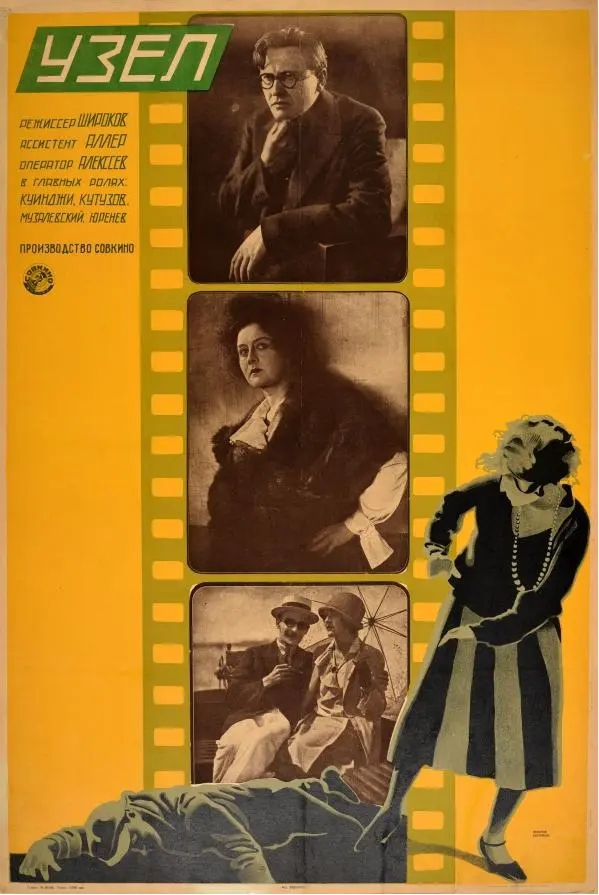
Is Uzel a forgotten classic or a dusty archive piece that should remain buried? Short answer: It is a vital historical document that demands immense patience but rewards the analytical eye with its raw, unpolished power.
This film is specifically for students of early 20th-century history and cinephiles who enjoy dissecting the evolution of visual language. It is absolutely NOT for anyone seeking high-octane entertainment, clear audio-visual fidelity, or a narrative that resolves with a comfortable bow.
1) This film works because it captures the genuine anxiety of a society in transition without the polished artifice of later propaganda.
2) This film fails because its pacing is glacial by modern standards, and the lack of narrative clarity can leave uninitiated viewers feeling adrift.
3) You should watch it if you want to understand the roots of Soviet cinematic realism and the early work of writer Aleksandr Balagin.
To answer this question directly: Uzel is worth watching if you view cinema as a window into the past rather than just a mirror of the present. It is a difficult film. It is a slow film. But it is also a brave film.
Unlike the more famous montage-heavy films that would come later in the decade, Uzel feels more grounded in the theatrical traditions of the previous era. However, you can see the seeds of revolution being sown in the way the camera lingers on the tired faces of Aleksandr Gromov and Valentina Kuindzhi. Their performances carry a weight that transcends the silent medium.
The writing by Aleksandr Balagin is surprisingly dense for a silent production. While many films of 1921, such as the more melodramatic Shame, relied on broad emotional strokes, Uzel attempts a more psychological approach. The 'knot' is not just a plot device; it is a metaphor for the entrapment of the individual within a shifting social hierarchy.
Consider the scene where Georgiy Muzalevskiy’s character sits alone in a dimly lit room, the shadows forming literal bars across his chest. This isn't just clever lighting; it’s a visual manifestation of the script’s core thesis. The tension isn't found in action, but in the agonizing stillness of choice. It is heavy. But it is also necessary.
The film lacks the frantic energy of something like Naughty Lions and Wild Men, choosing instead to simmer in its own discomfort. This makes the eventual climax feel earned, even if the journey there is arduous. The pacing is a challenge, but the payoff is a profound sense of atmospheric dread that modern dramas rarely achieve.
The acting in Uzel is a fascinating study in transition. Aleksandr Gromov delivers a performance that avoids the 'eye-rolling' histrionics common in early silent cinema. He uses his hands and the set of his shoulders to convey a man being crushed by invisible forces. It’s a subtle, almost modern approach to the craft.
In contrast, Mariya Svetukhina provides a more traditional, emotive presence. This creates a stylistic friction that actually serves the film well. The older characters feel like they belong to a different century, while the younger ones seem to be vibrating with the nervous energy of the 1920s. This contrast is much sharper here than in other contemporary works like Waifs.
The cinematography is austere. There are no sweeping landscapes or grand sets. Instead, we are given tight, claustrophobic interiors. The camera feels like an intruder in these private moments. This creates an intimacy that is both compelling and deeply uncomfortable. It makes the viewer feel like a voyeur to a tragedy.
We have to address the elephant in the room: the technical state of the film. Like many survivors of this era, the print is often grainy and the lighting inconsistent. However, these flaws add to the film's 'hauntological' quality. It feels like a ghost of a world that no longer exists.
When compared to Western films of the same year, such as the more polished The Night Cry, Uzel looks primitive. But that primitivity is its strength. There is a lack of vanity in the production. The sets look used, the clothes look dirty, and the stakes feel real. It doesn't have the Hollywood sheen, and it's better for it.
The film also avoids the easy sentimentality found in Good Little Brownie. It is a cynical, hard-edged look at life. The 'knot' doesn't get untied; it gets cut. This unsentimental approach is what makes it stand out in a sea of early 20th-century moral plays.
Pros:
Cons:
One surprising element of Uzel is how it treats its female characters. While Mariya Svetukhina’s role starts traditionally, she becomes the catalyst for the film's most radical shifts. In many ways, she is the only character who understands that the 'knot' cannot be untangled—it must be destroyed. This is a far more progressive stance than what you’ll find in The Heart of a Woman from the same period.
The film suggests that the domestic sphere is the true front line of the revolution. It’s not about soldiers in the street; it’s about the dinner table and the bedroom. This focus on the micro-political is what gives the film its lasting, if uncomfortable, relevance.
Uzel is a difficult, prickly, and ultimately rewarding piece of cinema history. It doesn't want to be liked. It wants to be understood. If you are willing to meet it halfway and forgive its technical shortcomings, you will find a film that is as complex and tightly wound as its title suggests. It works. But it’s flawed. And in those flaws, we find the truth of the era it represents. It is a jagged piece of history that still has the power to draw blood.
IMDb —
1923
Community
Log in to comment.