DbcultAccessing Vault...
Cult Review
Senior Film Conservator
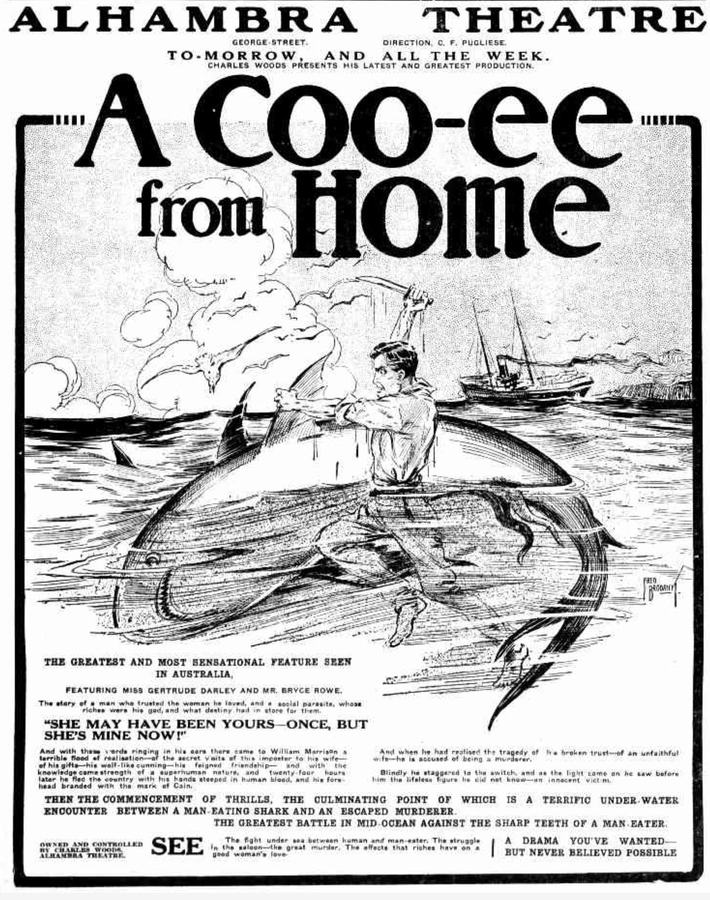
In the annals of early cinema, certain films resonate not just with the technical marvels of their era, but with a timeless emotional core that transcends the limitations of the medium. 'A Coo-ee from Home' is precisely one such cinematic artifact. More than a mere period piece, this film, penned by the insightful Charles Woods, unfurls a narrative tapestry rich with themes of urban alienation, the magnetic pull of one's origins, and the often-painful journey of self-discovery. It is a testament to the power of visual storytelling, where the absence of spoken dialogue only amplifies the profound human drama unfolding on screen.
At its heart, 'A Coo-ee from Home' is the odyssey of Elara, brought to vivid, empathetic life by Gertrude Darley. Elara is not merely a character; she is an archetype of youthful aspiration, a spirited country lass who, stifled by the perceived monotony of her rural Australian homestead, yearns for the vibrant pulse and boundless opportunities she imagines lie within the city's sprawling embrace. Her departure, fraught with the silent anxieties of her family—particularly the stoic, weathered visage of her father, portrayed with understated gravitas by Charles Villiers—sets the stage for a classic tale of innocence confronted by experience. The early scenes of her rural life, bathed in a rustic simplicity, are masterfully contrasted with the impending chaos of the urban landscape, immediately establishing the film's central thematic dichotomy.
Upon her arrival in the bustling metropolis, Elara is initially captivated. The city, a dizzying spectacle of towering buildings, surging crowds, and dazzling storefronts, promises liberation and advancement. She finds work, perhaps as a milliner or a clerk, and for a fleeting period, the urban dream seems within her grasp. However, the film quickly peels back this veneer of glamour to reveal the city's underbelly: a labyrinth of loneliness, social stratification, and moral ambiguity. It is here that Elara encounters Silas Thorne, a slick, opportunistic businessman embodied with a predatory charm by Charles Woods, who also contributed to the film's poignant screenplay. Thorne sees in Elara not a person, but a commodity, an innocent to be exploited for his own gain. His subtle manipulations and the insidious pressures he exerts on Elara form a crucial arc of her disillusionment, painting a stark picture of the moral compromises often demanded by urban survival.
Darley's performance during these sequences is particularly compelling. Her initial wide-eyed wonder slowly gives way to a haunted weariness, her expressive face a canvas for the emotional toll of her experiences. We witness her struggle with the erosion of her values, the gnawing regret, and the profound sense of isolation that can afflict even the most vibrant of spirits in a crowd of millions. This narrative thread, of a young woman navigating the perils of the city, finds echoes in other cinematic works of the era, such as the social commentary often woven into films like Scandal, which similarly dissected the moral complexities faced by women in rapidly modernizing societies.
While Elara grapples with her urban plight, the film masterfully interweaves scenes depicting the quiet struggles back home. Charles Villiers, as Elara's father, portrays a man burdened by the land and the absence of his child. His weathered hands and somber gaze convey a depth of unspoken emotion—the worry for his daughter, the pride in her ambition, and the deep-seated ache of her departure. The farm, once a symbol of stability, now faces the twin threats of drought and financial hardship, its parched fields mirroring the emotional desolation of the family. It is during this period that Bryce Rowe's character, Lachlan, emerges as a beacon of unwavering loyalty. A childhood friend, perhaps even a nascent suitor, Lachlan's letters to Elara are not merely missives; they are threads of connection, weaving a lifeline from her past to her increasingly uncertain present. Rowe imbues Lachlan with an earnest sincerity, his concern for Elara palpable even in the silent medium, making him the embodiment of the home Elara left behind.
The titular 'coo-ee' is not a single, explicit call, but a cumulative, almost spiritual summons. It manifests through Lachlan's heartfelt letters, detailing the family's worsening predicament, and through Elara's own growing internal disquiet. The juxtaposition of the city's artificiality with the raw, elemental struggle of the land is a powerful visual metaphor. The film's direction, with its keen eye for composition, makes the Australian landscape itself a character, a silent witness to human drama. The vast, sun-baked plains and the resilient, yet vulnerable, homestead serve as a stark reminder of what Elara has forsaken, and what she stands to lose entirely. This profound sense of belonging and the yearning for a simpler, more authentic existence is a theme beautifully explored in other films of the period that centered on rural life and its challenges, such as the pastoral elegance of Die Insel der Seligen, though with a distinctly Australian flavor here.
The ensemble cast, under the astute guidance of the director, delivers performances that are both nuanced and deeply affecting. Gertrude Darley's Elara is the emotional anchor of the film. Her transformation from an eager, somewhat naive girl to a world-weary but ultimately resilient woman is depicted with remarkable subtlety. Her facial expressions, gestures, and body language convey a spectrum of emotions—joy, fear, regret, determination—without the need for intertitles to spell out every feeling. This is the hallmark of great silent acting, and Darley proves herself a master.
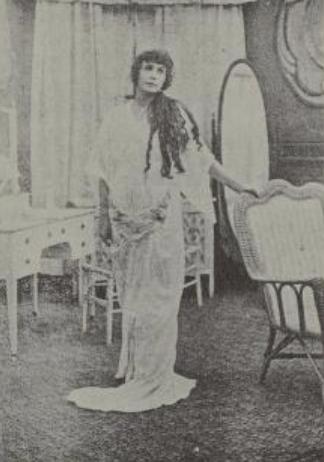
Charles Woods, in his dual role as writer and the villainous Silas Thorne, crafts a character that is chillingly believable. Thorne is not a mustache-twirling caricature; rather, he is a nuanced antagonist whose charm is as dangerous as his deceit. Woods' portrayal captures the insidious nature of urban corruption, a man who operates within the perceived legality of business while preying on vulnerability. His performance provides a compelling counterpoint to Darley's innocence, creating a palpable tension that drives much of the film's dramatic momentum. The sheer magnetism of his portrayal is reminiscent of powerful, morally ambiguous figures seen in films like The Mad Lover, where character complexity elevates the narrative.
Charles Villiers, as the patriarch, delivers a performance of quiet strength and enduring love. His character's struggles are etched onto his face, making him a poignant symbol of the land and family values Elara has temporarily abandoned. His scenes with Bryce Rowe's Lachlan, particularly as they discuss Elara's absence and the farm's future, are imbued with a naturalistic warmth that grounds the more dramatic urban sequences. Rowe, for his part, brings a genuine sincerity to Lachlan, making his character a vital emotional touchstone, a pure heart amidst the city's cynicism. His steadfastness provides a comforting counter-narrative to Elara's tumultuous journey.
The direction of 'A Coo-ee from Home' is marked by an exceptional understanding of visual storytelling. The director utilizes contrasting imagery to great effect. The expansive, sun-drenched panoramas of the Australian bush evoke a sense of freedom and authenticity, often employing long shots that emphasize the smallness of human endeavors against nature's grandeur. Conversely, the city scenes are characterized by tighter framing, dynamic angles, and a sense of claustrophobia, particularly as Elara becomes ensnared in Thorne's schemes. The use of light and shadow is particularly noteworthy, with the harsh, artificial glare of the city often contrasted with the softer, more natural light of the countryside, subtly reinforcing the film's thematic concerns.
The editing pace, while characteristic of the era, is thoughtfully modulated to enhance emotional impact. Moments of quiet reflection in the countryside are allowed to linger, while the urban sequences often employ a quicker rhythm to convey the hustle and bustle. The film's ability to communicate complex emotional states and narrative developments without spoken words speaks volumes about its technical and artistic merits. It's an example of silent cinema at its most expressive, a quality shared by other masterworks of the period that relied heavily on visual narrative, such as the evocative imagery of The Lifted Veil or the dramatic tension of The Fight.
The culmination of Elara's journey is her decision to heed the 'coo-ee' from home. This is not a simple retreat but a conscious act of redemption and self-reclamation. Having faced the harsh realities of the city and the moral compromises it demanded, she chooses to return, not as the naive girl who left, but as a woman tempered by experience, yet fundamentally reconnected to her core values. Her escape from Thorne's influence and her arduous journey back to the bush are depicted with a sense of urgency and determination, underscoring the profound shift in her character.
The reunion scenes are particularly moving, devoid of grand pronouncements but overflowing with unspoken affection and relief. Elara's return brings not only her physical presence but also a newfound maturity and resilience, which she applies to helping her family overcome their struggles. Her hands, once perhaps softened by city life, now work alongside her father's, a symbol of her renewed commitment to her roots. The rekindling of her relationship with Lachlan, handled with delicate restraint, offers a hopeful conclusion, suggesting that true happiness lies not in fleeting urban glamour but in enduring connections and a sense of belonging. This theme of finding solace in one's origins and the redemptive power of love is a universal narrative, found in many forms, from the romantic idealism of La leggenda di Pierrette to the spiritual quest in The Monk and the Woman, yet 'A Coo-ee from Home' grounds it firmly in a distinctly Australian context.
'A Coo-ee from Home' stands as a powerful example of early Australian cinema's ability to craft compelling, emotionally resonant narratives. It is a film that speaks to the universal human experience of seeking one's place in the world, of the allure of the unknown, and the profound, often quiet, strength of family and home. Its themes remain remarkably relevant even today, in an age where the pull of global cities continues to draw individuals away from their ancestral roots. The performances, particularly by Gertrude Darley and Charles Woods, are exceptional, bringing depth and authenticity to their roles. The direction is thoughtful and visually striking, using the vast Australian landscape as a character in itself.
For enthusiasts of silent film and those interested in the cultural narratives of early 20th-century Australia, 'A Coo-ee from Home' is an indispensable viewing experience. It is a cinematic gem that not only entertains but also provokes contemplation about what truly constitutes 'home' and the enduring echoes that call us back to where our journey began. It reminds us that sometimes, the most profound adventures are not found in distant lands, but in the return to what we thought we had left behind, a sentiment as timeless as the gentle breeze across a sun-drenched plain.
IMDb —
1916
Community
Log in to comment.