DbcultAccessing Vault...
Cult Review
Senior Film Conservator
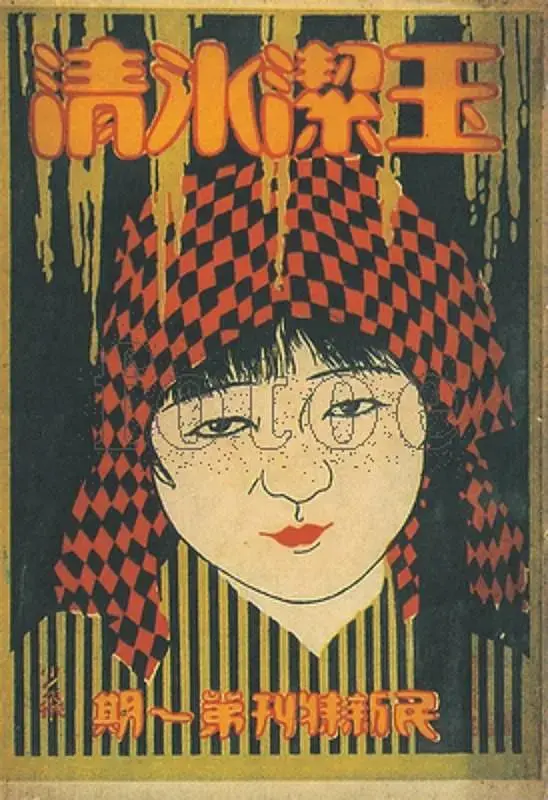
Is Yu jie bing qing a lost masterpiece or a relic of a bygone era? Short answer: It is an essential historical document for those who value the roots of Asian cinema, but it will likely alienate those who cannot stomach the glacial pacing of the silent era.
This film is specifically for students of film history and those who find beauty in the subtle nuances of 1920s performance art. It is absolutely NOT for anyone looking for a casual evening of entertainment or a fast-moving plot.
1) This film works because of Cho-cho Lam’s ability to convey complex internal grief without the benefit of sound or excessive intertitles.
2) This film fails because its narrative structure relies too heavily on coincidences that feel dated even by 1926 standards.
3) You should watch it if you want to understand how early Chinese cinema began to differentiate itself from Western imports like The Virgin of Stamboul.
Yu jie bing qing represents a pivotal moment in the development of the Great China Lily Film Company. By 1926, the Shanghai film scene was beginning to move away from purely theatrical adaptations and toward something more uniquely cinematic. While many contemporary Western films like Fighting Blood were leaning into the spectacle of physical action, Yuqian Ouyang was interested in the interiority of the soul.
The script is a fascinating artifact. Ouyang, a giant of the 'New Culture' movement, uses the medium to interrogate the very foundations of Chinese family life. The film doesn't just present a story; it presents a moral challenge. It asks the audience to define what 'purity' actually means in a world that is rapidly losing its traditional moorings. It works. But it’s flawed. The tension between the old world and the new is palpable in every frame, often manifesting in the contrast between the rigid, traditional costumes and the increasingly fluid camera movements.
The magnetic center of this film is Cho-cho Lam. In an era where acting was often characterized by wild gesticulation and over-the-top facial expressions, Lam offers a masterclass in restraint. There is a specific scene where her character realizes she has been betrayed—instead of the expected hair-pulling or fainting, she simply stands still, her eyes reflecting a cold, crystalline realization. It is a haunting moment that bridges the gap between the silent era and modern realism.
Her chemistry with the supporting cast, including the reliably solid Lixia Shen and Jie Tang, creates a believable domestic ecosystem. Compare this to the somewhat more exaggerated performances in Bonds of Love, and you see the leap forward that Yu jie bing qing represents. Lam’s performance isn't just about sadness; it’s about the weight of expectation. She carries the film’s metaphorical 'jade' with a grace that feels both ancient and startlingly contemporary.
Technically, the film is a product of its time, yet it shows flashes of brilliance. The use of shadows in the interior scenes suggests a burgeoning understanding of German Expressionism, though it is filtered through a distinctly Eastern lens. The framing is often static, reminiscent of a stage play, but the depth of field is used effectively to separate the protagonist from her oppressors.
One cannot help but compare the visual clarity here to the gritty, almost documentary-like feel of The Pitfall. While that film sought to capture the grime of reality, Yu jie bing qing seeks to capture the elegance of tragedy. The lighting on the jade ornaments throughout the film is particularly noteworthy; they glow with a sickly luminescence that underscores the heavy price of maintaining a 'pure' reputation.
Why you should watch it: If you are interested in the evolution of feminist themes in Asian media, this is a cornerstone text. It provides a rare look at the social anxieties of pre-revolutionary China through a lens that is both sympathetic and critical.
The film offers a unique aesthetic that you won't find in Hollywood productions of the same year, such as Sherlock's Home. It is a slower, more meditative experience that requires the viewer to lean in and interpret the visual metaphors rather than being spoon-fed a narrative.
I’ll go on the record with a debatable opinion: Yuqian Ouyang was a better filmmaker than most of his Hollywood contemporaries in 1926. While films like The Agent were perfecting the art of the gag or the thriller, Ouyang was experimenting with the 'film-as-essay.' He wasn't just trying to tell a story; he was trying to provoke a societal shift.
The dialogue—delivered via intertitles—is surprisingly sharp. It avoids the flowery prose common in films like Daring Love and instead opts for a more direct, almost confrontational style. This directness is what makes the film feel so visceral today. When a character speaks of honor, it doesn't feel like a platitude; it feels like a threat. This is a film where words have weight, even when you can't hear them.
"The tragedy of Yu jie bing qing is not that the protagonist loses her purity, but that the world demands she possess it in the first place."
Pros:
- A rare look at 1920s Shanghai high society.
- Exceptional costume design that serves the narrative.
- A strong emotional core that remains relevant today.
- Important historical context for the development of the 'New Woman' in China.
Cons:
- The print quality of surviving copies can be distracting.
- The middle section suffers from significant pacing issues.
- Some supporting characters are written as one-dimensional villains.
When placed alongside Together or The Master Key, Yu jie bing qing stands out for its somber tone. It lacks the whimsical escapism of many silent-era films. Instead, it leans into the 'social problem' genre with a ferocity that is surprising. It feels more akin to the European art house tradition than the burgeoning Hollywood studio system.
There is an unconventional observation to be made here: the film treats its male characters with a surprising amount of nuance. While the patriarchal system is the villain, the individual men are often shown as victims of their own rigid expectations. This is a far cry from the mustache-twirling villains seen in Tseka komissar Mirostsenko. It suggests a level of psychological complexity that was rare for the time.
Yu jie bing qing is a difficult film to love, but an easy one to respect. It demands a lot from its audience—patience, historical empathy, and a willingness to engage with a visual language that has long since fallen out of fashion. However, the rewards are significant. You are treated to a performance by Cho-cho Lam that is genuinely timeless and a script that dares to ask difficult questions about the cost of virtue.
It is not a 'masterpiece' in the sense that it is perfect; it is a masterpiece because it is brave. It takes the tropes of the melodrama and uses them to perform a surgical strike on the conscience of 1920s society. Even if you find the pacing tedious, the final shots will linger in your mind long after the screen goes black. It is a haunting, beautiful, and deeply frustrating piece of cinema that deserves its place in the canon.
IMDb 5.8
1929
Community
Log in to comment.