DbcultAccessing Vault...
Cult Review
Senior Film Conservator
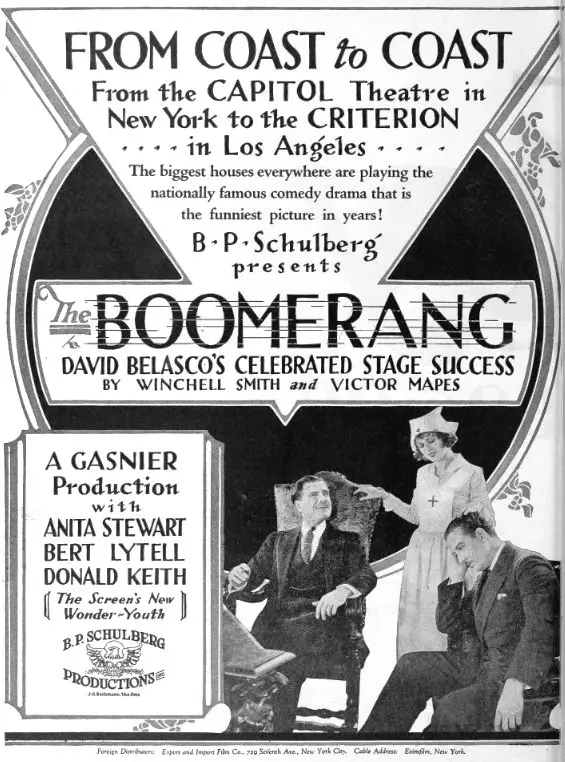
The screen opens to a meticulously crafted world of 1920s America, where Dr. Sumner, a professional psychologist, finds himself at the helm of a bustling sanitarium. Driven by his ambition and the need for success, Sumner transforms a humble facility into a beacon of hope and healing, attracting patients from across the land. His carefully constructed life is unexpectedly disrupted when Virginia Zelva, a clairvoyant harboring dreams of becoming a part of the esoteric 'racket,' joins his staff as a nurse.
Their initial interactions are marked by a mutual wariness, as Zelva's mystical abilities and Sumner's scientific approach to psychology create a formidable contrast. However, as the film progresses, a subtle chemistry begins to develop between them, fueled by shared experiences and the challenges they face. Sumner, initially skeptical of Zelva's claims, gradually finds himself drawn to her, a fascination that is both exhilarating and unsettling.
As the narrative unfolds, a series of complications arise, testing the boundaries of their burgeoning relationship. Zelva's past begins to catch up with her, revealing layers of truth that challenge Sumner's perceptions. Meanwhile, Sumner's personal life is not immune to scrutiny, as his dedication to his profession sometimes leaves little room for personal connection. The film masterfully explores these tensions, presenting a nuanced portrayal of the human condition through the lens of love and ambition.
Central to 'The Boomerang's' narrative is the exploration of deception. Both characters are driven by their own desires and fears, leading to moments of calculated manipulation and heartfelt vulnerability. The film's ability to juxtapose these conflicting emotions creates a profound sense of realism, making the audience question their own judgments and sympathies.

Technically, 'The Boomerang' is a marvel of its time. The cinematography, with its rich, sepia-toned visuals, captures the essence of a bygone era. The performances, particularly those of Winter Hall and Mary McAllister, are standout, bringing depth and authenticity to their respective roles. Hall's portrayal of Sumner is a masterclass in understated drama, while McAllister's depiction of Zelva is a testament to her capability to convey a range of emotions without the aid of dialogue.
The film's narrative structure is a testament to its innovative storytelling. It weaves together threads of love, mystery, and psychological complexity, creating a tapestry that is both captivating and thought-provoking. The emotional climax, where Sumner and Zelva's relationship reaches a pivotal juncture, is particularly moving. The film's resolution, while satisfying, leaves room for interpretation, inviting viewers to reflect on the themes of trust, authenticity, and the pursuit of happiness.
When compared to contemporaneous films like 'Algeria' or 'The Common Law,' 'The Boomerang' stands out for its sophisticated approach to character development and thematic exploration. While these earlier works may focus more on external conflicts and social commentary, 'The Boomerang' delves deeper into the inner lives of its characters, offering a more intimate and emotionally resonant experience.
In conclusion, 'The Boomerang' is a remarkable film that transcends its historical context. It is a poignant exploration of love, deception, and personal growth, told with a level of nuance and insight that is both rare and refreshing. For film enthusiasts and those interested in early cinema, it is a must-watch that continues to captivate and inspire.
IMDb 7.2
1926
Community
Log in to comment.