DbcultAccessing Vault...
7/10
Senior Film Conservator
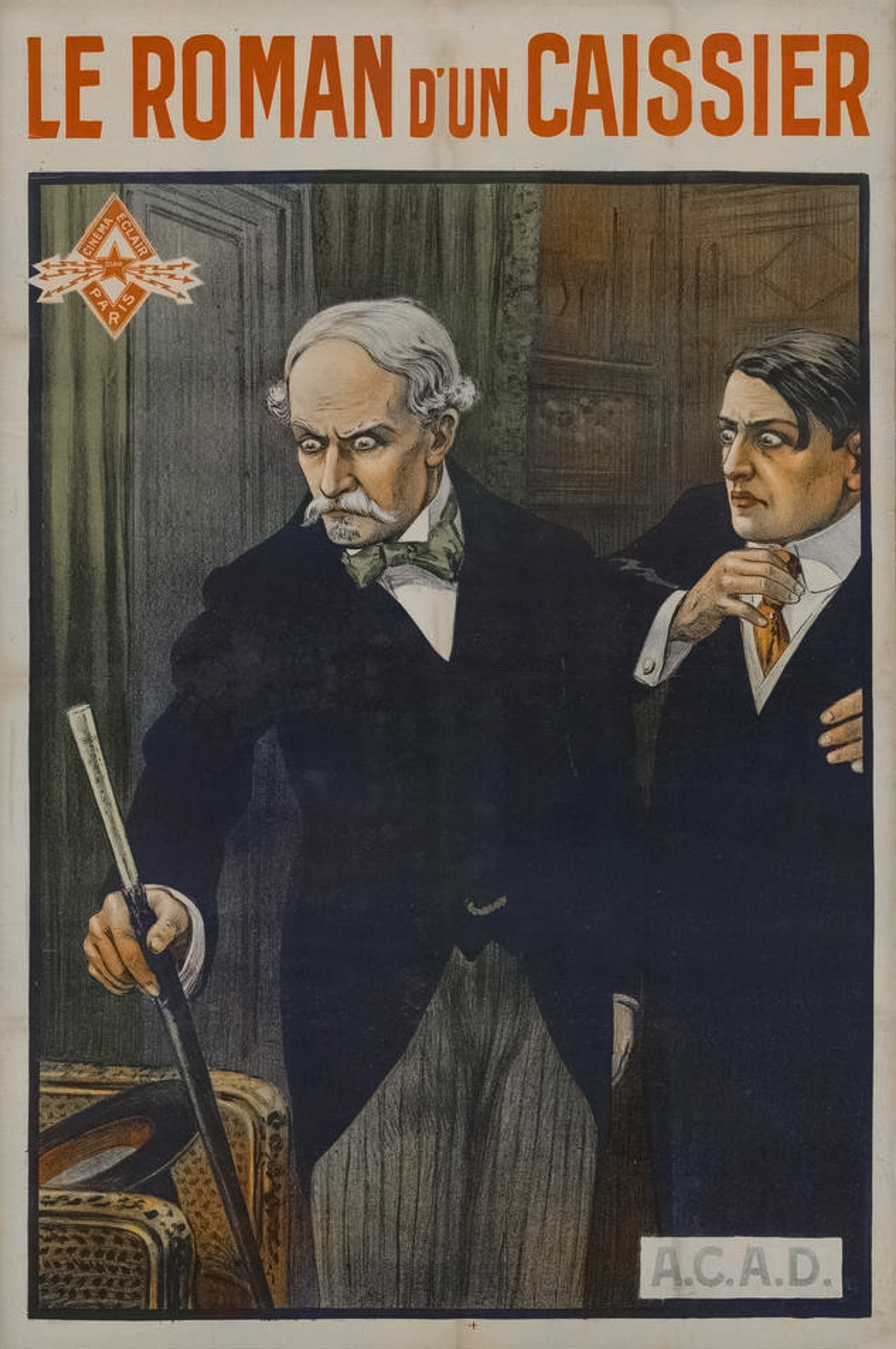
A definitive 7/10 rating for a film that redefined the boundaries of cult cinema. Le roman d'un caissier remains a cornerstone of transgressive art.
The year 1914 stands as a monumental threshold in the annals of human history, but in the specific microcosm of the moving image, it represented a metamorphosis from the primitive 'cinema of attractions' toward a more sophisticated, novelistic architecture. Le roman d'un caissier, directed with a prescient eye for atmospheric tension by André Liabel, serves as a quintessential artifact of this transition. It is not merely a film; it is a celluloid confession, a somber reflection on the precariousness of the human condition when stripped of its societal veneer. While contemporary audiences might be more familiar with the sprawling epics like Cleopatra or the theatrical grandiosity of Judith of Bethulia, Liabel’s work operates on a much more intimate, and arguably more devastating, psychological frequency.
The narrative core of the film explores the 'roman'—the novel or story—of a man whose identity is subsumed by his profession. The 'caissier' (cashier) is a figure of immense trust and profound monotony. In the early 20th century, this role was the linchpin of the financial machine, a gatekeeper of wealth who possessed none of it. Georges Saillard delivers a performance that is nothing short of revelatory for its time. Eschewing the histrionic gesticulations common in the silent era, Saillard utilizes a subdued physicality to convey the creeping dread of a man caught in a web of his own making, or perhaps, a web woven by a society that values the ledger over the soul.
The Aesthetic of Anxiety
Visually, the film is a masterclass in proto-noir aesthetics. The way the shadows stretch across the counting house floor suggests a moral darkness that no amount of electric light can dissipate. The cinematography captures the claustrophobia of the urban environment, contrasting the rigid, geometric lines of the bank with the chaotic, fluid movements of the Parisian streets. This visual dichotomy serves to heighten the protagonist's internal conflict. Unlike the overt villainy found in The Great Diamond Robbery, where the stakes are purely material, Le roman d'un caissier deals in the currency of conscience. It shares a thematic kinship with The Avenging Conscience: or 'Thou Shalt Not Kill', yet it swaps Griffith’s poetic symbolism for a grittier, more grounded French naturalism.
The supporting cast, including Devalence and the luminous Suzanne Revonne, provide a rich tapestry of social interactions that frame our protagonist's descent. Revonne, in particular, captures the plight of the woman caught in the crossfire of male pride and financial ruin. Her presence on screen offers a softer, yet no less tragic, counterpoint to Saillard’s stoicism. The chemistry between the performers is palpable, even through the veil of a century-old grain, suggesting a level of directorial control by Liabel that was ahead of its time. The film avoids the pitfalls of simple moralizing, a trap that many religious epics of the era, such as Maria Magdalena or Pilgrim's Progress, often fell into.
A Socio-Economic Post-Mortem
One cannot discuss this film without acknowledging its sociopolitical resonance. In 1914, the European middle class was experiencing a crisis of identity. The industrial revolution had created a new tier of 'white-collar' workers who were essentially cogs in a massive, impersonal machine. Le roman d'un caissier taps into the zeitgeist of this anxiety. It asks: what happens to the man when the machine breaks? Or worse, what happens when the man realizes he is the only part of the machine that can feel pain? This existential inquiry is what elevates the film above contemporaneous crime procedurals like The Crime of the Camora.
The pacing of the film is deliberate, almost agonizingly so, mirroring the slow accumulation of debt and the rapid evaporation of hope. Liabel understands the power of the 'long take' before it was a codified technique, allowing the camera to linger on Saillard’s face as he contemplates an irreversible decision. This focus on the internal rather than the external is what makes the film feel so modern. While Satanasso might lean into the fantastical and the macabre, Liabel finds the horror in the mundane—the scratching of a pen, the clink of a coin, the silence of an empty office.
Comparative Textures and Cinematic Language
When we look at other films of the period, the uniqueness of Le roman d'un caissier becomes even more apparent. It lacks the exoticism of El grito de Dolores o La independencia de México or the rugged, outdoor vitality of The Pendleton, Oregon, Round-Up. Instead, it embraces an indoor, almost theatrical intimacy that paradoxically feels more 'cinematic' because of its reliance on nuance. It shares some DNA with the Russian 'criminal' dramas like Sonka zolotaya ruchka, but it replaces the sensationalism of the 'underworld' with the quiet desperation of the 'overworld'.
The use of intertitles in the film is sparse, a testament to the strength of the visual storytelling. Liabel trusts his actors and his audience to understand the subtext of a glance or the significance of a lingering shot on a locked drawer. This trust creates a bond between the screen and the viewer, an emotional investment that is often missing from more spectacle-driven fare like King Charles II: England's Merry Monarch. Where that film relies on historical pageantry, this film relies on the universal language of human suffering and the desperate desire for a clean slate.
Technical Brilliance and Restoration
Technically, the film benefits from a sophisticated understanding of depth of field. Even within the limited sets, Liabel creates a sense of three-dimensional space that draws the viewer into the cashier’s world. The lighting, often harsh and directional, emphasizes the lines of age and worry on the characters' faces, serving as a silent narrator of their hardships. This is a film that demands to be seen on a large screen, where the subtle play of light and shadow can be fully appreciated. It possesses a gravitas similar to Fides, yet it feels more grounded in the gritty reality of the 20th century rather than the allegorical past.
The legacy of Le roman d'un caissier is one of quiet influence. It paved the way for the French Poetic Realism of the 1930s, foreshadowing the works of Carné and Renoir. It understood that the most compelling stories aren't always found in the lives of kings or revolutionaries, but in the hearts of the ordinary people who keep the world turning. The film is a poignant reminder that every person we pass on the street, every clerk behind a counter, has a 'roman'—a story of love, loss, and the struggle to remain whole in a world that seeks to break us down into mere numbers.
Final Reflections on a Forgotten Gem
In conclusion, André Liabel’s work is a harrowing, beautiful, and deeply empathetic piece of cinema. It challenges the viewer to look beyond the surface of the 'crime' and to see the human being underneath. It is a film about the weight of expectations and the crushing gravity of a single mistake. For those interested in the evolution of cinematic narrative, Le roman d'un caissier is essential viewing. It stands as a bridge between the old world and the new, a haunting melody played on the keys of a bank’s register, echoing through the halls of time to remind us of the fragility of our own moral architecture. Whether compared to the melodrama of Under the Gaslight or the redemption arcs in The Redemption of White Hawk, this film remains a singular achievement in psychological realism. It is a testament to the power of the silent image to speak volumes about the human soul, a 'roman' that deserves to be read and reread by every generation of cinephiles.
IMDb 7.3
1927
Community
Log in to comment.