DbcultAccessing Vault...
Cult Review
Senior Film Conservator
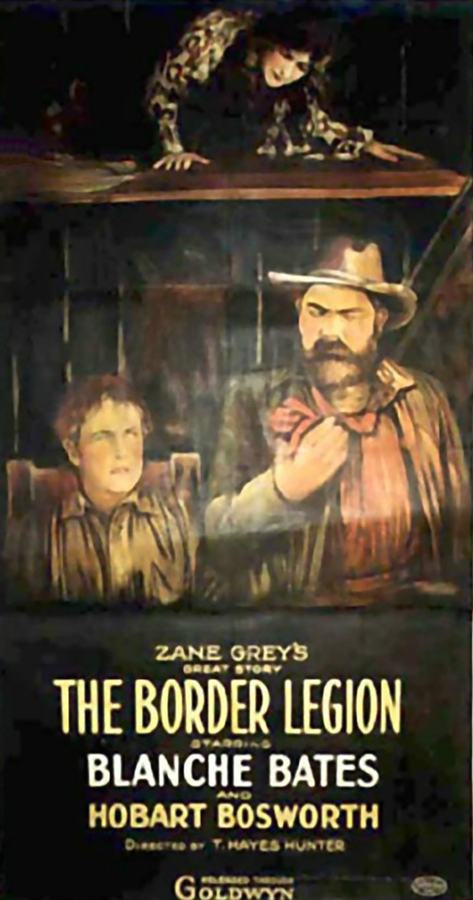
In the annals of early cinematic Westerns, few narratives capture the raw, untamed spirit of the American frontier with the visceral intensity and moral complexity of 1918's The Border Legion. This silent epic, adapted from Zane Grey's seminal novel, plunges viewers into a world where the lines between law and lawlessness are blurred, where personal conviction battles against the exigencies of survival, and where redemption often emerges from the most unlikely of alliances. Directed with an eye for dramatic sweep and character nuance by Lawrence Marston and Victor de Viliers, the film is more than just a tale of cowboys and outlaws; it's a profound exploration of human nature under duress, a testament to the enduring power of conscience amidst chaos.
The narrative thrust of The Border Legion hinges upon the harrowing plight of Jim Cleve, portrayed with earnest conviction by Eugene Strong. Cleve, an unassuming cowhand, finds his life irrevocably upended by a cruel twist of fate: a wrongful accusation of murder. This sudden, unjust branding as a fugitive propels him into a desperate flight, a journey that ironically leads him directly into the embrace of the very forces he sought to avoid. His rescuer, or perhaps more accurately, his captor, is none other than Jack Kells, the charismatic yet menacing leader of the titular Border Legion, a notorious band of Idaho outlaws. Kells, brought to life with a compelling blend of authority and menace by Hobart Bosworth, offers Cleve a stark choice: join their ranks and find protection within their renegade brotherhood, or face the unforgiving justice of the frontier alone. Cleve's reluctant acquiescence sets the stage for a compelling exploration of identity, loyalty, and the moral compromises inherent in survival.
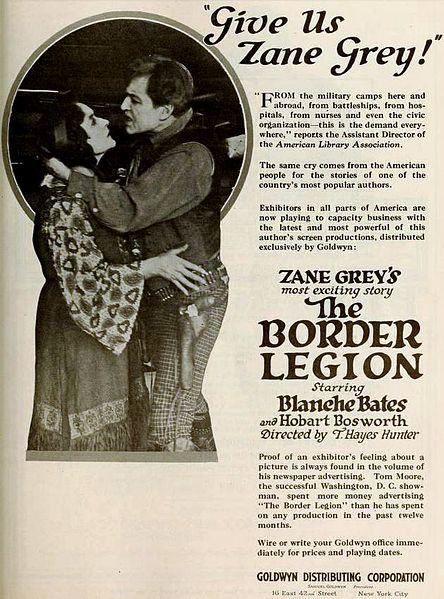
Initially, Cleve's immersion into the Border Legion is a journey of necessity, a pragmatic acceptance of his new reality. He observes the rough justice and camaraderie within the outlaw camp, a strange mirror to the societal structures he left behind, yet fundamentally warped by its rejection of legal authority. However, his moral compass, though temporarily obscured by circumstance, is far from broken. The true test of his character, and the turning point of the entire narrative, arrives with the Legion's audacious capture of Joan Randall. Blanche Bates, embodying Joan with a graceful resilience, becomes the innocent fulcrum upon which Cleve's destiny pivots. Her presence, a beacon of purity amidst the lawless encampment, forces Cleve to confront the stark dichotomy between his personal ethics and the brutal realities of his enforced allegiance. Tasked with guarding her, Cleve finds himself embroiled in an internal struggle, realizing with stark clarity that he cannot remain a passive participant in such villainy. This realization ignites a nascent rebellion within him, transforming him from a reluctant outlaw into a determined protector, setting him on a perilous course to orchestrate Joan’s liberation.
The dynamic between Cleve, Kells, and Randall forms the pulsating heart of The Border Legion. Kells, as the leader, is not merely a one-dimensional villain but a complex figure driven by his own code, however twisted. His interactions with Cleve reveal a grudging respect, even a paternalistic interest, which only heightens the tension when Cleve's allegiance inevitably shifts. The film masterfully uses Joan's vulnerability to highlight the moral chasm between the two men. It's a classic Western trope, the damsel in distress, but here it serves as a powerful catalyst for a man's journey from passive victim to active agent of change. This narrative arc, while seemingly straightforward, is imbued with a psychological depth that elevates it beyond mere adventure, positioning it closer to a morality play set against a backdrop of breathtaking, untamed wilderness.
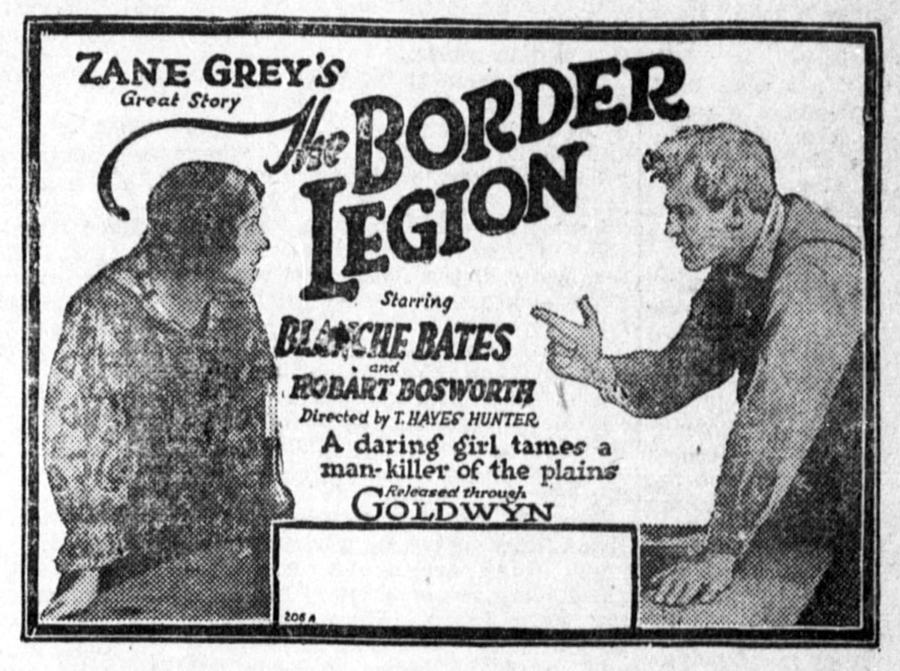
Eugene Strong, as Jim Cleve, carries the weight of the film's moral struggle with admirable grace. His performance is a journey from bewildered innocence to determined heroism, marked by subtle shifts in posture and gaze that betray his internal turmoil. Strong effectively conveys Cleve's inherent decency, making his eventual stand against the Legion feel earned and inevitable. His transformation is credible, a slow burn of conscience rather than an abrupt epiphany, which lends significant dramatic weight to the narrative.
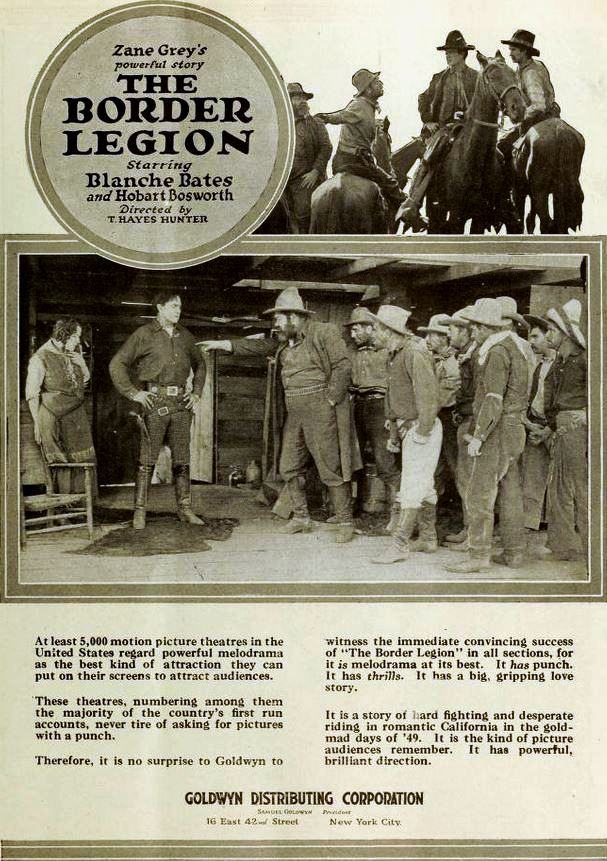
Hobart Bosworth, playing Jack Kells, is perhaps the film's most magnetic presence. He crafts a multi-faceted outlaw leader, menacing yet possessing a certain brutal charm. Kells is not a caricature; he's a man of action, a product of his environment, whose leadership commands respect even from those who oppose him. Bosworth's powerful physicality and piercing stare make Kells a formidable antagonist, and his complex dynamic with Cleve is one of the film's most compelling elements. The supporting cast, including Kate Elmore, Bull Montana, Kewpie Morgan, Arthur Morrison, Russell Simpson, and Richard Souzade, all contribute to the rich tapestry of frontier life, each adding a brushstroke to the vivid portrait of the Border Legion's motley crew.
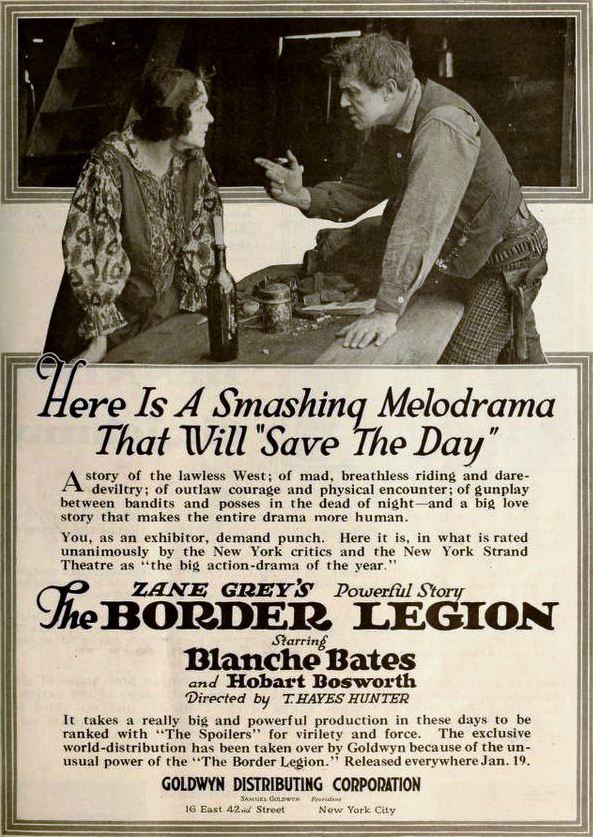
The screenplay deftly navigates the intricacies of loyalty and betrayal, a common thread in many frontier tales, but handled here with a particular poignancy. It highlights how quickly circumstances can strip away societal norms, forcing individuals to forge new codes of conduct. This exploration of moral relativism within a lawless society is a recurring motif in Grey's work and is effectively conveyed in the film. The writers understood that the appeal lay not just in gunfights and chases, but in the internal struggles of characters grappling with profound ethical choices.
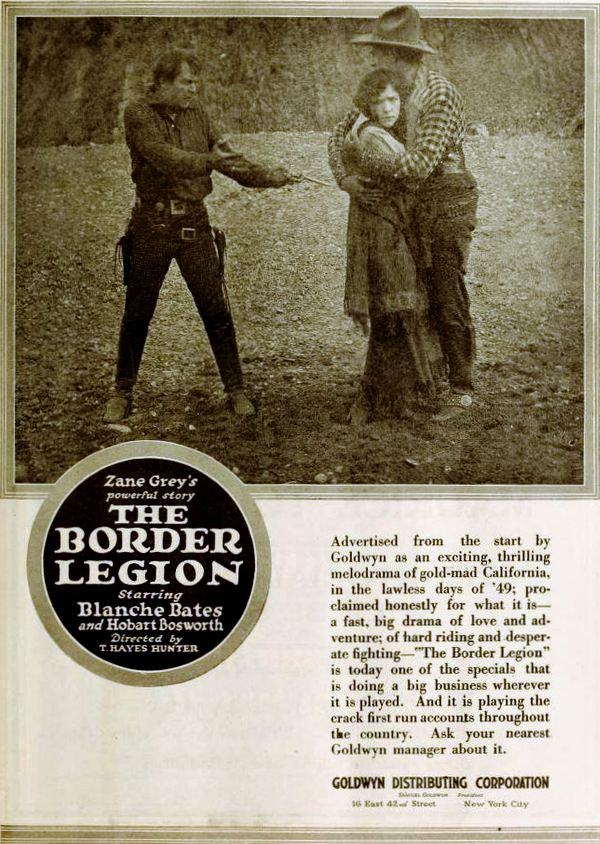
The staging of action sequences, from the initial pursuit of Cleve to the climactic confrontation, is executed with a clarity that belies the technical limitations of the period. There's a raw energy to these scenes, often relying on practical effects and genuine horsemanship, which imbues them with a palpable sense of danger. The directors also excel at using close-ups to emphasize emotional states, a crucial technique in silent cinema. This attention to detail, both in grand scope and intimate moments, ensures that the narrative remains engaging and emotionally resonant despite the absence of spoken dialogue.
The film's exploration of justice, both official and self-administered, resonates with the thematic underpinnings found in films like the Danish production Gengældelsens ret (The Right of Retaliation, 1916), which, despite its different setting, also delves into the complex nature of retribution and moral accountability. Similarly, the struggle for survival and the fight against overwhelming odds in a harsh environment echo the challenges faced by characters in dramas like Gold and the Woman (1917), where the frontier itself becomes a character, testing the very limits of human endurance and morality. The Border Legion, therefore, isn't just a product of its genre but a significant contributor to its evolution, pushing boundaries in character development and thematic depth.
For enthusiasts of early cinema and Westerns alike, The Border Legion is an essential viewing experience. It's a reminder of the foundational storytelling techniques that shaped the industry and a testament to the timeless allure of a well-crafted narrative. While subsequent adaptations of Grey's novel have been made, this 1918 version holds a special place, capturing the raw, pioneering spirit of its source material with an authenticity that is difficult to replicate. It's a film that, despite its age, continues to resonate, demonstrating that true grit, moral fortitude, and the pursuit of redemption are themes that never truly go out of style.
The film serves as a vital historical document, showcasing not only the technical advancements of its time but also the prevailing cultural narratives of the early 20th century. Its portrayal of the American West, though romanticized in some aspects, also acknowledges its inherent dangers and the moral ambiguities faced by those who chose to make their lives there. It’s a powerful illustration of how the Western genre, even in its nascent form, was already capable of delivering profound and thought-provoking cinematic experiences. The legacy of The Border Legion endures, a shining example of silent cinema's capacity for epic storytelling and deep character exploration.
IMDb —
1926
Community
Log in to comment.