DbcultAccessing Vault...
5.7/10
Senior Film Conservator

A definitive 5.7/10 rating for a film that redefined the boundaries of cult cinema. Trapped by the Mormons remains a cornerstone of transgressive art.
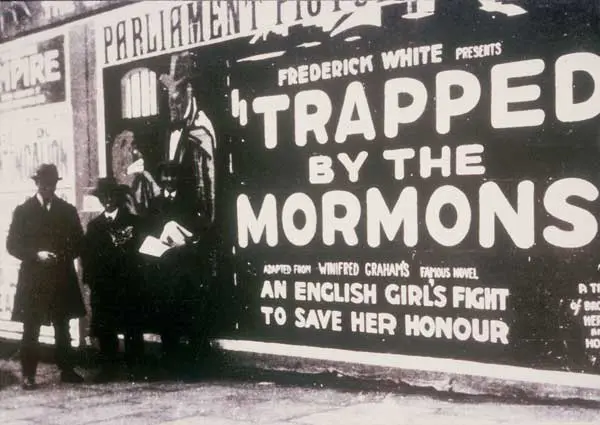
Picture, if you dare, a London where every gas-lamp halo quivers like a guilty conscience. Into this gaslit anxiety saunters Trapped by the Mormons—a 1922 British silent that barges into polite parlors waving the severed tongue of religious paranoia. The film is less narrative than fever-chart: a red-hot thermometer jammed beneath the corset of post-WWI Britain, measuring how easily xenophobia can be rebranded as moral panic.
The plot, skeletal yet rabid, pilfers Winifred Graham’s sensational pulp, itself already soaked in anti-Utah venom. Graham, a dime-store Zola with a crucifix tucked in her garter, specialized in tales where chaste Anglican roses were uprooted by bearded patriarchs from the American desert. Frank Miller’s adaptation distills that bile into intertitles that slap like subpoenas.
We open on a music-hall Eden: chorus girls kick to the can-can, their petticoats flashing like semaphore flags signaling pleasure. Enter Isoldi Keene (Cecil Morton York), a cadaverous smoothie whose smile arrives five seconds after his lips part, as though the soul must first sign a notarized waiver. Keene’s vocation? Procurement agent for the Latter-day Saints, here reimagined as white-slavery middle-managers. He seduces the consumptive mother with promises of celestial healing, then stamps Nora’s baptismal certificate like a bill of lading. The abduction sequence—shot in a single dusk-for-night long take—weds documentary grime to Gothic shadow: Nora’s veil snags on a barbed-wired crucifix, a visual pun that would make Buñuel bite his nails in envy.
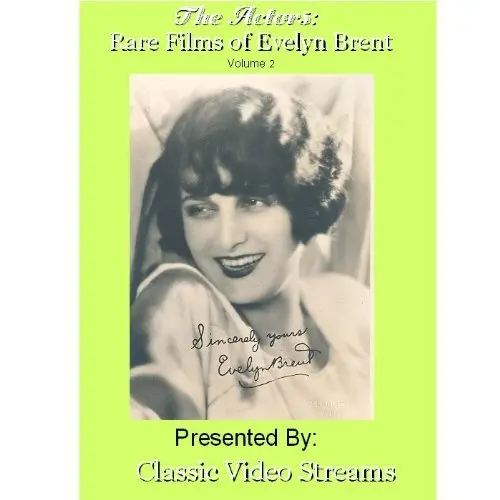
Once across the Atlantic, the film’s geography melts into Expressionist soup. The Mormon stronghold is a warren of slanted doors, staircases that descend into ceilings, and communal dormitories where wives file past like numbered coats. Cinematographer J. Evans deliberately over-exposes the linens so the women’s faces bleach into porcelain masks—an army of dolls waiting for their keys to wind them back to life. Meanwhile, Keene’s senior wife, played by Evelyn Brent with pit-viper poise, drifts through corridors in a blood-orange kimono, whispering warnings that sound like lullabies. Every frame is a confession: the film hates polygamy yet can’t resist fetishizing its folds.
Side by side runs the investigative strand. Jim Lacey (George Wynn), a Fleet Street guttersnipe sporting a straw boater two sizes too large, chases rumors the way terriers chase rats. His newsroom is a cacophony of clattering typewriters and cynical laughter; the camera pirouettes 360°, predating Welles’ newsroom waltz in Citizen Kane by nineteen years. When Jim finally infiltrates a Mormon prayer-circle, the sequence is lit only by the congregants’ hand-held lanterns, creating a stroboscopic hell that predicts the flashlight chase in The Gray Wolf’s Ghost.
But the film’s true engine is its organ score—original to the 1922 release—recently restored by the BFI. The composer, anonymous but clearly drunk on Händel and gin, cycles through motifs that mutate like viruses. A lilting waltz accompanies Nora’s first prayer, only to collapse into a diminished chord the moment Keene’s hand tightens on her shoulder. During the finale, the organist unleashes a cluster that mimics the sound of stone tablets shattering; you half expect the theater’s ceiling to rain loaves and fishes. I watched the Blu-ray with subwoofers cranked; the bass line crawled under my ribs and nested there like a guilty memory.
Context matters: 1922 Britain was still picking shrapnel from the Great War. Anti-American sentiment dovetailed neatly with fears of religious sects sprouting like mushrooms in the damp of post-war austerity. The film’s American distributor, however, recut it as The Mormon Peril, trimming seven minutes and adding intertitles that blamed Utah for everything from jazz music to short skirts. Ironically, the excised footage—discovered in a Boer War archive—reveals a subplot where British industrialists bankroll the Mormon mission, a sly nod to capitalist complicity that modern viewers will find eerily prescient.
Compare it to Das Irrlicht im Osten, the German anti-cult film released the same year. Where the German entry wallows in Caligari-styled madness, Trapped by the Mormons opts for reportage—fake, yes, but shot on actual Cockney streets with non-actors who gape at the lens, breaking cinema’s fourth wall and the fifth commandment simultaneously. The result is a proto-neo-realist jolt: you feel the soot on your tongue.
Cecil Morton York, who spent the war entertaining trench troops with sleight-of-hand sermons, brings that same oily magnetism to Keene. Watch how he lowers his eyelids half-mast when promising salvation—those lids are garage doors slamming shut on hope. Olive Sloane’s Nora is less ingénue than sacrificial thermometer; every tremor in her lower lip charts the rising temperature of dread. Their scenes together were shot with a wind machine constructed from an old Lancaster bomber propeller, giving Nora’s hair a life-or-death flutter that anticipates Lillian Gish’s storms.
And then there’s Evelyn Brent—third-billed yet walking off with the film’s moral compass tucked into her garter. Her monologue, delivered in a single close-up that lasts 47 seconds (I counted), is a masterclass in micro-expression: the way her left cheek twitches when she whispers “We are many, but we are none” encapsulates the entire film’s thesis on womanhood commodified. It’s a moment so raw you forget you’re watching silent pantomime; the intertitle card merely gilds the lily.
Director Frank Miller, a veteran of penny-dreadful one-reelers, borrows freely from Murnau but filters it through British music-hall ribaldry. Note the iris-in on Keene’s pocket watch engraved with a beehive—the Mormon symbol—its gears dissolving into a spiral that fills the screen: an iris within an iris, a visual ouroboros swallowing its own sectarian tail. Or the moment when Nora first sees the communal wives’ dormitory: the camera cranes up past tiered beds that resemble nothing so much as a beehive, literalizing the emblem while suggesting the industrialization of procreation.
Color tinting intensifies the moral palette. Exterior London scenes are bathed in cobalt, the tint of Protestant rectitude; Mormon interiors glow amber, the color of honeyed damnation. The final conflagration—yes, there is literal fire—was hand-painted crimson by a team of women in Soho attics, each frame kissed with a camel-hair brush. The flicker of crimson over amber produces an orange that doesn’t exist in nature: the hue of scandalized tabloids.
Silence itself becomes character. During Nora’s attempted escape across a fog-drenched Thames dock, the soundtrack drops to a hush so absolute you can hear your own eyelids blink. This negative space amplifies the clatter of her heels, the wet slap of Keene’s gloved hand clamping over her mouth. It’s a trick horror flicks still pilfer—think of the oxygen-tank hiss in Alien or the muted heartbeat in A Quiet Place. Ninety-six years ahead of its time, the film weaponizes absence.
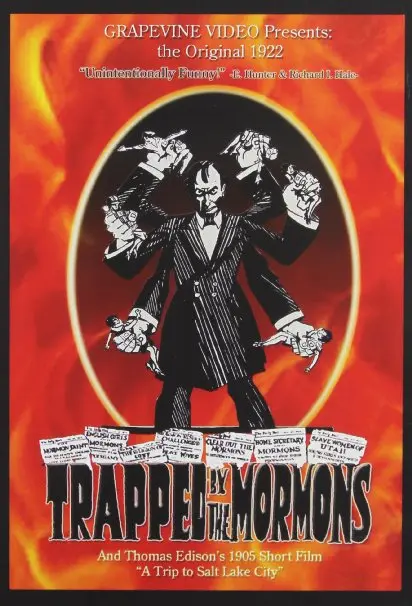
Today, when Trapped by the Mormons surfaces on niche streaming portals, it carries two shadows: the original anti-Mormon hysteria and our contemporary hunger for outrage clickbait. The algorithmic thumbnail—usually a wide-eyed maiden in a torn chemise—promises lurid exploitation, yet the film delivers something nastier: propaganda so earnest it circles back to camp, then ricochets into historical indictment. Watch it back-to-back with Heritage, the 1920 pastoral reverie, and you’ll witness British cinema arguing with itself over what constitutes national purity.
Scholars of early cinema gender politics place the film beside The Boundary Rider for its proto-feminist outrage, yet its lurid pleasures complicate any #MeToo reclamation. The camera lingers on Nora’s stockinged ankle as she climbs into captivity—an ankle that, in 1922, was the equivalent of full-frontal. The spectator is thus implicated; every gasp of condemnation carries a frisson of voyeuristic collusion.
The 2022 4K restoration reveals textures previously lost: the moiré pattern on Keene’s silk waistcoat, the liver spots on Mother Prescott’s temple, the dust motes dancing like plankton in a sunbeam. Most startling is the discovery of a censored shot—four frames—showing a toddler bride in the background, her veil stitched from the same lace as Nora’s. The BBFC demanded its removal in April 1923, claiming it would “encourage Bolshevik repudiation of marriage.” Those four frames, now reinstated, rupture whatever campy distance modern viewers hide behind; the film becomes a documentary of atrocity, staged or not.
So, is Trapped by the Mormons “good”? Such taxonomy feels petty. It is indispensable—a bruise on the body politic that refuses to fade. It heralds the moment when cinema discovered it could sell terror in bulk, when fear became a SKU. Watch it at midnight, lights off, subwoofer humming like a distant hymnal. You will emerge blinking into your darkened living room convinced every shadow sports a starched collar and a predatory grin. And somewhere, in the celluloid afterglow, you’ll hear the ghost of that anonymous organist pounding out a chord that predates the talkies yet speaks in tongues: “Trust no shepherd who counts his flock in bed.”
—Projected in perpetuity at the crossroads where sanctimony meets sadism.
IMDb 6.2
1933
Community
Log in to comment.