DbcultAccessing Vault...
5.5/10
Senior Film Conservator
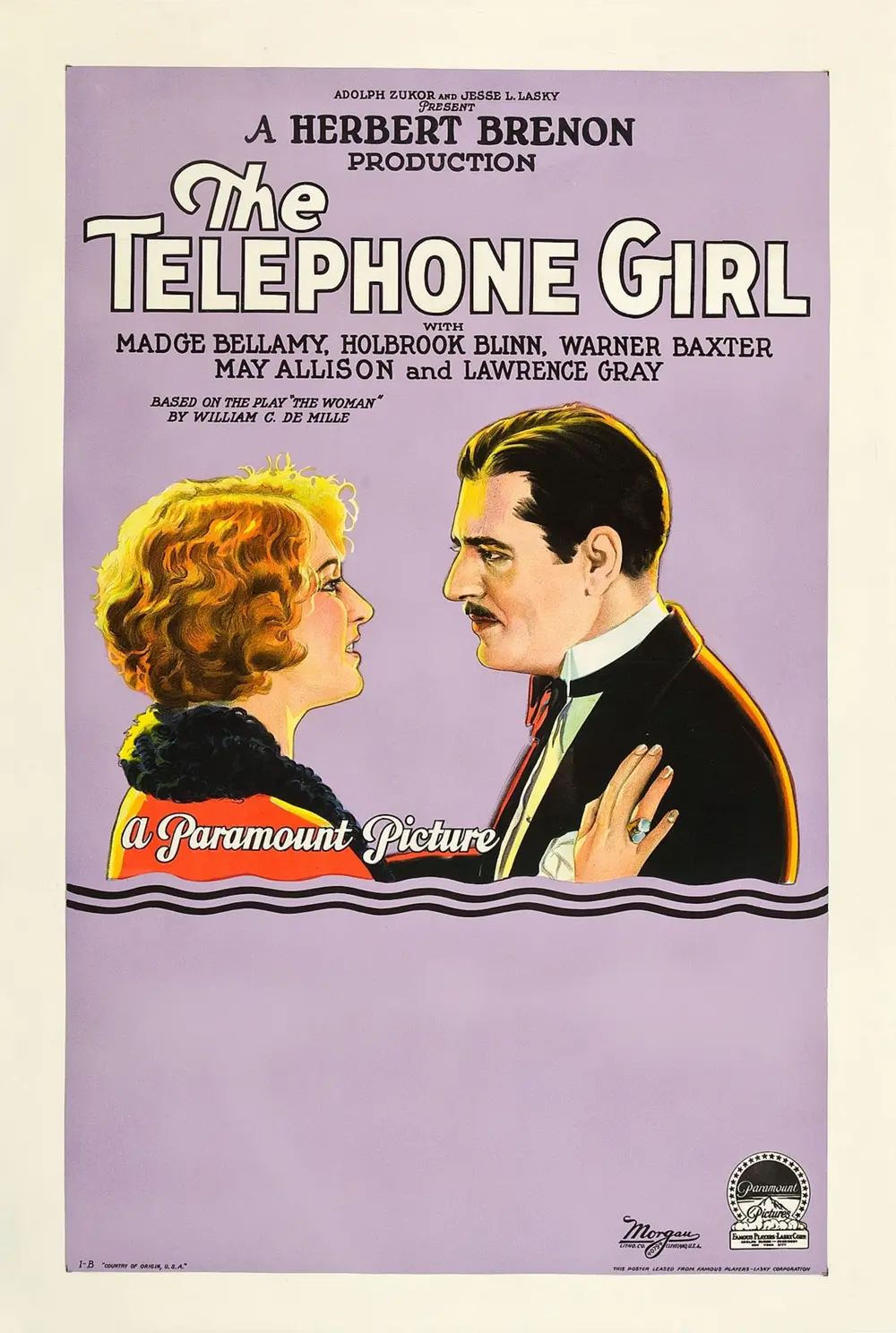
A definitive 5.5/10 rating for a film that redefined the boundaries of cult cinema. The Telephone Girl remains a cornerstone of transgressive art.
Does 'The Telephone Girl' still ring true in an era of digital surveillance and cancel culture? Short answer: yes, but primarily as a fascinating, cynical look at how the powerful weaponize personal privacy for political gain. This isn't just a dusty relic of the silent era; it is a surprisingly modern exploration of the intersection between technology and reputation.
This film is for viewers who enjoy slow-burn political dramas and those interested in the evolution of the 'working girl' archetype in early cinema. It is decidedly NOT for those who require high-octane action or the broad, slapstick humor often associated with the 1920s. It demands patience and an eye for the subtle shifts in social status that define its central conflict.
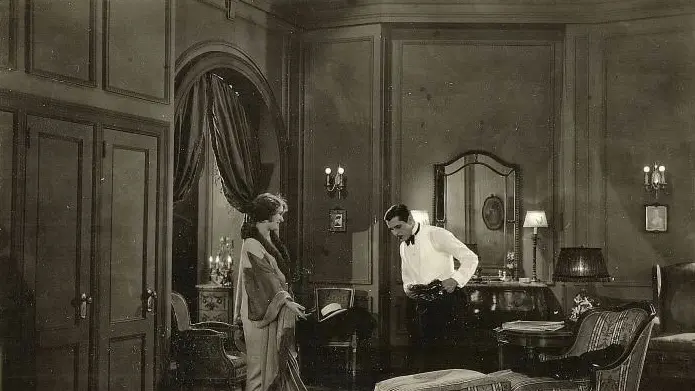
This film works because it treats its central scandal not as a moral failing of the victim, but as a strategic tool for the villain. This film fails because its final act relies on a somewhat convenient romantic resolution that softens the sharp edge of its political critique. You should watch it if you want to see how the de Mille family (specifically William) mastered the art of the domestic-political thriller long before the talkies arrived.
At its heart, 'The Telephone Girl' is about the architecture of a smear campaign. When Jim Blake, played with a heavy-handed but effective gravitas by Holbrook Blinn, discovers the 'Matthew Standish and wife' entry in a three-year-old hotel log, the film shifts into a psychological chess match. This isn't just about a man having an affair; it’s about the timing of the revelation. The film captures the terrifying reality of how a single piece of paper can dismantle a career.
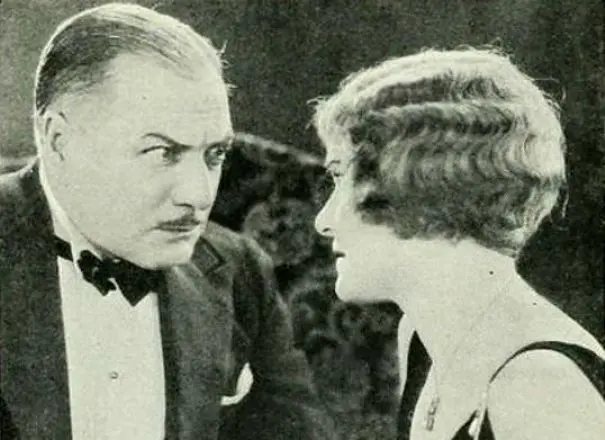
Consider the scene where Blake first presents the evidence to his inner circle. The lighting is harsh, casting long shadows that suggest a conspiratorial gloom. It’s a stark contrast to the more lighthearted fare of the time, such as The Rag Man. Here, the stakes are existential. The film suggests that in politics, truth is secondary to the narrative you can build around it. It’s a cynical take, one that feels uncomfortably relevant in our current climate of leaked documents and 'gotcha' journalism.
Madge Bellamy’s Kitty is the film’s moral compass, and her role as a telephone operator is a stroke of narrative genius. In 1927, the switchboard was the central nervous system of society. Operators heard everything. They were the original data brokers. Kitty’s refusal to cooperate with Blake’s scheme isn't just a moment of personal integrity; it’s a professional stand against the abuse of access.
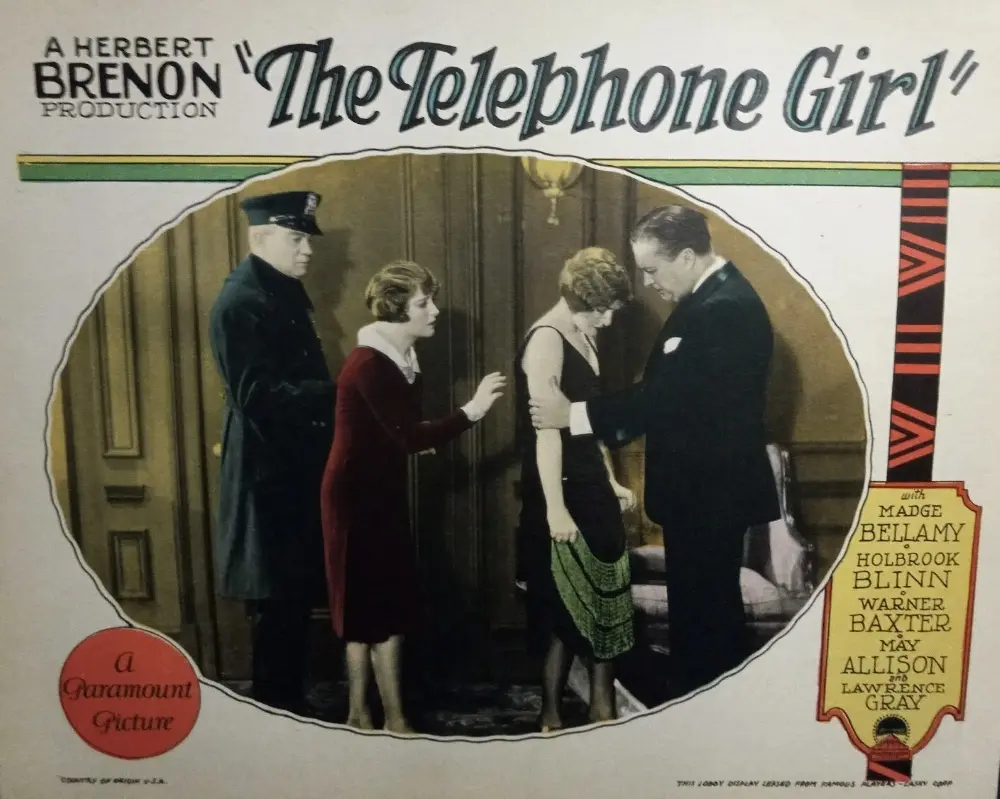
There is a specific moment when Kitty is asked to intercept a call to warn Standish’s 'mystery woman.' The camera lingers on her face as she weighs the consequences. Bellamy plays this with a restrained intensity. She isn't a damsel in distress; she is a gatekeeper. This portrayal of a working-class woman holding the keys to the kingdom is far more nuanced than the typical 'vamp' characters seen in films like Exit the Vamp. Kitty is a professional, and the film respects her labor as much as her ethics.
While Cecil B. de Mille was busy parting the Red Sea, his brother William C. de Mille was perfecting the art of the intimate drama. His direction in 'The Telephone Girl' is surgical. He understands that a political thriller doesn't need thousands of extras; it needs tight framing and a clear understanding of power dynamics. The way he uses the physical space of the political office—expansive, cold, and intimidating—tells us everything we need to know about Jim Blake’s world.
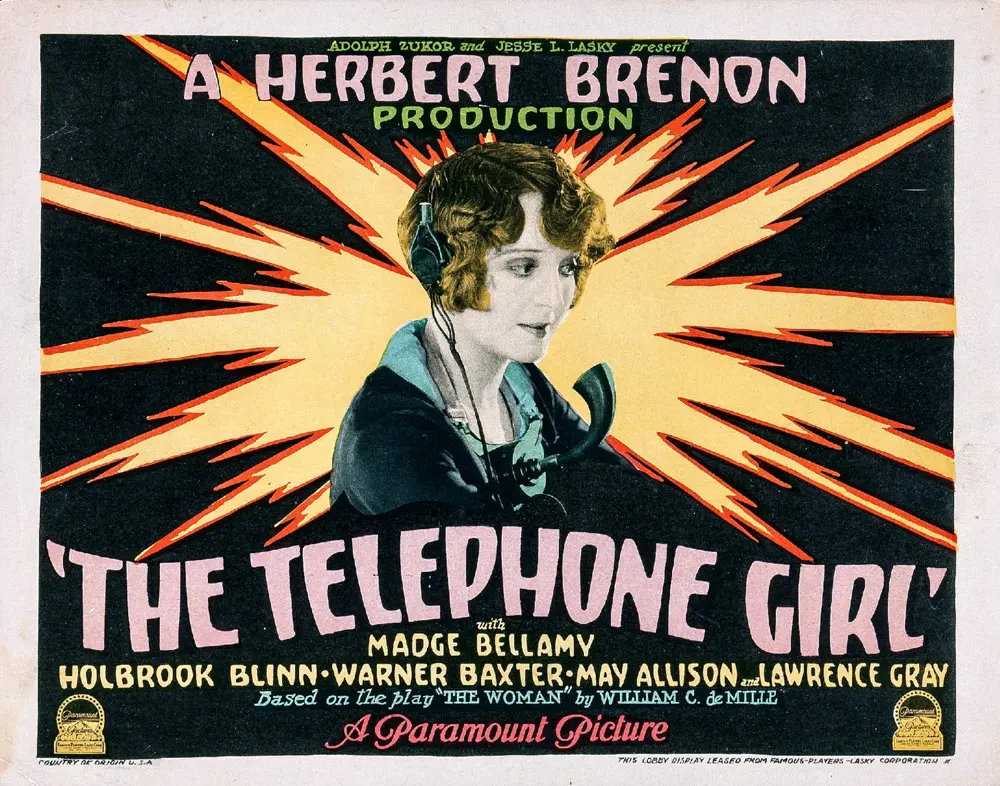
The pacing is deliberate. It doesn't rush to the scandal. Instead, it builds the tension through a series of increasingly uncomfortable social encounters. This approach is reminiscent of his work on Young Mrs. Winthrop, where domestic tensions carry the weight of a tragedy. In 'The Telephone Girl,' the tragedy is the corruption of the democratic process. De Mille’s camera stays close to the actors, capturing the flickers of doubt and the hardening of hearts.
Yes, 'The Telephone Girl' is worth watching for anyone interested in the roots of the political thriller. It provides a sophisticated look at how information is brokered and used as a weapon. While the ending is a bit too tidy, the journey through the underbelly of a gubernatorial campaign is gripping. It offers a unique perspective on 1920s technology and the social power of the working class.
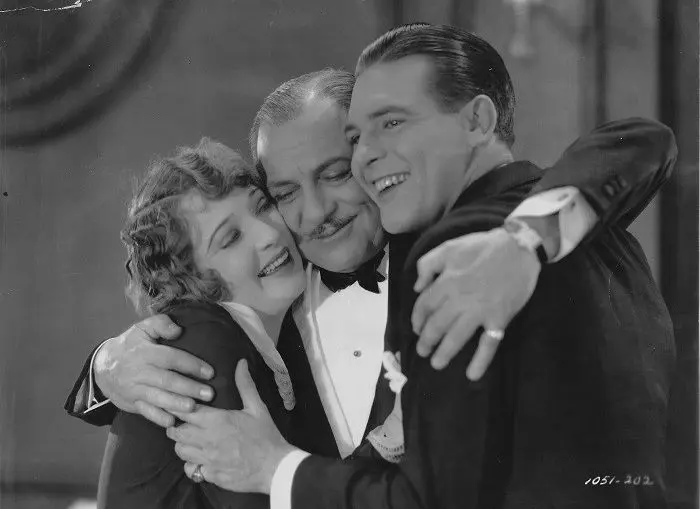
Holbrook Blinn is the standout as the political boss. He doesn't play Blake as a mustache-twirling villain. Instead, he plays him as a man who genuinely believes that the ends justify the means. His performance is grounded in a terrifying sense of entitlement. When he interacts with Warner Baxter’s Matthew Standish, the screen crackles with a quiet hostility. Baxter, who would go on to much greater fame, shows early flashes of the leading-man charisma that would define his career.
However, the real surprise is Lawrence Gray as Tom Blake. His character could have easily been a generic romantic interest, but Gray imbues him with a sense of conflict. He is the son of a monster, trying to find a way to love his father while rejecting his methods. This dynamic adds a layer of familial tragedy that elevates the film above a simple 'good vs. evil' narrative. It’s a much more complex character study than what you find in contemporary melodramas like The Woman in Politics.
We often think of the silent era as a time of primitive storytelling, but 'The Telephone Girl' uses its titular technology with a high degree of sophistication. The telephone is not just a prop; it is a character. It represents the death of distance and the end of absolute privacy. The film suggests that once a voice is sent over the wire, it no longer belongs to the speaker. It belongs to the network.
This theme is explored with more nuance here than in other tech-focused films of the era, such as Time Lock No. 776. In that film, technology is a mechanical obstacle. In 'The Telephone Girl,' technology is a moral test. The switchboard is a confessional where the priest is a twenty-something girl making minimum wage. The film asks: what do we owe to the secrets we overhear?
'The Telephone Girl' is a robust piece of silent filmmaking that deserves more attention than it currently receives. It manages to be both a product of its time and a timeless warning about the dangers of political obsession. It works. But it’s flawed. The ending is a compromise, but the questions it raises about privacy and power are as sharp today as they were in 1927. While it may not have the epic scale of a Cecil B. de Mille production, William C. de Mille’s focus on the human cost of ambition makes it a far more resonant experience. If you can track down a copy, it is a fascinating window into a world where the most powerful weapon wasn't a gun, but a telephone cord.
IMDb —
1924
Community
Log in to comment.