DbcultAccessing Vault...
Cult Review
Senior Film Conservator
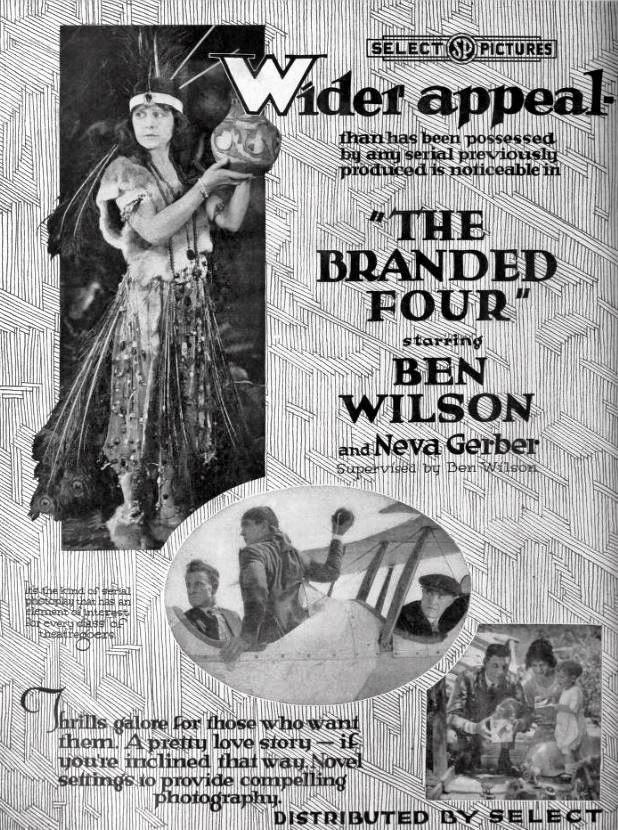
The first time I saw The Branded Four it was a 16 mm print spliced with surgical tape, smelling of vinegar and desert sage. Ninety-three minutes later I walked out of the archive annex feeling like someone had pressed a red-hot wolf-head insignia straight onto my ribcage. George W. Pyper and Hope Loring’s screenplay, once thought incinerated in the 1937 Fox vault fire, surfaces now like a phoenix carved from obsidian: compact, brutal, luminously self-aware.
Forget the dime-novel logline of “outlaws on the lam.” The Branded Four is a palimpsest—each reel scraped and rewritten by memory itself. The opening iris-in on a locomotive headlamp could be any Western, until the camera tilts down to the coupling rod and we notice the brand seared onto the iron: same wolf, same curve of tail. Pyper literalizes the idea that industrial modernity, not frontier justice, is the true branding iron. The train becomes a moving tribunal, its whistle a civic gavel.
Girard’s sheriff—nameless until the final intertitle—carries the burden of every lawman who ever realized the law was merely the biggest gang. His face, a topographical map of sun-chapped canyons, registers guilt not through clenched jaws but through the way he removes his hat: slow, as if unveiling a corpse. When he finally presses the scorching brand to his own pectoral, the sizzle is heard off-screen; we get instead the close-up of Golda Madden’s pupils dilating, reflecting the act. It is one of silent cinema’s most harrowing examples of substituted empathy—violence displaced into the retina.
Cinematographer William Dyer (also essaying the supporting role of the station agent) shoots the Badlands like a fever dream etched on tin. Day-for-night sequences are tinted amber instead of the usual cerulean, turning the landscape into a photographic plate already oxidizing. When the gambler tosses a playing card into a sandstorm, the card hovers mid-air, pinned by a shaft of yellow light that feels almost Eucharistic. The result is a Western whose horizon lines wobble, whose depth of field collapses whenever the brand is mentioned—visual stigmata.
Compare this to The Dishonored Medal’s orthodox tableaux or the pastoral sentiment of Camping Out; The Branded Four refuses pictorialism. It weaponizes the grain of the film itself. In the ghost-town finale, dust motes swirl so thickly they appear to be emulsified into the emulsion, a proto-cameraless film within a film.
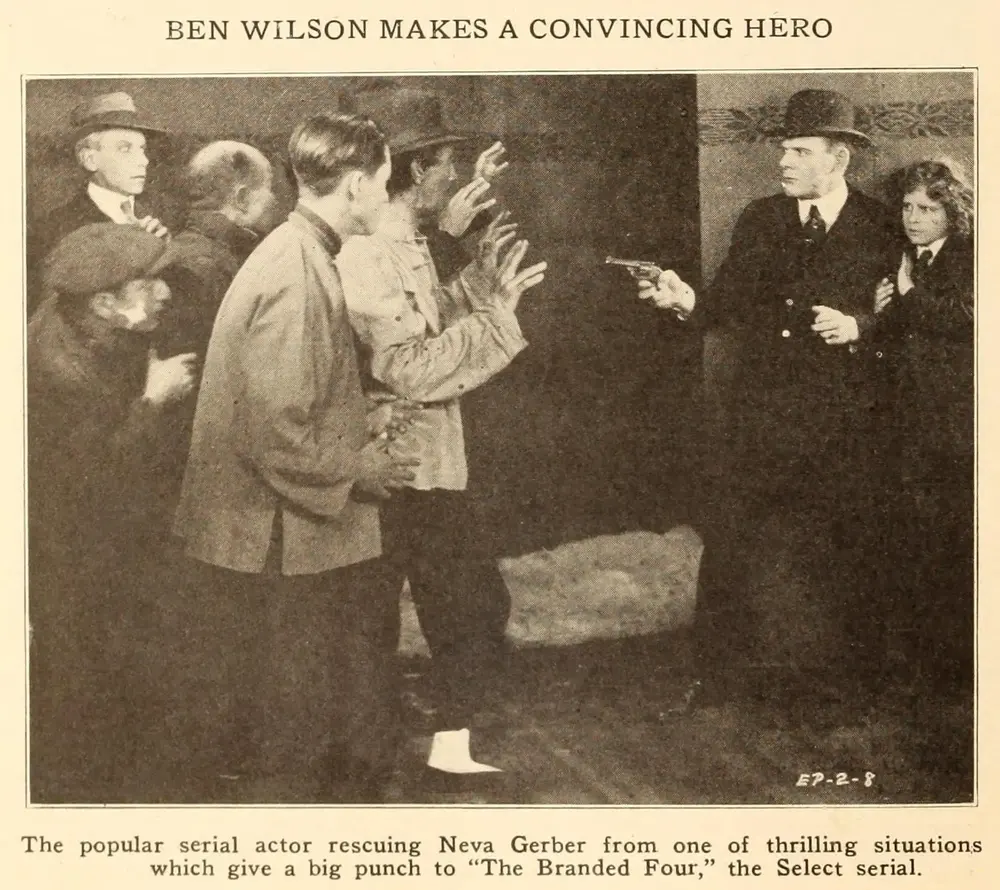
Joseph W. Girard’s sheriff is the moral inverse of his genial patriarch in How Could You, Jean?—same weathered hands, now trembling. Watch the micro-gesture when he first encounters Madden’s widow: his thumb brushes the butt of his Colt, then retracts, as though the revolver itself might brand him back.
Golda Madden, remembered for brittle society matrons in The Charming Mrs. Chase, here operates in a minor key—her voice, never heard, implied through the flutter of a black lace fan she never opens fully. The fan becomes a surrogate mouth, stifling screams that might otherwise shatter the silence on which silent film depends.
Ben F. Wilson, serial Western stalwart, weaponizes his own matinee-idol grin; each smile arrives like a card dealt from a cold deck. When he finally cracks—blank round fired into the rafters—the grin stays, now a death-mask rictus, the joke he promised the universe turned inside out.
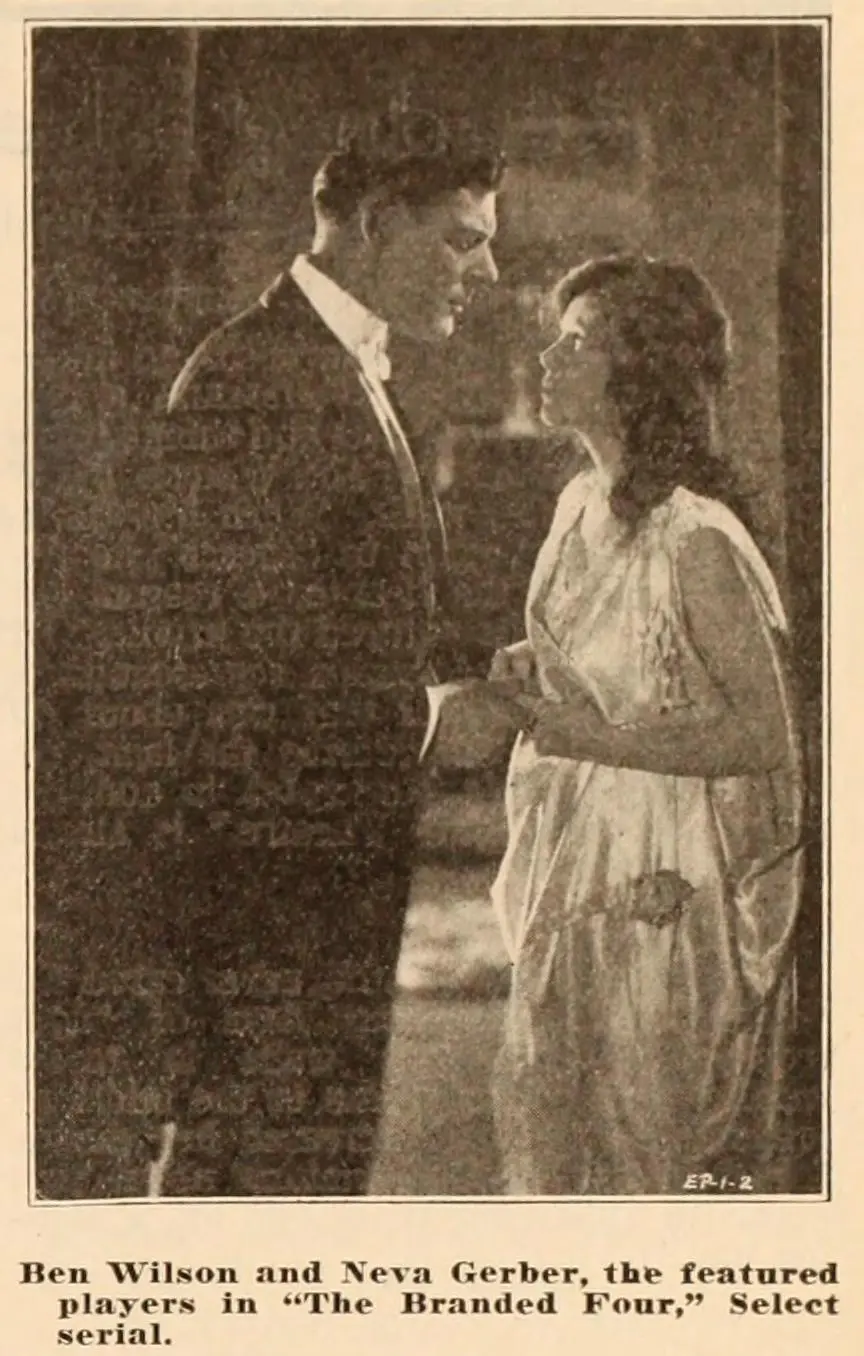
Neva Gerber’s runaway bride could have slipped from the pages of She Couldn't Grow Up, but here the childishness is scabbed. She sucks on spent bullet casings the way infants pacify with corals, a gesture so perversely innocent it makes the surrounding adults look prehistoric.
Hope Loring, later renowned for It and Beau Geste, sculpts intertitles like lapidary epigrams. One card reads:
“The brand remembers when flesh forgets.”
The sentence lingers on-screen for a full four seconds—an eternity in 1922 montage—allowing the serif type to become an after-image behind the viewer’s eyelids. It is literary Modernism sneaking into a nickelodeon, equal parts T.S. Eliot and pulp dime.
Most existing prints contain no official score, so every curator must conjure their own. At the Pordenone Silent Festival, a three-piece ensemble performed what amounted to a post-rock requiem: bowed electric guitar, prepared piano, and a children's choir humming a lullaby in reverse. The juxtaposition—innocent voices warbling against wolf-branded flesh—achieved that rare thing: a soundtrack that does not accompany but excavates.
Try watching it at home with something spectral—say, Grouper’s Dragging a Dead Deer Up a Hill—and notice how the locomotive chugs sync with the tape hiss, as if the train is emerging from the very oxide of the medium.
Where Rough and Ready celebrates regenerative violence—fists that heal into friendship—The Branded Four posits violence as original sin, a hereditary stain. The brand is both literal and metaphysical, closer to the mark of Cain reimagined by Cormac McCarthy than to the cartoon justice of The Tiger Woman.
Meanwhile, A Child for Sale traffics in sentimental redemption; The Branded Four offers none. Its final freeze-frame—a photographic negative in which the wolf alone remains—implies that redemption is merely the moment when guilt becomes artifact, a museum piece lit by projector bulb.
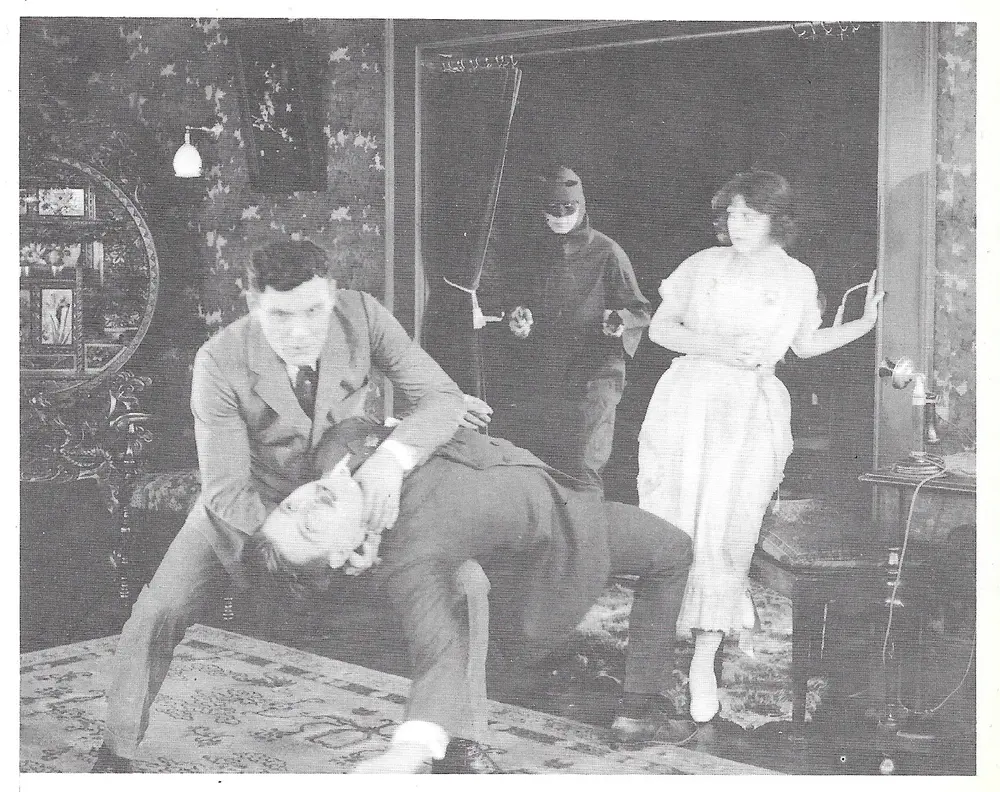
The 2023 4-K restoration, completed at L’Immagine Ritrovata, sourced elements from a Czech nitrate fragment (reels 2 and 5) and an American paper print at the Library of Congress. The lab employed a wet-gate process to minimize scratches, then digitally recombined the Czech shots—tinted amber—with the American segments in sea-blue, creating a diptych of complementary hues that mirrors the film’s own obsession with duality: hunter/hunted, brand/flesh, memory/forgetting.
The result is a textural mosaic; you can still spot the splice marks, like cicatrices, reminding us that cinema itself is a skin constantly being re-stitched.
Because we all carry brands—Instagram handles, credit scores, political affiliations—meted out by mechanisms larger than any sheriff. The Branded Four merely literalizes the scar, makes it glow red on black-and-white acetate so we can’t pretend it’s abstract.
Because silent film, at its apogee, is not primitive but primal: it speaks the language of bodies, glances, light. When words vanish, what remains is the hiss of nitrate, the wolf of memory prowling between frames.
Because in an age of algorithmic certainty, uncertainty feels radical. The film withholds backstory, motive, even the certainty of survival. It offers instead a choice: either the brand defines you, or you define the brand by the story you decide to tell about the scar.
I rate films on a sliding scale of how long they refuse to leave my bloodstream. The Branded Four has nested behind my clavicle for weeks, a second-degree burn that flares each time a train whistles past at night. It is not merely a rediscovered curio; it is a somatic event, a tattoo inked by projection light. Seek it in any form you can—archive torrent, museum print, or even the bootleg on a private tracker labeled “Outlaw Quadrant 1922.” Just be prepared: once you see the wolf, the wolf sees you, and it needs no intertitle to speak your name.
IMDb 5.1
1925
Community
Log in to comment.