DbcultAccessing Vault...
Cult Review
Senior Film Conservator
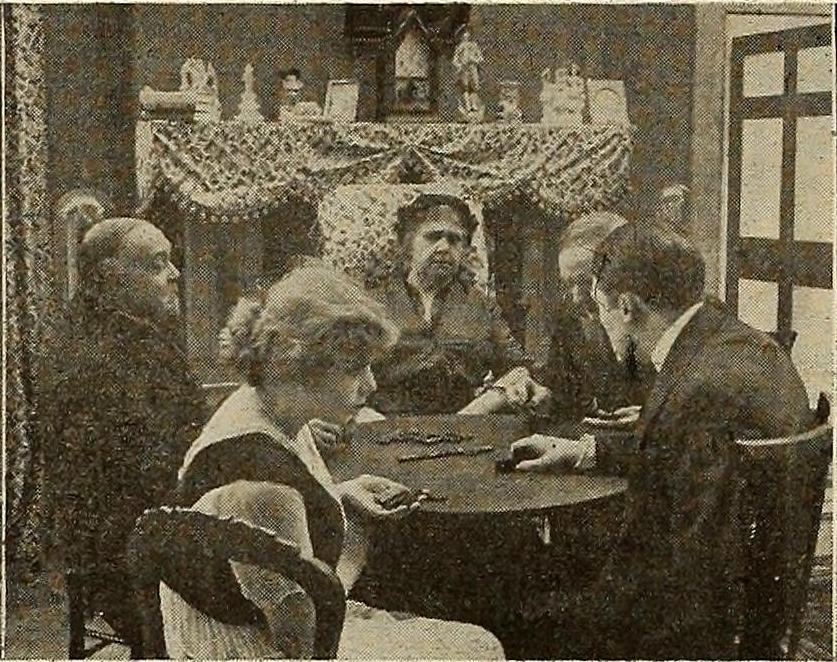
There's an undeniable, almost primal power in silent cinema, an ability to distill raw human emotion and complex narratives into a visual language that transcends spoken words. When such artistry is applied to the grim, unvarnished naturalism of an Émile Zola-esque tale, the result can be profoundly unsettling and unforgettable. Such is the case with Herbert Brenon's 1916 cinematic offering, The Marble Heart (or The Marble Heart, as it's often referenced), a film that plunges headfirst into the suffocating depths of human desire, betrayal, and the inescapable torment of a guilty conscience. Far from a mere historical curiosity, this early drama stands as a potent psychological thriller, a precursor to the noir sensibilities that would define later decades, proving that the human capacity for depravity and subsequent self-destruction is a timeless narrative wellspring.
At the heart of this somber narrative is Therese Roger (Marcelle Carroll), a young woman whose West Indian origins hint at a vibrancy perhaps ill-suited for the drab, predictable existence she's been dealt. Orphaned in infancy, she finds herself raised by her aunt, Madame Roger, proprietor of a modest haberdashery in a sleepy southern French village. Her life, from the outset, seems preordained for quiet desperation. The ultimate manifestation of this fate is her marriage to Camille (Rhy Alexander), Madame Roger's son – a figure so utterly devoid of vitality, so sickly and sexless, that his very presence casts a pall over Therese's burgeoning youth. This union, born not of love but of deference to her aunt's wishes, traps Therese in a monotony that gnaws at her spirit. Each day unfolds with an excruciating predictability: Camille's dreary office work, his return at the same hour, his perpetually enfeebled health and depressed spirits. The weekly domino games with Dr. Gribet and Michaud, the prefect of police, punctuated by the polite visits of young lovers Suzanna and Oliver, only serve to underscore the unchanging, stifling cycle of events. Therese, brimming with an unspent reservoir of youth and life, finds herself increasingly suffocated by this provincial environment, a prisoner of circumstance and societal expectation.
The quiet despair that pervades Therese's existence is violently disrupted by an unexpected turn of events. Camille, in his perpetual state of frailty, collapses at his office, only to be brought home by his friend, Laurant. Here enters the catalyst, the antithesis to Camille's languid spirit. Laurant is everything Camille is not: robust, charismatic, full of an undeniable life force. The moment Laurant meets Therese, an electric, dangerous attraction sparks between them, a recognition of kindred spirits yearning for something more than their prescribed lives. What begins as a spark swiftly escalates into a conflagration. Laurant becomes a frequent visitor, his presence a stark contrast to the oppressive routine, and a torrid liaison develops. This clandestine affair, fueled by a potent cocktail of forbidden desire and a shared contempt for their stifling environment, quickly morphs into something far more sinister. Camille, once merely an uninteresting husband, now becomes the singular, insuperable obstacle to their imagined happiness.
The descent into premeditated murder is portrayed with a stark, unsettling realism, typical of Zola's influence. It's not a crime of passion in the heat of the moment, but a calculated decision, born of a desperate yearning for freedom. When the opportunity presents itself, they act with chilling resolve, drowning Camille. The swiftness and apparent impunity of their act are initially deceptive. They manage to deflect suspicion from the grieving Madame Roger, whose sorrow, thankfully for them, is unclouded by doubt. With the obstacle removed, the path seemingly clear, they marry with the old woman's consent, believing they have outsmarted fate and secured their blissful future. Yet, the film's title, The Marble Heart, hints at the cold, unyielding nature of their crime and its inevitable repercussions.
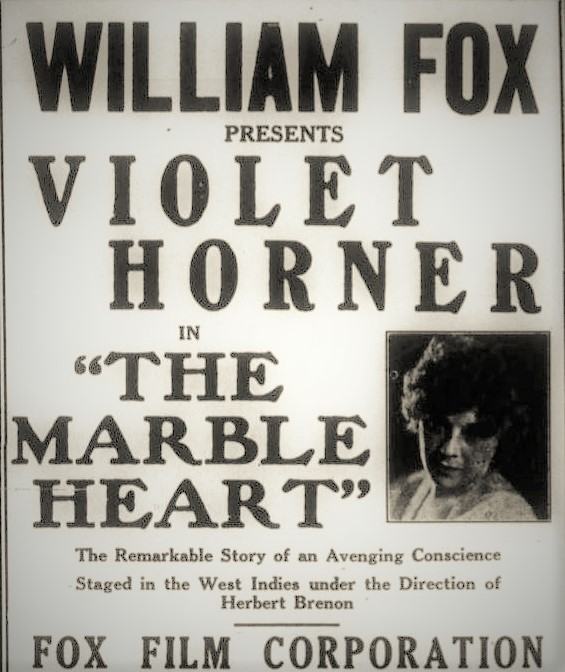
The true genius of The Marble Heart lies not in the act of murder itself, but in its meticulous, psychologically harrowing depiction of the aftermath. The happiness Therese and Laurant so ruthlessly sought remains perpetually out of reach, a cruel mirage. Their crime, far from being buried, becomes a living, breathing entity, a spectral presence that infiltrates every corner of their shared existence. It manifests in their faces, etching lines of worry and suspicion where joy should reside. It stalks through their home, transforming domesticity into a cage of paranoia. The once passionate lovers find their bond corroding, their shared secret twisting into mutual recrimination and escalating quarrels. The very act meant to unite them forever instead tears them apart, piece by agonizing piece.
During one particularly stormy scene, their heated words, laden with the grim truth, are overheard by Madame Roger. The revelation of her son's brutal murder, at the hands of those she had taken in and blessed, is a shock so profound it leaves her stricken with paralysis and the total loss of speech. This tragic turn introduces one of the film's most chilling and compelling elements: the helpless old mother transformed into a silent, living monument to their guilt. She cannot speak, cannot accuse, yet her very presence is a constant, suffocating indictment. Her eyes, filled with a terrible knowledge, follow their every move. She "gloats over the torture" they suffer from their consciences, her silent agony becoming a perverse form of revenge. In a scene of exquisite tension, during a gathering of guests, she attempts to etch her accusation onto a tablecloth with the edge of a domino, her fingers trembling, unable to complete the damning sentence. It is a moment of raw, desperate pathos, underscoring the inescapable nature of their internal prison. The growing distrust between the unhappy pair is palpable, a festering wound that refuses to heal, driving them further into isolation despite their physical proximity.
In the realm of silent film, the burden of conveying complex emotions and narrative nuances rests squarely on the shoulders of the actors. Marcelle Carroll, as Therese, delivers a performance of remarkable depth and subtlety. We witness her transformation from a repressed, yearning woman to a desperate lover, and finally, to a woman consumed by guilt and paranoia. Her expressive eyes and gestures communicate a torrent of unspoken thoughts and feelings, making her psychological torment utterly believable. Rhy Alexander's portrayal of Camille, though brief, is equally effective in establishing the character's inherent weakness and the almost pathetic nature of his existence, making his demise both tragic and, in the context of the narrative, almost inevitable. The supporting cast, including Louise Fazenda, Henry Armetta, and Harry Burkhardt, contribute to the film's rich tapestry, each adding a layer of authenticity to the provincial setting.
Herbert Brenon's direction is masterful, employing the visual lexicon of silent cinema to its fullest potential. His use of close-ups effectively draws the audience into the characters' inner turmoil, while his staging and lighting create an atmosphere of escalating dread. The film's pacing, deliberate yet inexorable, mirrors the slow, agonizing unraveling of the protagonists' psyches. It's a testament to Brenon's skill that a story so reliant on internal conflict can be communicated with such clarity and impact without a single spoken word. The visual storytelling is so potent that it transcends the limitations of its era, speaking directly to universal themes of morality and consequence.
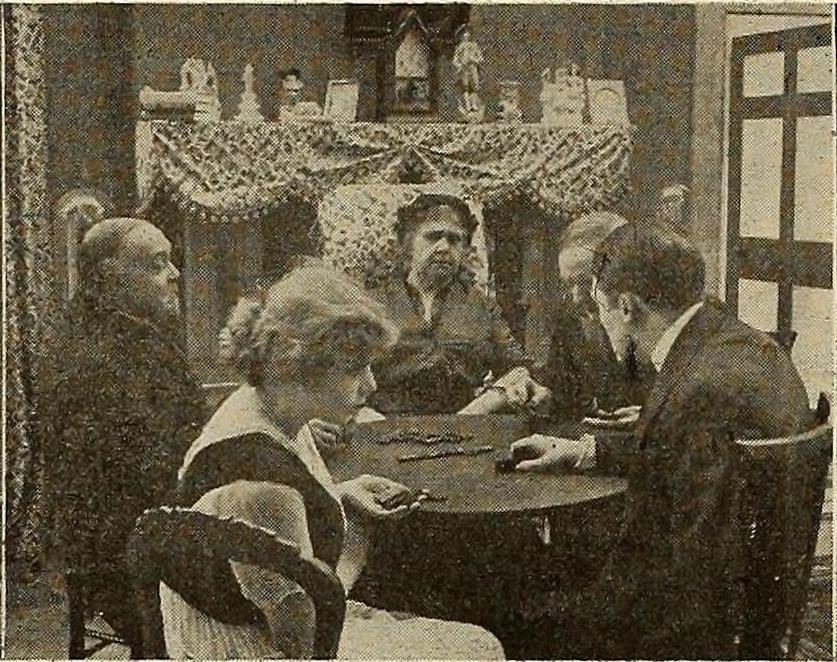
The influence of Émile Zola, credited as one of the writers alongside Herbert Brenon, is unmistakably woven into the fabric of The Marble Heart. The film embraces the tenets of naturalism, portraying human beings as products of their heredity and environment, driven by primal passions and societal pressures. Therese's initial repression, her desperate craving for a life beyond her means, and the fatalistic trajectory of her choices resonate deeply with Zola's explorations of human nature. The film doesn't shy away from the darker aspects of the human psyche, presenting a world where desires, once unleashed, can lead to catastrophic consequences.
The central theme of inescapable guilt finds echoes in various cinematic explorations of moral decay. One might draw parallels, for instance, to films like The Undertow, which similarly delves into the corrosive effects of a hidden past, or the broader moral quandaries explored in Sodoms Ende, where societal pressures and individual failings lead to ruin. The intense emotional drama and tragic consequences also bring to mind works such as The Battle of Hearts, which explores the tumultuous conflicts of the human heart, or even the grim expose of moral corruption found in The Yellow Traffic. While not a direct adaptation of a specific Zola novel, the film captures the essence of his tragic realism, where fate often conspires with human weakness to deliver a grim reckoning. The psychological torment experienced by Therese and Laurant is not merely an abstract concept; it is vividly portrayed as a tangible, destructive force that slowly but surely unravels their lives from within. The film posits that true justice is not always meted out by external authorities but by the inexorable workings of conscience.
The culmination of their torment is both horrifying and tragically inevitable. Driven to the brink by their internal demons and the silent, judging gaze of Madame Roger, Therese and Laurant hatch a desperate, final plan: to kill each other. Yet, even in their ultimate act, their inherent cowardice reveals itself. They lack the courage to add another direct murder to their record, preferring instead a mutual act of self-destruction. They drink poison together, choosing to pay for their earlier crime with their own lives. It's a bleak, yet profoundly resonant ending, illustrating the futility of their initial transgression. Their pursuit of happiness through murder ultimately led them to a shared, agonizing demise, their "marble hearts" finally cracking under the immense weight of their sins. The film's conclusion serves as a stark, uncompromising morality play, a testament to the enduring power of conscience and the inescapable nature of one's deeds.
The Marble Heart (1916) stands as a compelling artifact of early cinema, a film that, despite its age, retains an astonishing emotional potency. It is a stark reminder of the narrative sophistication and psychological depth that silent films were capable of achieving. For aficionados of classic cinema, psychological dramas, or those interested in the cinematic interpretations of Zola's dark naturalism, this film is an essential viewing experience. It's not a comfortable watch, but its unflinching gaze into the abyss of human culpability and the relentless pursuit of justice – even if self-inflicted – makes it a profoundly impactful and memorable work. It truly is a silent symphony of sin and retribution, resonating long after the final frame.
IMDb —
1922
Community
Log in to comment.