DbcultAccessing Vault...
5.4/10
Senior Film Conservator
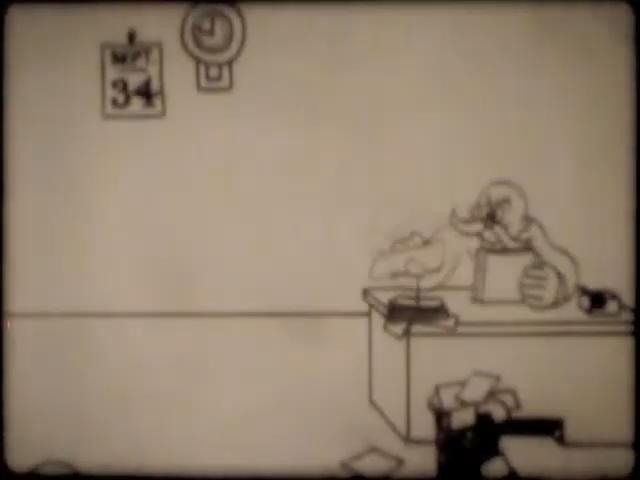
A definitive 5.4/10 rating for a film that redefined the boundaries of cult cinema. The Tale of a Wag remains a cornerstone of transgressive art.
Walt Hoban’s The Tale of a Wag is the cinematic equivalent of a hiccup that becomes a sermon: brief, involuntary, and weirdly metaphysical. Shot on blotchy orthochromatic stock that turns human skin into lunar topography, the film runs a scant twelve minutes yet hoards more anarchy than most trilogies manage today. The premise—dog plus hammer versus mosquito—reads like a nursery rhyme concocted by an anarchist. But beneath the flea-bitten slapfest lurks a sly manifesto about industrial-age ennui: every commuter wants to swat something, anything, that disturbs the metronomic boredom of platform life.
The mosquito, a single pixel of malevolence, is filmed in suffocating close-ups that morph its wings into Gothic stained glass. Hoban’s camera ogles the insect with the same rapt piety Dreyer will later reserve for Joan’s tears, turning pest into pagan totem. Meanwhile Jerry—half tramp, half prophetic prankster—embodies that distinctly American faith in jury-rigged engineering. His knot around the dog’s tail is a sailor’s splice learned from dime-novel sea dogs, a knot that binds absurdity to utility with Puritan zeal.
Hoban, who wrote, directed, and plays Mr. Givney, stages the gag in one prolonged master shot that refuses to blink. The stationary frame becomes a proscenium of escalating catastrophe: milk cans tip like tipsy obelisks, a dowager’s parasol snaps shut like a clam, and the station clock tolls half-past entropy. Because the camera never budges, the comedy festers inside the rectangle, forcing the viewer to become both spectator and accomplice. You scan every corner for the next flailing limb the way a Hitchcock crowd scans for the missing glove in The Lady Vanishes.
Silent clowns often weaponized physics, but Hoban weaponizes inertia itself. The hammer’s pendular momentum obeys Newtonian law yet behaves like a drunk oracle, predicting who will fall next. Each swing etches a yellow arc—thanks to the day-for-night tinting—that glows against the monochrome like a comet of humiliation. When the hammer finally smashes the station lamp, the shower of kerosene ignites a puffball of flame that Hoban undercranks into a carnivalesque bloom. The moment lasts maybe eight frames, yet it feels as mythic as Prometheus swiping fire from the gods and immediately burning his fingers.
Compare this to the geometric sadism of Fangen fra Erie Country Tugthus, where convicts march in lockstep toward metaphysical doom. Hoban’s prisoners are freer—derailed by whimsy rather than shackled by guilt—yet equally condemned to repeat the same twitching dance. The difference is tone: Norwegian despair versus American gadfly optimism.
The unnamed mutt, a rangy cur with the soul of Mercury, operates as both prop and prophet. His tail—normally an emotive barometer—becomes a prosthetic of human will, a slapstick Shiva arm. Watch how Hoban intercuts the dog’s bewildered eyes with the mosquito’s smug hover, creating a dialectic between instinctive innocence and cerebral mischief. In that montage you can sniff the same perfume that will later intoxicate Alice in Wonderland adaptations: animals know more than they let on, and what they know is that humans are ridiculous.
Yet the film refuses anthropomorphic treacle. When the hammer finally thuds against the platform—missing both pest and purpose—the dog yelps not in pain but in existential recognition: he has been drafted into a cosmic farce. His howl echoes across the depot, transforming the scene from knockabout into miniature tragedy, a yelp that anticipates the bewildered bark of the circus elephant in The Kaiser’s Shadow.
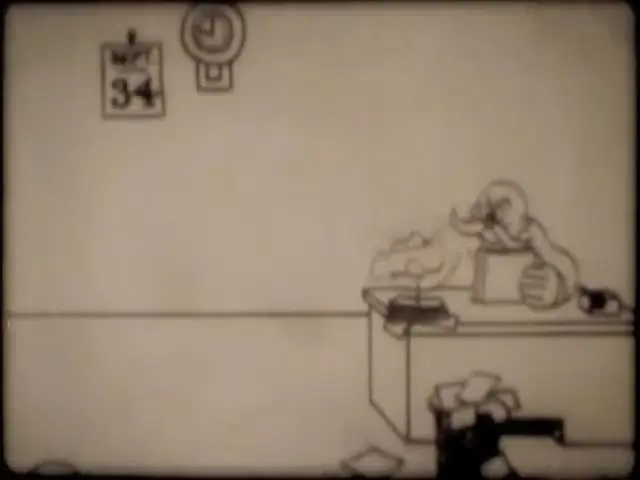
Because the picture is mute, every squeak, buzz, and yelp exists synaesthetically. Contemporary exhibitors often accompanied it with improvisational percussion: woodblocks for the hammer, slide-whistle for the mosquito, kazoo for the dog’s tail. Those sonic ghosts still haunt the footage; you can almost hear the rasp of twine against fur, the wet slap of hammer on flesh, the sizzle of lamp oil. Hoban understood that absence is the loudest sound of all, a vacuum begging the audience to fill it with their own flinches.
Politically, the vignette skewers Taylorist efficiency. The commuters queue like cog-teeth, pockets stuffed with unsmoked cigars and unopened ledgers. Jerry’s Rube-Goldberg contraption is a middle finger to Fordist logic: progress measured not by output but by how high a dog can arc. In 1922, when America was mass-producing Model Ts and standardizing time zones, Hoban proposes that maybe salvation lies in letting a mutt demolish the schedule.
Notice the sartorial taxonomy: Givney’s bowler (bourgeois respectability), Jerry’s newsboy cap (proletarian hustle), the dowager’s feathered hat (decaying aristocracy). When the hammer slices the air, it shears through these caste markers with egalitarian contempt. A banker’s silk top-hat gets flattened into an inkblot; a waitress’s starched apron balloons like a puff pastry. Hoban’s joke is that catastrophe is the ultimate democratic institution—everyone gets clipped, no refunds.
This egalitarian slapstick differentiates Wag from, say, The Grandee’s Ring, where social hierarchies are re-established through last-minute moralizing. Hoban offers no restitution, no handshake, no moral. The mosquito survives; the dog limps; the commuters re-board their delayed lives. The only residue is laughter, anarchic and unpaid.
A 4K scan from a 35 mm nitrate print (discovered in a boarded-up Montana depot) reveals textures previously smothered by mildew: the glint of brass buttons, the cyan shimmer on the dog’s nose, the mosquito’s wing-veins like scrimshaw. The restoration team opted to retain the gate wavers and cigarette burns, arguing—rightly—that these scars are historical graffiti. Watch the lower-left corner at 06:43 and you’ll spot the shadow of Hoban’s own arm as he signals the dog; it’s a Brechtian rupture that reminds us this “comedy” is also a documentary of its own making.
Place Wag beside Revenge and you chart the spectrum of early-20s catharsis: personal vendetta versus communal delirium. Pair it with Az utolsó éjszaka and you unearth a shared preoccupation with time’s cruel march; both films climax when a clock face becomes a canvas for absurdity. And if you dare program it after The Sin That Was His, the double bill becomes a diptych of guilt versus innocence, morality versus mischief.
The Tale of a Wag is not a relic; it is a dare. It dares modern filmmakers to reclaim brevity, to craft spectacle without CGI, to trust that an audience will still laugh at a dog, a hammer, and the hubris of thinking we can swat every pest that buzzes our way. Stream it on repeat until the mosquito’s whine embeds itself in your eardrum like tinnitus. Then go outside, tie no tools to any tails, and remember: the joke is never the gag—it’s the trembling air left behind.
IMDb 6.5
1927
Community
Log in to comment.