DbcultAccessing Vault...
Cult Review
Senior Film Conservator
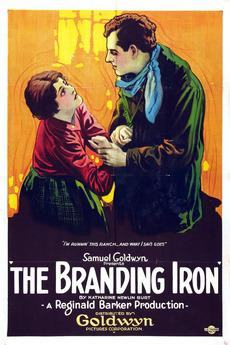
The camera, a mute voyeur, glides across a workshop that reeks of coal and testosterone. Sparks pirouette like incandescent fireflies, illuminating the branding iron—phallic, primitive, an agricultural tool perverted into nuptial weapon. In this single establishing shot, director Reginald Barker announces his thesis: marriage, in 1920 America, is still a cattle operation. Sidney Ainsworth’s Pierre looms, eyes rabid, the muscles of his jaw twitching Morse code for maniacal entitlement. When the iron kisses flesh, the close-up on Barbara Castleton’s Joan is not of pain but of dawning metaphysical exile: she has been translated from woman to parchment.
What follows is less a linear narrative than a fever dream staged on the precipice of the Pacific. Prosper Gael—played by James Kirkwood with the consumptive glamour of a poet who has read too much Schopenhauer—enters like an authorial deus ex machina, pistol coughing black-powder punctuation. The death is instantaneous, yet the moral bookkeeping remains eternally in arrears. He carries Joan, draped in a cloak the colour of absolution, to a writer’s retreat that feels carved from Poe and Monterey cypress. Sunlight drips through rafters; pages of an unborn script rustle like startled doves. Here the film pivots from Grand-Guignol violence to chamber-piece psychosis, anticipating Hitchcock’s Rebecca by two decades.
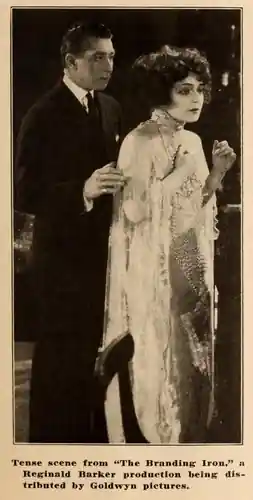
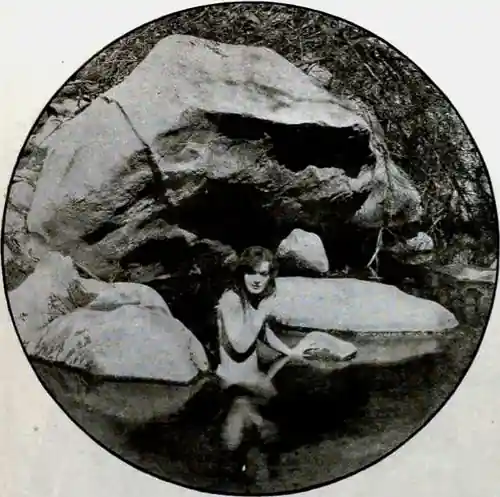
Barker’s visual grammar alternates between chiaroscuro interiors—where kerosene flames butter the walls with sepia—and exteriors bleached by a salt-heavy noon. The tonal whiplash embodies Prosper’s bifurcated soul: saviour and scavenger. He swears Pierre is shark fodder, yet nightly he descends to a grotto where tide pools mirror the underworld, scribbling stage directions that plagiarise Joan’s sobs. The metatextual kicker? The screenplay he’s crafting is titled—what else—The Branding Iron. Silent cinema rarely indulged such Borgesian self-interrogation, and the device lands like a shiver in August.
Barbara Castleton, burdened with communicating paranoia without benefit of spoken word, performs miracles with ocular semaphore. Her Joan oscillates between gratitude and dawning dread, eyelids fluttering like trapped moths whenever Prosper’s gaze lingers too long on her scar. That wound—half lunar crater, half christening seal—becomes the film’s organising emblem, photographed with reverent obscenity. In one devastating insert, she studies it in a hand-mirror framed by carved wooden roses; the reflection superimposes upon Prosper’s manuscript page, suggesting that her agony is literally being inked into immortality.
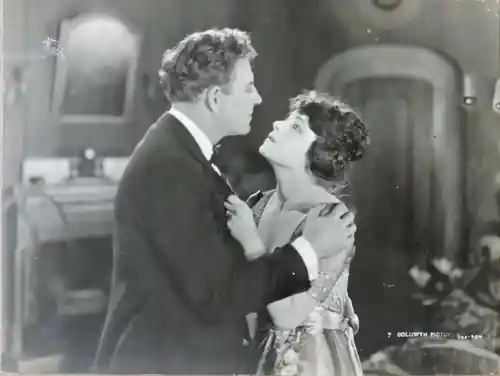
Meanwhile Pierre, presumed cadaver, drifts through the periphery like an unexorcised demon. Alan Roscoe’s physicality is all coiled menace; he appears first as silhouette on a cliffside path, then as face in a windowpane, finally as flesh-and-blood revenant. The resurrection is achieved not via narrative contrivance but through the modernist miracle of parallel editing: we intercut Prosper’s candle-lit confession of murder with Pierre crawling from the surf, kelp entwined like laurels of Hades. The audience learns the truth before Joan does, birthing an exquisite tension that gnaws like rat teeth.
The film’s midpoint erupts in a set-piece worthy of Von Stroheim: a midsummer fête staged by Prosper to distract Joan—complete with paper lanterns, a string quartet pantomiming Vivaldi, and Gertrude Astor’s courtesan performing a danse serpentine that turns the garden into a living Aubrey Beardsley lithograph. Pierre infiltrates disguised in harlequin motley, his mask a kabuki rictus. The camera tracks him through a labyrinth of topiary until he stands behind Joan, breath fogging the nape of her neck. The resulting tableau—two men orbiting one woman against a backdrop of merriment about to curdle—distils the entire melodrama into a single breath-held frame.
Screenwriters J.G. Hawks and Katharine Newlin Burt lace the intertitles with dagger-sharp aphorisms: “Possession is the grave where love buries its own corpse.” Each card appears unadorned, white on black, as if carved by some celestial typesetter who regrets the sentence. Compared to the florid verbosity of contemporaries like The Purple Dress or the pastoral innocence of Gretchen the Greenhorn, the austerity here feels almost modernist—O’Neill by way of Maeterlinck.
Yet for all its philosophical heft, the picture never forsakes pulp propulsion. The climax arrives in a thunderstorm that would make King Lear jealous: Prosper, manuscript clenched like rosary, confesses to Joan that Pierre lives. Lightning illuminates the scar on her shoulder as if God himself is highlighting the footnote. Pierre bursts in, wielding—you guessed it—the selfsame branding iron, now rust-flecked but symbolically untarnished. A tripartite struggle ensues; the iron skitters across flagstones, hissing when raindrops kiss its surface. The weapon ultimately claims Pierre, impaled on it like a moth on a collector’s pin, poetic justice served at 800 degrees Fahrenheit.

Cinematographer Clyde De Vinna, years before he lensed White Shadows in the South Seas, demonstrates a pre-code willingness to linger on viscera. The final image—Joan walking into the dawn, scar now a badge of survived patriarchy—was censored in several territories, exhibitors insisting on a superimposed intertitle declaring her subsequent marriage to Prosper. Lost reels preclude certainty, yet existing documentation suggests Barker’s original finale left her solitary, clutching the play that both immortalised and imprisoned her. A proto-feminist terminus, astonishing for 1920.
One cannot discuss The Branding Iron without acknowledging its DNA in later melodramas. The trope of the scarred heroine resurfaces in On Dangerous Ground; the meta-theatrical device presages Synecdoche, New York by nearly nine decades. Even the rustic-mansion-as-artifact-of-male-ego echoes through Jan Vermeulen, der Müller aus Flandern, though that film’s mill wheel grinds grain, not flesh.
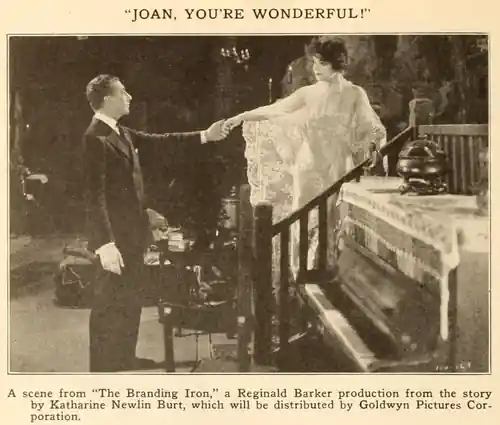
Performances across the board vibrate at a pitch that could shatter crystal. Joan Standing, as the maidservant Tama, supplies comic relief without derailing the Wagnerian intensity—her pidgin intertitles (”Missy Joan, devil man he burn love on you”) risk racial caricature yet are tempered by her ultimate act of loyalty, hiding the manuscript in a rice jar. Russell Simpson’s cameo as a blacksmith who once forged the cursed iron provides a moment of grizzled pathos, his monologue—delivered via close-up on soot-etched wrinkles—about the moment metal becomes message, is heart-splitting.
Musically, the surviving prints feature a recombined score compiled from Saint-Saëns’ Danse Macabre and traditional Chinese folk motifs—an odd mélange that somehow amplifies the cultural dissonance. When Joan, draped in Prosper’s kimono, studies her reflection, the erhu’s wavering note externalises her dislocation. It’s globalism before the word existed, a cultural palimpsest as scarred as the protagonist.
Is the film flawless? Hardly. Its pacing, calibrated for 1920 attention spans, dawdles in the second act; a subplot involving counterfeit money exists solely to pad runtime. And the gender politics, though progressive for the era, still frame female autonomy through male authorship—Joan’s liberation is literally scripted by her rescuer. Yet these wrinkles feel like artefacts of archeological interest rather than mortal wounds.
Restoration efforts by the George Eastman Museum have salvaged approximately 73 % of the original 7-reel cut; the remainder is summarised via production stills and annotated continuity. The 4K transfer reveals textures previously lost to nitrate bloom: the herringbone tweed of Prosper’s jacket, the mercury glint in Joan’s eye as she realises her life is intellectual property. Released on Blu-ray by Kino Lorber, the edition includes an audio essay by film historian Shelley Stamp, who contextualises the picture within the post-suffrage ferment. Streaming availability remains spotty—Criterion Channel rotates it seasonally, while European viewers can rent via Eureka Video’s silent imprint.
Comparative viewing yields rich dividends. Double-feature it with Sodoms Ende to witness how German decadence and Californian sadism diverge in their treatment of moral decay. Or pair with The Daughter of Dawn for a diptych on indigenous versus industrial visions of bodily marking—one celebratory, one punitive.
Ultimately, The Branding Iron endures because it understands that the gravest scars are those etched in the psyche. The iron cools, the wound scabs, but the story—commodified, dramatised, sold back to its source—burns on. In an age where every heartbreak is content, Barker’s 104-year-old cautionary tale feels tweet-thread fresh. Watch it, then ask yourself: who is branding whom in the flickering darkness of the auditorium?
IMDb 6.2
1932
Community
Log in to comment.