DbcultAccessing Vault...
5.9/10
Senior Film Conservator
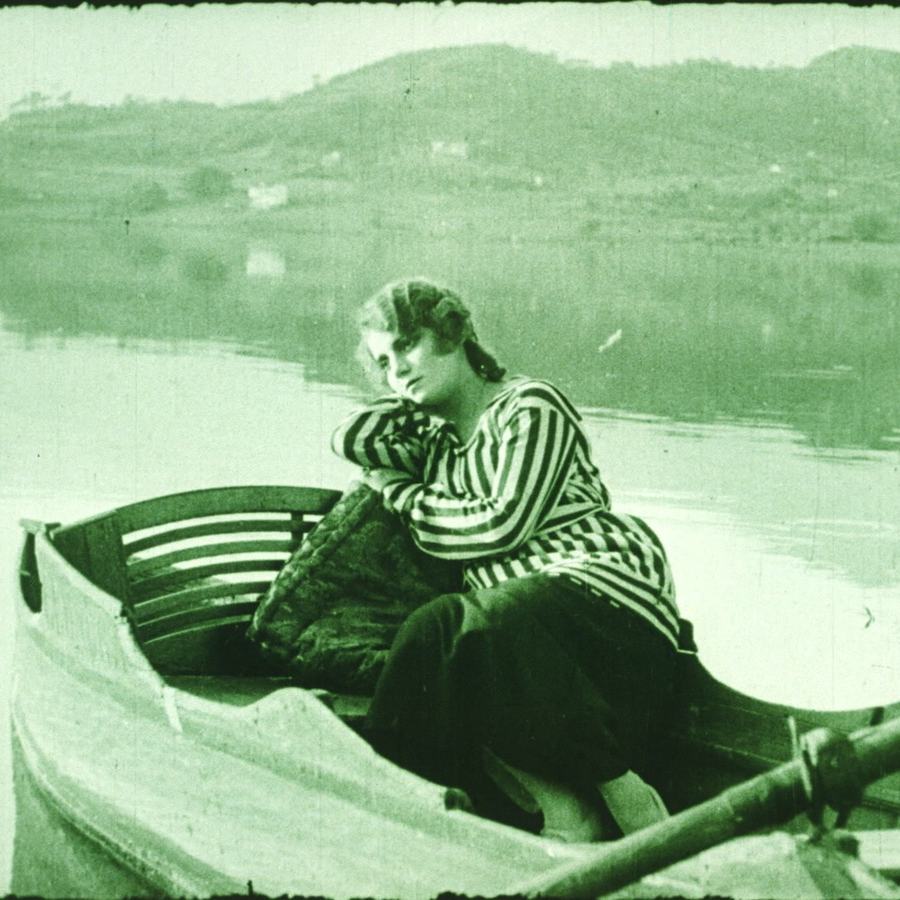
A definitive 5.9/10 rating for a film that redefined the boundaries of cult cinema. L'innamorata remains a cornerstone of transgressive art.
The first time Mara’s silhouette slices across the screen—jet-beaded dress drinking the strobe like spilled absinthe—you realize Genina isn’t staging seduction; he’s performing vivisection on the male gaze. Franz Sala plays Mara with the languid cruelty of a cat who’s memorized every plea in the human throat. She doesn’t walk; she unfurls, vertebrae liquid mercury, eyes twin Leica lenses calibrated to extract maximum yearning. The camera clings to her clavicle as though the frame itself were trying to bite.
Carlo Valderi—Annibale Betrone channeling every awkward idealist who ever thought geometry could map the soul—enters wearing the kind of hope that looks lethal in retrospect. His first line to Mara is a confession disguised as small-talk: “I build bridges that outlast the men who cross them.” She answers by tracing a finger along the rim of her coupe, the squeal of crystal a promise that his monuments will crumble first. In that instant the film’s dialectic is set: concrete versus carnality, blueprints versus blood.
Genina orchestrates their courtship like a stock-market crash in slow motion. A swirl of dissolves carries us from ballroom to bedroom without a single intertitle of consent; the ellipses feel predatory. When Carlo finally kisses Mara, the close-up lingers on her earring—a topaz droplet trembling, never falling—an image so erotically merciless it makes von Sternberg look prudish. Meanwhile, Italia Almirante-Manzini as Carlo’s widowed sister drifts through scenes like the conscience he refuses to consult, eyes clouded with the knowledge that Rome’s nightlife is a mausoleum rented by the hour.
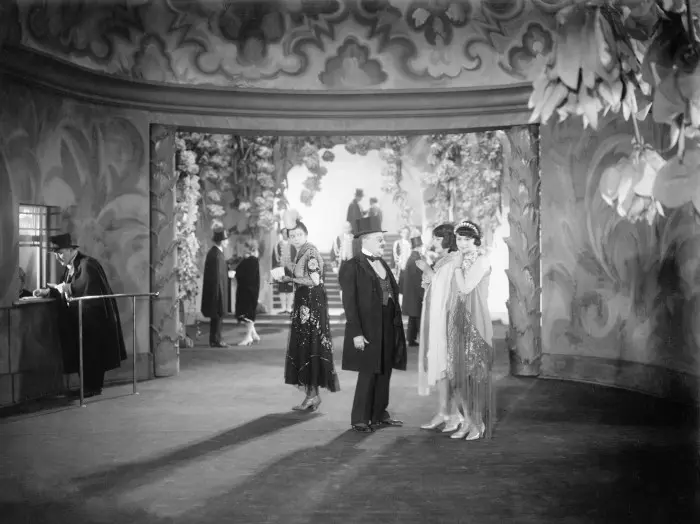
Shot on the cusp of sound, L’innamorata vibrates with the phantom echo of saxophones the censors later tried to erase. The nightclub set is a fever chart: chrome rails, zig-zag mirrors, dance floor lacquered so slick it reflects people’s ankles like accusations. Every extra’s cigarette becomes a semaphore for moral rot. Alberto Collo’s cinematography favors oblique angles—ceilings tilt until they threaten to spill chandeliers like guillotines. Compare this claustrophobic decadence to the open-air optimism of A Jazzed Honeymoon and you grasp how thoroughly Genina mistrusts escapism.
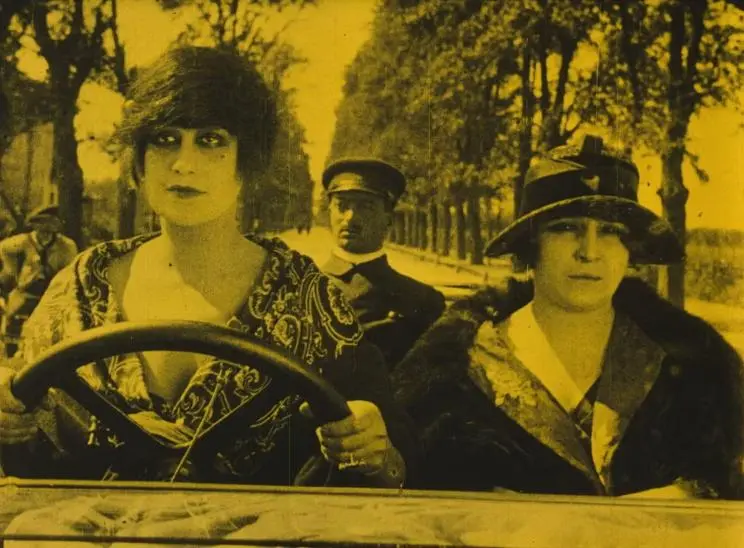
Yet the film’s true revolt lies in its temporal pulse. Narrative beats arrive late, always a heartbeat after you’ve braced for them, so the viewer lives in a perpetual wince. When Mara’s wedding veil catches fire on a candelabra, Genina cuts away to a servant’s blank face; we return to find the veil half-consumed, ash drifting like gray snow over marital vows. The moment is never mentioned again, but the smell of scorched lace haunts every subsequent frame.
Histories of Italian cinema treat Mara as an early femme fatale, but that label feels flimsy here. A noir vamp weaponizes sex for money or survival; Mara already has money, pedigree, apartments overlooking the Tiber. Her cruelty is philosophical—she annihilates men to test whether anything in modernity still possesses weight. The closest American analogue isn’t Phyllis Dietrichson but Charles Foster Kane: both amass empires of intimacy only to discover the hollowness at the core of ownership.
Observe the scene where she gifts Carlo a wristwatch of white gold. He flips it; the case snaps open to reveal not a dial but a miniature photograph of her profile. Time literally becomes her face. Seconds later she sashays off to dance with Alfonso Cassini’s cocaine-eyed count, leaving Carlo clutching a chronometer that refuses to chronologize. The gag is Buñuel-level savage, a foreshadowing that time, under the regime of desire, will refuse to move forward.
Betrone’s performance charts a man disassembled not by betrayal but by the unbearable clarity it brings. His breakdown isn’t operatic; it’s bureaucratic. He fills ledgers with bridge stress ratios, inkblots blooming like bruises. In one insert shot, we see a blueprint where the center span is labeled only “MARA”—a structural absence masquerading as support. When the bridge finally collapses (an effects sequence achieved with quarter-scale balsawood and a single hand-crank), the debris cloud resembles a woman’s torso dissolving into steam. Critics who compare it to the climactic train wreck in A Mother’s Ordeal miss the point: here catastrophe is not punishment but epiphany, a brutalist poem about the lethal physics of idealism.
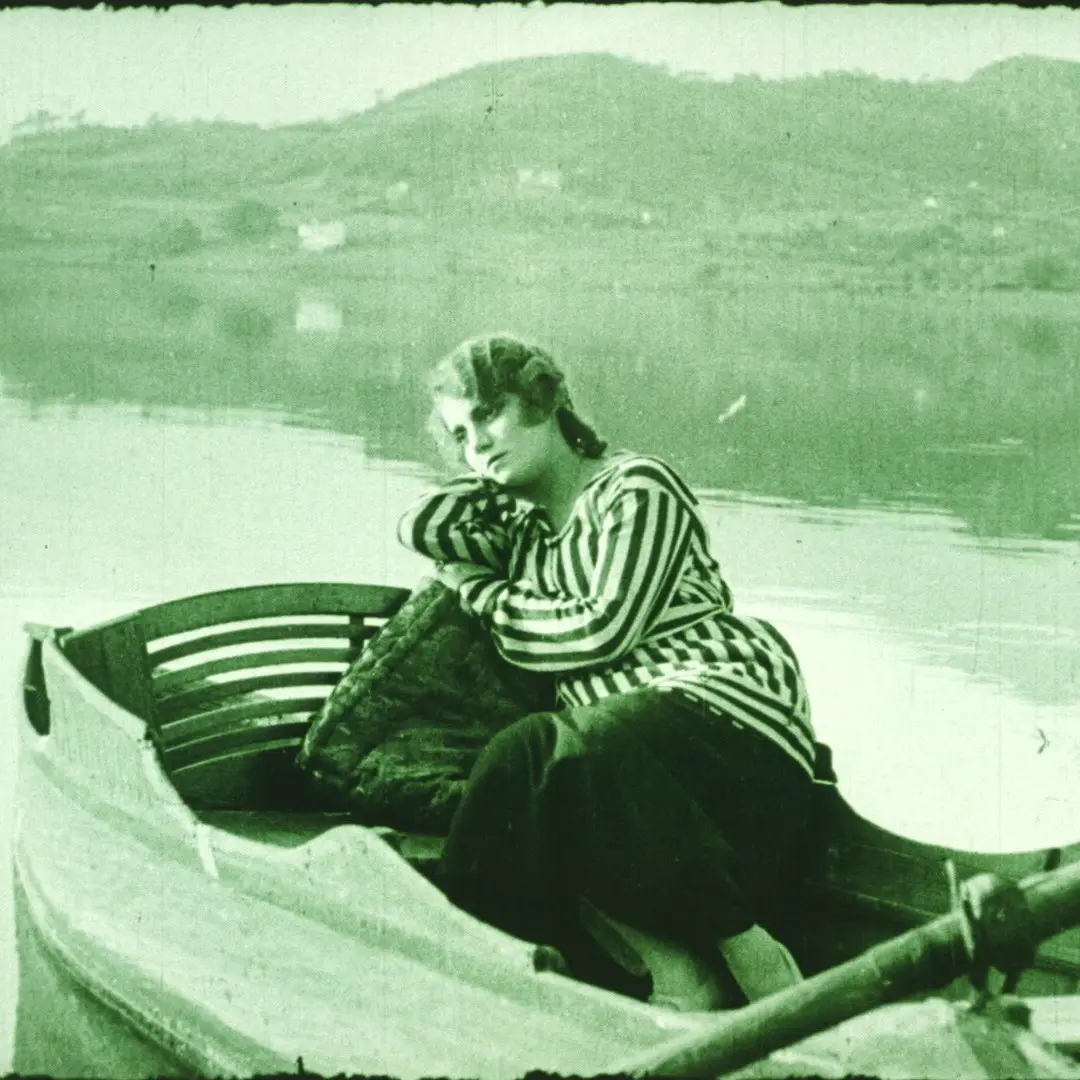
Most surviving prints circulate sans musical accompaniment, and silence weaponizes every creak of leather, every hiss of silk. Yet production memos reveal Genina commissioned a foxtrot titled “Ossidiana”, banned for its “lewd syncopations.” Imagine that brass section syncing with Mara’s hip sway—an aural corset tightening around the audience. The absence forces modern viewers to supply their own soundtrack, turning each screening into a séance where the lost era’s rhythm might possess the room.
Though monochrome, the film thinks in color. Costume designer Orietta Claudi saturated fabrics with metallic salts so that under carbon-arc lamps Mara’s gowns radiate spectral after-images—topaz bleeding into bruise-violet. Censors accused the production of “chromatic immorality,” claiming viewers hallucinated hues. Whether apocryphal or not, the legend underscores how L’innamorata weaponizes sensation against the regime of restraint.
Scholarship slots Genina somewhere between the itinerant showmanship of Polly Put the Kettle On and the stately fatalism of War and Peace, but that axis misses his true coordinates. He is Italy’s missing link between the carnival of capitol and the carnival of the id. His camera cranes over Roman nightlife as if auditing debauchery for tax purposes, then swoops in for a close-up so intimate it feels like larceny. The resulting dialectic—accountancy versus ecstasy—makes the film play like a ledger that’s learned to moan.
Only two 35 mm nitrate reels survive at Cineteca Nazionale, both scarred by vinegar syndrome; a 4K scan circulated quietly on the festival circuit last year, shocking audiences with its micro-detail—every pore, every bead of scalp oil. Rumor has it a Milan startup is minting a limited NFT restoration, though purists argue the decay is part of the text. Until wider accessibility emerges, cinephiles piece together fragments on forums, tradingbit-rate secrets like speakeasy passwords.
In an age where dating apps gamify intimacy and influencer culture monetizes desirability, Mara Flores feels prophetic—an algorithmic ghost haunting the feed. She doesn’t break hearts; she crashes servers. Meanwhile Carlo’s arc foreshadows every tech-bro who believes engineering prowess entitles him to loyalty. Their collision stages the foundational myth of modern romance: the moment when transactional seduction meets the illusion of authenticity and both implode into a supernova of mutually assured disappointment.
L’innamorata isn’t a cautionary tale; it’s an autopsy performed on a living patient. It offers no moral, only the vertiginous thrill of watching structures—bridges, marriages, identities—tested to failure point. Genina doesn’t ask you to empathize with Mara or pity Carlo; he demands you recognize the bruise on your own psyche shaped exactly like Mara’s bite. Long after credits roll, you’ll find yourself listening for the phantom foxtrot, counting heartbeats in 4/4 time, wondering whether love itself is just another engineering flaw waiting for the right stress test.
IMDb —
1920
Community
Log in to comment.