DbcultAccessing Vault...
6.4/10
Senior Film Conservator
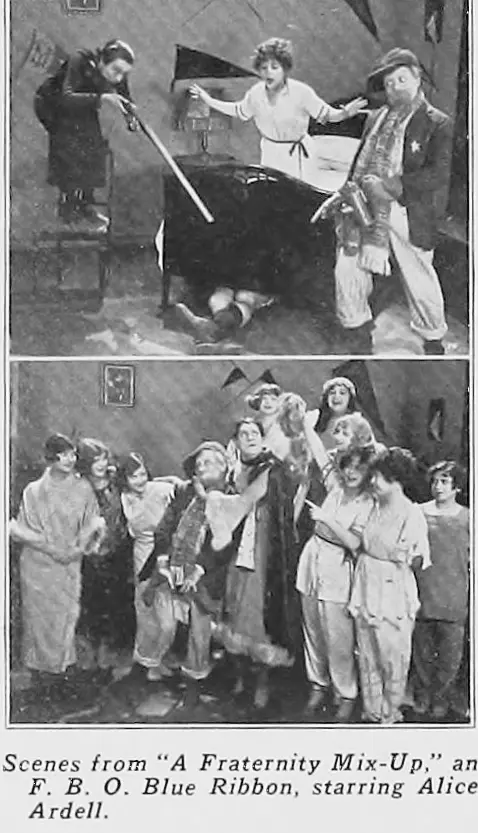
A definitive 6.4/10 rating for a film that redefined the boundaries of cult cinema. A Fraternity Mixup remains a cornerstone of transgressive art.
Is A Fraternity Mixup worth watching today? Short answer: yes, but with significant caveats. This peculiar silent comedy offers a fascinating, if sometimes baffling, glimpse into the early experimental days of filmmaking, making it a film primarily for dedicated silent film enthusiasts, film historians, and those with a deep appreciation for the truly bizarre in early cinema. It is emphatically not for viewers seeking polished narratives, sophisticated humor, or a straightforward viewing experience.
This film works because of its sheer, unadulterated commitment to chaos. It leans into its absurd premise with a relentless energy that, in its best moments, is genuinely infectious and offers a unique window into the comedic sensibilities of the era. However, this film fails because its ambition to blend slapstick with an 'atmosphere of terror' often results in a jarring, underdeveloped tonal clash rather than a cohesive comedic experience. You should watch it if you are fascinated by the evolutionary oddities of early cinema, appreciate the raw, unrefined energy of silent-era physical comedy, or simply enjoy a film that defies easy categorization and embraces its own peculiar brand of madness.
At its core, A Fraternity Mixup is less about a 'fraternity' and more about a complete breakdown of order within the confines of a girls' boarding school. The title itself, a curious misnomer, hints at the underlying disarray. We are introduced to a world where youthful exuberance, specifically the then-sensational Charleston dance, is a force of nature that the schoolmistress, Gale Henry, must constantly contend with. Her role is not merely educational but primarily disciplinary, a Sisyphean struggle against the tide of adolescent energy.
But the film doesn't stop at internal rebellion. It escalates the absurdity by introducing external threats: persistent male admirers attempting to infiltrate the school, and, most notably, a bizarre menagerie of escaped zoo animals. Imagine the scene: a schoolmistress, already at her wit's end trying to stop a rogue Charleston, suddenly facing down a lion or a bear in the school hallway. This level of escalating, almost surreal, chaos is the film's defining characteristic.
Adding another layer of bewildering atmosphere is the constant presence of a violent storm. Lightning flashes and heavy rain scenes are 'flashed every few feet,' according to the plot description, creating an almost proto-jump-scare rhythm that attempts to infuse the comedy with an element of terror. This isn't just background noise; it's an active participant, a relentless visual and tonal assault designed to keep the audience on edge, even as they're meant to laugh.
Given the sparse plot details, one can infer that the direction of A Fraternity Mixup must have been focused on managing this onslaught of visual gags and escalating scenarios. The rapid-fire introduction of new threats—dancing girls, male admirers, escaped animals—suggests a director, likely uncredited or lost to time, with a penchant for high-energy, almost frantic pacing. The film doesn't seem to linger; it throws one chaotic element after another at its lead, Gale Henry, demanding a constant state of reactivity.
The pacing is undoubtedly driven by the 'flashed every few feet' storm effects. This isn't subtle atmospheric building; it's an aggressive, almost experimental use of visual disruption. It transforms the film into a series of punctuated moments, each flash of lightning serving as an exclamation mark on the unfolding pandemonium. While modern audiences might find this technique jarring, it speaks to an early attempt to manipulate audience emotion through purely visual means, long before sophisticated editing techniques were commonplace.
One could argue that this constant flashing is a precursor to modern jump-scares or even the visual language of music videos, where rapid cuts and sensory overload are key. It's a bold choice, and one that, while perhaps not entirely successful in achieving genuine 'terror,' certainly ensures the film is never dull. The director's challenge was to keep the audience engaged through this visual bombardment, allowing moments of slapstick clarity to emerge from the storm.
Gale Henry, as the schoolmistress, is the undeniable anchor of this comedic maelstrom. Her performance would have demanded a masterclass in physical comedy and expressive silent acting. She is not merely a character; she is the embodiment of perpetual agitation and increasingly desperate attempts to maintain order against insurmountable odds. Her facial expressions, her exaggerated movements, and her reactions to the escalating absurdity are what would have driven the humor.
Consider the physical demands: disciplining unruly girls doing the Charleston would require a certain comedic grace, but then transitioning to fending off escaped zoo animals would demand full-blown slapstick athleticism. Henry's ability to pivot between these comedic registers, all while under the constant visual assault of a flashing storm, would be central to the film's success. She is the eye of the storm, attempting to impose calm while the world around her descends into utter pandemonium.
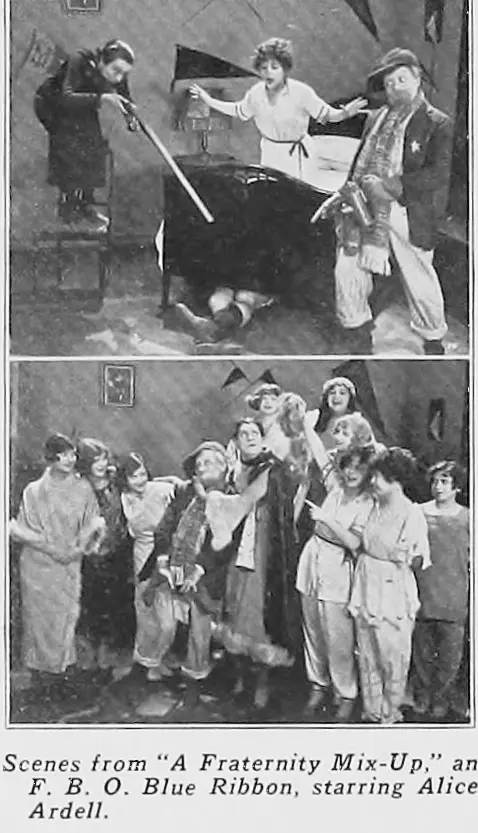
The supporting cast, including Ella McKenzie and Robert McKenzie, would have primarily served as foils to Henry's escalating distress. The girls' Charleston scenes, for instance, would have required synchronized, energetic performances to effectively convey the 'nuisance' factor. The male admirers and the zoo animals, likely played by actors in costumes, would need to be physically imposing yet comically inept, adding to the overall sense of farcical danger. The success of the film hinges on Henry's ability to consistently elicit laughter from her increasingly hopeless situation.
The cinematography of A Fraternity Mixup, while undoubtedly rudimentary by today's standards, clearly aimed for a specific effect. The description of 'lightning and heavy storm scenes...flashed every few feet' indicates an early, aggressive attempt at visual storytelling to create a mood. This isn't merely a backdrop; it's a deliberate choice to inject a sense of dread and unease into what is otherwise a slapstick comedy. The visual language, therefore, is one of constant interruption and jarring shifts.
How effective was this 'atmosphere of terror'? It's debatable. For contemporary audiences, it might have been genuinely unsettling, a novel way to heighten tension. For modern viewers, it likely comes across as more quaint or even unintentionally comical. It's an early example of a film attempting to layer genre elements, a comedic base with horror overtones, long before such blends became common. One could compare it to the more subtle use of unsettling imagery in a film like Les Vampires, though with a much cruder, more direct approach.
The visual gags involving the escaped animals and the dancing girls would have required clear, wide shots to allow the physical comedy to land. The contrast between these relatively bright, chaotic scenes and the sudden, dark flashes of the storm would have created a disorienting, almost dreamlike quality. The film's visual identity is defined by this jarring juxtaposition, a constant push and pull between lighthearted antics and an imposed sense of impending doom.
Yes, but with a highly specific audience in mind. A Fraternity Mixup is a fascinating historical artifact. It showcases early silent film techniques and comedic styles. It offers a glimpse into the career of Gale Henry. It's a testament to the experimental nature of cinema's nascent years. Do not expect a polished, universally appealing experience. Expect a raw, often baffling, but undeniably unique piece of film history.
“A Fraternity Mixup stands as a fascinating, if flawed, testament to the boundless creativity and occasional missteps of early cinema. It’s a film that demands patience but rewards with a unique, chaotic energy unlike anything you’re likely to see today.”
What makes a film like A Fraternity Mixup, with its seemingly nonsensical plot and jarring stylistic choices, continue to hold a certain allure for film critics and historians? It’s precisely its oddity. In an era where cinema was still finding its voice, films like this were vital experiments. They pushed boundaries, even if those pushes sometimes resulted in bizarre, Frankensteinian creations. This isn't a film designed to be a comfortable viewing experience; it's a historical document, a window into a time when filmmakers were throwing everything at the wall to see what stuck.
The sheer ambition to combine slapstick with a pervasive 'atmosphere of terror' is, in itself, commendable. While the execution might be crude, the idea is surprisingly modern. It anticipates later genre fusions and the idea that comedy doesn't always have to be lighthearted. The film’s audacity to continuously escalate the absurdity, from rogue dances to zoo animal invasions, speaks to a fearless approach to storytelling that is often lacking in more formulaic contemporary productions.
Furthermore, Gale Henry's role as the perpetually stressed schoolmistress is a comedic archetype that transcends time. Her struggle against insurmountable odds, her increasingly desperate attempts to maintain control, resonate with anyone who has ever felt overwhelmed by life's chaos. She is the relatable human element in a whirlwind of the ridiculous, making her performance, even through the lens of a century, likely to elicit a sympathetic chuckle.
It’s a film that reminds us that cinema's journey has been anything but linear. There were detours, dead ends, and glorious, chaotic explosions of creativity. A Fraternity Mixup is one such explosion. It works. But it’s flawed. And that’s precisely what makes it so interesting to dissect.
Ultimately, A Fraternity Mixup is not a film for everyone, nor is it a forgotten masterpiece destined for rediscovery by the masses. It is, however, an invaluable piece of cinematic archaeology. It's a chaotic, often bewildering, but undeniably energetic silent comedy that provides a unique insight into the early, experimental days of filmmaking. Its bold, if imperfect, blend of slapstick and an almost surreal 'atmosphere of terror' makes it a compelling watch for those with a specific interest in the history of cinema and the evolution of comedic forms. While its narrative cohesion is loose and its tonal shifts jarring, the sheer audacity and relentless energy of its premise, anchored by Gale Henry's likely captivating performance, ensure it leaves a lasting, if peculiar, impression. Seek it out if you’re a film scholar or simply enjoy the weird and wonderful corners of silent film history; otherwise, you might find its charms too esoteric.
IMDb 6.1
1936
Community
Log in to comment.