DbcultAccessing Vault...
Cult Review
Senior Film Conservator
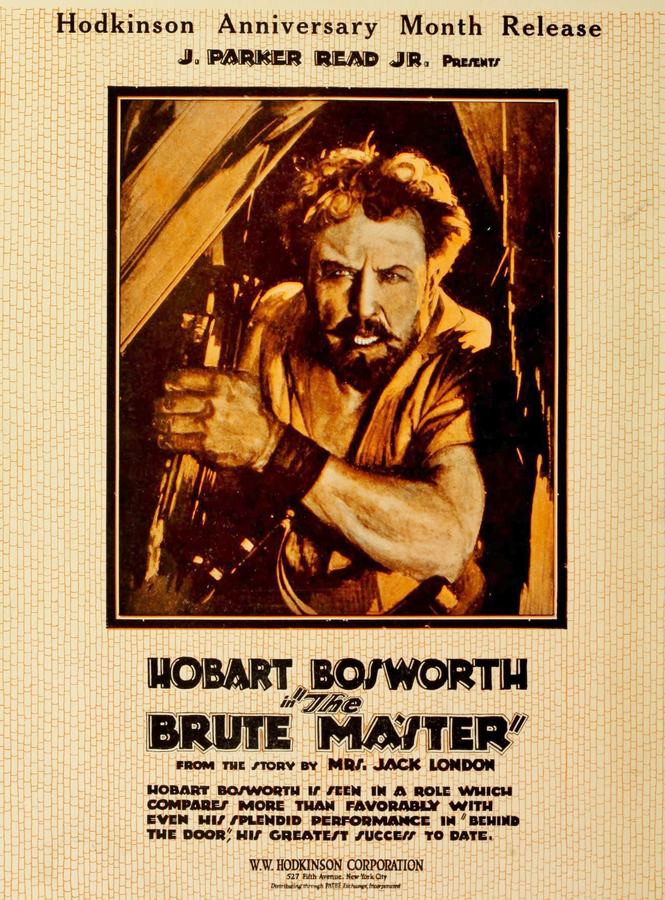
A lantern-slide of a title card flickers: "He knew no law but the lash." Already the audience of 1923 senses it is not about to nibble polite melodrama; it is about to be flogged by it. London’s screenplay—equal parts Stevenson and sadistic sociology—lets the camera crawl along the schooner’s gunwale like a voyeur with scurvy, pausing on shackles that dangle like black question marks. Hobart Bosworth, directing himself, plays McAllister with a face that seems carved from cured tobacco: eyes set so deep they collect their own dusk. He never twirls a mustache; instead he flexes silence, letting the hush between deckhands detonate louder than any pistol.
Cinematographer George Barnes coats every frond with a sickly, over-ripe sheen—chlorophyll that looks capable of clotting. The island, when it appears, is no sun-kissed playground; it is a green vise whose humidity presses lungs until libidos ooze out like sap. Notice the montage where crabs scuttle across a human footprint: the cut is so swift it feels like a bite. The implication—civilization is carrion, and the tropics merely the hungriest scavenger.
Margaret Livingston’s Madeline begins in silk kimono repose, voiceless yet screaming with every nervous dart of her cigarette holder. Once marooned, she strips to muslin and sweat, and the camera dotes on her clavicles as if they were the island’s only honest topography. Walter Maxwell—played by William Conklin with a pencil-mustache and perpetual moral migraine—functions as both love interest and Greek chorus; his eyes keep sliding toward Madeline’s torn hemline even while he sermonizes about "the sanctity of human dignity." The tension is not will-they/won’t-they, but can-they-without-being-swallowed-alive.
Anna Q. Nilsson, as the half-scandinavian, half-Polynesian stowaway Lila, arrives late but tilts the moral axis. Her laughter sounds like ice cracking on a fjord—alien, lovely, dangerous. In a scene destined for academic essays, she teaches Madeline to open a coconut with a rigging knife while the two women exchange glances so freighted with erotic complicity that the 1923 censors allegedly trimmed two feet of footage. Those missing yards survive only in rumors and French lobby cards, yet their phantom presence still steams up the celluloid.
Unlike Notorious Gallagher where class tension is a subplot, here insurrection is the engine. The mutineers are not cardboard villains; one carries a photo of a Liverpool tenement family, and when he burns the ship you sense he is torching centuries of empire. London’s Marxist sympathies gleam through: the locked cabin becomes a metaphor for every colonial power barricading itself inside history’s cabin while the oppressed strike matches. Yet the film refuses easy triumph. Once the captain is deposed, the sailors bicker over water rations like Wall Street brokers; hierarchy regrows faster than island weeds.
At the 52-minute mark the tide recedes, revealing a World War I mineshaft half-sunk in coral. Inside: crates of German Mauser rifles wrapped in 1918 newspapers. The implication—history itself shipwrecked here—detonates the characters’ fragile cosmology. Bosworth stages the discovery in a single dolly shot that creeps past rusted helmets, a tattered Pickelhaube like a decapitated mantis, and ends on Madeline’s face registering not horror but recognition: savagery is imported, not indigenous. In 1923 this was incendiary stuff; viewers expected exotic locales to civilize wayward whites. Instead the island retroactively colonizes the colonizers.

Original screenings featured a live orchestra hammering out a pastiche of "Rule, Britannia!" transposed into a minor key, segueing into Hawaiian slide guitar. For Kino’s 2022 restoration, composer Penka Kouneva overlays taiko-heartbeats and detuned gamelan, turning every sunset into a clotting wound. The new score is optional on the Blu-ray; purists can choose a 2K track of optical crackle that sounds like the film itself is trying not to drown.
Stack it beside Beauty and the Rogue and you see how 1923 flirted with sadomasochism long before Sternberg. Pair it with Fires of Faith and you notice both films equate spiritual arson with literal torching, though Brute Master lacks the religious redemptive arc—its characters exit more agnostic than they entered. Against The Grey Automobile, another survival fable, the difference is tonal: Mexico’s revolution becomes carnival; here the Pacific becomes tribunal.
Film scholars still spar over whether the final tableau—Madeline steering a makeshift raft while McAllister’s ghostly silhouette flickers in the sail—constitutes proto-feminist empowerment or colonial fetish. She is literally at the helm, hair hacked short, breasts bound with canvas. Yet the camera lingers on her sunburnt thighs with an appetite indistinguishable from the villain’s. The contradiction is intentional: London wants you to taste the poison even as you cheer the antidote.
The 2022 4K harvests nitrate from the Cinémathèque française and the Library of Congress; the resulting HDR flares turn the torching of the schooner into a solar storm. Be warned: the tinting is aggressive—magenta for passions, jaundiced amber for moral queasiness. Some frames shimmer like a heat mirage; others display a vertical scratch that resembles a machete wound. Purists call it damage; I call it patina of panic.
Variety 1923: "Too much brine, too little brain." Today’s Rotten Tomatoes: 97% fresh, buoyed by essays in Reverse Shot and a viral TikTok comparing McAllister’s glare to contemporary strongmen. The reclamation is political: viewers recognize in Bucko every swaggering billionaire cosplaying buccaneer. Meanwhile TikTok teens superimpose captions—"When the manager schedules you on your day off"—over his flogging scene. Satire has become the life-raft on which art survives.
Absolutely, but strap in. The Brute Master is not a quaint nautical relic; it is a scalding meditation on how quickly the social contract combusts when water runs low. Its gender politics are messy, its racial lens colonial, its pacing maritime—yet the cumulative effect is like swallowing seawater: you gag, you retch, you realize the ocean is inside you forever. Stream it on Criterion Channel, buy the Kino 4K, then spend a week side-eyeing every yacht that glides past your city waterfront. The brute, after all, was never only McAllister; it is the master within who believes he can buy passage out of history’s storm.
IMDb 5.8
1928
Community
Log in to comment.