DbcultAccessing Vault...
Cult Review
Senior Film Conservator
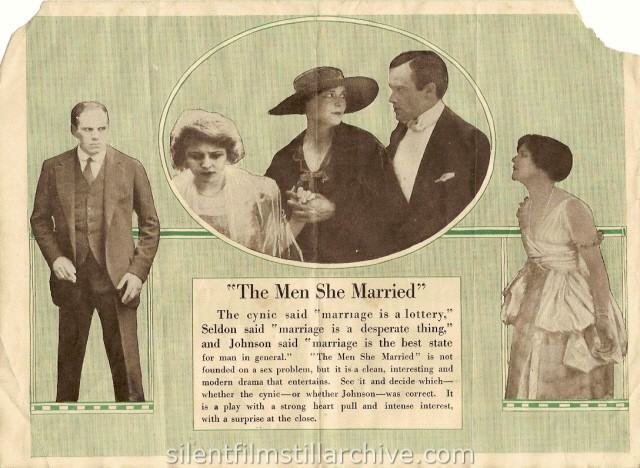
Stepping into the cinematic landscape of "The Men She Married" is akin to delving into a richly embroidered tapestry of early 20th-century melodrama, a genre that masterfully captured the moral complexities and societal anxieties of its time. This particular offering, a poignant narrative penned by Harold Vickers, distinguishes itself not merely as a relic from a bygone era but as a compelling exploration of human frailty, resilience, and the relentless pursuit of truth amidst a labyrinth of deceit. From its opening frames, the film ensnares the viewer in a web of emotional entanglement, presenting a protagonist whose journey through betrayal and hidden pasts resonates with a timeless quality, challenging our perceptions of justice, forgiveness, and the enduring power of love. It’s a narrative that, despite its vintage, speaks volumes about the enduring human condition, reminding us that the struggles against deception and the quest for authentic connection are universal themes, forever pertinent.
At the heart of "The Men She Married" lies the tragic predicament of Beatrice Raymond, a woman whose initial foray into matrimony proves to be a catastrophic misjudgment. Ralph Semple, portrayed with a chilling blend of charm and perfidy by Montagu Love, is not merely a cad; he is a bigamist, already bound by marital vows when he ensnares the unsuspecting Beatrice. His motives are purely venal: to exploit her considerable wealth. The narrative unfolds with a grim inevitability as Semple absconds with a substantial sum, $10,000, a fortune in that era, leaving Beatrice not only financially bereft but emotionally shattered and socially disgraced. To compound his villainy, he orchestrates his own demise, a calculated ruse designed to erase his tracks and evade any repercussions for his nefarious deeds. This elaborate deception casts a long, dark shadow over Beatrice’s life, forcing her into a solitary existence burdened by a secret shame.
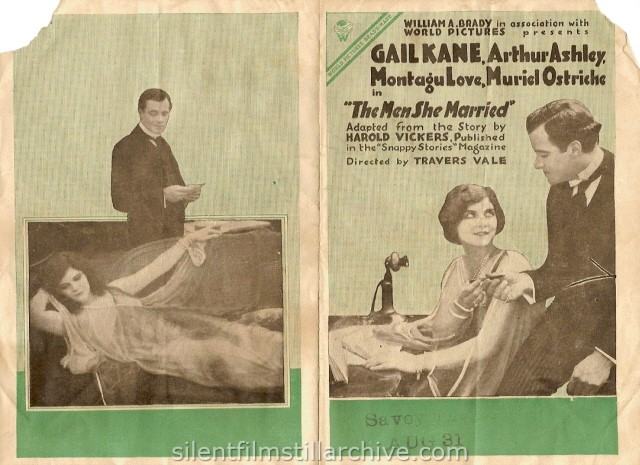
However, human spirit, particularly in the face of adversity, often finds a way to mend. Beatrice, believing herself a widow, albeit one profoundly scarred, eventually discovers a semblance of peace and rekindled hope in the arms of Jerry Trainer. Arthur Ashley imbues Jerry with a wholesome earnestness, presenting him as a widower himself, a man whose shared experience of loss creates an immediate, empathetic bond with Beatrice. Their union promises a fresh start, a sanctuary from her past, but the fragile peace is predicated on silence. Beatrice meticulously guards the truth of her first, fraudulent marriage, fearing that its revelation would irrevocably shatter the burgeoning trust and affection she shares with Jerry. This secret, a ticking time bomb, infuses the domestic tranquility with an underlying current of suspense, a testament to Harold Vickers's astute scriptwriting.
The film’s central conflict ignites with the shocking reappearance of Ralph Semple. His staged death, a masterstroke of deception, proves merely a temporary retreat before his return, spurred by an insatiable greed. He resurfaces not for remorse, but for blackmail, threatening to expose Beatrice’s scandalous past to Jerry and the wider society. This development plunges Beatrice back into a maelstrom of fear and desperation. Her resolve hardens: she must protect Jerry, and by extension, their newfound happiness, from the corrosive truth. The stakes are raised exponentially when Semple, with an almost unbelievable audacity, sets his sights on Jerry’s unsuspecting daughter, Edith, played by Louise Bates. His plan to elope with Edith is a stroke of pure, unadulterated villainy, transforming Beatrice’s personal struggle into a desperate fight for her surrogate daughter's future. The climax, a tense confrontation in Ralph’s apartment, is a masterclass in dramatic irony, culminating in Jerry’s devastating misunderstanding, his furious expulsion of Ralph, and his heartbroken denunciation of Beatrice. It is only through Edith’s subsequent arrival at Ralph’s, a tragic misunderstanding that clarifies Beatrice’s selfless intentions, that the truth finally emerges, paving the way for a poignant, hard-won reconciliation between Jerry and Beatrice, a moment of catharsis earned through immense suffering.
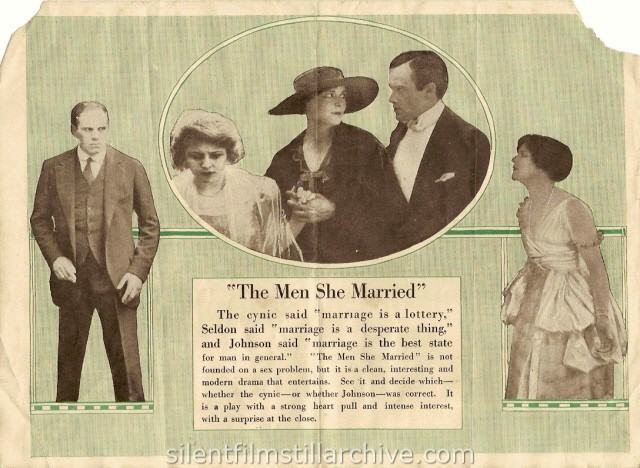
Muriel Ostriche’s portrayal of Beatrice Raymond is the emotional anchor of "The Men She Married." Ostriche crafts a character of remarkable depth, navigating a treacherous emotional landscape with palpable vulnerability and burgeoning strength. Initially, Beatrice is depicted as a woman of means, perhaps a touch naive, which makes her susceptibility to Ralph Semple’s charms tragically believable. Her subsequent betrayal and financial ruin are not merely plot points; they are experiences that visibly scar her, shaping her into a more guarded, yet ultimately more resilient, individual. The audience witnesses her transformation from a trusting victim into a woman fiercely protective of her second chance at happiness. Her internal conflict—the desperate desire to live an honest life with Jerry versus the crushing weight of her concealed past—is rendered with exquisite nuance. We feel her anguish when Ralph reappears, her terror at the thought of Jerry discovering the truth, and her ultimate, selfless courage in confronting Ralph to save Edith. It is a performance that transcends the often-exaggerated gestures of silent film, conveying a profound sense of inner turmoil and an unwavering moral compass, even when her actions are misunderstood. Her journey is one of profound suffering, but also of profound growth, making her a truly sympathetic and memorable figure.
Montagu Love’s performance as Ralph Semple is nothing short of captivating, a chilling study in malevolent charm. Semple is not a caricature of evil; rather, he embodies a more insidious form of villainy – one cloaked in superficial attractiveness and cunning calculation. Love masterfully conveys the character’s utter lack of conscience, his actions driven solely by avarice and self-preservation. From the initial bigamous marriage to the calculated swindle and the audacious faking of his own death, Semple’s every move is a testament to his moral depravity. His return for blackmail is executed with a casual cruelty that is truly unsettling, revealing a man who views others merely as instruments for his own gain. The ultimate act of villainy, his attempt to elope with Jerry’s innocent daughter, Edith, cements his status as a truly despicable antagonist. Love’s portrayal ensures that Semple remains a constant, palpable threat throughout the narrative, a dark cloud looming over Beatrice’s fragile peace. His presence provides the necessary dramatic tension, fueling Beatrice's desperate actions and ultimately setting the stage for the film's climactic confrontations. Without such a compellingly rendered villain, Beatrice’s struggles would lack the urgent gravity that makes the film so engaging.
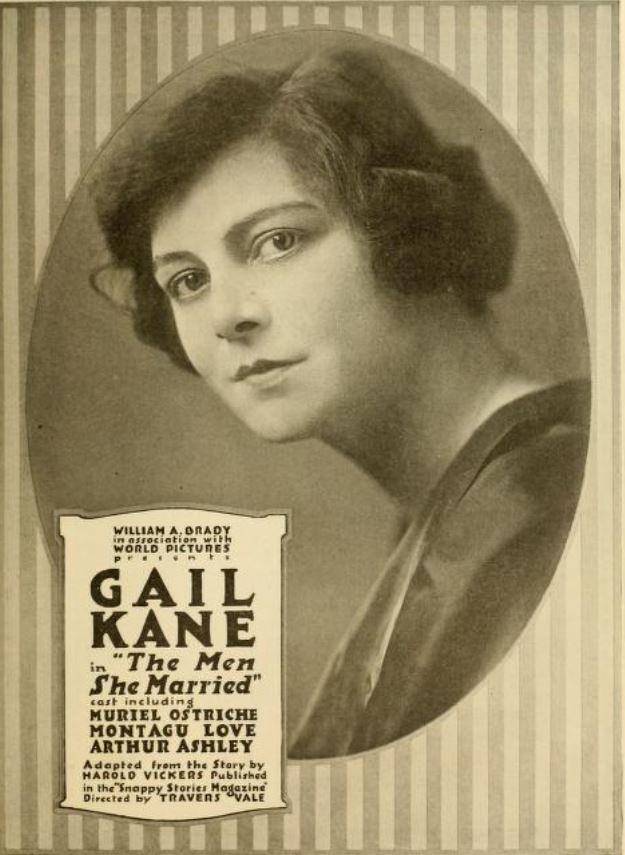
Arthur Ashley’s portrayal of Jerry Trainer is crucial in establishing the emotional stakes of Beatrice’s predicament. Jerry is presented as the antithesis of Ralph Semple: a man of integrity, kindness, and genuine affection. His widower status establishes a common ground with Beatrice, fostering a relationship built on mutual understanding and a shared desire for a peaceful future. Ashley conveys Jerry’s goodness with an understated sincerity, making his love for Beatrice feel authentic and profound. This makes his eventual misunderstanding of Beatrice’s actions all the more heartbreaking. When he walks in on Beatrice and Ralph, his assumption of infidelity is entirely plausible, given the context, and his subsequent rage and denunciation of Beatrice resonate with the pain of a good man betrayed. The audience feels the crushing weight of his disillusionment, making the eventual revelation of Beatrice’s true motives and their subsequent reconciliation incredibly powerful. Jerry’s journey from trusting partner to heartbroken accuser and finally to understanding, forgiving husband forms a vital emotional arc, underscoring the film’s exploration of trust, suspicion, and the redemptive power of truth.
The character of Edith, Jerry's daughter, though not as central as Beatrice or Jerry, serves as a critical narrative device, elevating the stakes from personal anguish to familial catastrophe. Louise Bates portrays Edith with an innocence that makes her an ideal target for Ralph Semple’s predatory machinations. Her unwitting involvement in Ralph’s scheme to elope is the ultimate catalyst for Beatrice’s desperate, heroic intervention. Edith represents the pure, untainted future that Beatrice is fighting to protect, not just for herself, but for the man she loves. Her vulnerability underscores Semple's utter depravity and provides Beatrice with an unassailable moral imperative. It is Edith’s eventual arrival at Ralph’s apartment, after Jerry’s explosive confrontation, that shatters the misunderstanding and illuminates Beatrice’s selfless sacrifice, thereby facilitating the family’s reconciliation. Bates's performance, though perhaps brief in screen time, effectively conveys the youthful idealism that makes her so susceptible and, ultimately, so instrumental in the film's resolution.
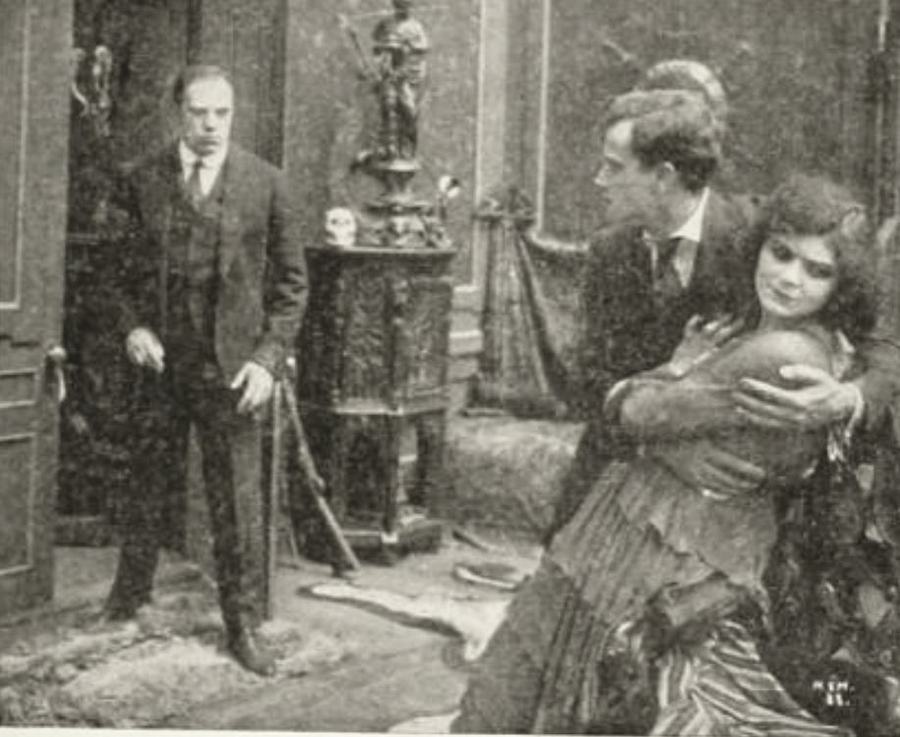
Harold Vickers, credited as the writer, demonstrates a profound understanding of dramatic tension and character development in "The Men She Married." The screenplay is a masterclass in building suspense, meticulously layering deceit upon deceit, and allowing the emotional consequences of past actions to unfold with devastating impact. Vickers doesn’t rush the narrative; instead, he allows the audience to fully grasp Beatrice’s predicament, her internal struggles, and the ever-present threat posed by Ralph Semple. The plot, while melodramatic in nature, is constructed with an intricate precision that keeps viewers thoroughly engaged. The pacing is deliberate, allowing for character motivations to be clearly established and for the emotional resonance of each twist to register fully. The choices made in the script, particularly the clever device of Ralph faking his death and his subsequent return, highlight Vickers's ingenuity in crafting a story that, even today, feels remarkably fresh in its dramatic construction. Furthermore, the resolution, while ultimately redemptive, doesn't feel unearned; it is the culmination of profound suffering and selfless acts, a testament to a well-structured narrative arc.
The ensemble cast of "The Men She Married" delivers performances that largely transcend the stylistic conventions of early silent cinema, imbuing their characters with genuine emotionality. Muriel Ostriche, as Beatrice, carries the film with an impressive range, conveying despair, determination, and ultimately, triumphant love through nuanced expressions and gestures. Her ability to communicate the internal conflict of a woman trapped by her past is particularly noteworthy. Arthur Ashley, as Jerry Trainer, provides a grounding presence, portraying an honorable man whose trust, once shattered, becomes the central emotional battleground. His portrayal of heartbreak and subsequent understanding is deeply affecting. Montagu Love, as the villainous Ralph Semple, is a standout. He avoids caricature, instead crafting a character whose insidious charm makes his depravity all the more chilling. His performance is a masterclass in subtle menace, reminding us that evil often wears a handsome disguise. Gail Kane’s role, though perhaps less prominent than the main trio, adds another layer to the ensemble, while Louise Bates, as Edith, effectively embodies the innocence threatened by Semple’s schemes. The collective strength of these performances ensures that the film’s dramatic beats land with maximum impact, drawing the audience deeply into the characters' plights.
"The Men She Married" is more than just a thrilling melodrama; it is a fascinating artifact that reflects the societal concerns and moral codes of its time. Themes of bigamy, blackmail, and the precarious position of women in society are explored with an unflinching gaze. Beatrice’s initial marriage, though fraudulent, would have carried immense social stigma, particularly for a woman, making her desperation to keep it secret entirely understandable. The film deftly navigates the tension between personal morality and public reputation, a common trope in early cinema, as seen in films like The Rosary, which similarly explores the weight of hidden pasts. The narrative also delves into the destructive power of greed, personified by Ralph Semple, whose avarice drives him to ever-greater acts of cruelty and deception, a thematic thread echoed in the financially motivated struggles of characters in The Dollar Mark. Furthermore, the film examines the fragility of trust within relationships and the devastating consequences of misunderstanding, a struggle for love amidst deceit reminiscent of the complex romantic entanglements in The Battle of Love. It is a testament to the film's enduring power that these themes, though presented through a historical lens, remain remarkably pertinent, speaking to universal human experiences of betrayal, redemption, and the arduous journey towards emotional honesty.
While specific directorial credits are often less defined in early cinema, the overall production of "The Men She Married" showcases a commendable understanding of visual storytelling for its era. The use of intertitles is effective, not merely relaying dialogue but often advancing the emotional narrative and clarifying complex plot points. The cinematography, though constrained by the technology of the time, skillfully employs composition to highlight dramatic moments, focusing on key character reactions and interactions. The staging of scenes, particularly the climactic confrontation in Ralph’s apartment, builds tension through careful blocking and the strategic use of entrances and exits. The film’s aesthetic, while simple by modern standards, is purposeful, serving the story rather than distracting from it. The ability to convey such a convoluted plot and intense emotional arcs without spoken dialogue is a true testament to the collaborative craft of silent filmmaking, where every gesture, every expression, and every visual cue had to speak volumes. It stands as a fine example of how early filmmakers were already mastering the language of cinema to engage audiences in powerful narratives.
"The Men She Married" stands as a compelling example of early 20th-century cinema’s capacity for intricate storytelling and profound emotional resonance. It is a film that, despite its age, continues to captivate with its tale of a woman's desperate struggle against a past she cannot escape and a villain whose depravity knows no bounds. The powerful performances, particularly from Muriel Ostriche and Montagu Love, elevate the material beyond mere melodrama, crafting characters whose journeys feel authentic and impactful. Harold Vickers’s astute writing ensures a narrative that is both thrillingly suspenseful and deeply moving. This is not just a historical curiosity; it is a timeless exploration of deception, the weight of secrets, and the ultimately redemptive power of truth and unwavering love. For enthusiasts of classic cinema and those interested in the evolution of dramatic storytelling, "The Men She Married" offers a rich and rewarding experience, solidifying its place as a noteworthy entry in the annals of film history.
IMDb —
1917
Community
Log in to comment.