DbcultAccessing Vault...
Cult Review
Senior Film Conservator
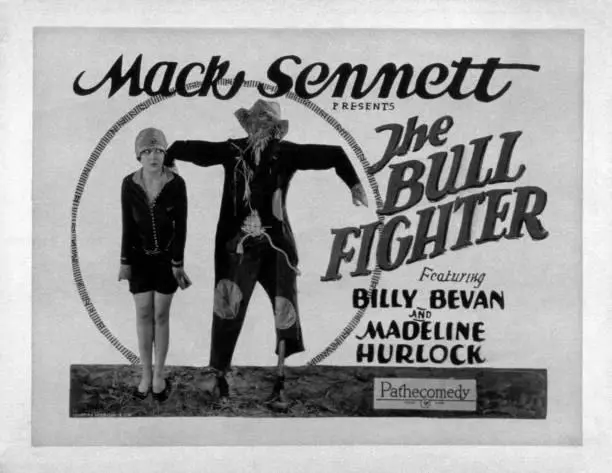
Is The Bull Fighter worth your time in the modern age? Short answer: Yes, but only if you have a high tolerance for the primitive, frantic energy of 1920s slapstick. This is a film for those who appreciate the 'gag-per-minute' philosophy and the historical roots of physical comedy, rather than those seeking a deep narrative or nuanced character development.
This film is specifically for silent cinema enthusiasts and students of the Sennett era. It is definitely NOT for viewers who find repetitive physical violence tedious or those who require high-definition production values to enjoy a story.
1) This film works because it understands the inherent absurdity of the bullring and uses it as a canvas for high-speed, low-stakes chaos.
2) This film fails because its narrative is virtually non-existent, serving only as a thin wire to hang disjointed comedy sketches upon.
3) You should watch it if you want to see the technical evolution of the 'clown' archetype transitioning into the late silent period.
To understand The Bull Fighter, one must understand the Mack Sennett ecosystem. By 1927, the 'King of Comedy' had refined a formula that prioritized the visual over the verbal. In this film, the bullring isn't a place of tragedy or Hemingway-esque grace; it is a giant, dusty prop. The cinematography is functional, designed to capture the full body of the performer. Unlike modern comedy that relies on reaction shots and clever editing, the humor here is found in the wide shot—the way Andy Clyde’s entire frame vibrates with fear as he faces a clearly artificial beast.
Consider the scene where Clyde first enters the arena. His movements are a masterclass in 'scared-stiff' acting. His knees knock with a rhythmic precision that feels almost musical. This is a stark contrast to the more grounded performances seen in films like A Gentleman of Leisure. While that film attempted a blend of charm and comedy, The Bull Fighter leans entirely into the grotesque and the broad. It doesn't want you to like the protagonist; it wants you to laugh at his impending doom.
The pacing is relentless. There is no room for breath. From the moment the bull is introduced, the film becomes a series of collisions. This 'machine-gun' approach to comedy was a staple of the era, but here it feels particularly aggressive. It lacks the poetic stillness of Keaton or the pathos of Chaplin. It is pure, unadulterated Sennett. It is loud without making a sound.
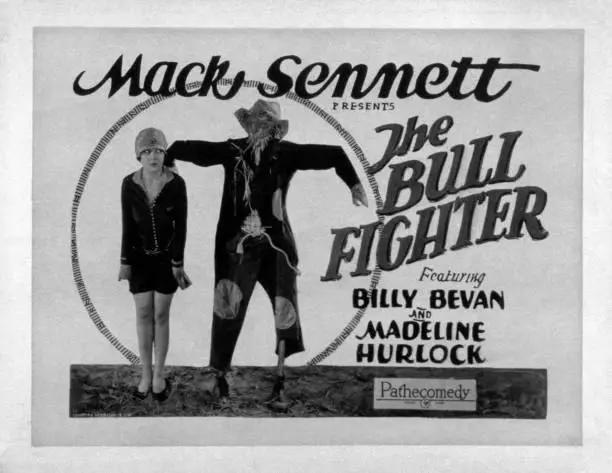
Andy Clyde is the glue that holds this chaotic mess together. Before he became the iconic sidekick in Westerns, Clyde was a powerhouse of silent frustration. In The Bull Fighter, he uses his face like a rubber mask. Every time the bull charges, Clyde offers a new variation of the 'double take.' It’s a performance of pure instinct. He doesn't have the athletic grace of Billy Bevan, who also appears here, but he has a frantic vulnerability that makes the gags land harder.
Billy Bevan, with his trademark mustache and stout physique, provides the perfect foil. Bevan’s comedy is more about the 'slow burn' compared to Clyde’s 'explosion.' When the two share the screen, you see the two pillars of 1920s slapstick: the man who is too fast for his own good and the man who is too slow to realize he’s in danger. This dynamic is far more effective here than in some of their more domestic shorts, such as Home Brew, where the stakes felt significantly lower.
The supporting cast, including Madeline Hurlock and Eddie Quillan, are mostly there to provide obstacles or rewards. They are the 'straight men' in a world gone mad. Quillan, in particular, shows flashes of the charisma that would later make him a more prominent star, but here he is subservient to the gag. The writing team, led by Al Giebler and Jefferson Moffitt, clearly knew their audience. They weren't writing a script; they were writing a blueprint for a riot.
Yes, The Bull Fighter is worth watching for its historical value and its raw, unfiltered comedic energy. It represents the peak of a specific type of American humor that has largely disappeared. If you want to see how comedy was constructed before the 'talkies' forced a slower pace, this is a prime example.
However, if you are looking for a cohesive story, look elsewhere. The film is a collection of moments rather than a journey. It is best enjoyed in its original context: as a high-energy short meant to warm up an audience before a feature. Watching it in isolation today requires a shift in perspective. You have to look past the grain and the dated cultural caricatures to see the clockwork precision of the gags.
One cannot discuss The Bull Fighter without mentioning the bull itself. It is clearly a costume—likely two men in a frame—and the film makes no effort to hide this. In fact, the 'fakeness' of the bull is part of the joke. This meta-commentary on the artifice of cinema was common in Sennett’s work, similar to the theatrical setups in Props. The way the bull moves—with an erratic, non-biological jitter—adds to the surrealist quality of the film.
The cinematography by the uncredited cameramen is surprisingly fluid for 1927. The camera follows the action in the ring with a primitive tracking style that keeps the viewer in the middle of the melee. There is a specific shot where the bull chases Clyde around a small barrel; the circular motion and the increasing speed of the cuts create a dizzying effect that prefigures the frantic editing of modern action-comedies. It’s a mess. But it’s a calculated mess.
Compared to the more static comedies of the early 1920s, like Mirandy Smiles, The Bull Fighter feels incredibly modern in its aggression. It doesn't ask for your permission to be funny; it just hits you over the head until you give in. This 'assaultive' style of comedy is what made Sennett a millionaire, and it’s on full display here.
The Bull Fighter is a loud, vibrating relic of a time when comedy was a contact sport. It isn't 'high art,' and it doesn't pretend to be. It is a film that lives and dies by the quality of its bruises. While it lacks the emotional depth of the era's more celebrated features, it possesses a raw, infectious joy that is hard to find in today's over-sanitized comedy landscape. It works. But it’s flawed. If you go in expecting nothing more than a man being chased by a fake cow, you will leave satisfied. It is a fascinating, if somewhat exhausting, piece of cinematic history that proves that a well-timed fall is eternal.
IMDb 6.2
1936
Community
Log in to comment.