DbcultAccessing Vault...
Cult Review
Senior Film Conservator
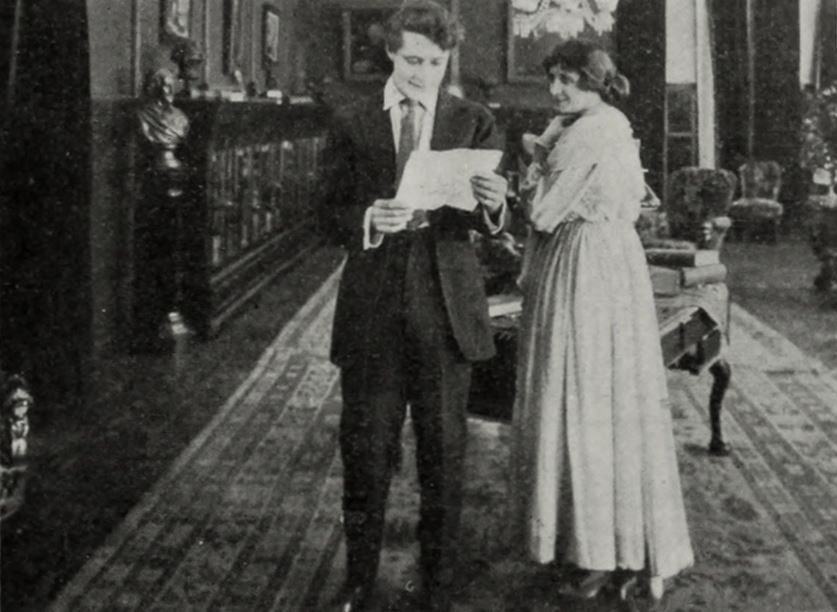
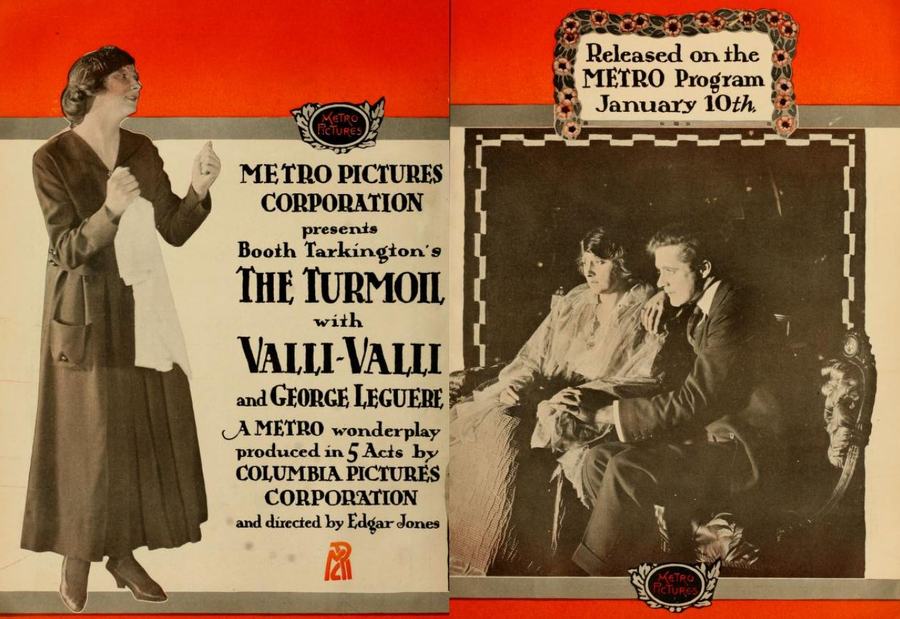
Step into the early 20th century, where the clang and roar of industry shaped not just landscapes but the very souls of men. Booth Tarkington's The Turmoil, brought to the screen with a potent narrative, plunges us headfirst into the maelstrom of ambition, class aspiration, and familial sacrifice that defined an era. It’s a compelling, often heartbreaking, examination of what happens when the relentless pursuit of material gain eclipses humanity, painting a vivid portrait of a family caught in the destructive undertow of its own patriarch’s making.
At its core, The Turmoil is a searing critique of American industrial capitalism and the societal pressures it engenders. James Sheridan, a titan of industry in a burgeoning Middle West city, embodies the quintessential self-made man. He is a force of nature, his entire existence absorbed in the relentless churn of his enterprises. His wealth is immense, his power undeniable, yet he remains perpetually restless, haunted by a singular deficiency: social standing. This perceived lack gnaws at him, driving him to conquer the social sphere with the same brute force and strategic cunning he employs in business. It’s a fascinating study in the psychology of ambition, revealing how a man who has everything can still feel profoundly incomplete, forever striving for a different kind of conquest. His methods are transactional, his vision narrow; he sees people and relationships as mere extensions of his balance sheet, tools to be leveraged for greater gain.
Sheridan’s children are, predictably, products of this very turmoil, each grappling with its pervasive influence in distinct ways. The elder sons, Jim and Roscoe, are initially cast in their father's mold. Jim, the eldest, embraces the industrialist's ethos with a zeal that mirrors his father's. He is driven, efficient, and equally consumed by the ceaseless endeavor, a testament to the idea that the apple often doesn't fall far from the tree, especially when that tree is so deeply rooted in the soil of commercialism. Roscoe, the middle son, however, represents a more tragic figure. While also immersed in the family's business, he lacks Jim’s singular focus and resilience. His struggles are more internal, his unhappiness manifesting in a deteriorating marriage and, eventually, a descent into alcoholism. He is a man adrift, lost in the very currents of ambition that sustain his father and brother. Their lives, much like the factory floor, are a constant whir of activity, a ceaseless, unfulfilling grind.
Then there is Bibbs, the youngest, a stark anomaly in this industrial dynasty. Frail, sensitive, and possessed of a profound love for books and intellectual pursuits, Bibbs is an antithesis to everything his family represents. He is a poet in a world of profit margins, a gentle soul in a landscape of grit and steel. His father's insistence on his immersion in the factory is a cruel irony, a futile attempt to mold a delicate artistic spirit into a cog in the industrial machine. Bibbs's physical and mental health inevitably buckles under the strain, leading to a sanitarium stay—a poignant symbol of his rejection by, and retreat from, the very world that defines his family. This struggle between the artistic temperament and the demands of industry resonates deeply, echoing themes found in films like The Arab, where a character finds themselves an outsider in a world that doesn't understand their sensibilities, forced to confront a culture alien to their nature.
Sheridan’s social ambitions lead him to the impoverished yet aristocratic Vertrees family. He eyes their daughter, Mary, as the perfect conduit for his family’s ascent into polite society. The arrangement of a lavish dinner party, a vulgar display of newly acquired wealth, serves as the stage for this calculated maneuver. Mary Vertrees, a woman of refined sensibilities, finds herself compelled to attend, trapped by her father’s financial obligations to Sheridan. It's a stark portrayal of class dynamics, where genteel poverty is forced to bend to the will of industrial wealth. This scene, with its uncomfortable tension and implied coercion, brings to mind the social machinations often depicted in films like The Goose Girl, where purity and noble lineage are often exploited or manipulated for status or power. Mary's quiet dignity amidst the Sheridans' ostentation speaks volumes about the true nature of aristocracy, which, in this film, is shown to be less about money and more about an inherent moral compass.
The dinner party is a pivotal moment, a collision of worlds. Amidst the forced merriment, Bibbs returns from the sanitarium, a ghost at his own family's feast. Ignored by his kin, he becomes a figure of profound pity for Mary, igniting a spark of connection between two souls alienated by their surroundings. This nascent attraction is a beacon of hope in a narrative otherwise steeped in cynicism. Mary’s plight is further complicated by the machinations of Sibyl, Roscoe’s unhappy wife. Sibyl, seeking companionship outside her loveless marriage, falls for Robert Lamhorn, a man secretly engaged to Edith, Sheridan’s only daughter. This web of illicit romance and societal expectation highlights the pervasive unhappiness lurking beneath the surface of the Sheridan family’s glittering facade. Sibyl's desperation and Edith's clandestine engagement underscore the hollowness of a life defined by material success but devoid of genuine affection.
Mary’s journey towards self-realization is one of the film’s most compelling arcs. When Jim proposes, she wisely asks for time, a brief reprieve from the inevitable. Her hesitation is a quiet rebellion, a yearning for agency in a life largely dictated by circumstance. The subsequent quarrel between Sibyl and Edith over Lamhorn provides Mary with a crucial moment of clarity. Sibyl, in a moment of bitter honesty, reveals Lamhorn's mercenary intentions towards Edith, warning Mary that her own impending marriage to Jim would be no different—a transaction, not a union of hearts. This stark revelation jolts Mary, forcing her to confront the moral compromises she is about to make. Her subsequent refusal of Jim’s proposal, conveyed in a letter, is a powerful act of defiance, a reclaiming of her personal integrity. This assertion of self, even against immense pressure, resonates with the spirit of films like What 80 Million Women Want, which explored the burgeoning desire for female independence and a voice in a patriarchal society.
Tragedy strikes the Sheridan household with shocking swiftness. Jim, fueled by his father's insatiable drive, constructs a massive warehouse in record time, an act of hubris that proves fatal. The building’s collapse, taking Jim’s life, is a grimly poetic metaphor for the inherent instability and ultimate cost of unchecked ambition. It’s a moment that rips through the veneer of success, exposing the fragility of a foundation built on speed and profit over safety and ethics. Sheridan is shattered, his grief compounded by Roscoe’s continued decline into alcoholism, a man utterly undone by the pressures of his domestic life and the relentless demands of his father’s world. The weight of his losses falls heavily upon Sheridan, forcing a grim reckoning. The industrial empire, once a source of immense pride, now stands as a monument to his personal tragedies.
In the wake of this devastation, the focus shifts to Bibbs, the 'weakling' who now becomes his father's last hope for succession. Sheridan, in his grief and desperation, redoubles his efforts to mold Bibbs into a businessman, an ironic echo of his earlier, failed attempts. But Bibbs is no longer the fragile youth. His connection with Mary, forged in shared empathy and a mutual disdain for the family’s values, has quietly fortified him. Edith’s elopement with Robert further isolates Sheridan, leaving Bibbs as the sole remaining heir. This shift is crucial, as it allows Bibbs to emerge from the shadow of his family’s expectations, guided by a different moral compass.
Mary’s influence on Bibbs is transformative. She encourages him to embrace a business career, but one imbued with integrity and purpose, distinct from his father’s ruthless pragmatism. Their love blossoms, a tender counterpoint to the surrounding chaos. Yet, Mary, still scarred by the transactional nature of her earlier arranged marriage, initially rejects Bibbs’s proposal, fearing his affections stem from pity. This moment of miscommunication underscores the lasting damage wrought by the Sheridan family’s materialistic worldview—even genuine affection is initially viewed through a lens of suspicion and utility. This kind of nuanced emotional struggle, where societal expectations clash with personal desires, can be seen in historical dramas like The Straight Road, where characters must navigate complex moral landscapes to find their true path.
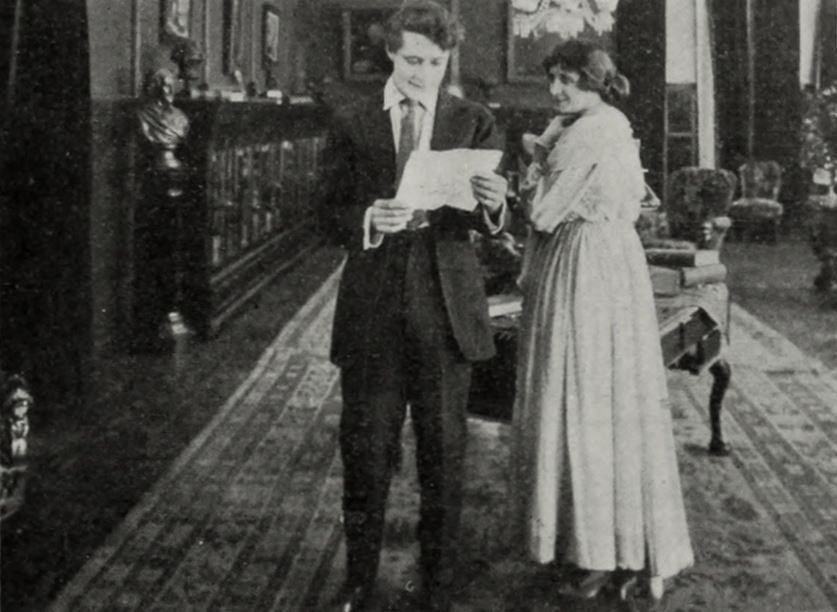
Bibbs’s response is the ultimate act of self-definition. He defiantly quits his place with his father, explicitly rejecting the family fortune and the corrupting influence it represents. This act of moral courage finally jolts Sheridan into a profound awakening. He realizes the true cost of his ambition, the human wreckage left in its wake. In a remarkable turn of events, Sheridan pays Mr. Vertrees a substantial sum for worthless street railway stock, an act of genuine restitution that frees Mary’s family from financial distress. This gesture, born of sorrow and newfound understanding, paves the way for Mary to accept Bibbs’s renewed proposal. The film culminates in Bibbs becoming the leading spirit in the Sheridan enterprises, but with a crucial difference: he leads with integrity, compassion, and a vision that transcends mere profit. He represents a new kind of industrialist, one who understands the value of human connection and ethical conduct, offering a glimmer of hope for a more humane future.
The narrative of The Turmoil, while rooted in its specific historical context, offers timeless insights into the human condition. It explores the perennial conflict between material success and spiritual fulfillment, the corrupting influence of unchecked ambition, and the enduring power of love and moral conviction. The film cleverly uses the industrial setting not merely as a backdrop but as an active participant, its 'turmoil' mirroring the internal chaos of the characters. The collapse of the warehouse is not just a plot device; it is a symbolic implosion of a system built on unsustainable principles, a stark warning against the dangers of valuing speed and profit over human lives and integrity. This theme of societal decay or the consequences of industrial excess can be interestingly juxtaposed with films like The World, the Flesh and the Devil, though that film tackles a more apocalyptic vision, both explore the fragility of human constructs when moral foundations crumble.
The character arcs are meticulously crafted, particularly Bibbs’s transformation from a fragile intellectual to a principled leader. His journey is the heart of the film, demonstrating that true strength lies not in brute force or financial power, but in moral clarity and compassion. Mary’s character, too, undergoes a significant evolution, moving from a passive object of societal maneuvering to an active agent of her own destiny. Her refusal of Jim, and later her initial hesitation with Bibbs, are not acts of weakness but of profound self-respect and wisdom. Even James Sheridan, the seemingly unyielding patriarch, experiences a profound, albeit painful, epiphany, suggesting that even the most entrenched individuals are capable of change, given sufficient impetus.
In its entirety, The Turmoil is more than just a family drama; it is a profound social commentary. It asks fundamental questions about the nature of success, the price of ambition, and the possibility of redemption in a world increasingly defined by industry and commerce. It reminds us that true wealth is not measured in factories or fortunes, but in the integrity of one's character and the depth of one's connections. The film’s lasting resonance lies in its poignant exploration of these universal struggles, making it a compelling piece of cinematic history that continues to provoke thought and discussion about the values we choose to live by.
The performances, even in the context of early cinema, convey the emotional weight of the narrative with considerable impact. The silent era often relied heavily on exaggerated expressions and body language, but here, there’s a subtlety in the portrayal of Bibbs’s quiet suffering and Mary’s internal conflict that transcends mere melodrama. The stark contrast between the boisterous, often crude, Sheridans and the refined, understated Vertrees family is beautifully rendered, amplifying the film’s central themes of class and cultural clash. While specific details of cinematography or editing might be harder to assess for a film of this vintage without direct access, the narrative structure, clearly derived from Booth Tarkington's literary work, ensures a coherent and emotionally engaging experience.
Ultimately, The Turmoil stands as a powerful testament to the enduring human spirit amidst the clamor of progress. It’s a story that resonates because it delves into the timeless struggles of identity, family loyalty, and the relentless pursuit of happiness—or, in many cases, what we perceive as happiness. It’s a film that bravely critiques the very foundations of the American dream, suggesting that unchecked ambition can lead to a hollow victory, and that genuine fulfillment often lies in the most unexpected places, guided by the quiet strength of those who dare to seek a different path. A truly captivating and thought-provoking cinematic experience, it offers both a historical snapshot and a universal reflection on the human cost of progress, leaving audiences with a lingering sense of both tragedy and hope. Much like the complex societal critique found in Within Our Gates, The Turmoil uses personal narratives to illuminate broader societal injustices and the persistent quest for moral clarity.

IMDb 6.1
1924
Community
Log in to comment.